

0.75L
Covers
80–205 sq ft
2 coats, absorbent mineral
Best For
Small courtyard, kitchen floor, sample area — the standard India retail size.
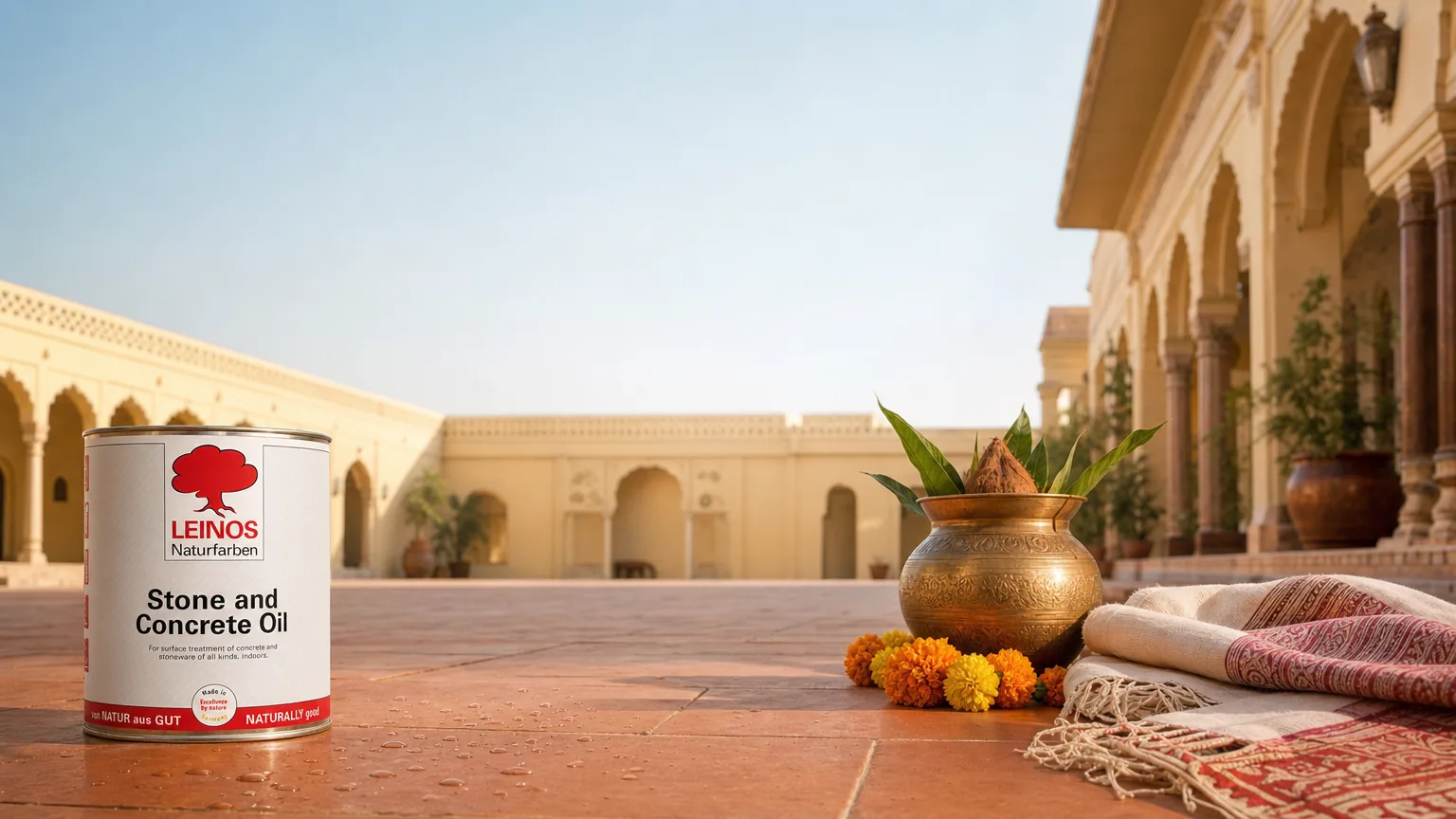
STONE & CONCRETE IMPREGNATION · ART. 254
LEINOS 254 — penetrating impregnation oil for terracotta, absorbent tiles, and chemically neutral concrete. Water-repellent, abrasion-resistant, vapour-permeable. No film. No darkening.
Mechanism & Use
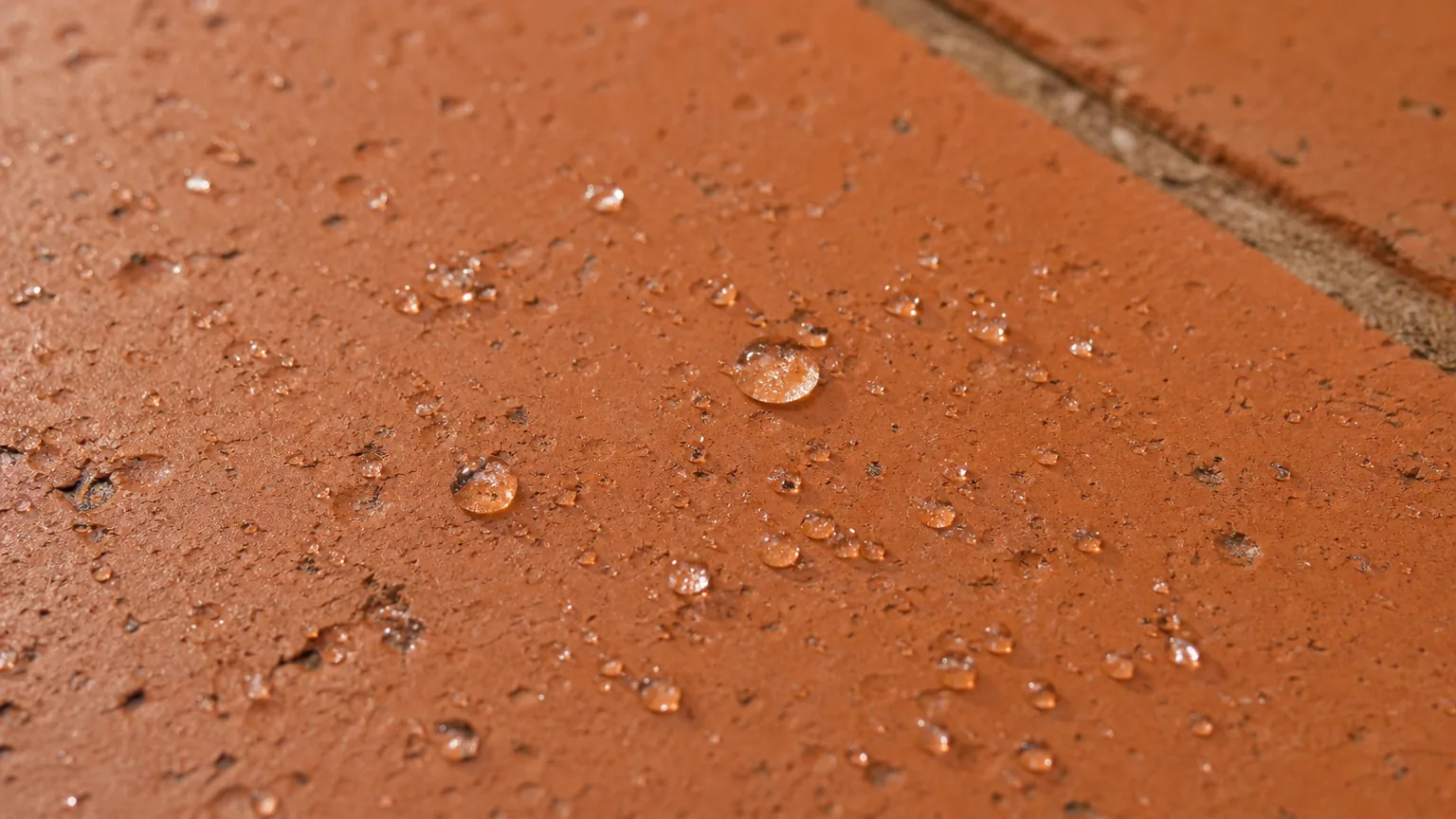
Penetrating impregnation that protects from inside the pore — water beads off, the surface stays open, the colour stays yours.
Wood oil, linseed, castor, and sunflower oils travel into the absorbent pore structure of terracotta, concrete, and unglazed tile by capillary action. The stone itself becomes the carrier of the protection — not a film on top of it.
Natural rosin-ester resins cross-link the oils inside the mineral matrix. Water beads off the surface and rolls away rather than soaking into the grain. Spills wipe clean before they stain.
Open-pore finish lets moisture vapour pass through the floor or wall — no plastic seal trapping monsoon humidity under concrete or terracotta. The screed breathes with the season, expanding and contracting freely.
Unlike acrylic and silicone sealers that wet the surface and deepen the colour permanently, 254 leaves the natural terracotta red or concrete grey visibly intact. The architect’s specified colour is what you see in five years.
Where It Lives
Terracotta floors (haveli, courtyard, heritage)
Indian terracotta tiles, athangudi tiles, Mediterranean terracotta. Preserves the natural red colour while making spills wipeable. Re-apply every 2–3 monsoon seasons.
Polished and unsealed concrete floors
Modern residential lofts, design-led commercial interiors. Maintains the natural grey concrete look without acrylic “plastic” finish.
Cement grout joints (tile-floor systems)
Protect the grout as you protect the tile — the failure point in tile floors becomes the protected element. Apply post-grouting before regular use.
Unglazed stone and stoneware
Kota stone, granite cobble, terrazzo, unglazed ceramic basins and planters. Penetrates into the pore; does not film over the surface.
Heritage building restoration
Preservation-compliant treatment for protected structures where film-forming sealers are prohibited. Reversible — does not chemically bond with the substrate beyond the oil-resin cure.
Modern industrial and loft concrete floors
Bangalore + Mumbai design-led residential lofts, boutique studios, and commercial showrooms with polished or unsealed concrete. Preserves the natural grey concrete tone — no acrylic “wet-look” film.
Compliance · Natural Ingredients · EU
Three anchors that let architects specify 254 for heritage and modern mineral floors without disclaimers.
EU Compliance
EU limit 700 g/l · Cat. f minimal-build impregnation · Directive 2004/42/EC.
Institutional Pledge
Reincke Naturfarben — full-ingredient-disclosure pledge for natural building products.
The TDS is downloadable below. Where you need a written specification packet — ingredient declaration, VOC compliance letter for an architect’s submittal, or preservation-treatment compatibility statement for a heritage project — it is available to architects and contractors on request. Use Get Expert Advice above.
Read The Full TDSStep by Step
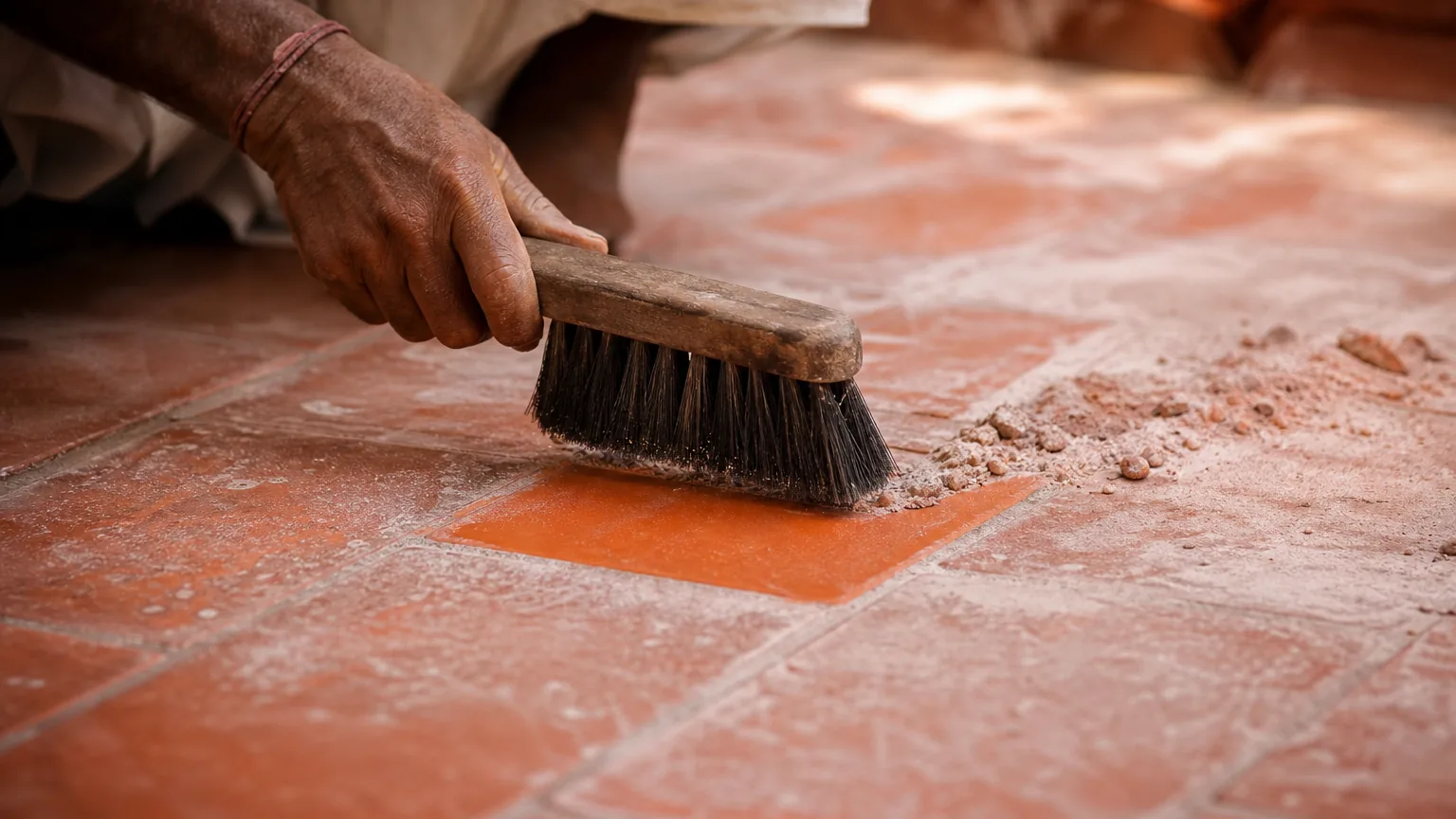
Prepare the substrate — surface must be dry, clean, oil-free, and dust-free. Sweep, damp-mop, and let the floor dry completely (24–48 hours after washing). Remove cement laitance from new concrete with light mechanical abrasion. Remove salt efflorescence from older concrete with stiff brush — do not use acids. Old film coatings (acrylic, silicone sealers) must be stripped completely — 254 will not penetrate through a film finish.
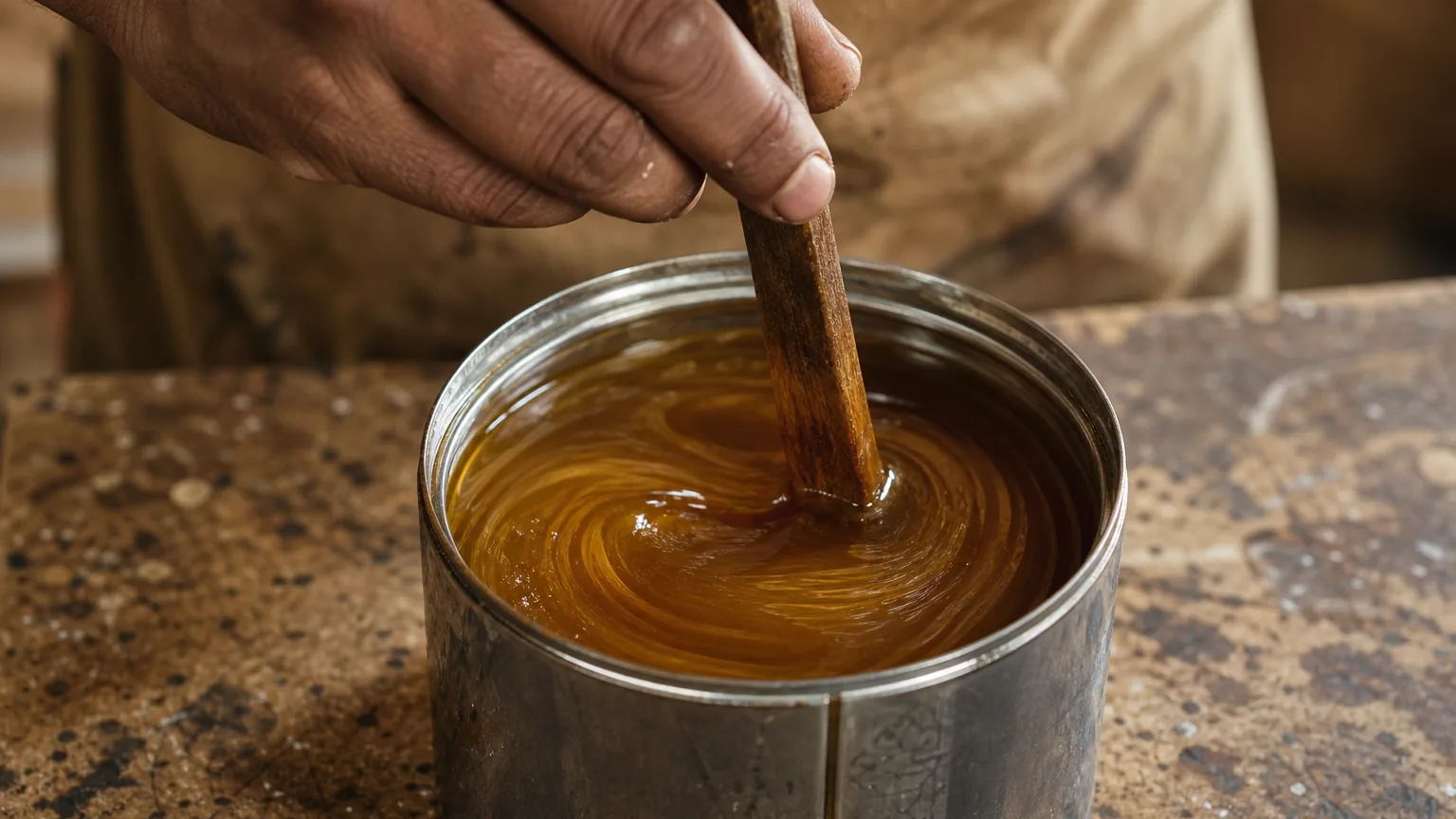
Stir thoroughly — stir the tin until any settled solids are fully dispersed. Do not thin under normal conditions. Apply at ambient and surface temperatures above 10 °C; ensure cross-ventilation during the drying window. A floor fan during cure helps avoid odour build-up and supports even oxidation drying.
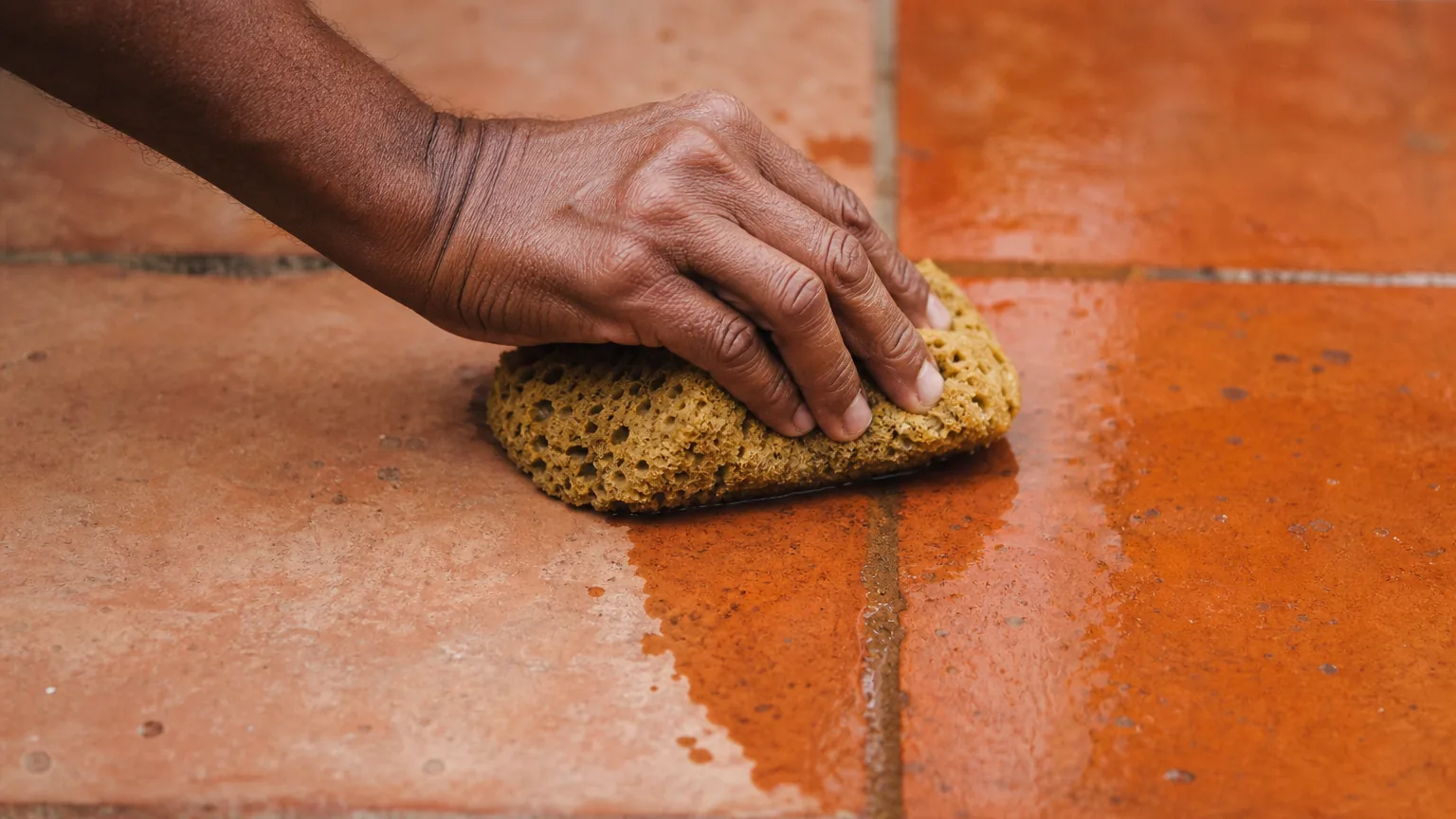
First coat — apply thinly and evenly with brush, lint-free cloth, roller, or sponge. On large floor areas a sponge or roller is the fastest tool; on tile grout joints and edges, brush gets into the recess. Allow 20–30 minutes penetration. Avoid puddles — the mineral pore absorbs what it absorbs; surplus oil will not penetrate.
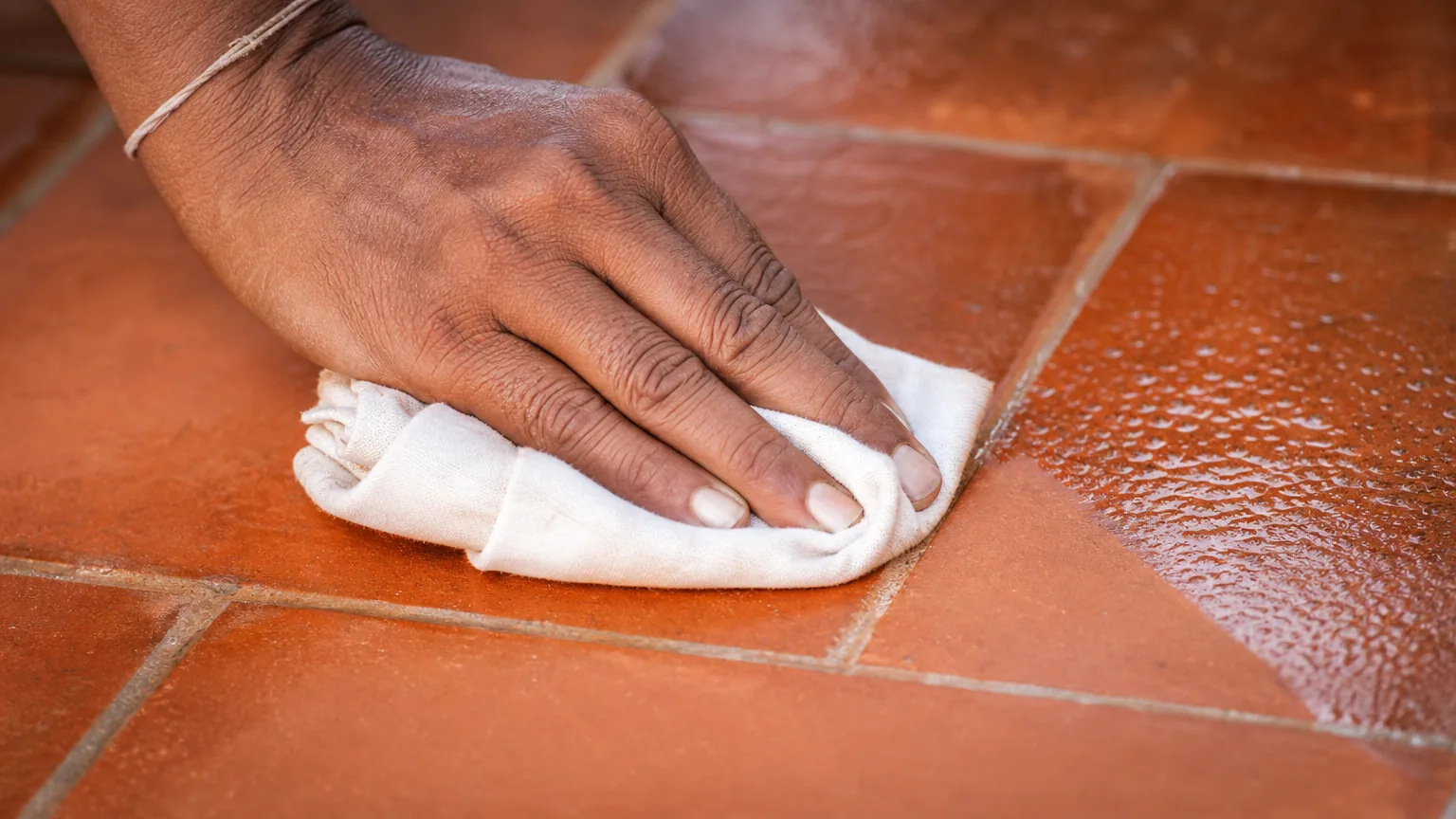
Wipe excess after 20–30 minutes — the critical step. Wipe any unabsorbed oil off the surface with a clean lint-free cloth or pad. No oil film must remain — surplus oil will not dry properly and leaves a sticky surface. The wiped-off oil can be redistributed onto adjacent still-absorbent patches.
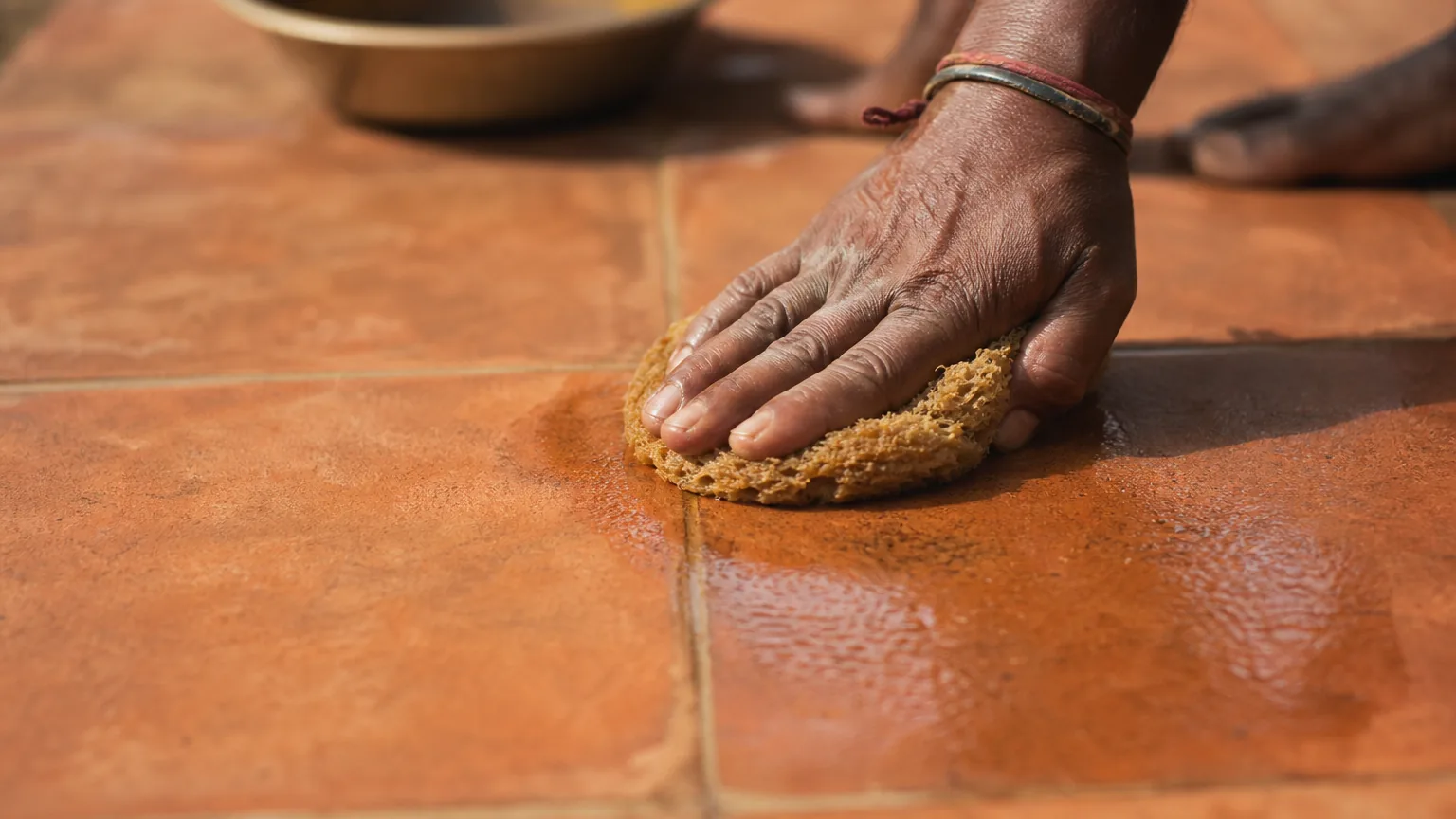
Second coat — next day, same technique. Apply thinly and evenly with sponge, brush, or roller. Same wipe-off discipline: 20–30 minutes penetration, then remove excess. On highly absorbent substrates (old terracotta, very porous concrete) apply an optional third thin coat after the second cures.
Maintenance — cure 7–10 days at 18–22 °C. Light foot traffic after 24 hours; heavy traffic after full cure. Maintenance recoat: when the surface stops beading water or starts to look dry, clean and re-apply 254 directly. No sanding, no stripping — re-oil into the existing oil-impregnated pore.
Application Conditions
Coats & Recoating
Cleaning & Storage
First time with Stone and Concrete Oil? Our technical team runs complimentary on-site walkthroughs for contractors — full application protocol, start to finish.
System & Substrates
Two thin coats of 254 directly on prepared mineral surface. There is no primer in the LEINOS mineral-impregnation system. No film topcoat: the protection lives inside the mineral pore. Reversible — critical for heritage and preservation-controlled installations.
The Coating System
Primer plus topcoat — the full chain.
Substrate Fit
Suitable
Honest Limits
Use With Care
Coverage & Pack Sizes
Coverage on the card assumes one coat. Two coats standard — double the surface estimate accordingly. Highly absorbent old terracotta sits at the upper consumption end; dense polished concrete at the lower end.
0.75L
Covers
80–205 sq ft
2 coats, absorbent mineral
Best For
Small courtyard, kitchen floor, sample area — the standard India retail size.
2.5L
Covers
270–675 sq ft
2 coats, absorbent mineral
Best For
Full haveli courtyard, residential floor, commercial lobby.
Enter your area to see how much material — and the most efficient pack mix — you’ll need for 2 coats.
Full calculatorDocumented Applications
Documented mineral surface projects. Captions show which LEINOS finish was used.
In their words
Real customers, real projects — honest ratings, nothing incentivised.
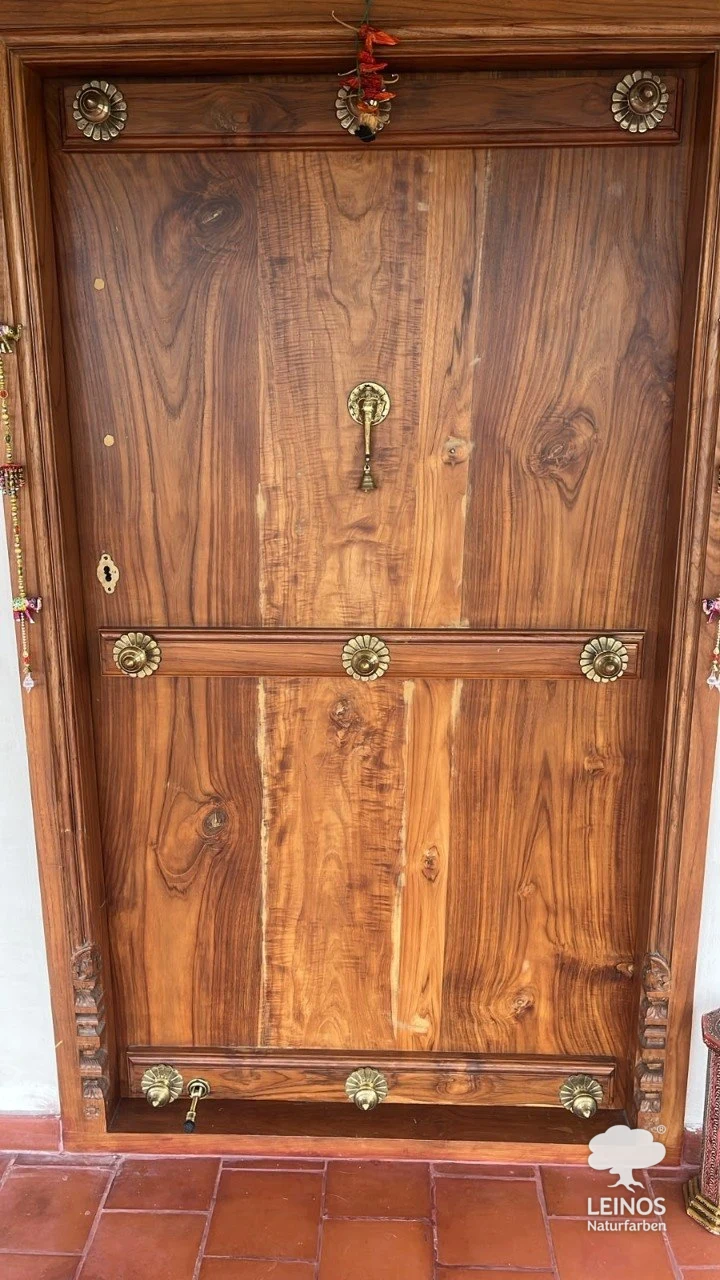
Highly recommended. Very good quality product and perfect suggestions by expert company persons. Very trustworthy quality and customer service.
Full Declaration
Every ingredient declared on the label. The Trust Hub explains what each one does and the standards behind it.
Wood Oil (Tung)
Tung-tree seed oil, plant-derived. Water-resistance partner alongside linseed for faster initial cure and stronger spill-resistance on mineral substrates.
Cold-pressed flax-seed oil — the LEINOS signature drying oil. Polymerises with oxygen inside the mineral pore. Plant-based, traditional natural-paint pedigree.
Castor Oil
Plant-derived elasticity additive. Stays slightly flexible inside the cured matrix — matters on substrates that move with thermal cycling and moisture migration.
Sunflower Oil
Plant-derived carrier extension for very fine pore networks. Improves flow into dense terracotta and polished concrete where heavier oils alone do not penetrate efficiently.
Natural Resin (Rosin Ester)
Pine-derived natural resin ester. Cross-links the cured oils into the mineral pore matrix — the “resin” in the brand’s oil-resin chemistry. No surface film.
Isoaliphatic Carrier (Isoparaffins)
Plant-derived hydrocarbon thinner. Evaporates during cure, leaving the oil-resin matrix bonded in the mineral pore. Carries the VOC declaration (420 g/l, Cat. f).
Driers
Manganese, zirconium, and zinc neodecanoate driers (cobalt-free) accelerate the oxidative polymerisation of the oil-resin matrix. Disclosed per InVeNa full-disclosure pledge.
Got Questions?
Quick answers on formulation, application and Indian-climate suitability. Pulled from our full FAQ and TDS library.
For Architects & Specifiers
Technical and safety documents — citable in project specifications.
Need a Recommendation?
Four ways to reach our India team — pick the one that fits how you work.
For Trade & Specifiers
Full TDS / SDS library, specification support and trade pricing — direct from the manufacturer.
Documents
TDS / SDS
Per-product datasheets and safety sheets, downloadable in English.
Specification
NCS Match
Custom colour briefs and material samples mixed at our Delhi lab.
Trade
Direct Pricing
Volume tiers, project quoting and stock allocation through our trade desk.
Written by the LEINOS India technical team, in collaboration with
Reincke Naturfarben R&D, Lower Saxony.
Last updated
Want to represent LEINOS in your city?
Become a Dealer