The mechanism
Why silicate paint doesn’t peel.
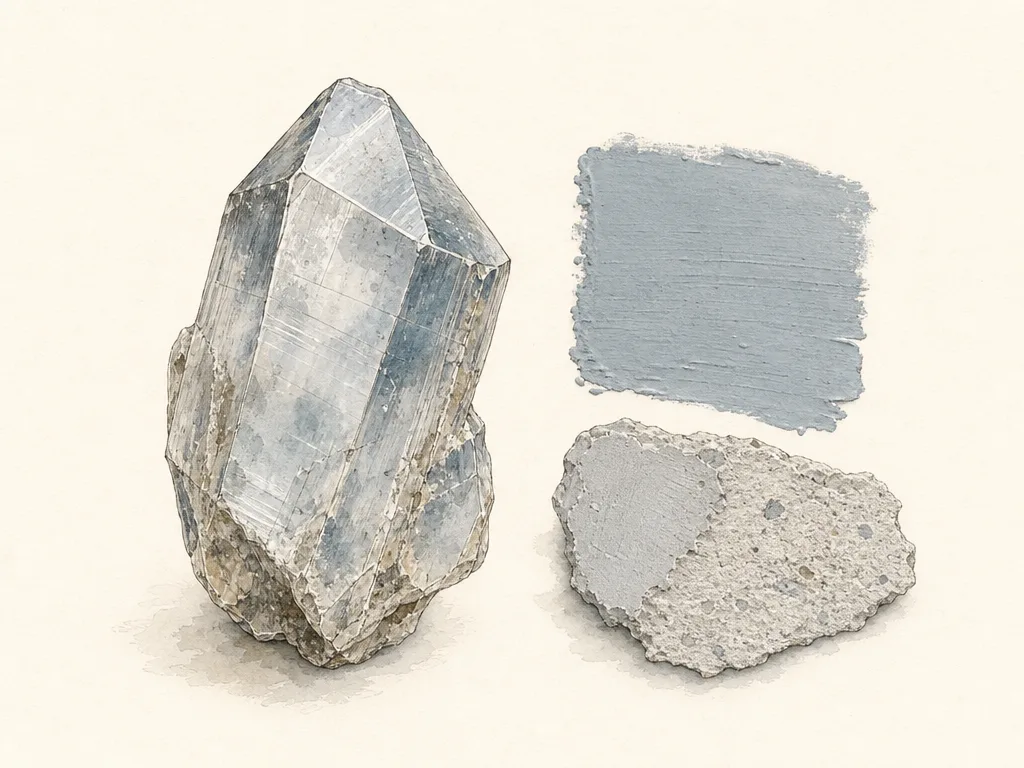
An organic facade paint — acrylic, for example — bonds to the wall by adhesion: a polymer film lies on top of the surface and holds on. Sun, heat, and the wet-dry cycle eventually break that bond, and the film chalks, fades, and peels. A silicate paint bonds by chemistry instead. The potassium-silicate binder reacts with the mineral surface, forming an insoluble crystalline network that is continuous with the substrate — the paint silicifies into the wall. There is no separate film to lose adhesion, because there is no separate film.
Because the binder is inorganic and the pigments are mineral, ultraviolet light has nothing organic to degrade. Silicate facades hold their colour for decades and do not chalk; the surface ages by gentle erosion rather than by film failure. The same inorganic chemistry makes the coating non-combustible — there is no plastic film to burn.
The cured surface remains highly vapour-permeable, with an Sd value around 0.01 m on the ProfiSol topcoat. Moisture that reaches the wall can leave through the coating rather than building up behind it, so the freeze-thaw and monsoon stresses that blister film paints have far less to act on. Durability, colour stability, and breathability all come from the one decision to bind with silicate rather than polymer.
A silicate facade does not hold on to the wall. It becomes part of it.