

5L
Covers
165–210 sq ft
2 coats, smooth mineral
Best For
A single elevation or a smaller facade in two coats.
SOL-SILICATE FINE FACADE PAINT · ART. 612
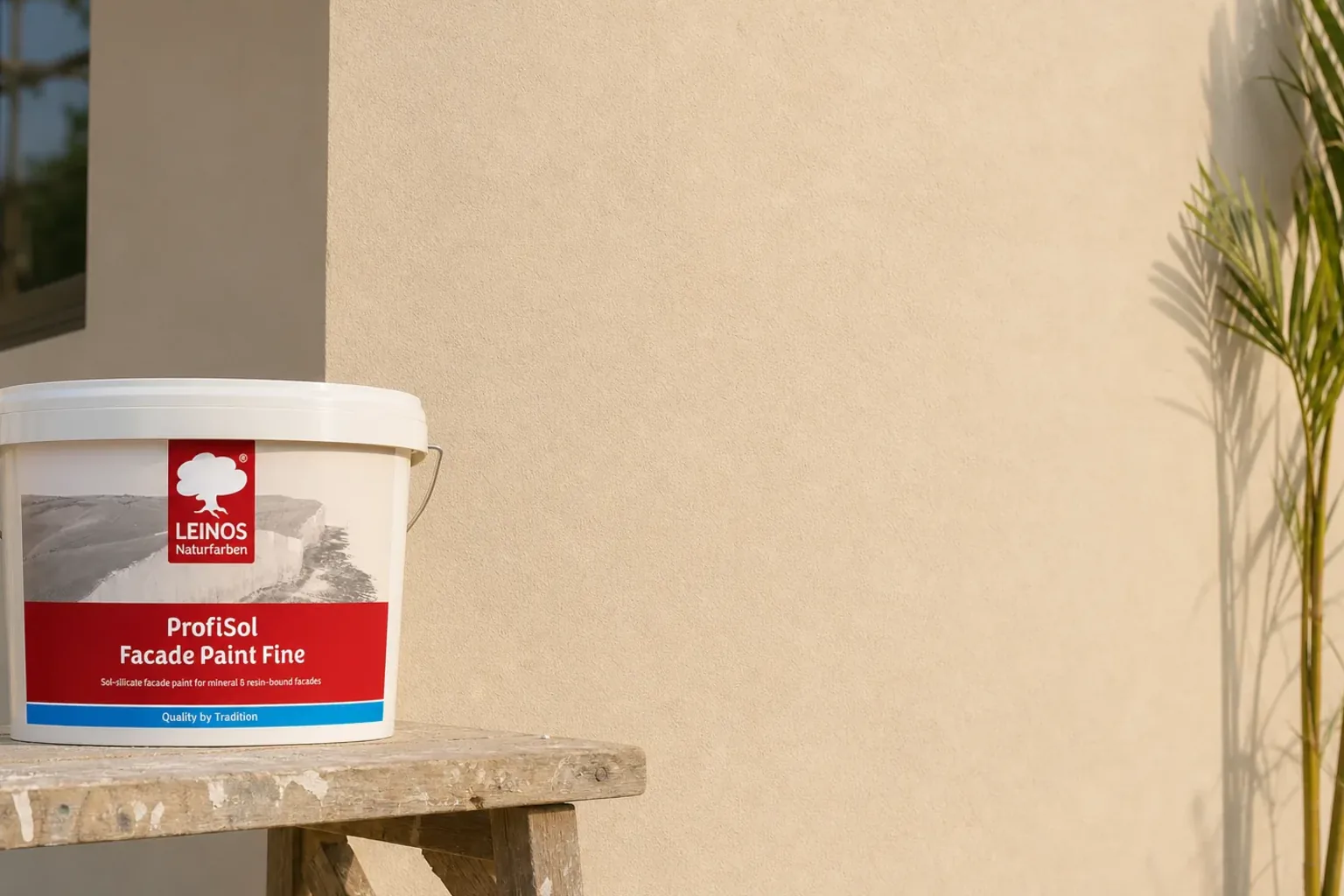
LEINOS 612 ProfiSol Facade Paint Fine — a sol-silicate colour topcoat. Its silica-sol-and-water-glass binder silicifies into mineral and resin-bound facades alike and holds the tone at the highest stability class A1, in 200-plus alkali-fast pastel shades. The vapour-open colour finish of the ProfiSol facade system. Made in Germany by Reincke Naturfarben.
Facade Colour Range
Twelve of over 200 alkali-fast pastel shades, each shown on fine mineral render rather than a flat chip — because a silicate colour reads through the texture of the wall it sinks into. Highest colour-stability class A1, the class that holds a facade tone for decades.
RAL 9010
Pure White
RAL 9001
Cream
RAL 7035
Light Grey
RAL 1001
Sand Beige
RAL 1014
Ivory
RAL 1015
Light Oak
RAL 1019
Grey Beige
RAL 8025
Pale Brown
RAL 8001
Cognac
RAL 8023
Orange Brown
RAL 8002
Russet
RAL 6011
Reseda Green
A sol-silicate paint reads as a matte mineral layer, not a plastic film — the tone sits in the render and is softened by its texture and the light on it. Each shade lists its RAL Classic code and carries a nearest NCS reference for specification. On WDVS/ETICS insulated facades, use only light shades (HBW > 40) to avoid heat build-up on the insulation. Screen renders approximate the paint on plaster — confirm the final match with a drawdown before specification.
Beyond the Twelve
The full facade palette runs to over 200 alkali-fast pastel shades, tinted to your specified colour reference with alkali-resistant pastes at our Delhi lab. Bring the architect’s spec — we match it, and advise the HBW-safe range for insulated facades.
Explore the full Silicate Facade collection on our Colours page — each shade rendered on fine render, textured render, and smooth lime.
Mechanism & Use
A silica-sol-and-water-glass binder bonds the pigment chemically into mineral and resin-bound facades, holds the tone at the highest stability class A1, and leaves the wall vapour-open. A mineral colour coat, not a plastic film.
The silica-sol and potassium water-glass binder silicifies into the substrate, so the paint bonds chemically — not just mechanically — to lime and cement render, synthetic-resin plaster, sound matte silicone-resin and dispersion coatings, and WDVS/ETICS insulation alike. One facade colour across masonry and insulated walls, where most facade paints are tied to a single substrate family.
Alkali-resistant, lightfast mineral pigments in a silicate binder earn the top colour-fastness class A1 under BFS Merkblatt 26 — the facade holds its tone through years of UV and weather instead of fading and chalking to a washed-out version of the specified colour.
With an sd-value of just 0.01 m the mineral coat lets water vapour and CO₂ pass freely, so vapour keeps moving out instead of being held behind a sealed film. Through monsoon wet-and-dry cycles the finish does not blister or peel the way a sealed synthetic facade paint can.
It dries to a genuine mineral coating layer, not a plastic film — dead-matte, non-flammable, and alkaline at pH ≈ 11, which denies mould and algae a foothold from the coat itself rather than from a leaching biocide. Like every silicate finish it ages by an extremely slow reduction in layer thickness the trade calls chalking (Kreiden) — a material-typical property, not a defect.
Where It Lives
New mineral-render facades
The colour topcoat on fresh lime/cement or mineral render, over a 611-and-610 prepared wall — a matte, vapour-open mineral finish in the specified shade.
Renovation repaints over sound old coatings
Repainting facades that carry sound matte silicone-resin or dispersion coatings. The sol-silicate binder bonds to the old coat and re-establishes a mineral, breathable finish.
WDVS/ETICS insulated facades
Vapour-open mineral colour over thermal-insulation composite systems. Light shades only (HBW > 40) so the insulation does not overheat behind a dark tone.
Heritage and conservation elevations
Historic plastered facades where a mineral, breathable, biocide-free colour coat matters. Silicate paint keeps the old fabric breathing while it holds a specified heritage tone.
High-exposure weather elevations
Wind- and rain-driven facades where colour-fastness and breathability decide the repaint interval. Class A1 stability and sd 0.01 m carry the finish through hard exposure.
Contemporary architectural colour facades
Specified pastel facade colour on modern Indian architecture — a matte mineral surface that reads as part of the wall rather than as a film sitting on it, in over 200 alkali-fast shades.
Compliance · Natural Ingredients · EU
Three anchors that let architects specify 612 as the colour topcoat of a mineral facade system without disclaimers.
EU Compliance
EU limit 30 g/l · Cat. a (water-borne) · Directive 2004/42/EC · solvent-lean mineral paint.
Institutional Pledge
Reincke Naturfarben — full-ingredient-disclosure pledge for natural building products.
The TDS is downloadable below. Where you need a written specification packet — full ingredient declaration, VOC compliance letter for an architect’s submittal, the A1 colour-stability classification, or a facade build-up compatibility statement for a ProfiSol/UniverSil or WDVS/ETICS system — it is available to architects and contractors on request. The safety data sheet is supplied on request. Use Get Expert Advice above.
Read The Full TDSStep by Step
Prepare the substrate. All surfaces are prepared per VOB Part C DIN 18363 and the BFS data sheets — clean, firm, dry, and load-bearing. Level hairline cracks and structural differences full-surface with LEINOS 610 ProfiGrund; consolidate very absorbent or friable substrates first with LEINOS 611 Profi-Fixativ. Assess doubtful substrates individually and lay a sample area.
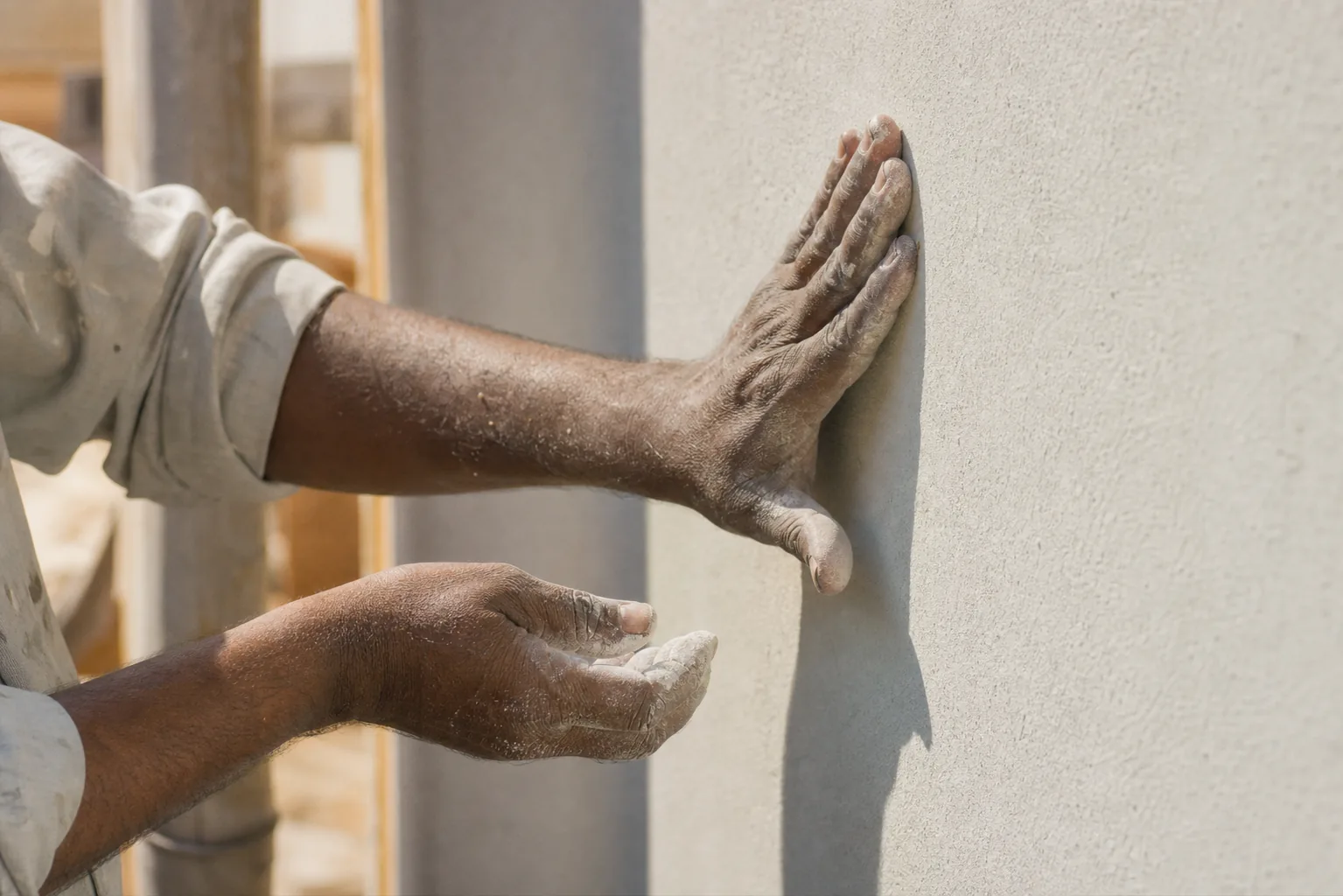
Stir thoroughly and sieve. Silicate paint settles and skins in the pail — stir the LEINOS 612 bucket well and sieve the material to remove any dried particles from the rim or lid before use. This material-typical step gives an even, blemish-free coat.
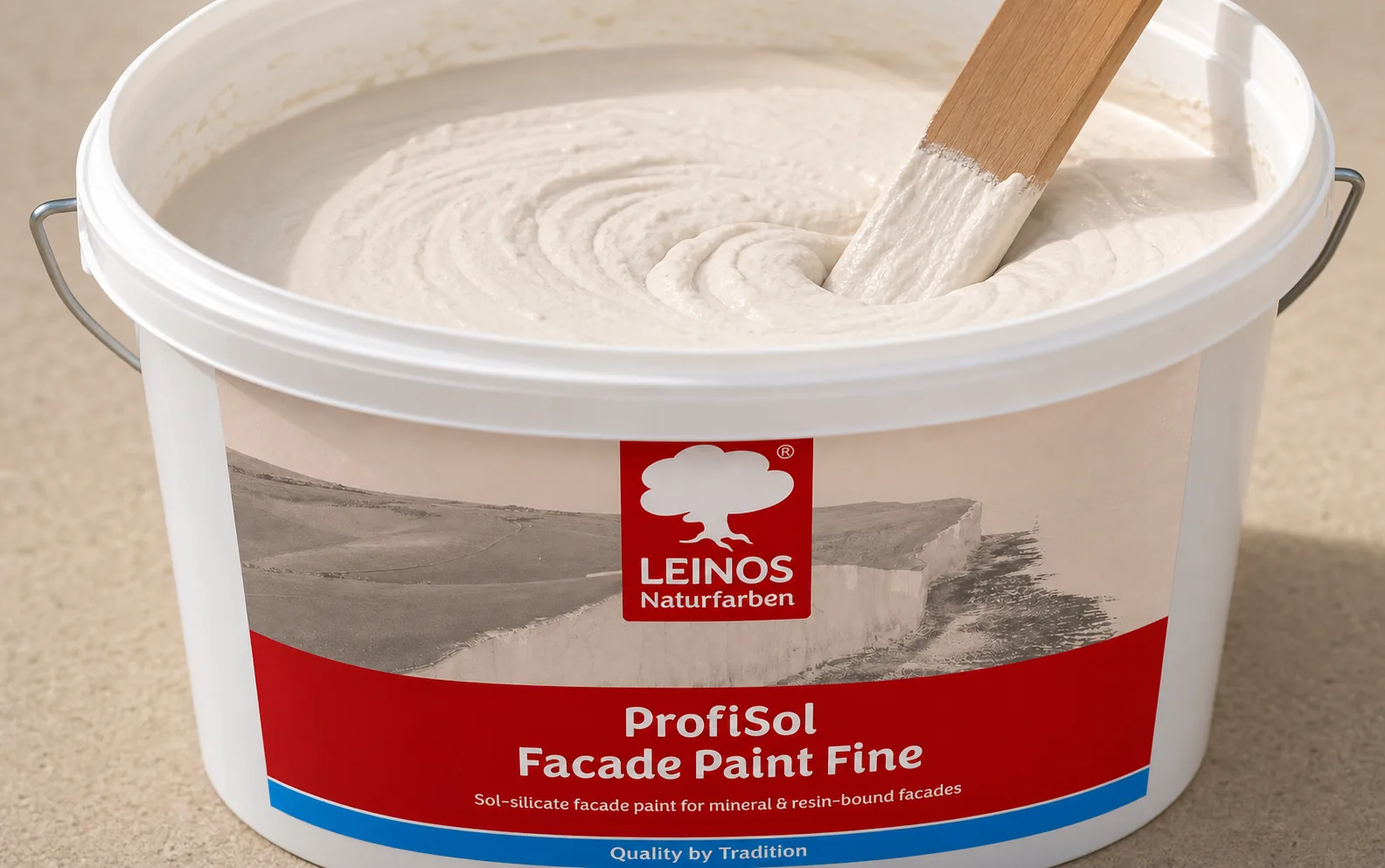
Thin with Profi-Fixativ. Adjust the paint with LEINOS 611 Profi-Fixativ to suit the substrate and your method — about 5–15% for the base coat, about 5% for the final coat. The clear water-glass fixativ regulates absorbency and workability without weakening the mineral bond.
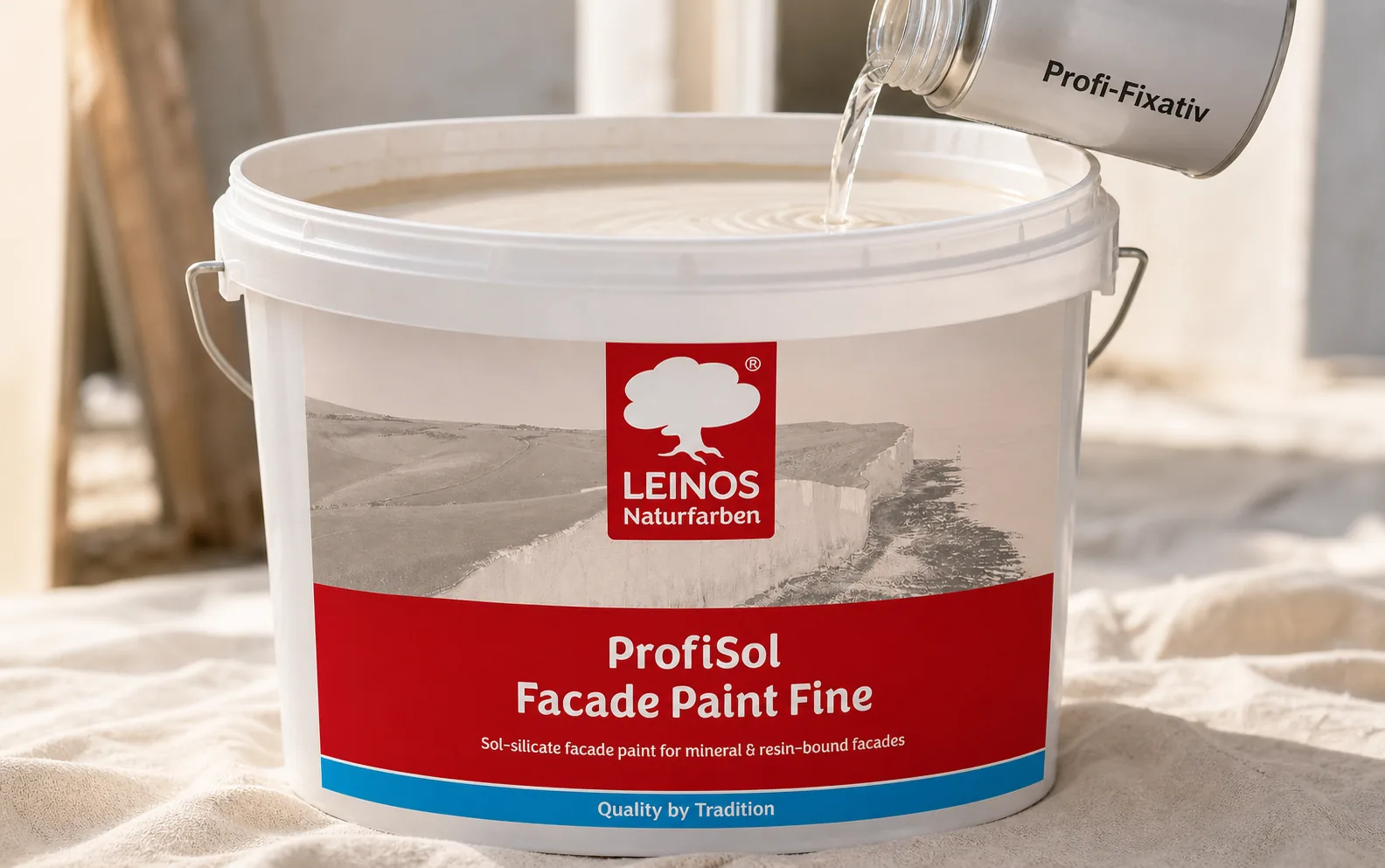
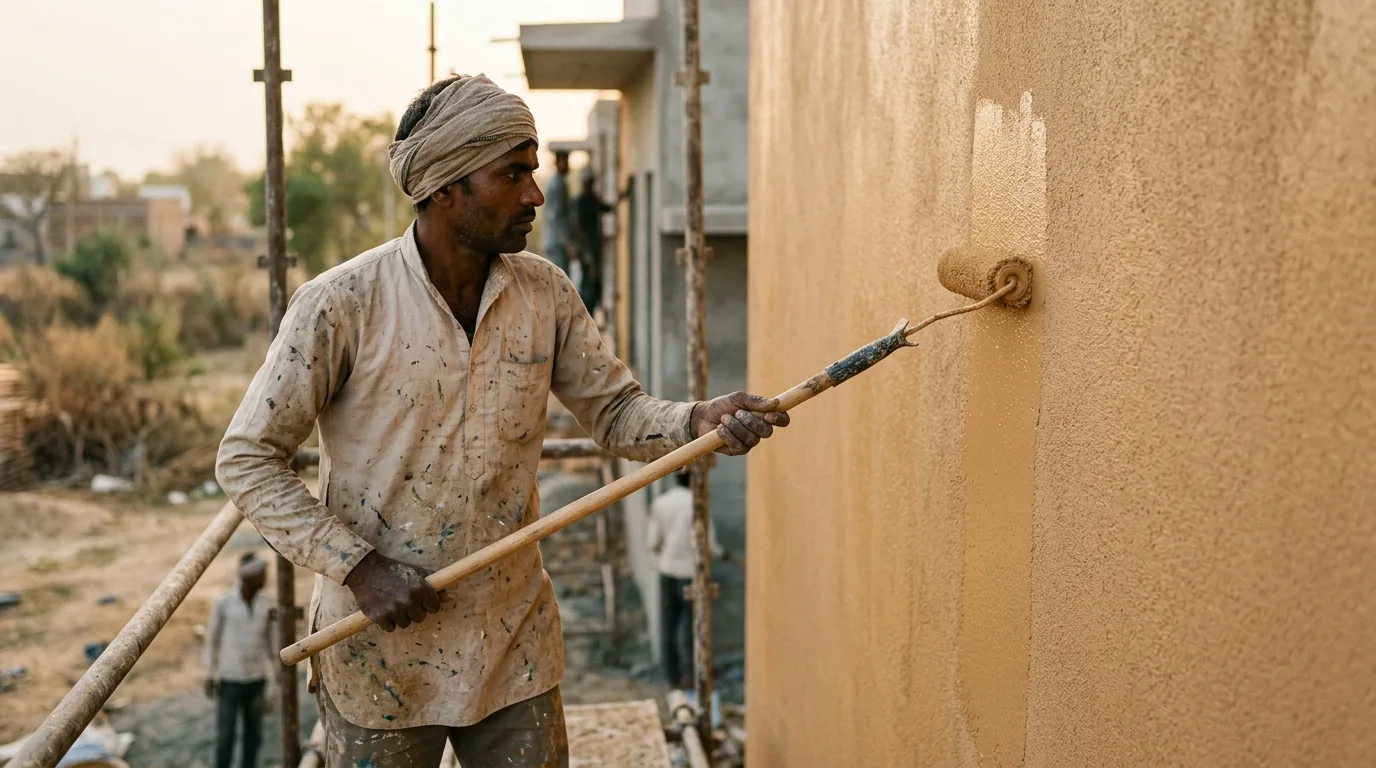
Apply in at least two thin coats. Work each coat thin and even in a cross-pattern (Kreuzgang), without overlaps, so contiguous surfaces read as one uniform plane — brush, roller, or airless. A further coat is recommended on facades with high weather exposure. Do not apply below +8°C, in direct sun, or on a heated substrate.
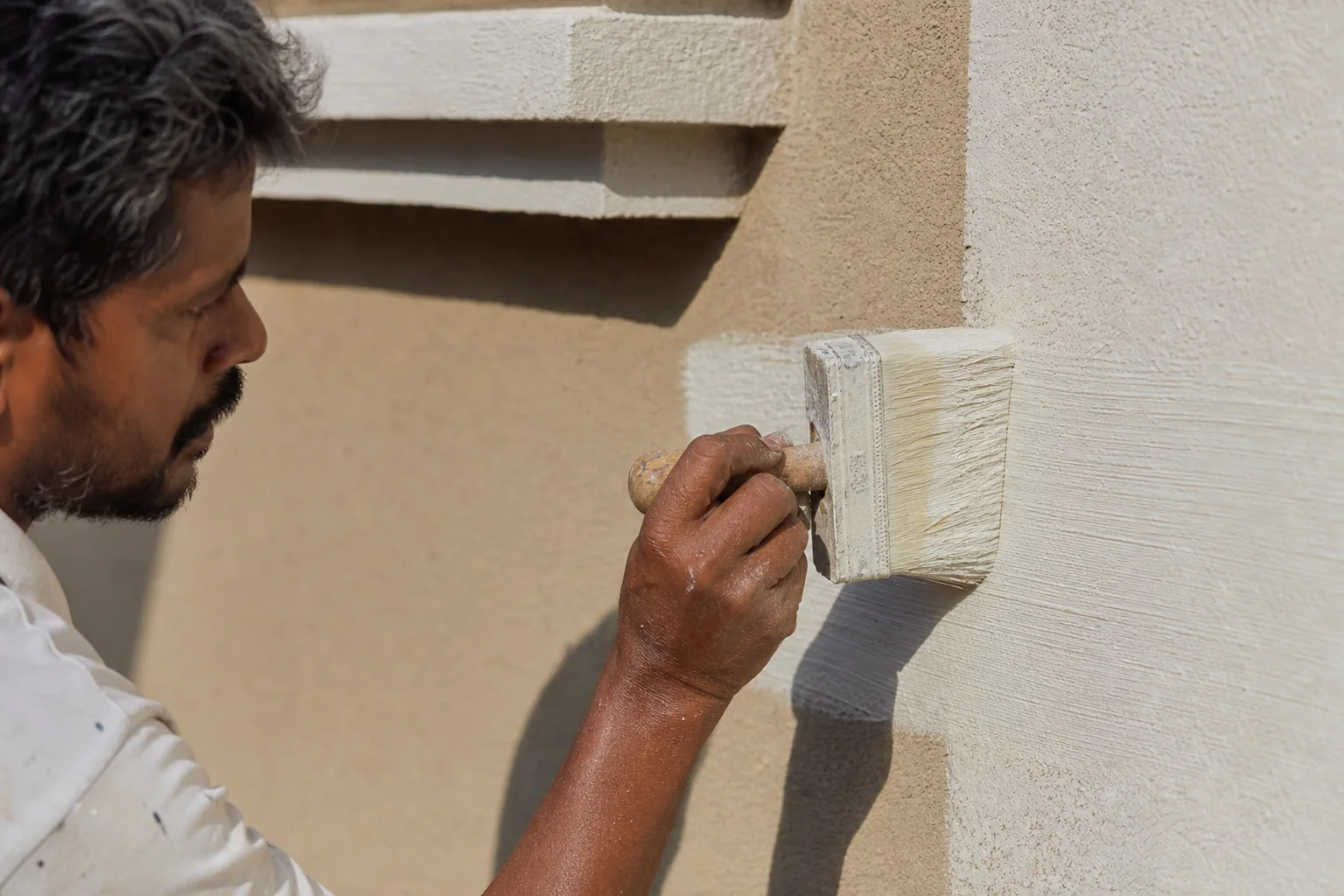
Lay the final coat. Apply the final coat after at least 12 hours, thinned about 5% with 611 Profi-Fixativ, for an even matte mineral finish in the specified shade. Each coat needs at least twelve hours before the next.
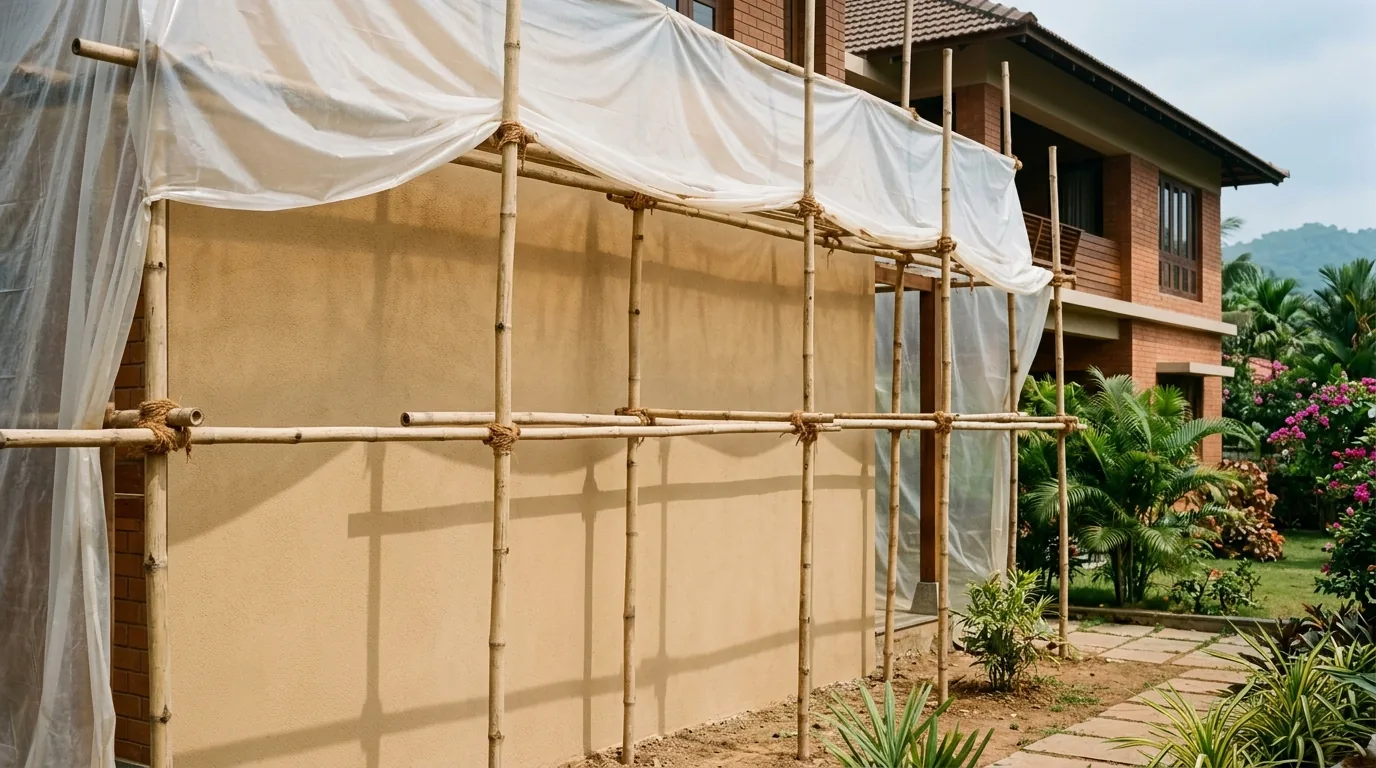
Protect while it cures. Allow at least 12 hours per coat; protect fresh coats from rain, direct sun, and heat. Do not apply below +8°C. Clean tools, substrate, and clothing immediately with water.
Application Conditions
Coats & Recoating
Cleaning & Storage
First time with ProfiSol Facade Paint Fine? Our technical team runs complimentary on-site walkthroughs for contractors — full application protocol, start to finish.
System & Substrates
611 Profi-Fixativ consolidates and thins; 610 ProfiGrund levels and bonds the wall; ProfiSol Facade Paint Fine finishes it in colour. A mineral, vapour-open build-up — the finish silicifies into the facade rather than filming over it.
The Coating System
Primer plus topcoat — the full chain.
Substrate Fit
Suitable
Honest Limits
Use With Care
Coverage & Pack Sizes
About 0.13 litres per square metre per coat (≈ 65–83 sq ft per litre) on smooth, normally absorbent substrates, applied in at least two coats. Rough or highly absorbent render uses more; the figure below is per single coat.
5L
Covers
165–210 sq ft
2 coats, smooth mineral
Best For
A single elevation or a smaller facade in two coats.
12.5L
Covers
405–520 sq ft
2 coats, smooth mineral
Best For
A full building envelope or a multi-facade project.
Enter your area to see how much material — and the most efficient pack mix — you’ll need for 2 coats.
Full calculatorRelated Work
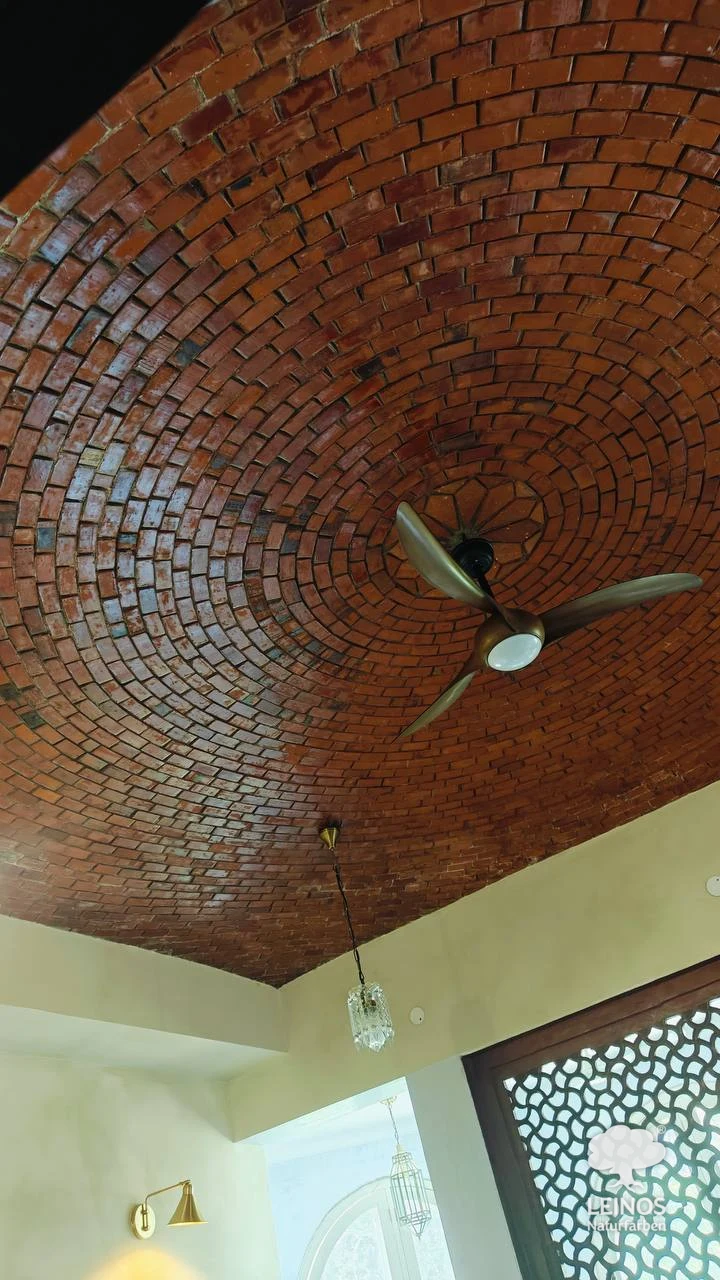
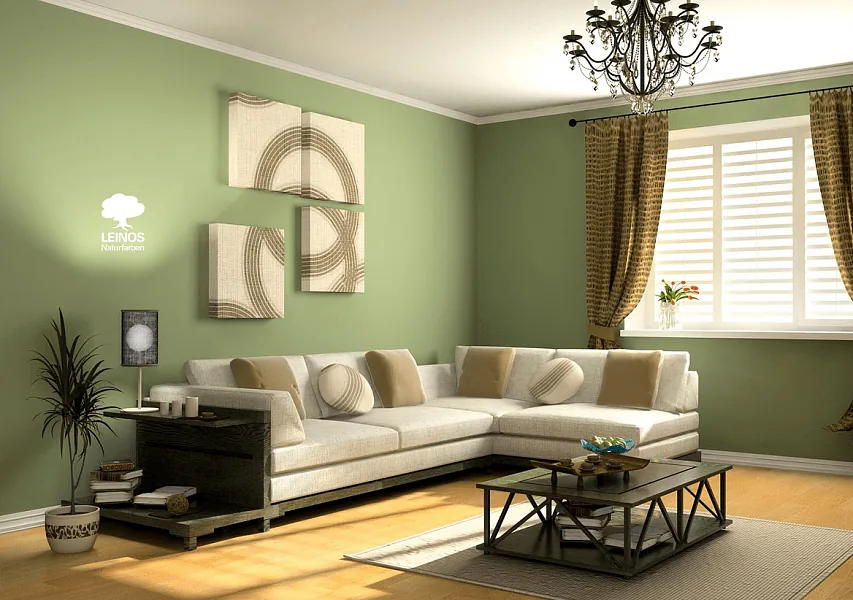
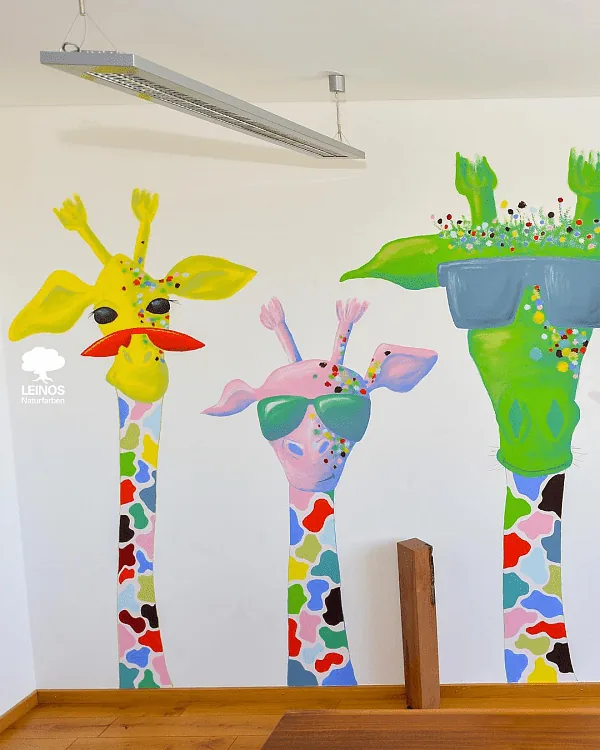
Documented mineral surface projects. Captions show which LEINOS finish was used.
Full Declaration
Every ingredient declared on the label. The Trust Hub explains what each one does and the standards behind it.
Mineral Water Glass
Potassium water-glass — the mineral binder. It silicifies into lime and cement render, resin-bound plaster, and WDVS/ETICS, becoming a mineral coating layer of the wall rather than a plastic film. Solvent-lean, water-borne.
Silica Sol (Kieselsol)
A colloidal silica sol that extends the silicate bond to non-mineral substrates — sound matte silicone-resin and dispersion coatings — so the sol-silicate paint grips where a pure silicate paint could not.
Alkali-resistant, lightfast mineral pigments
Mineral pigments chosen to survive the alkaline binder and years of UV — the basis of the highest colour-stability class A1 (BFS Merkblatt 26) and the 200-plus alkali-fast pastel shades.
Organic additives (< 5%)
A small organic additive fraction (under 5%, per VOB/C DIN 18363 2.4.1) for workability, without compromising the mineral, vapour-open character of the coat.
Got Questions?
Quick answers on formulation, application and Indian-climate suitability. Pulled from our full FAQ and TDS library.
For Architects & Specifiers
Technical and safety documents — citable in project specifications.
Need a Recommendation?
Four ways to reach our India team — pick the one that fits how you work.
For Trade & Specifiers
Full TDS / SDS library, specification support and trade pricing — direct from the manufacturer.
Documents
TDS / SDS
Per-product datasheets and safety sheets, downloadable in English.
Specification
NCS Match
Custom colour briefs and material samples mixed at our Delhi lab.
Trade
Direct Pricing
Volume tiers, project quoting and stock allocation through our trade desk.
Written by the LEINOS India technical team, in collaboration with
Reincke Naturfarben R&D, Lower Saxony.
Last updated
Want to represent LEINOS in your city?
Become a Dealer