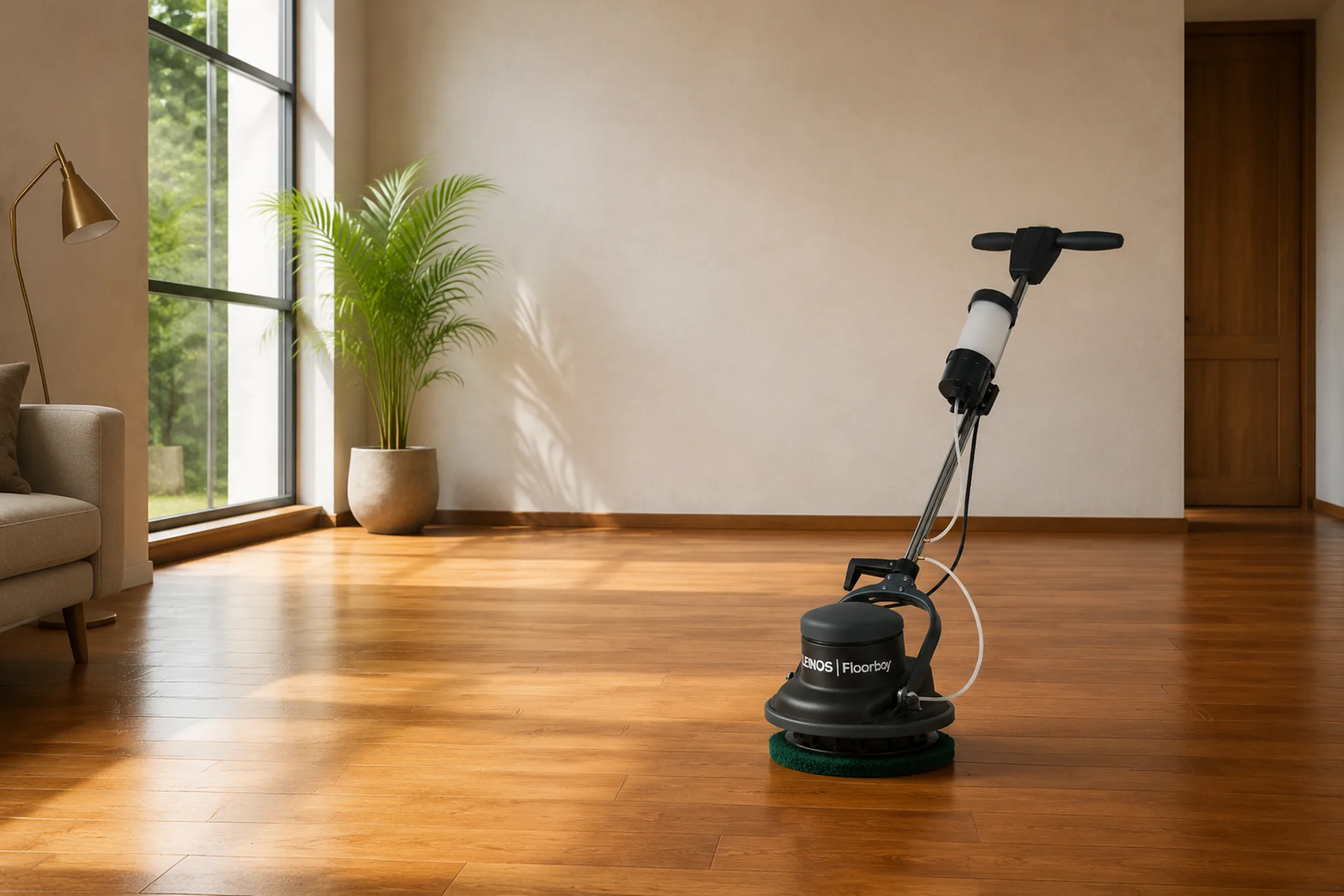
Oil Wash — the dust-free alternative to sanding
Floorboy
The single-disc machine behind the LEINOS oil wash. Care oil goes in, years of ground-in dirt come out with it, and the floor looks new again — no sanding, no dust sheets, no timber lost. Swiss-built, 230 V, quiet enough to run in an occupied home.
Mechanism & Use
How the LEINOS oil wash works.
A single-disc machine, a pad and a care oil — the dirt leaves the floor suspended in the oil, and the timber stays where it is.
The oil does the cleaning
Care oil dissolves the dirt held in the old oil-wax layer and carries it off the floor.
Eccentric, not rotary
1450 oscillations a minute instead of a spin — no swirl marks, no pull on the operator.
Nothing is ground off
A sanded floor loses timber every pass. The oil wash takes none, and repeats as often as needed.
Dust-free, and quiet
No sanding means no dust sheets, and at 63.5 dB(A) the room stays usable while you work.
Where It Lives
Where Floorboy lives
Restored haveli and heritage floors
Century-old teak and sal renewed in place — the patina stays, the dirt goes.
Apartment and villa floors
Dulled traffic lanes through living rooms and corridors, brought back in a working day.
Boutique hotels and cafes
Guest floors washed after hours at 63.5 dB(A) — no dust sheets, open the next morning.
Showrooms and design studios
Display floors made to look new again without closing the room for a week.
Contractors working oiled floors
One machine serves a whole client list, and the method repeats project after project.
Hard floors beyond timber
Cork, stone, clay tile, linoleum, vinyl and sealed timber run on the same disc.
Safety & Electrical
Swiss-built, and wired for India.
Made by Cleanfix Reinigungssysteme AG in Henau, Switzerland, under an ISO 9001 quality system.

European Conformity
CE
Declared under the Machinery, RoHS and EMC directives by the manufacturer.

Appliance Safety
EN 60335-1 / -2-67
The electrical safety standard for floor-treatment machines in commercial use.

Manufacturing
ISO 9001
Certified quality-management system at the Swiss plant that builds the machine.

Power
230 V / 50 Hz
Matches Indian mains exactly — no transformer, no adaptor, no rewiring.
The Pad System
Four pads, hardest to softest
The pad decides what the machine does — lifting old wax, working oil into the timber, or polishing a finished floor. All four are Ø 33 cm and swap onto the same drive plate.
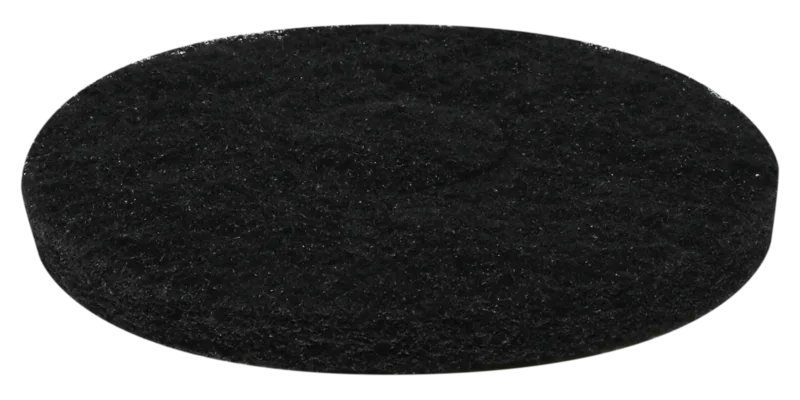
Hardest
Black pad
Heavy soiling and old wax build-up. The working pad for the oil wash on sound timber.
Too aggressive for soft timber — use green instead.
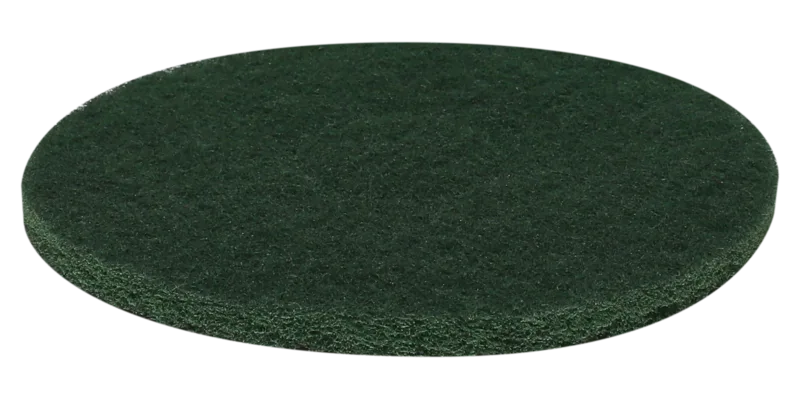
Medium
Green pad
The massaging pad. Works oils in evenly, and handles light general cleaning.
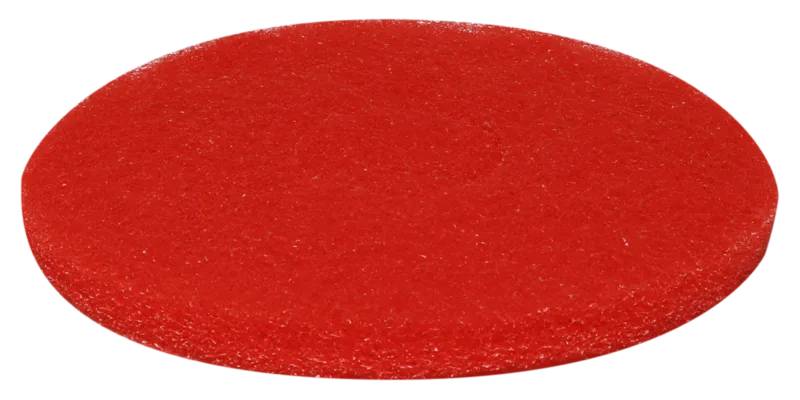
Softest cleaning
Red pad
Gentle cleaning on sensitive floors, and spot work on traffic lanes.
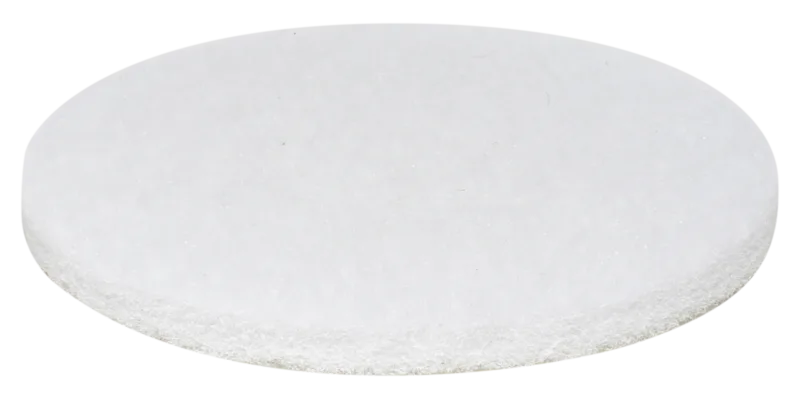
Polishing only
White pad
No abrasive at all. The finishing pad — care oil worked to a thin, dry surface.
Start with the softest pad that does the job. A pad harder than the floor needs can scratch soft timber, so test any new pad on an inconspicuous area before you work the whole room.
Before You Switch It On
- Water-based cleaners only in the tank — oil clogs the nozzles for good.
- Oil-soaked pads and cloths can self-ignite. Store them in a sealed metal container or under water.
- Test any pad on an inconspicuous patch before you commit to the floor.
Step by Step
How to Apply
Prepare the floor. Vacuum thoroughly, damp-clean with LEINOS Vegetable Soap 930, then neutralise with clean water and let the floor dry completely. Fresh oil cannot key into a floor that is still damp or still soapy. Vegetable Soap 930
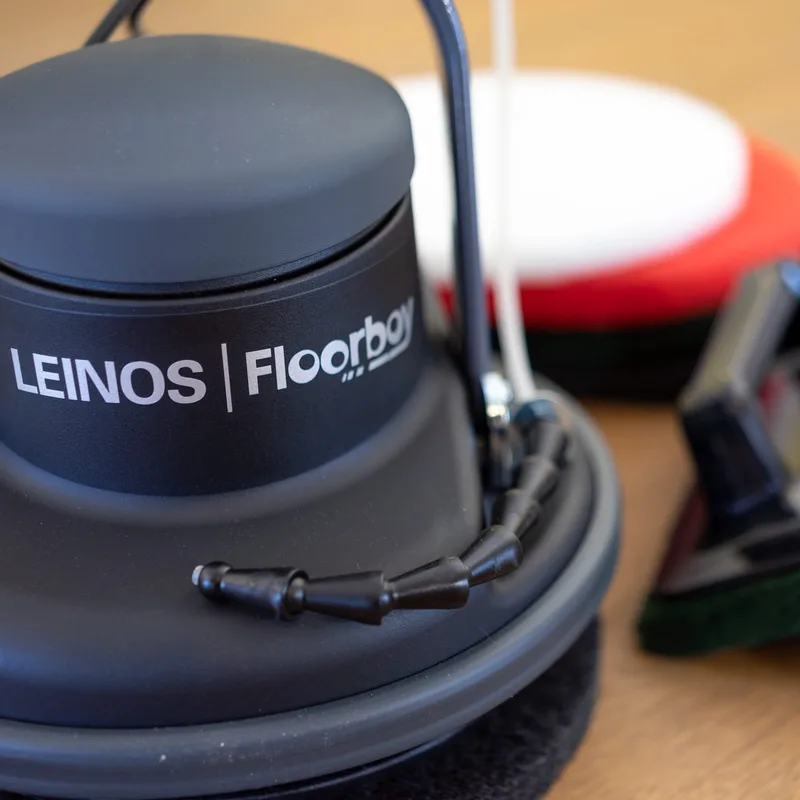
Pour the care oil. Working 10–30 sq ft at a time, tip LEINOS Oil Refurbisher 285 straight onto the floor — a litre washes roughly 55–110 sq ft, and the heavier end goes on a dirtier floor. Small sections keep the oil workable; do not flood the whole room. Oil Refurbisher 285
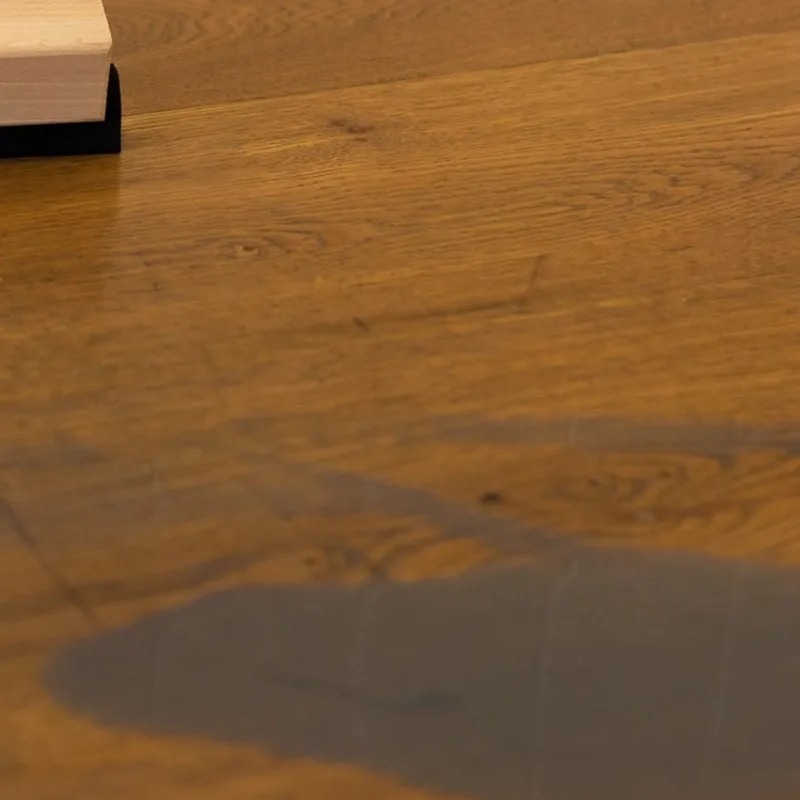
Work the oil in. Fit a black pad and massage the oil across the section until it darkens — that colour is the dirt leaving the old oil-wax layer. On soft or sensitive timber use the green pad instead.
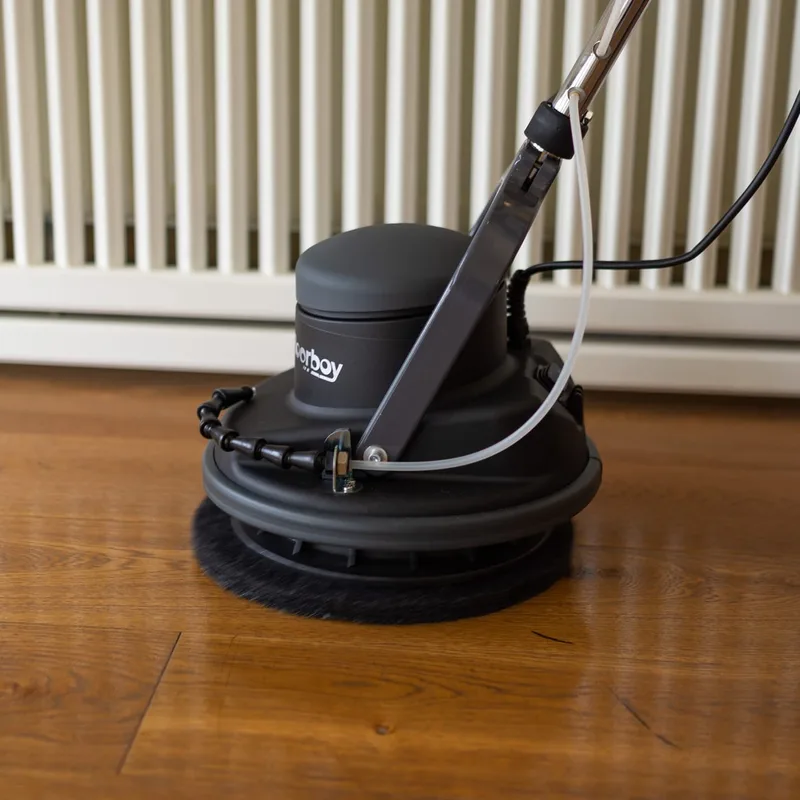
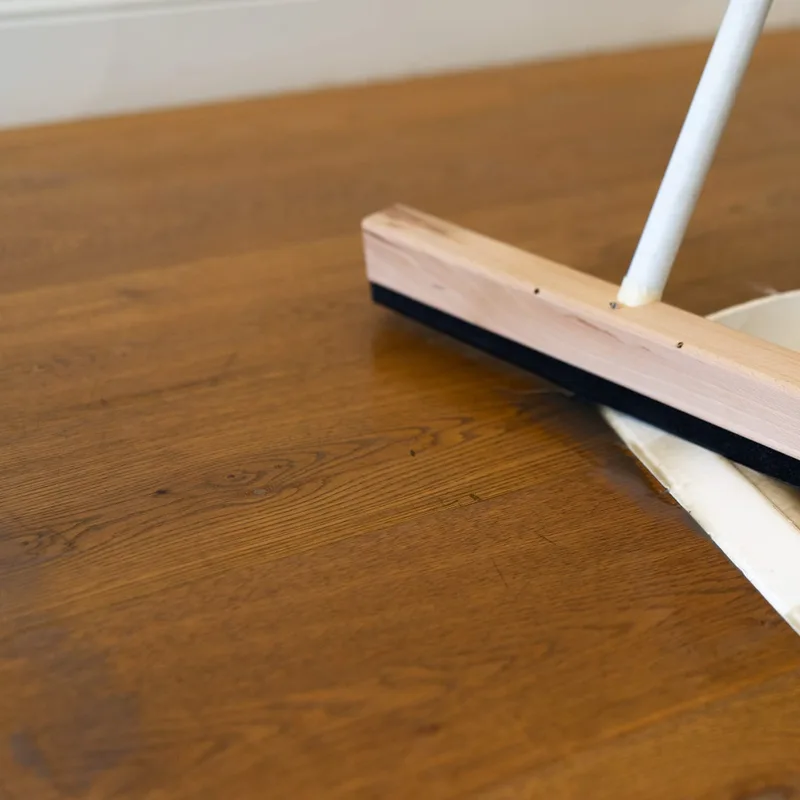
Move the dirty oil on. Pull the loosened slurry across with a squeegee and work it into the next section — LEINOS rates the same oil for two or three sections before it is spent. Then lift it with a dustpan and clear what is left with oil-absorbent cloths.
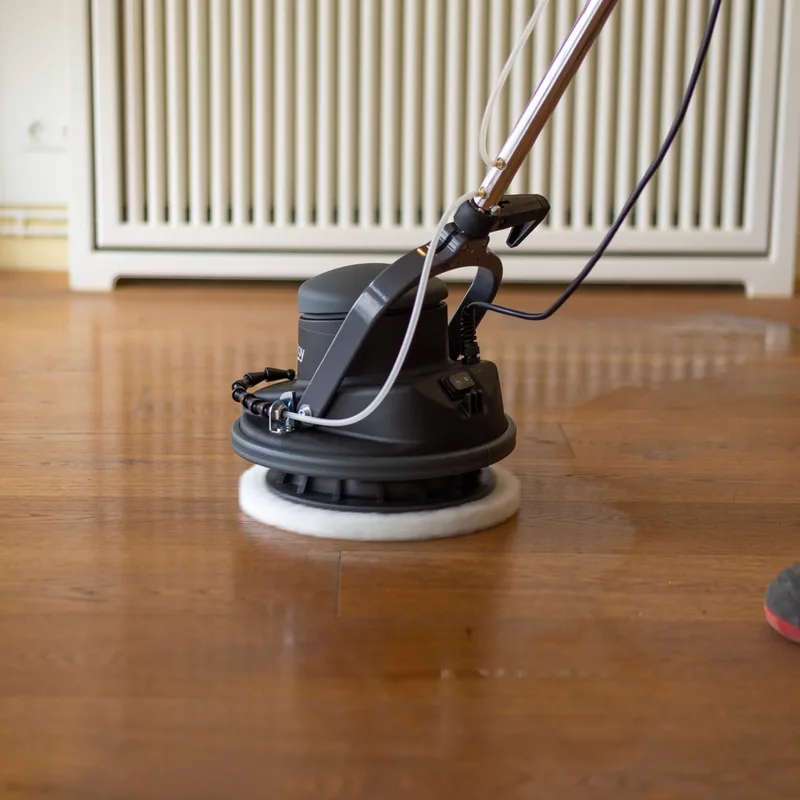
Polish the room dry. With the floor washed, go over it under a clean white pad until no oil stands anywhere. About 24 hours later, an optional drop-thin pass of care oil, padded in white, evens out the sheen. Dispose of oil-soaked pads and cloths in a sealed metal container or under water; they can self-ignite.
First time with Floorboy? Our technical team runs complimentary on-site walkthroughs for contractors — full application protocol, start to finish.
Where it works
Built for floors, indoors.
The machine is one part of a three-product routine — clean, renew, maintain.
The Care System
The machine cleans and renews. The maintenance coat goes on with a mop between washes.
Long-term Care
Extends the life of the finish over the years.
Substrate Fit
Floorboy works on — and what it doesn’t.
Suitable
Recommended substrates
- Oiled and waxed timber floors
- Cork flooring
- Stone, natural and cast stone, clay tile and klinker
- Ceramic tile
- Linoleum, PVC and vinyl
- Sealed and lacquered timber floors
Honest Limits
Where to use a different product
- Outdoors — the manufacturer builds this machine for building interiors.
- Stairs and steps — treads and edges are worked by hand. Never run the machine over a step.
- Floors needing structural repair — the oil wash renews a finish. It is not a sander, and it will not remove deep scratches or level a floor.
- Slopes steeper than 2° — manufacturer limit for safe handling.
Use With Care
Working safely with Floorboy
- Fill the tank with water-based cleaners only. Never pour oil or oil-bearing care products into the tank — the nozzles clog.
- Oil-soaked pads and cloths can self-ignite. Store them in a sealed metal container or under water before disposal.
- Test the pad on an inconspicuous area first — floor coverings must be checked for suitability before use.
- Built for building interiors. Never drive the machine over cables, and never leave it standing on a pad.
- Do not use on steps. Stairs and edges are hand work.
Specifications
The machine, in numbers.
Every figure below is the manufacturer’s own data for the Floorboy, taken from the operating manual.
- Power supply
- 230 V / 50 Hz
- Standard Indian mains — no transformer
- Motor
- 290 W
- Working width
- 33 cm
- Oscillations
- 1450 / min
- Eccentric drive, not rotary
- Weight
- 13 kg
- Cable length
- 7.5 m
- Sound pressure
- 63.5 dB(A)
- Handle vibration
- < 2.5 m/s²
- Under-furniture clearance
- 25 cm
In the Box
- The machine itself
- Drive plate
- Liquid tank — water-based cleaners only
- Seven colour-coded pads
- Three oil-absorbent cloths
LEINOS Floorboy
Not sure the method suits your floors? Take a machine for one project first — ask us and we will arrange it.
Consumables
What wears out.
The machine itself is built to outlast the floors it works on. These are the parts a project actually consumes.
- Pads
- Replace when compressed
- A pad pressed flat on one side stops working evenly and must be swapped — the manual is explicit about this.
- Oil-absorbent cloths
- Single use
- Used cloths go into a sealed metal container or under water. They can self-ignite.
- Brush ring
- Optional attachment
- For textured hard floors where a pad cannot reach into the joints.
- Care oil and soap
- Per project
- Oil Refurbisher 285 for the wash, Vegetable Soap 930 for preparation and routine cleaning.
Got Questions?
Frequently Asked
Quick answers on formulation, application and Indian-climate suitability. Pulled from our full FAQ and TDS library.
- For a floor that is dirty and dull, yes — that is exactly what the oil wash is for, and it is the reason the method exists. For a floor with deep scratches, water damage or an uneven surface, no. Those need repair first. The honest test: if the timber under the dirt is sound, the oil wash will bring it back.
- No. The machine runs on 230 V at 50 Hz, which is standard Indian mains. It plugs in as it is.
- Never. The tank is for water-based cleaners only — oil clogs the nozzles permanently, and the warning is printed on the tank itself. Care oil is poured directly onto the floor and worked in with a pad.
- It measures 63.5 dB(A), which is conversation level. Because the disc oscillates rather than spins, it is also far less aggressive to handle than a rotary machine — you guide it rather than fight it.
- Yes. We offer the Floorboy for rental as well as for sale, through our dealers and directly. Talk to us about the machine and the project, and we will tell you which makes sense.
- Hand work. The machine is not used on steps, and its disc cannot reach tight edges. Do those with a hand pad holder and the same care oil — the finish matches.
- The full oil wash only when the floor asks for it — typically years apart, driven by traffic rather than the calendar. Between washes, a floor stays healthy on routine cleaning with Vegetable Soap 930, followed by Floor Milk 920 after every second to fourth clean. Floor Milk goes into the mop water, not through the machine, and on a newly finished floor the first pass waits at least four weeks.
For Architects & Specifiers
Downloads
Technical and safety documents — citable in project specifications.
Need a Recommendation?
Talk to LEINOS
Four ways to reach our India team — pick the one that fits how you work.
For Trade & Specifiers
For Architects, Designers & Contractors
Full TDS / SDS library, specification support and trade pricing — direct from the manufacturer.
Documents
TDS / SDS
Per-product datasheets and safety sheets, downloadable in English.
Specification
NCS Match
Custom colour briefs and material samples mixed at our Delhi lab.
Trade
Direct Pricing
Volume tiers, project quoting and stock allocation through our trade desk.
Written by the LEINOS India technical team, in collaboration with
Reincke Naturfarben R&D, Lower Saxony.
Last updated
Buy or Rent
Two ways to get a Floorboy.
Both start with the same conversation. Tell us about the floors and the project, and we will point you at your nearest dealer or supply you directly.
Buy the machine
For contractors and dealers who work oiled floors regularly, and for anyone looking after a large floor themselves. It arrives complete — drive plate, tank, seven pads and cloths.
Rent for a project
One floor, one job. Take a machine for the work, watch the oil wash bring a tired floor back, and decide about owning one afterwards.