

2.5L
Covers
70–110 sq ft
2 coats, absorbent mineral
Best For
Single feature wall, kitchen, damp room, or accent area.
LIME PAINT · ART. 665
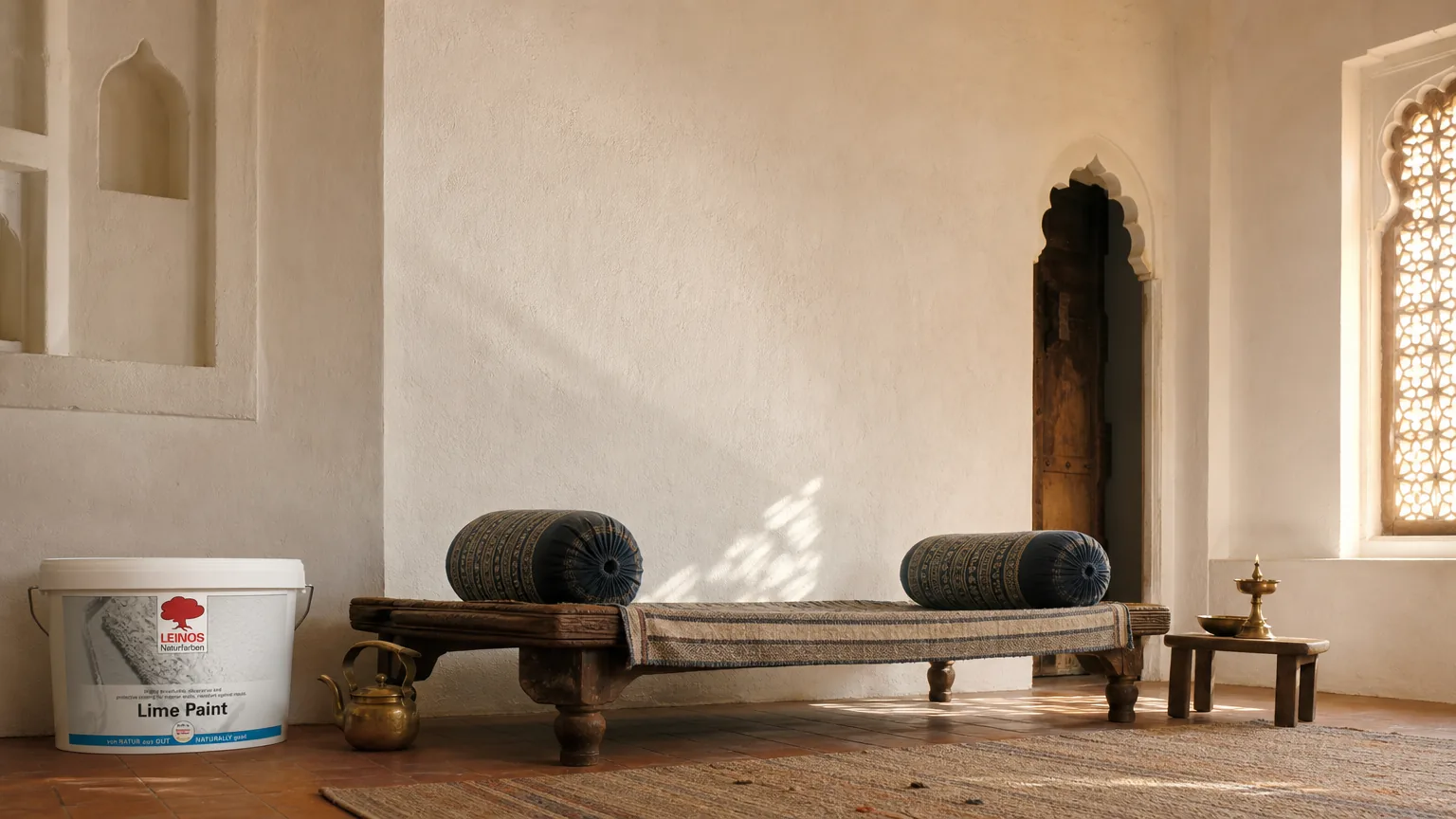
LEINOS 665 — a matured lime-putty mineral wall paint, what the English-speaking market calls limewash, for heritage and modern interiors. Highly vapour-permeable (Sd ≈ 0.01); its high alkaline pH (≈13) makes the surface antibacterial and well suited to mould prevention. Solvent-free, VOC 0 g/l. Made in Germany by Reincke Naturfarben since 1985.
Mechanism & Use
Matured lime putty cures by reaction with atmospheric CO₂ — the paint hardens into a microcrystalline calcium-carbonate surface chemically continuous with the mineral wall beneath. The wall keeps breathing, and the high alkaline pH makes the surface antibacterial and well suited to mould prevention and remediation.
Matured lime putty (fat lime) is calcium hydroxide in water. As the paint dries, atmospheric CO₂ converts it into microcrystalline calcium carbonate — the same mineral the wall’s lime plaster is built from. Chemical continuity, not adhesion.
The cured lime film stays open-pore. Water vapour passes freely in both directions — monsoon humidity absorbed, winter dryness released, so condensation can leave rather than sit behind a film. No bubble or peel under steam.
Fresh and curing lime sits at pH approximately 13. The manufacturer states this high alkalinity makes the paint antibacterial and well suited to mould prevention and remediation — the protection is the lime’s own high pH. (Not a tested antimicrobial specification; we make no such claim.)
It is suitable for damp rooms. Where monsoon humidity and condensation make conventional emulsion bubble, mould, or peel within a season, the vapour-permeable lime surface handles the moisture. Avoid permanently wet zones — shower stalls and standing water.
Where It Lives
Rajasthani heritage haveli interiors
Jaipur, Udaipur, Jodhpur, Bikaner heritage residences and hotels. Original lime-plastered walls, often two or three centuries old. 665 keeps the heritage breathability alive — the paint cures into the wall’s own mineral matrix, no plastic film, no seasonal repaint cycles.
Lucknow nawabi residences + Delhi heritage interiors
Original lime plaster and Surkhi mortar walls of Awadhi and Mughal-era buildings. Conservation-grade lime paint specification, compatible with traditional substrates that reject modern emulsion films.
Coastal-humidity damp rooms and kitchens
Mumbai, Goa, Kochi, Chennai. Where standard interior emulsion bubbles and peels under steam, monsoon humidity, and condensation. Lime paint’s vapour-permeable, high-pH antibacterial chemistry handles the wall stress that defeats acrylic coatings. Avoid permanently wet shower zones and standing water.
Wellness studios, ayurvedic spas, yoga shalas
Health-led interior projects where solvent-free, breathable, mineral coatings are part of the air-quality story. No off-gassing and no plastic film between occupant and substrate.
Modern cement-plastered residential walls
Bangalore, Pune, Mumbai apartments and villas. Standard cement plaster (cured ≥3 weeks) over 622 primer. 665 reads as a soft matt heritage finish — the texture and depth conventional emulsion cannot produce.
Restored heritage hotels, museums, conservation interiors
Where the specification requires traditional materials with documented German manufacturing rigour. LEINOS as the bridge between Indian heritage craft and EU compliance documentation.
Compliance · Natural Ingredients · EU
Three anchors that let architects specify 665 for heritage and humid-room projects without disclaimers.
EU Compliance
EU limit 30 g/l · Cat. a interior matt walls (water-borne) · Directive 2004/42/EC.
Institutional Pledge
Reincke Naturfarben — full-ingredient-disclosure pledge for natural building products.
The TDS and SDS are downloadable below. Where you need a written specification packet — full ingredient declaration, VOC compliance letter for an architect’s submittal, lime-paint compatibility statement for a heritage conservation project, or a humid-room performance brief for a hotel specification — it is available to architects and contractors on request. Use Get Expert Advice above.
Read The Full TDSStep by Step
Substrate inspection — wall must be dry, sound, absorbent, clean, free from efflorescence. Remove sinter skin mechanically from new plaster. New base plasters at least 2-3 weeks old before painting. Test for water-soluble discolouring substances by misting a small area; if brown or yellow streaks bleed through, seal with an appropriate insulating primer first. Pre-wet strongly absorbent old lime paint coats with a damp sponge.
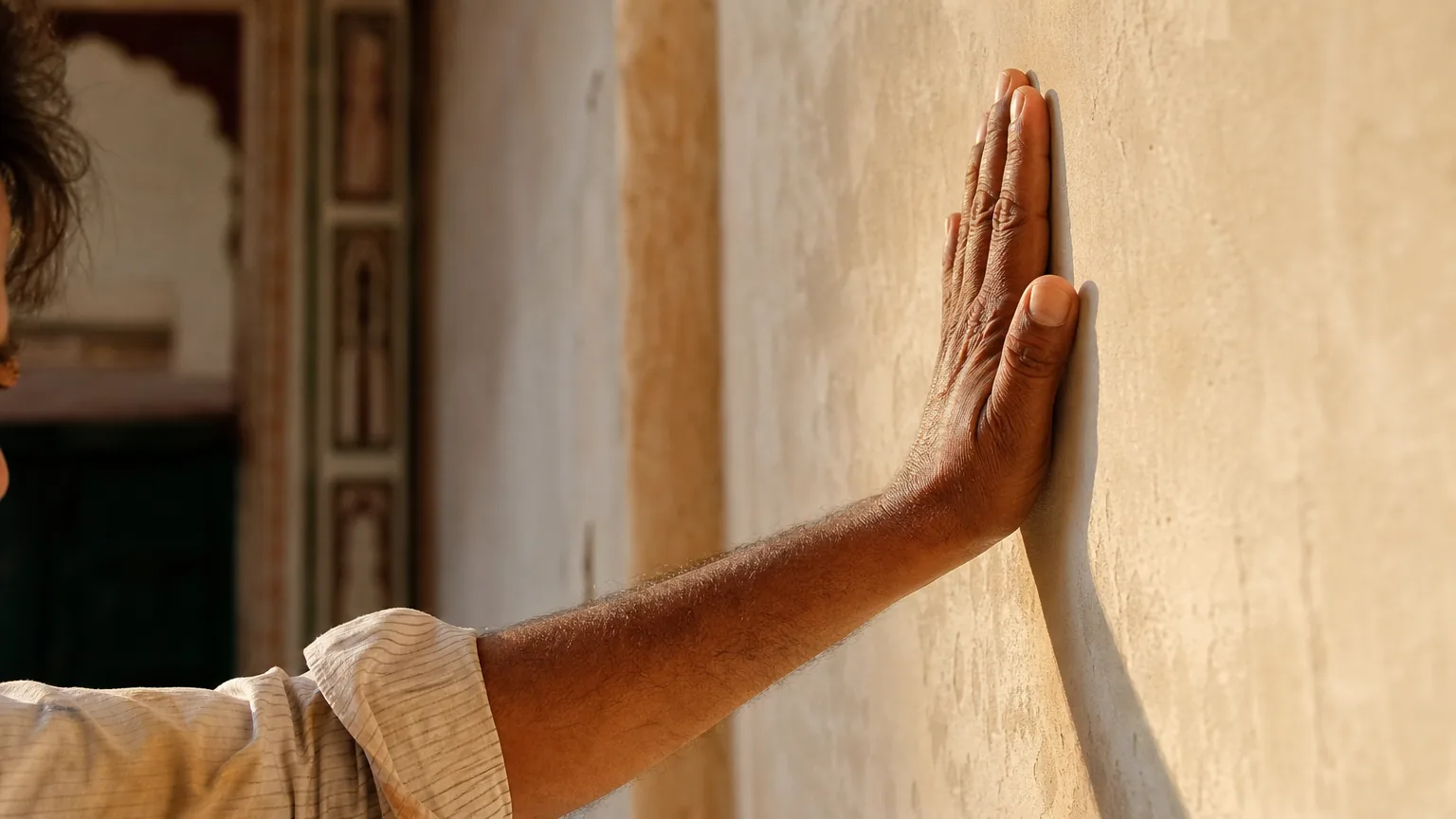
Prime chalking and highly absorbent surfaces with LEINOS 622 Mineral Plaster Primer. For sound, evenly absorbent lime or cement plaster older than 3 weeks, primer is optional — apply 665 directly. For chalking lime walls, very porous cement plaster, or patched repair zones with mixed substrate ages, 622 first evens the absorbency canvas.
Stir thoroughly + dilute with up to 20% water. Pour into an open painter’s tray, add up to 20% water, mix to uniform milky consistency. ALL coats are diluted at the same ratio (TDS — the product is NOT ready-to-use). In hot conditions or on very absorbent substrates, additional water may be needed. Continue stirring during application to keep lime particles suspended.
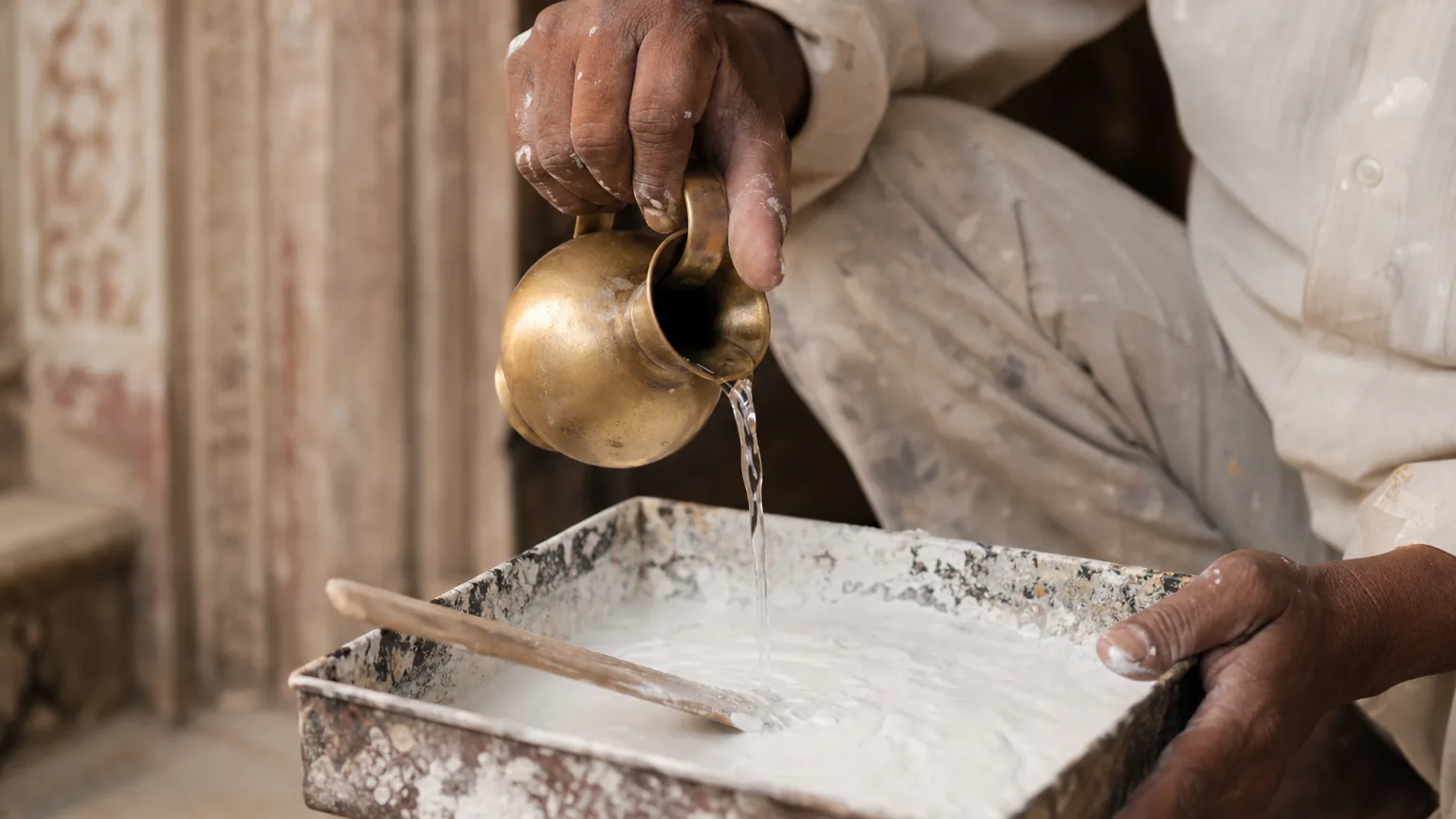
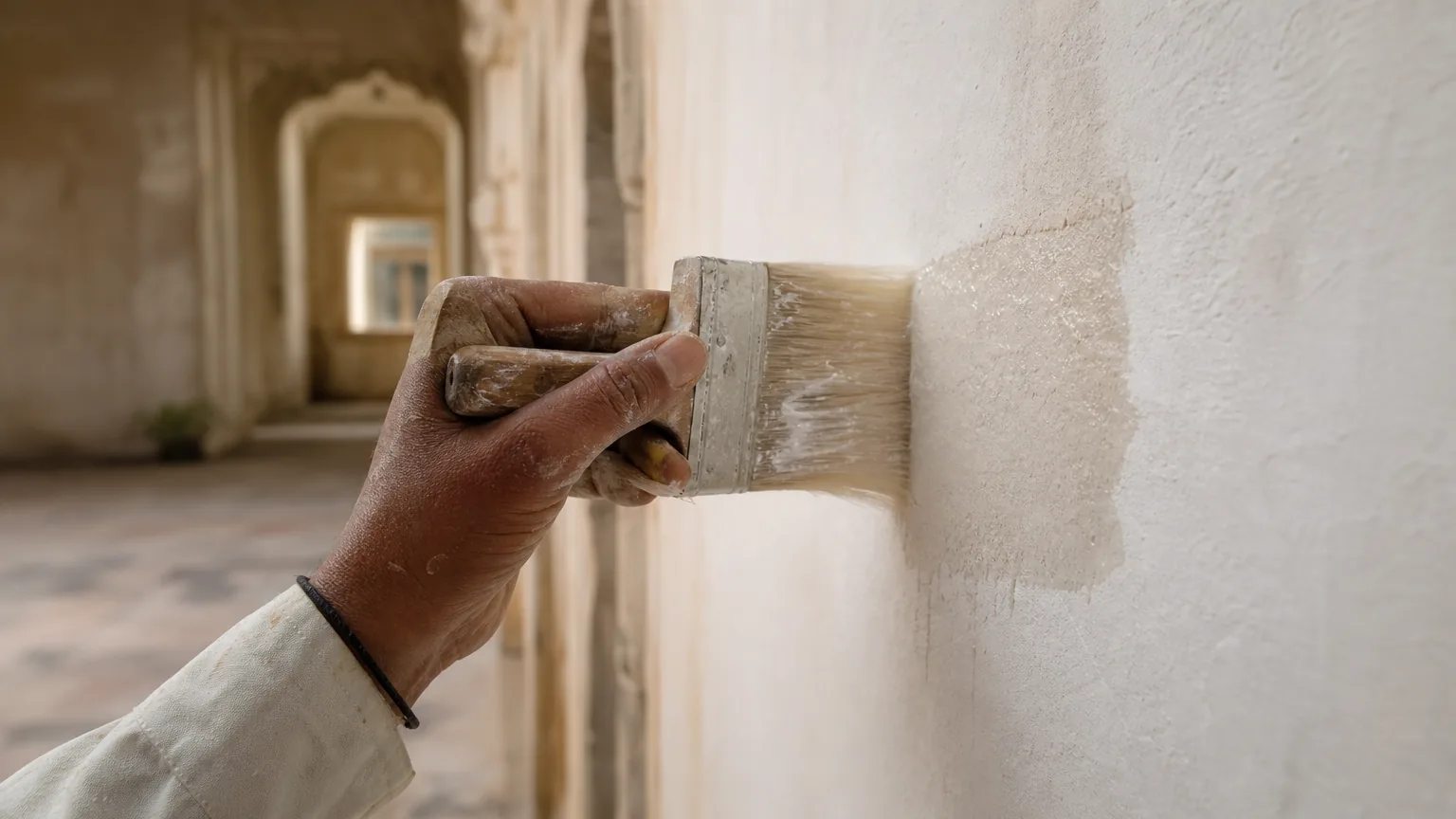
First coat — apply evenly with a brush or wide masonry brush. Work in all directions so brush strokes overlap and the lime paint penetrates uniformly. Avoid running and pooling on smoother patches. Full hiding power is achieved only after drying — the wet first coat looks translucent; this is normal.
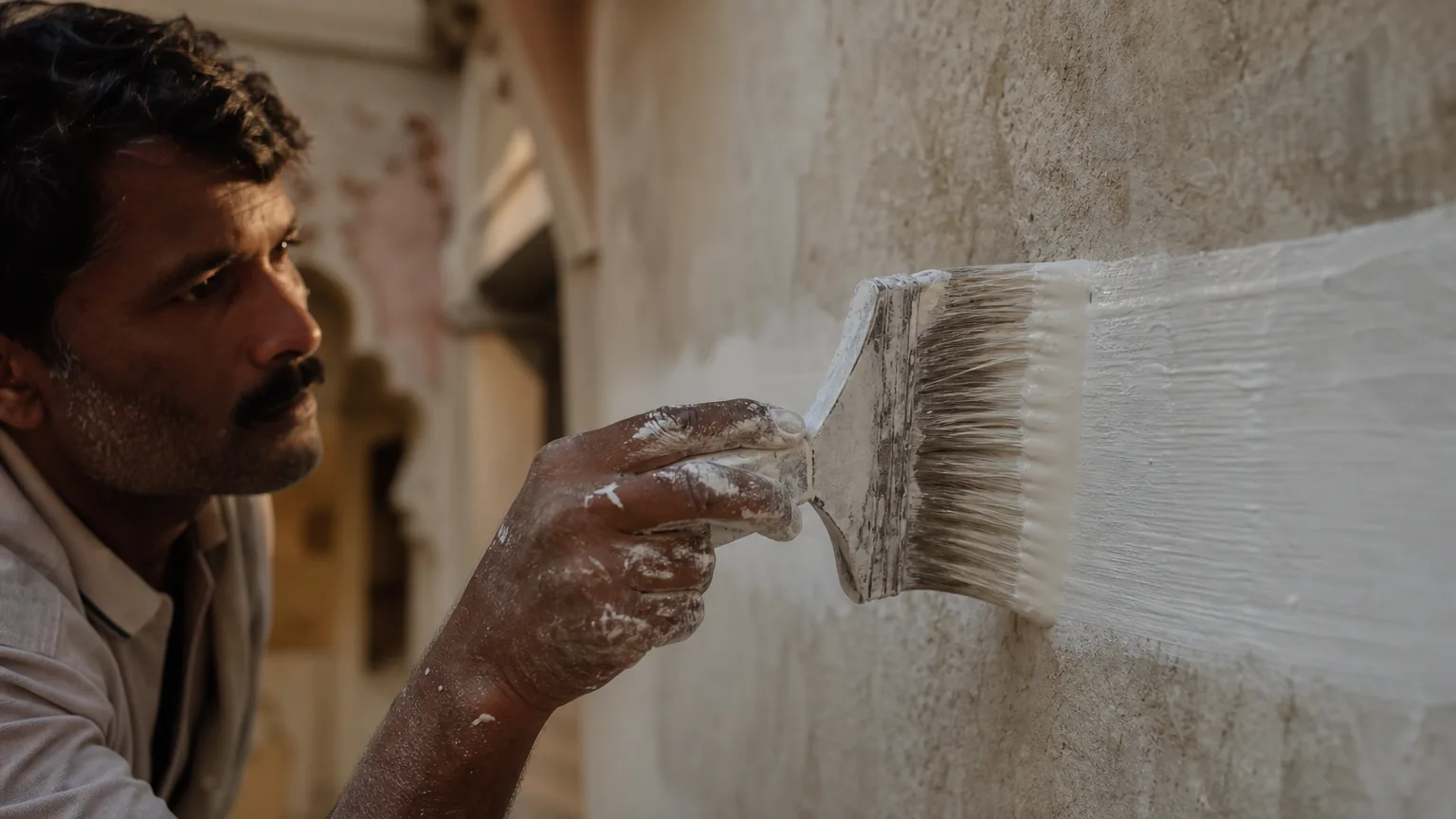
Second coat after 24 hours at 20 °C / 50% RH (longer at higher humidity). Apply the same way as the first — brush work in all directions, full 20% water dilution. If the first coat has dried highly absorbent, pre-wet the surface with a damp sponge before the second coat to prevent patching. Brings the lime to its uniform matt white opacity.
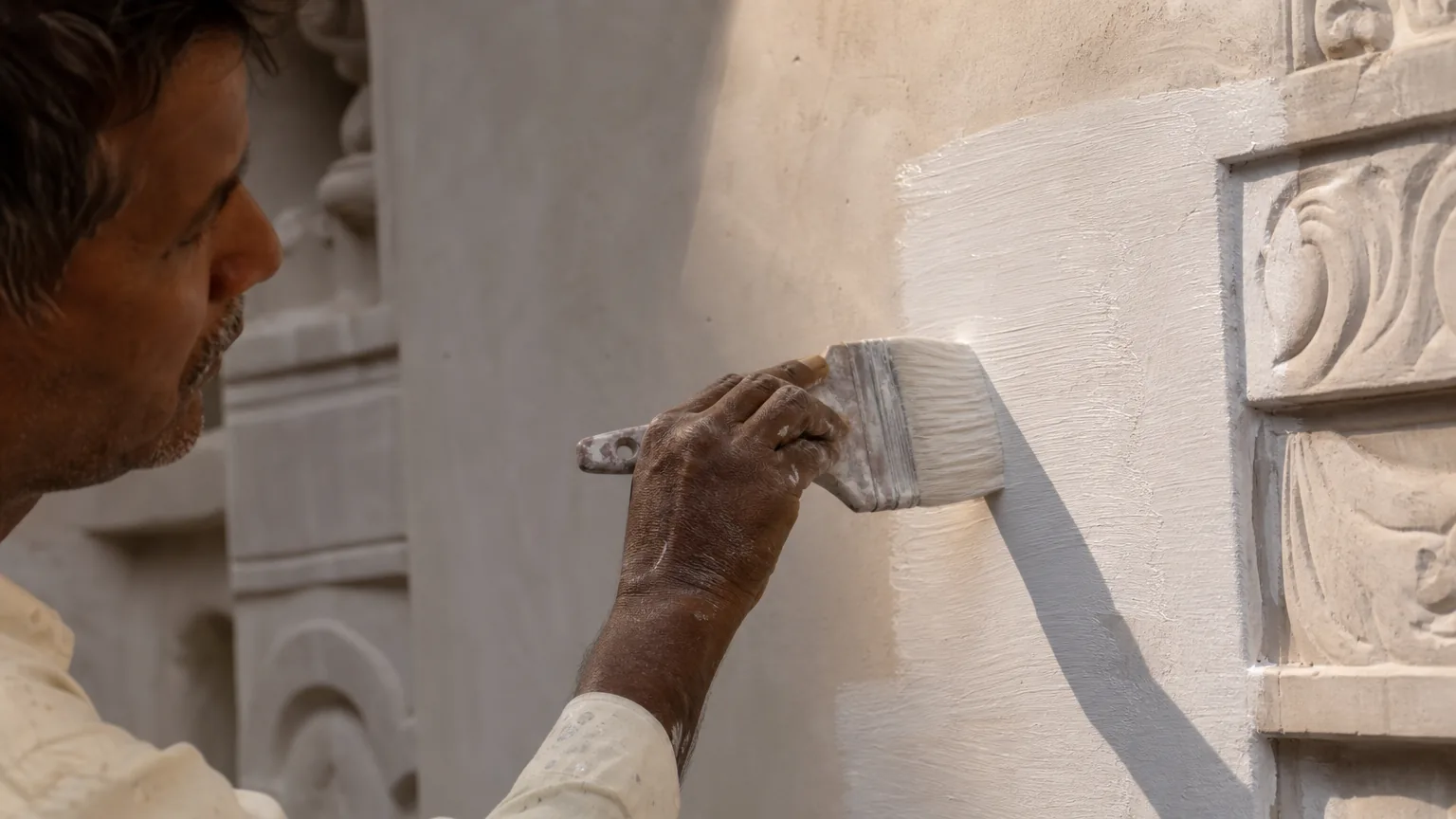
Optional third coat for variable substrates + full cure. Heritage walls with mixed-history patches or very porous lime plasters may need a third coat for uniform colour. The lime film cures fully over 4-6 weeks through atmospheric carbonation — chalky depth and durability develop over this window, not on day two.
Application Conditions
Coats & Recoating
Cleaning & Storage
Airless Spray
Nozzle: 0.025"–0.031". Gun filter: none. Main filter: Mesh #30. Pressure: 150–180 bar. Spray angle: 50°.
First time with Lime Paint? Our technical team runs complimentary on-site walkthroughs for contractors — full application protocol, start to finish.
System & Substrates
Two coats of 665 over sound mineral plaster — or 622 primer first if the substrate is chalking or highly absorbent. Lime paint behaves as a chemically continuous surface, not a coating film.
The Coating System
Primer plus topcoat — the full chain.
Tinting On Site
Mix your own custom shade at the site with LEINOS pigments.
Substrate Fit
Suitable
Honest Limits
Use With Care
Coverage & Pack Sizes
Coverage on the card assumes one coat. Two coats are the canonical specification. Plan an extra coat for heritage walls with mixed-history patches or very porous lime plasters.
2.5L
Covers
70–110 sq ft
2 coats, absorbent mineral
Best For
Single feature wall, kitchen, damp room, or accent area.
10L
Covers
270–430 sq ft
2 coats, absorbent mineral
Best For
Full room interior, multi-room project, heritage wall conservation work.
Enter your area to see how much material — and the most efficient pack mix — you’ll need for 2 coats.
Full calculatorDocumented Applications
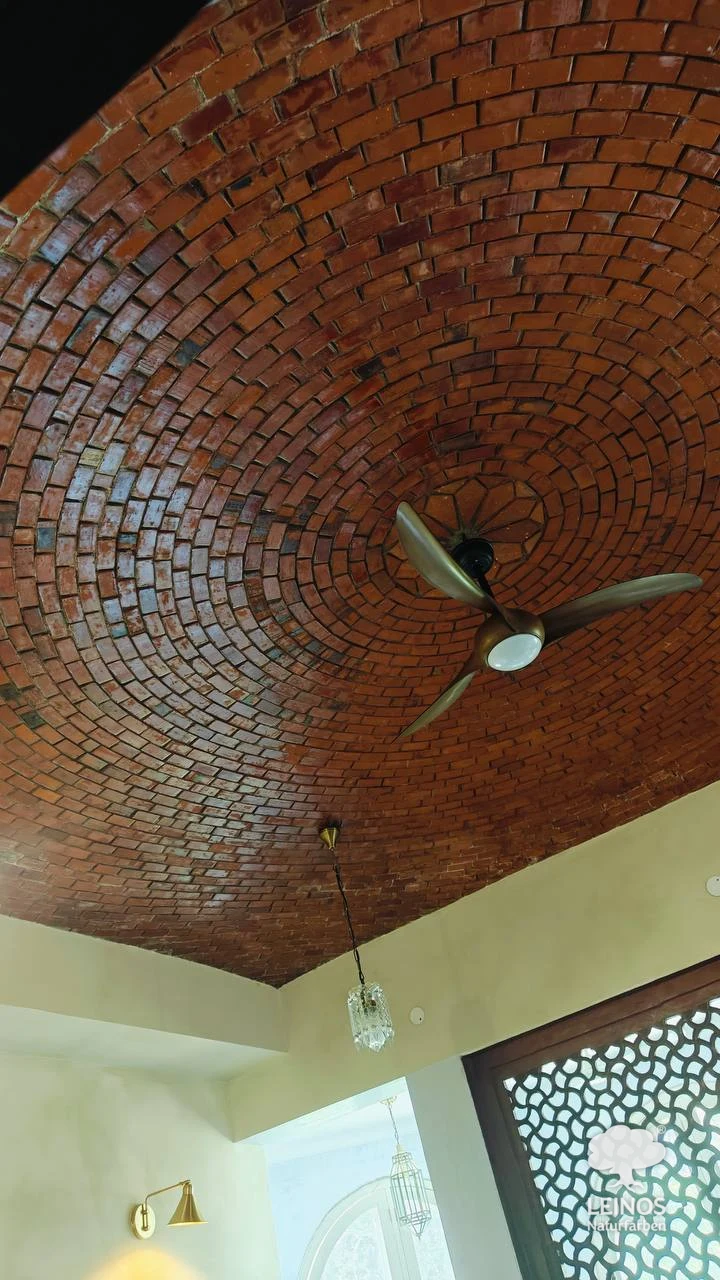
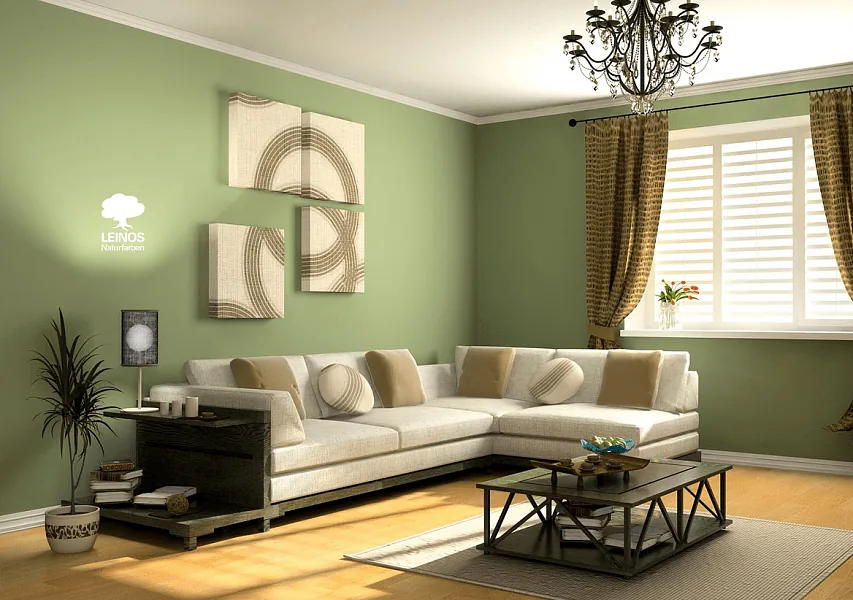
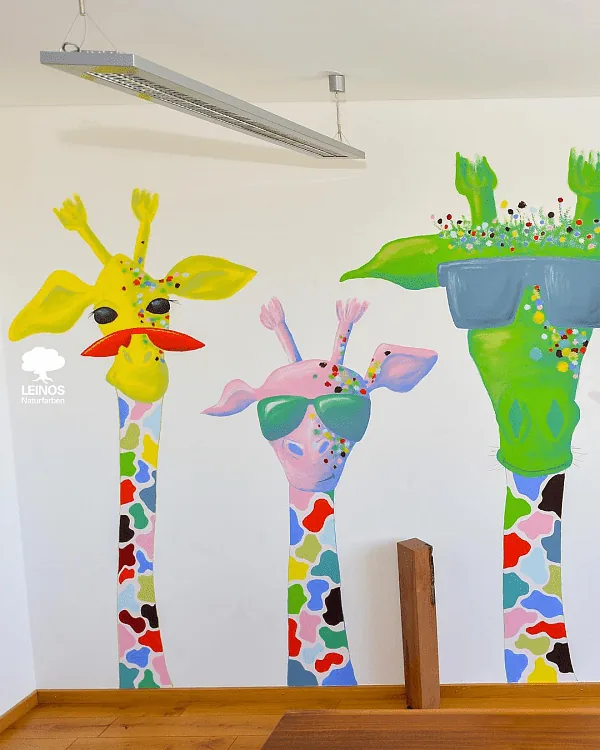
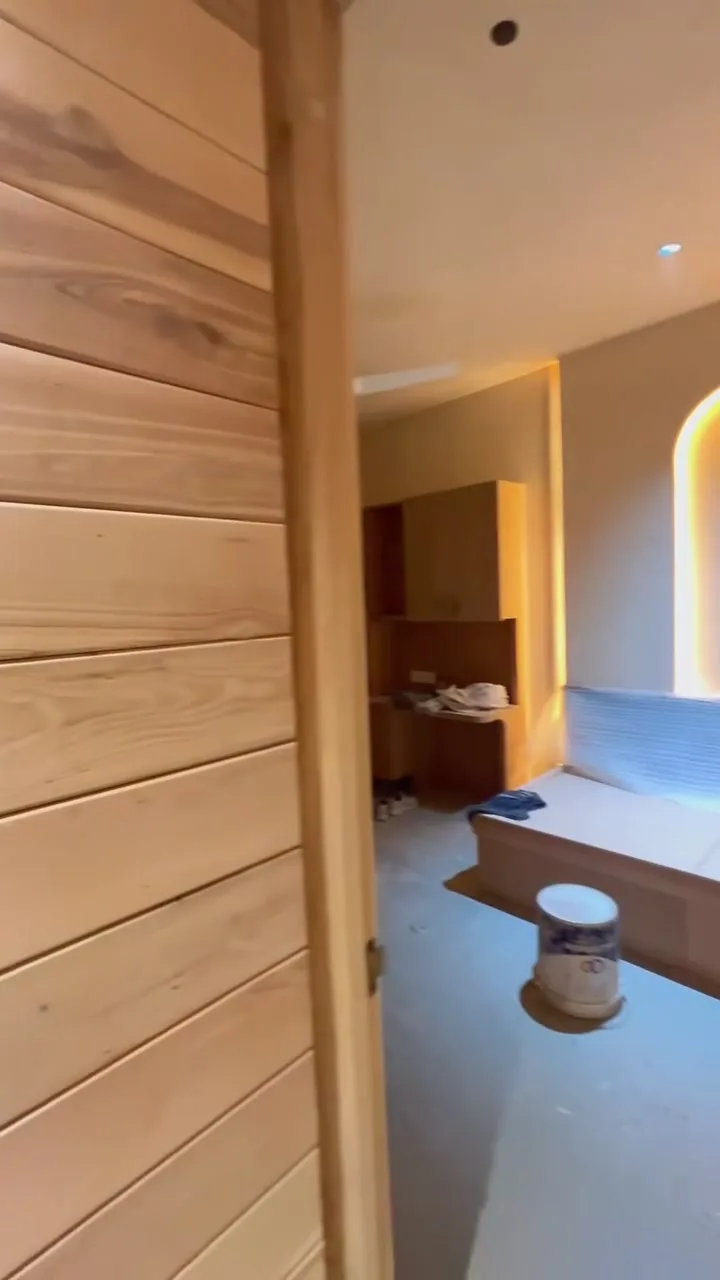
Recent projects finished with Lime Paint. Factual captions, real footage — no staged photography.
Full Declaration
Every ingredient declared on the label. The Trust Hub explains what each one does and the standards behind it.
Matured Lime Putty (Fat Lime)
Calcium-hydroxide creamy paste matured under water — the primary binder (in India: fat lime, the category IS 712 calls Class C). Cures by atmospheric CO₂ reaction into microcrystalline calcium carbonate. CAS 1305-62-0, 20–30% by mass per SDS. The chemistry that defines lime paint.
Chalk + Marble Powder
Calcium carbonate fillers — provide body, opacity, and the chalky matt depth characteristic of cured lime surfaces. Inert mineral fillers, no further reaction during cure.
Titanium Dioxide
Mineral white pigment for opacity and whiteness. CAS 13463-67-7, 1–10% by mass. EU classifies dust/respirable form as H351; the cured paint film is safe and not classified hazardous. EUH211 spray-droplet warning applies during airless application only.
Cellulose Ether
Plant-derived rheology stabiliser — keeps the lime suspension uniform in the pail. Burns off during carbonation; not present in the final mineral film.
Got Questions?
Quick answers on formulation, application and Indian-climate suitability. Pulled from our full FAQ and TDS library.
For Architects & Specifiers
Technical and safety documents — citable in project specifications.
Need a Recommendation?
Four ways to reach our India team — pick the one that fits how you work.
For Trade & Specifiers
Full TDS / SDS library, specification support and trade pricing — direct from the manufacturer.
Documents
TDS / SDS
Per-product datasheets and safety sheets, downloadable in English.
Specification
NCS Match
Custom colour briefs and material samples mixed at our Delhi lab.
Trade
Direct Pricing
Volume tiers, project quoting and stock allocation through our trade desk.
Written by the LEINOS India technical team, in collaboration with
Reincke Naturfarben R&D, Lower Saxony.
Last updated
Want to represent LEINOS in your city?
Become a Dealer