

2.5L
Covers
80–190 sq ft
1 coat, absorbent mineral
Best For
Small room repaint, sample area, accent wall, heritage spot-prime.
MINERAL PLASTER PRIMER · ART. 622
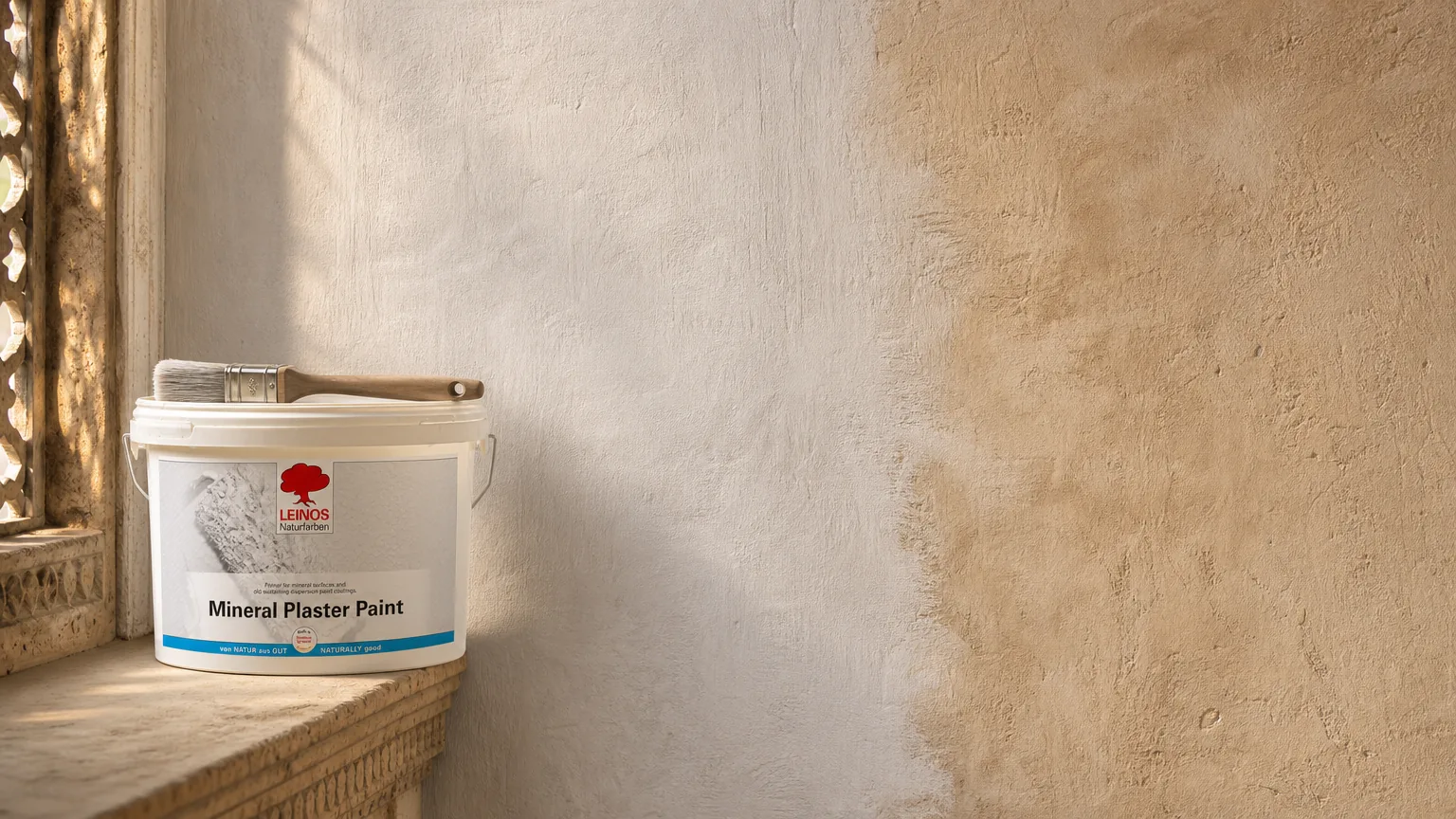
LEINOS 622 — water-based potassium-silicate primer for interior lime, cement, clay, brick, aerated-concrete, and gypsum-board walls. Controls absorbency. Stays vapour-permeable. The prep coat under LEINOS lime, silicate, and natural mineral paints.
Mechanism & Use
Potassium silicate binder fuses with mineral substrates — evens absorbency without sealing the wall. The topcoat lays down uniformly. The wall keeps breathing.
Potassium silicate (water-glass) reacts chemically with the silicates already in the lime plaster, cement, clay, or brick — a process called silicification. This is not adhesion; it is chemical bonding. The primer becomes part of the wall’s own mineral matrix, not a layer on top of it.
Variable suction across a freshly plastered wall is the contractor pain that produces patchy, blotchy lime and silicate paint finishes. 622 normalises absorption — the topcoat lays down at consistent thickness across the surface, colour reads uniformly, second-coat correction work disappears.
Open-pore finish keeps the wall breathing — moisture vapour passes through freely, which matters under monsoon humidity behind plaster. Alkali-resistant chemistry survives the high-pH kick of fresh lime topcoats (lime paint pH 12+), so the primer does not chalk, blister, or strip when the topcoat goes on wet.
Once dry, the primer leaves a fine micro-textured surface — a mechanical key the topcoat grips into as well as the chemical bond. Lime paint, silicate paint, natural resin emulsion, and clay paint all gain durable adhesion on the primed surface.
Where It Lives
Lime-plastered heritage haveli walls
Rajasthani havelis, Delhi heritage interiors, Lucknow nawabi residences. Primer locks the original lime plaster, evens century-old patchwork repairs, accepts traditional lime-wash or modern lime-paint topcoats without sealing the heritage breathability.
Modern cement-plastered residential walls
Bangalore + Mumbai + Pune apartments and villas. Standard cement plaster (rough or smooth-finished) absorbs paint unevenly; 622 normalises for flawless lime emulsion or natural-resin paint finishes.
Traditional clay-rendered walls
Village restoration, eco-architecture projects, contemporary mud-rendered partitions. Clay substrates are highly absorbent and variable; 622 primes without sealing the natural moisture exchange of clay walls.
Gypsum board and fermacell partitions
Modern apartment dry-wall installations. Highly and variably absorbent across the surface (joint compound vs face paper); 622 evens absorption for clean colour reads on flat matt emulsion paints.
Aerated concrete and brick — over-painted or fresh
AAC block walls (tier-2 city construction), exposed brick interiors being plastered + painted, old strong-binding dispersion coatings being prepped for mineral overpaint per India TDS specification.
Wellness studios, yoga shalas, ayurveda spas
Health-conscious interiors where vapour-permeable, solvent-free mineral coatings are part of the air-quality story. 622 keeps the wall breathing under the lime or silicate topcoat — no plastic film between the occupant and the substrate.
Compliance · Natural Ingredients · EU
Three anchors that let architects specify 622 for heritage haveli and modern mineral wall systems without disclaimers.
EU Compliance
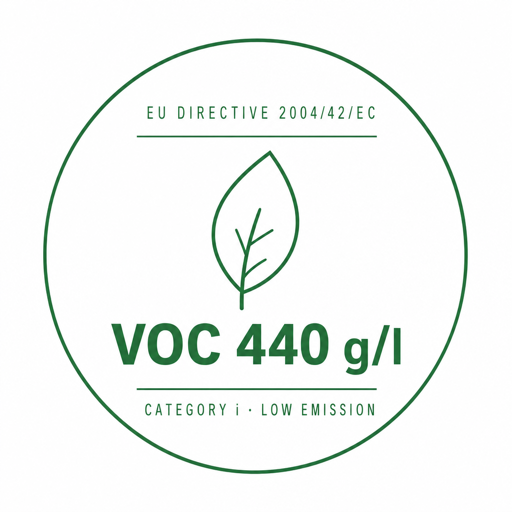
EU limit 30 g/l · Cat. a interior matt walls (water-borne) · Directive 2004/42/EC.
Institutional Pledge
Reincke Naturfarben — full-ingredient-disclosure pledge for natural building products.
The TDS is downloadable below. Where you need a written specification packet — full ingredient declaration, VOC compliance letter for an architect’s submittal, lime-paint or silicate-paint compatibility statement for a heritage project — it is available to architects and contractors on request. Use Get Expert Advice above.
Read The Full TDSStep by Step
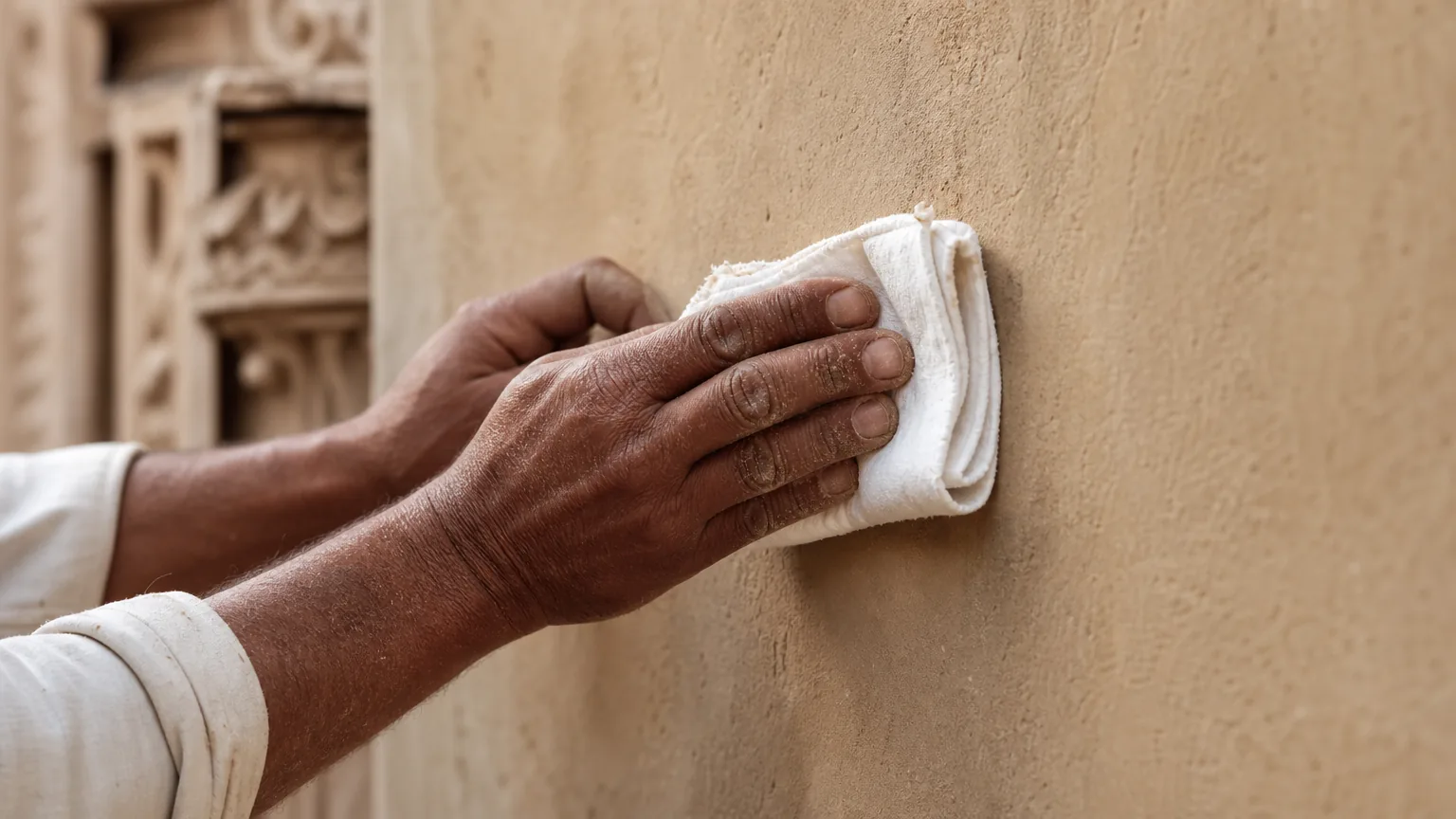
Substrate preparation — wall must be dry, clean, firm, and free from dust, grease, and loose material. Sweep, vacuum, and damp-wipe the surface. Cracks and large defects must be filled with mineral filler (LEINOS 684 interior smoothing filler) and allowed to dry per the filler’s TDS. Old loose paint or chalking dispersion coatings must be scrubbed back or stripped — 622 will bond to old strong-binding dispersion coatings, but not to flaking or powdering layers.
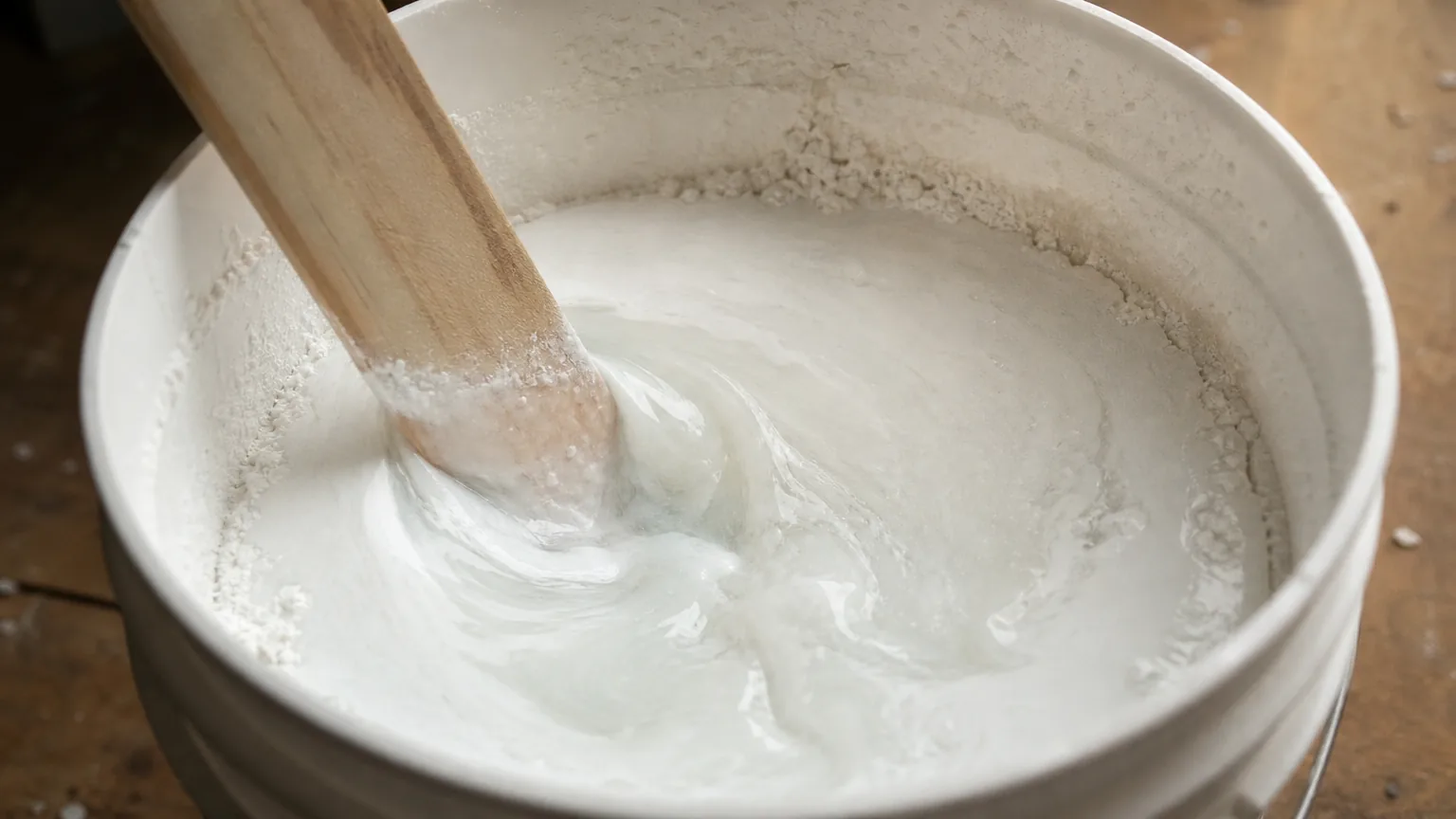
Stir thoroughly — stir the pail until any settled mineral solids are fully dispersed. Do not thin under normal conditions. On extremely absorbent substrates (very porous lime plaster, fresh clay rendering) the first pass may be thinned 5–10% with water for deeper penetration; subsequent passes go on at full strength. Apply at ambient and surface temperatures above 5 °C; protect from frost during application and the full drying window.
First coat — apply evenly with masonry brush, lambswool roller, or airless spray equipment. On heritage haveli walls and old lime plaster, brush is the canonical tool — it works the primer into the surface texture. On flat modern walls (gypsum board, smooth cement plaster), roller is fastest. For large commercial surfaces, airless spray covers ground quickly with even film build. Avoid puddles on lower-absorbency areas — surplus primer will not penetrate and leaves a sticky surface.
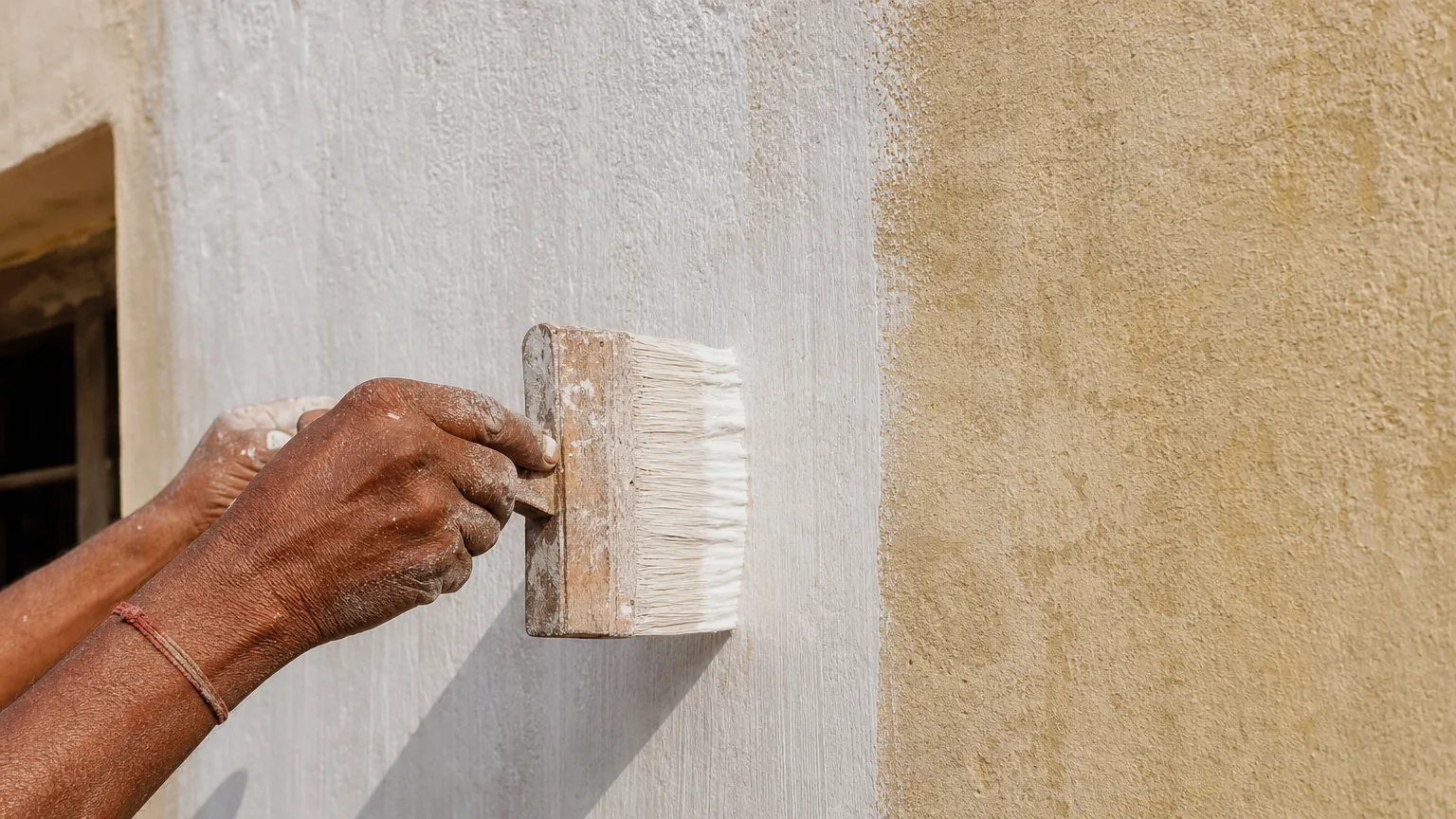
Wipe back any pooled primer — where the substrate has low absorbency (over-trowelled patches, smoothed corners, dense aerated-concrete blocks), the primer will pool on the surface rather than penetrate. After 15–20 minutes, brush or roll the pooled area back into the rest of the wall — distribute the surplus onto adjacent still-absorbent zones. No primer film must remain pooled on the surface after this step.
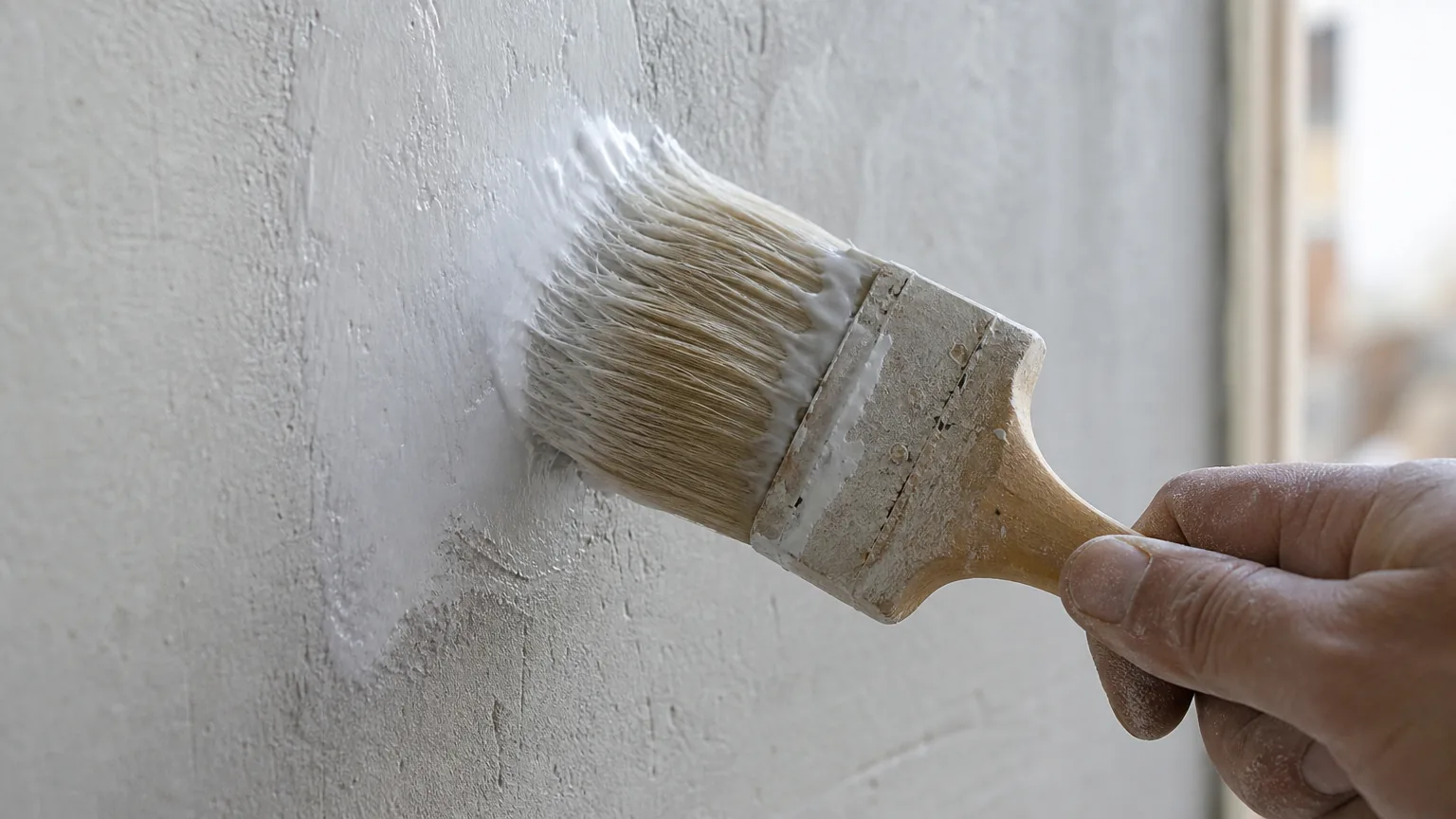
Touch dry 6–12 hours · recoatable 12 hours — touch dry after approximately 6–12 hours depending on temperature, humidity, ventilation, and substrate absorbency. Recoatable after approximately 12 hours. For most interior walls one coat is sufficient — the silicate has fused with the substrate and the surface reads uniformly absorbent. On highly variable substrates (heritage walls with multiple plaster patches, old painted walls with mixed history) a second thin coat after the first dries delivers the final uniform absorbency canvas.
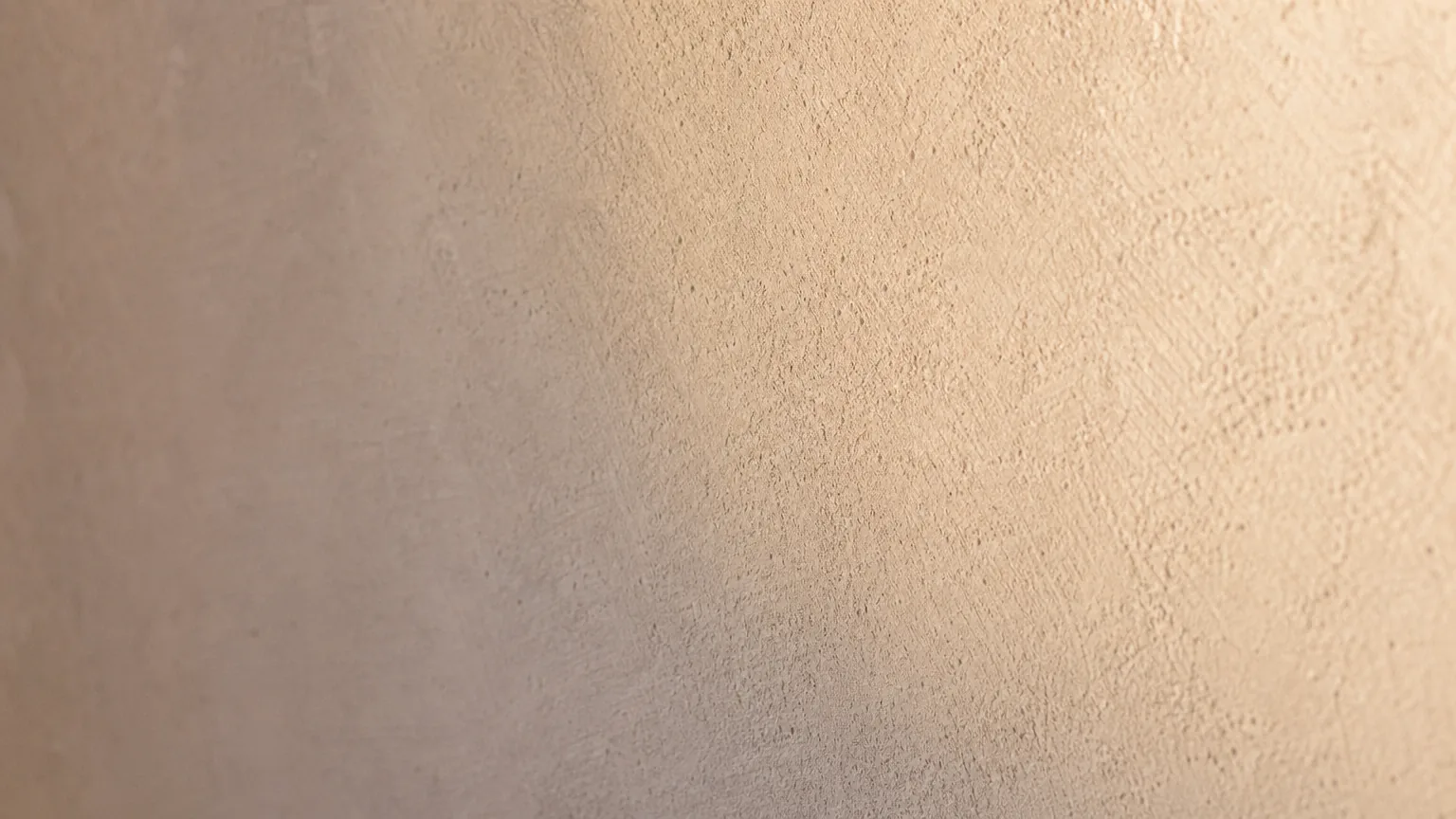
Topcoat application — apply the chosen mineral topcoat per its own TDS once the primer is fully recoatable (12+ hours). Canonical topcoat partners: Lime Paint 665 (matt heritage lime finish), Natural Resin Emulsion Paint 660 (modern interior emulsion), Interior White Paint 650 (high-opacity matt emulsion). Each topcoat carries its own coat count and full-cure window — the primer is now a uniform, breathable, alkali-resistant substrate that lets the topcoat behave as intended.
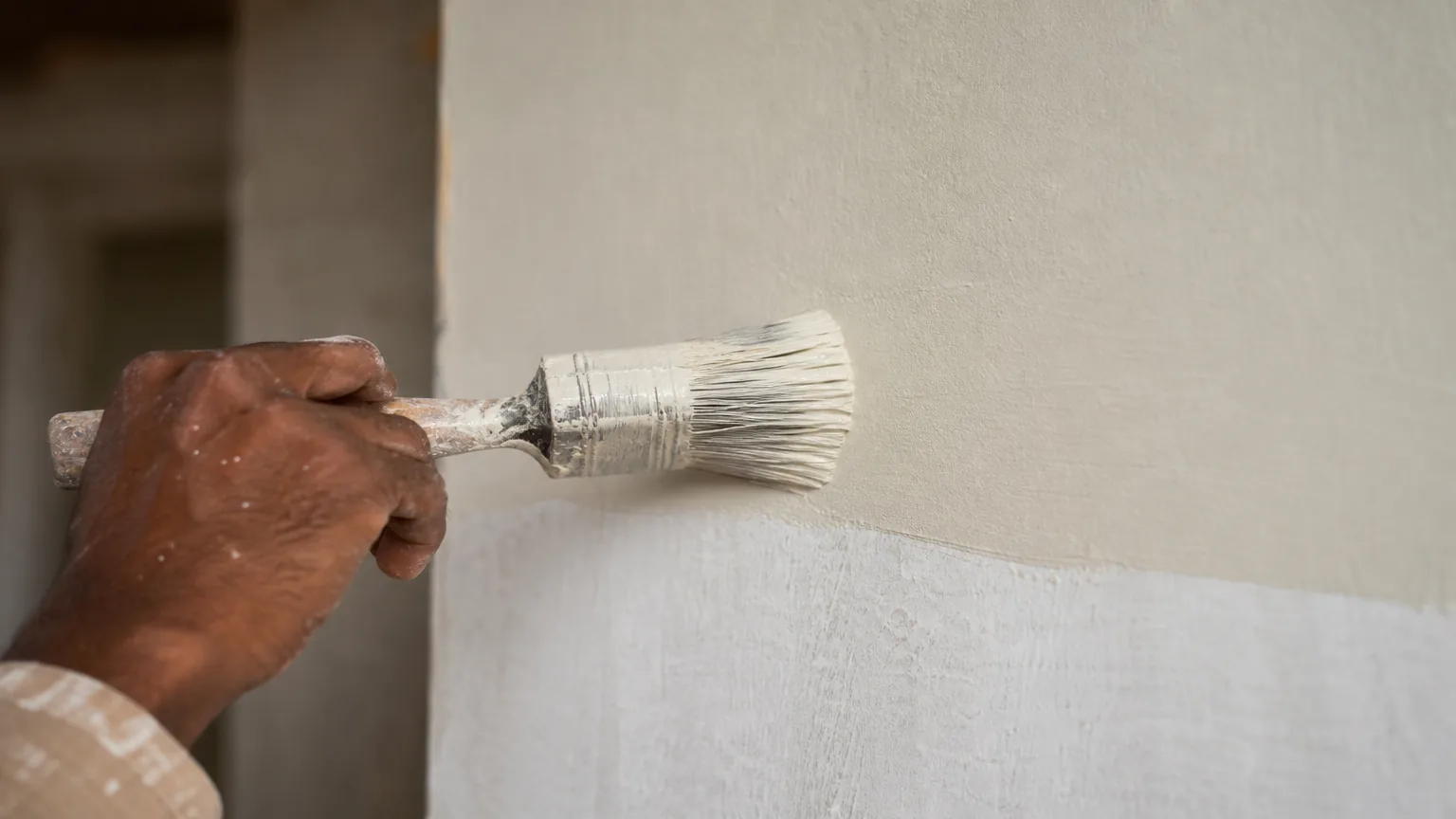
Application Conditions
Coats & Recoating
Cleaning & Storage
First time with Mineral Plaster Primer? Our technical team runs complimentary on-site walkthroughs for contractors — full application protocol, start to finish.
System & Substrates
Mineral Plaster Primer 622 is the canonical prep coat under LEINOS interior mineral topcoats. The silicate binder fuses chemically with the substrate (not just adheres), evens absorbency for uniform topcoat application, and stays vapour-permeable so the wall keeps breathing.
The Coating System
Primer plus topcoat — the full chain.
Topcoat Options
Choose the finish character; the primer underneath stays the same.
Substrate Fit
Suitable
Honest Limits
Use With Care
Coverage & Pack Sizes
Coverage on the card assumes one coat. One coat is usual; plan an extra 1.5× for highly variable heritage substrates. Highly absorbent fresh lime plaster sits at the lower end; dense aerated concrete + old strong-binding dispersion coatings at the upper end.
2.5L
Covers
80–190 sq ft
1 coat, absorbent mineral
Best For
Small room repaint, sample area, accent wall, heritage spot-prime.
10L
Covers
320–750 sq ft
1 coat, absorbent mineral
Best For
Full apartment interior, large heritage wall, commercial residential project.
Enter your area to see how much material — and the most efficient pack mix — you’ll need for 1 coat.
Full calculatorRelated Work
Documented mineral surface projects. Captions show which LEINOS finish was used.
Full Declaration
Every ingredient declared on the label. The Trust Hub explains what each one does and the standards behind it.
Water
The carrier. Evaporates during cure — what remains is the silicate network bonded to the substrate. Solvent-free, water-borne formulation.
Potassium Silicate (Water-Glass)
The reactive binder. Reacts with substrate silicates (silicification) — chemically fuses with lime plaster, cement, clay, brick. CAS 1312-76-1, 1–3 % by mass. Disclosed per InVeNa full-disclosure pledge.
Titanium Dioxide
Mineral white pigment for coverage and visual verification of primed area. CAS 13463-67-7, 5–10 % by mass. EU classifies powder/dust form as H351; the cured paint film is safe and not classified hazardous (SDS §2). EUH211 spray-droplet warning applies during airless application.
Mineral Fillers
Calcium carbonate + silicate fillers for rheology, opacity, and the micro-textured mechanical key under topcoat application.
Natural Additives
Cellulose thickener + mineral rheology modifiers + small wetting agent. Determines the application feel (brush flow, roller pickup, anti-drip).
Got Questions?
Quick answers on formulation, application and Indian-climate suitability. Pulled from our full FAQ and TDS library.
For Architects & Specifiers
Technical and safety documents — citable in project specifications.
Need a Recommendation?
Four ways to reach our India team — pick the one that fits how you work.
For Trade & Specifiers
Full TDS / SDS library, specification support and trade pricing — direct from the manufacturer.
Documents
TDS / SDS
Per-product datasheets and safety sheets, downloadable in English.
Specification
NCS Match
Custom colour briefs and material samples mixed at our Delhi lab.
Trade
Direct Pricing
Volume tiers, project quoting and stock allocation through our trade desk.
Written by the LEINOS India technical team, in collaboration with
Reincke Naturfarben R&D, Lower Saxony.
Last updated
Want to represent LEINOS in your city?
Become a Dealer