

0.25L
Covers
25–40 sq ft
2 coats, absorbent wood
Best For
Touch-ups, spot repairs, sample swatches before full spec.
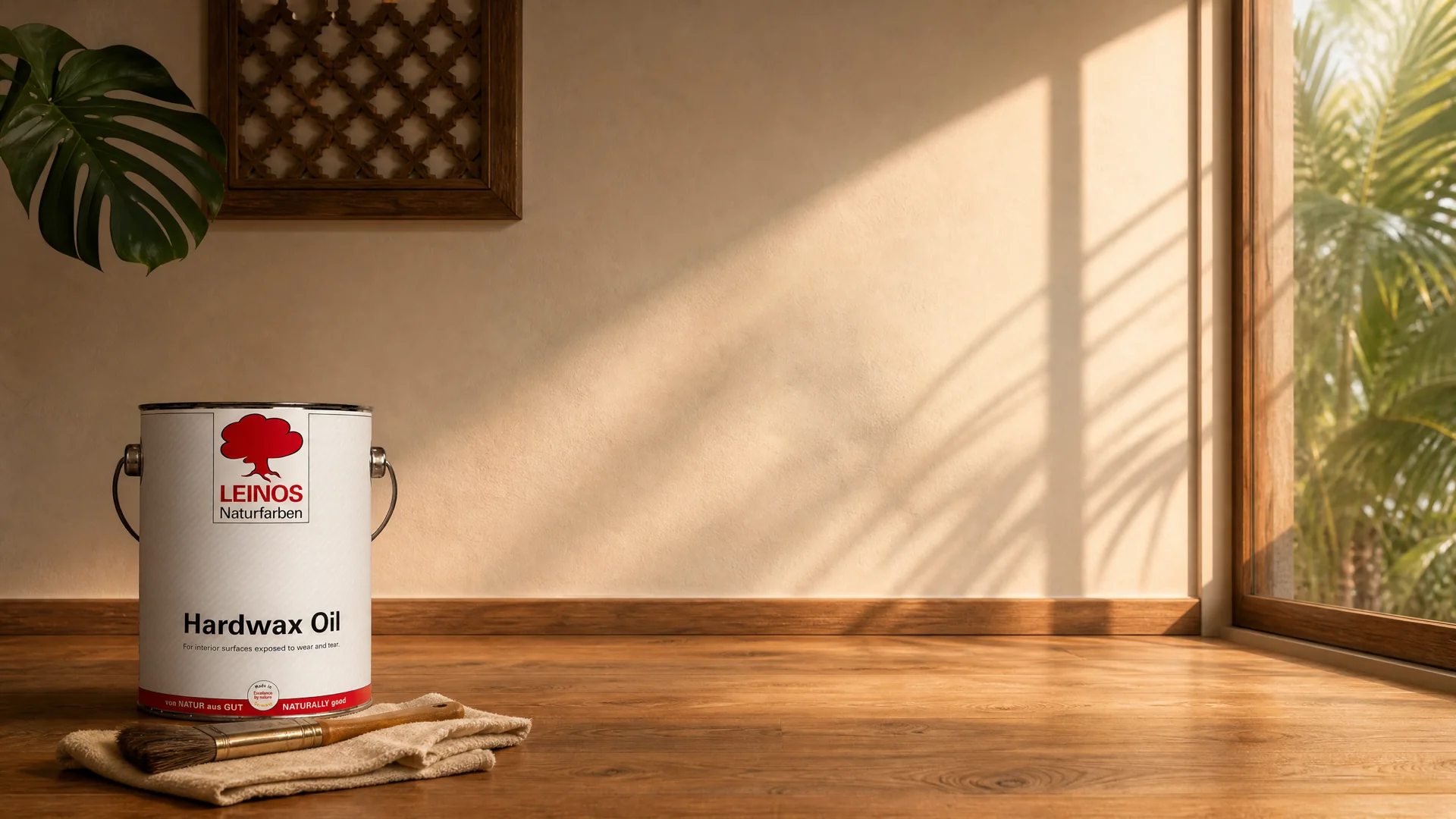
INTERIOR FLOOR FINISH · ART. 290
LEINOS 290 — DIN 68861 chemical-resistance tested. Linseed oil + hardwax for heavy-traffic Indian hardwood floors.
Ready-Mix Shades
11 ready-mix shades. Custom NCS or RAL tinting available at our Delhi lab.
002
Colourless
032
Glossy
053
Cherry
054
Sand
062
Walnut
076
Natural Oak
101
Double White
102
Ebony
200
Neutral Base
202
White
212
Grey
Wood is a living material — actual colour depends on species, grain density, and substrate age. Each shade you see here is a reference. Our specialists confirm the final match with you before specification.
Beyond the Standard Range
Custom NCS or RAL tinting at our Delhi lab — any architectural reference matched across the full colour palette. Bring the spec, take the shade home.
Natural Oak (076) is developed specifically for oak — leaves the wood looking untreated.
Mechanism & Use
Three-component hardwax oil, engineered for heavy-traffic interior floors that need to wear like a patina, not like a film.
Plant-oil base soaks into the grain — feeds it from the inside.
A microscopic wax layer makes the floor water-repellent yet open-pored.
Natural resin holds the system: the finish wears with the floor, not against it.
Tested liquid resistance — wine, beer, coffee, milk, juice, tea.
Where It Lives
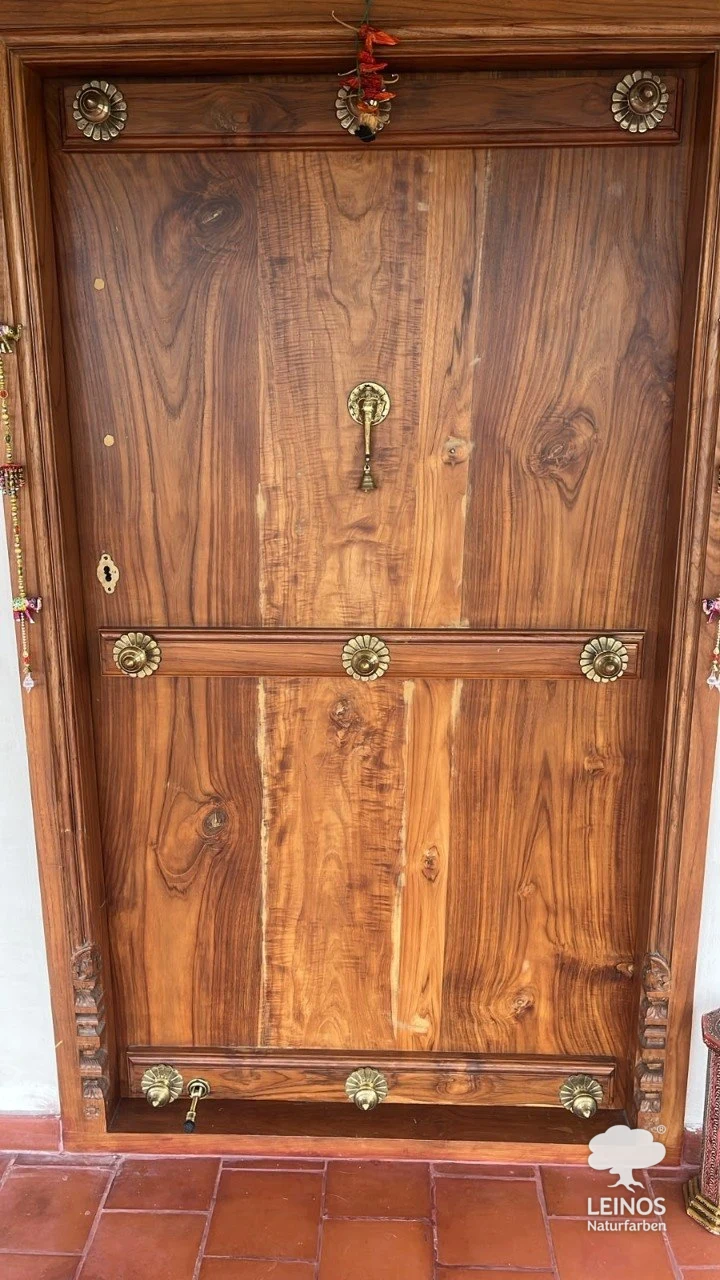
Premium hardwood floors
Oak, teak, sheesham, sal — solid or wide-plank engineered.
Restored haveli floors
Century-old wood brought back without losing patina.
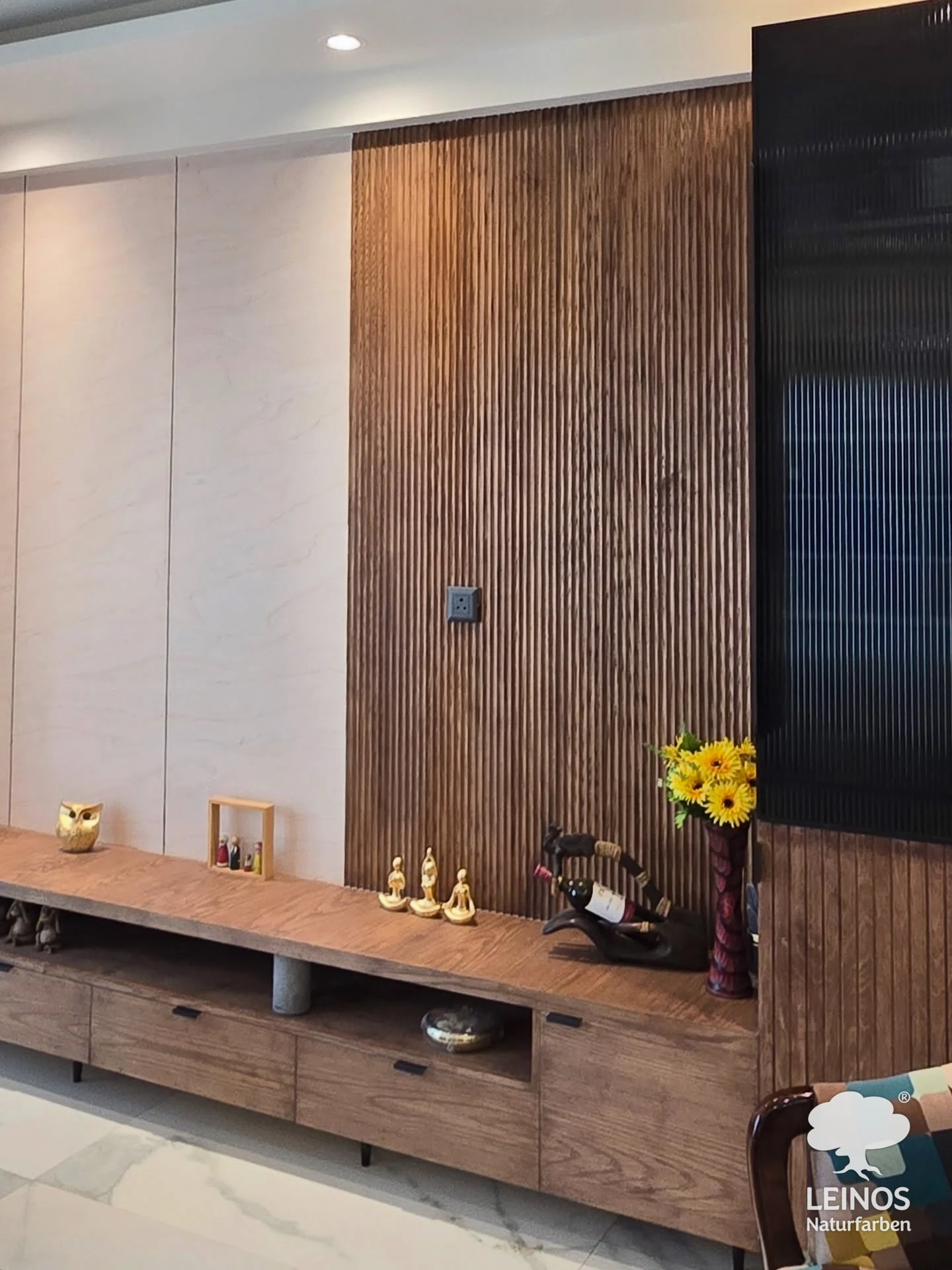
Modern duplex apartments
Contemporary urban interiors with daily foot-traffic.
Boutique hospitality lobbies
Heavy-traffic-tested for cafés, hotels, designer retail.
Designer staircases
Custom millwork that has to survive years of footfall.
Wellness studios & yoga shalas
Barefoot-friendly: EN 71-3 toy-safe (migration tested).
Compliance · DIN · EN · EU
Five anchors that let architects specify 290 without disclaimers.
Chemical Resistance
Chemical-resistance tested against wine, beer, coffee, tea, milk and juice.
Unlike film finishes, 290 bonds with the wood and wears as the wood does. Worn paths can be spot-renewed with a thin re-oil — no full sand-and-refinish. The TDS documents the maintenance cycle in detail.
Read The Full TDSStep by Step
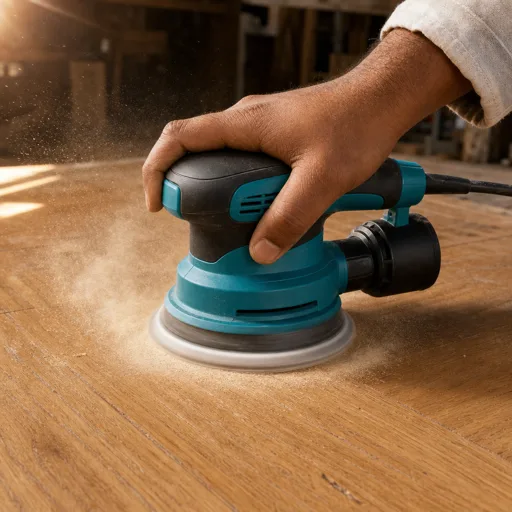
Prepare the substrate — sand to 120-grit (150–180 intermediate if grain is rough). Wood moisture ≤ 14%. Dry, dust-free, grease-free, absorbent. Surface and ambient temperature ≥ 16°C.
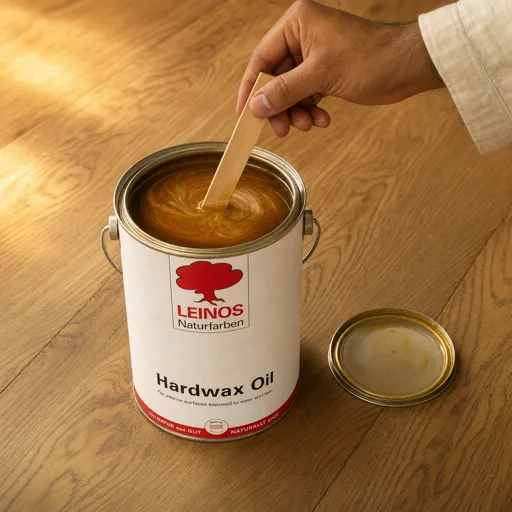
Acclimatise and shake — bring the can to room temperature 24 h before use. Shake thoroughly; natural oils and waxes separate during storage and need to be re-blended.
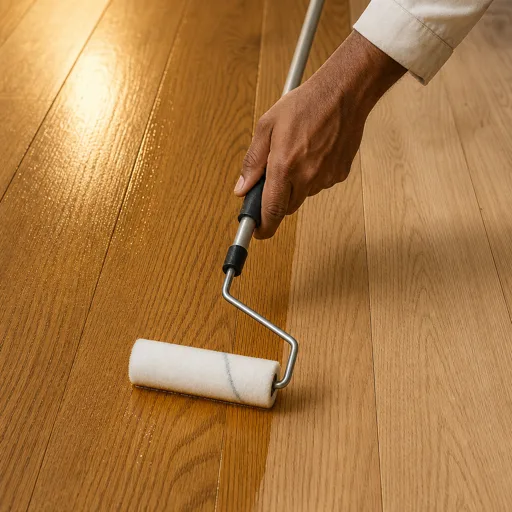
Apply the first coat — roll or pad a thin, even layer along the grain. Coverage approx. 190–320 sq ft per litre per coat, depending on absorbency. Work in manageable sections so excess can be removed within the next step’s window.
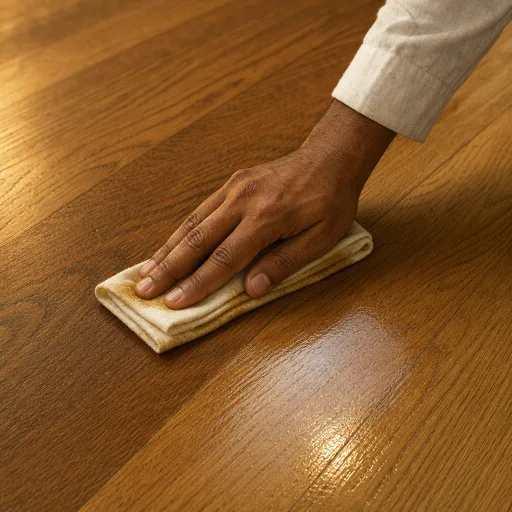
Remove excess and buff — after 15–20 minutes, wipe excess with a lint-free cloth along the grain until the surface is dry to the touch. For heavy-traffic floors, follow with a green pad on a single-disc machine to work the oil into the grain.
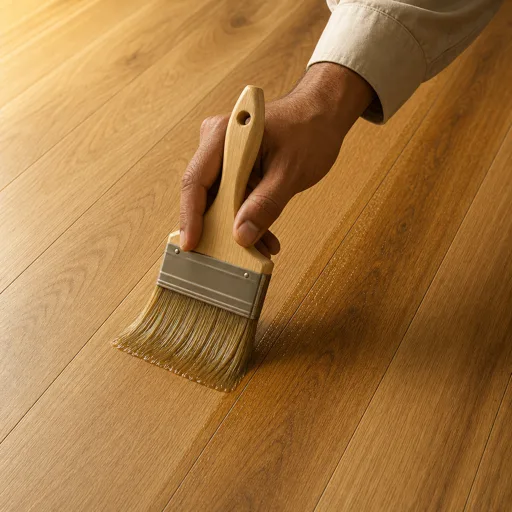
Apply the second coat — 16–24 h after the first, brush a thinner second layer along the grain with a natural-bristle brush. For heavy-traffic floors, finish with a white pad to lock the burnish.
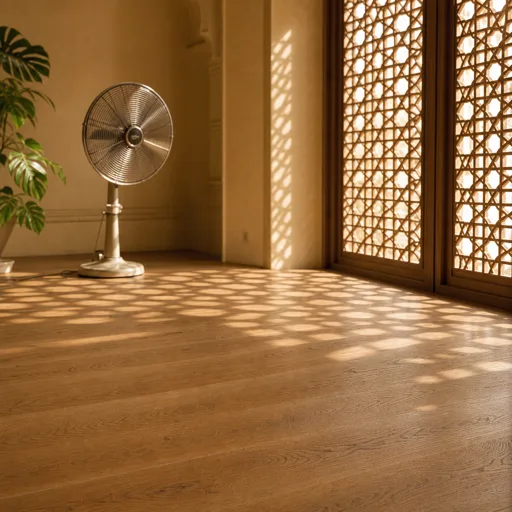
Cure with airflow — light foot traffic after 3 days, full cure 7–14 days. Run a fan continuously to circulate air at the surface. Dispose of oil-soaked rags in a sealed metal container or under water — spontaneous combustion risk.
Application Conditions
Coats & Recoating
Cleaning & Storage
First time with Interior Hardwax Oil? Our technical team runs complimentary on-site walkthroughs for contractors — full application protocol, start to finish.
System & Substrates
No primer needed, no separate topcoat — by design. The companion care products extend the finish over the years.
The Coating System
Primer plus topcoat — the full chain.
Long-term Care
Extends the life of the finish over the years.
Substrate Fit
Suitable
Honest Limits
Use With Care
Coverage & Pack Sizes
Coverage on the card assumes two coats on absorbent wood. Variation depends on substrate density and grain.
0.25L
Covers
25–40 sq ft
2 coats, absorbent wood
Best For
Touch-ups, spot repairs, sample swatches before full spec.
0.75L
Covers
70–120 sq ft
2 coats, absorbent wood
Best For
Doors, single piece of furniture, staircase treads.
2.5L
Covers
240–400 sq ft
2 coats, absorbent wood
Best For
Standard room or office floor — most-specified size in India.
10L
Covers
950–1600 sq ft
2 coats, absorbent wood
Best For
Whole-floor projects, duplex apartments, hospitality lobbies.
Enter your area to see how much material — and the most efficient pack mix — you’ll need for 2 coats.
Full calculatorDocumented Applications
Recent projects finished with Interior Hardwax Oil. Factual captions, real footage — no staged photography.
In their words
Real customers, real projects — honest ratings, nothing incentivised.

Excellent work @_mugiwara_haris_ and your oil is used extensively on my bespoke furniture products @leinos.india. Love the finish at the end of the process. No harmful chemicals, easy on the applicator as well
On our Delhi residence, LEINOS oils let the wood breathe and age beautifully — healthy interiors, no cracking, no compromise.
Dr. Anurag Khandelwal, Architect · Wood Style
See the projectProjectFull Declaration
Every ingredient declared on the label. The Trust Hub explains what each one does and the standards behind it.
Cold-pressed flax-seed oil — the LEINOS signature drying oil. Penetrates the grain by capillary action and oxidatively polymerises with the wood, so the substrate itself becomes the protective body.
Hardwax (micro-wax)
The micro-wax crystallises at the surface into a hydrophobic micro-layer with sub-micron pores. Water beads up; vapour passes through, giving 290 its silky-matte hand.
Natural resin
Pine-derived rosin and modified resin esters cross-link the oil-wax matrix into a single chemical continuum. This is the wear interface that lets 290 burnish slowly under footfall instead of fracturing.
Isoaliphatic solvent (isoparaffins)
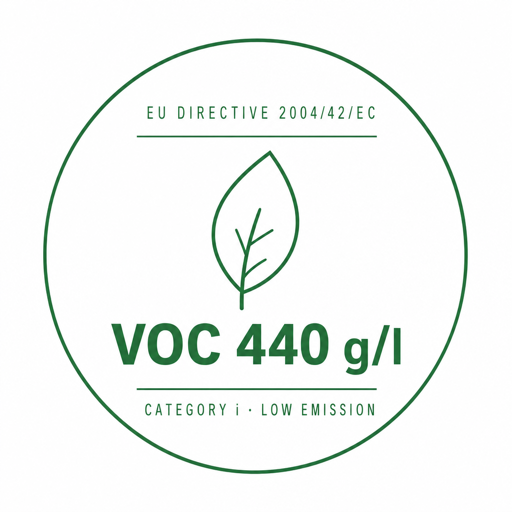
Dearomatised isoaliphatic (isoparaffin) carrier — low-aromatic, it evaporates during cure and leaves no film. 290 is not solvent-free (VOC max 440 g/l); the solvent-free variant is the separate article LF 291.
Drying catalysts
Cobalt-free metal-soap driers (zirconium, manganese) that speed the oxidative polymerisation of the linseed-oil base. Trace levels per declared TDS — disclosed in the SDS for full transparency.
Got Questions?
Quick answers on formulation, application and Indian-climate suitability. Pulled from our full FAQ and TDS library.
For Architects & Specifiers
Technical and safety documents — citable in project specifications.
Need a Recommendation?
Four ways to reach our India team — pick the one that fits how you work.
For Trade & Specifiers
Full TDS / SDS library, specification support and trade pricing — direct from the manufacturer.
Documents
TDS / SDS
Per-product datasheets and safety sheets, downloadable in English.
Specification
NCS Match
Custom colour briefs and material samples mixed at our Delhi lab.
Trade
Direct Pricing
Volume tiers, project quoting and stock allocation through our trade desk.
Written by the LEINOS India technical team, in collaboration with
Reincke Naturfarben R&D, Lower Saxony.
Last updated
Want to represent LEINOS in your city?
Become a Dealer