Rated 5 out of 5
Highly recommended. Very good quality product and perfect suggestions by expert company persons. Very trustworthy quality and customer service.
Interior Wood
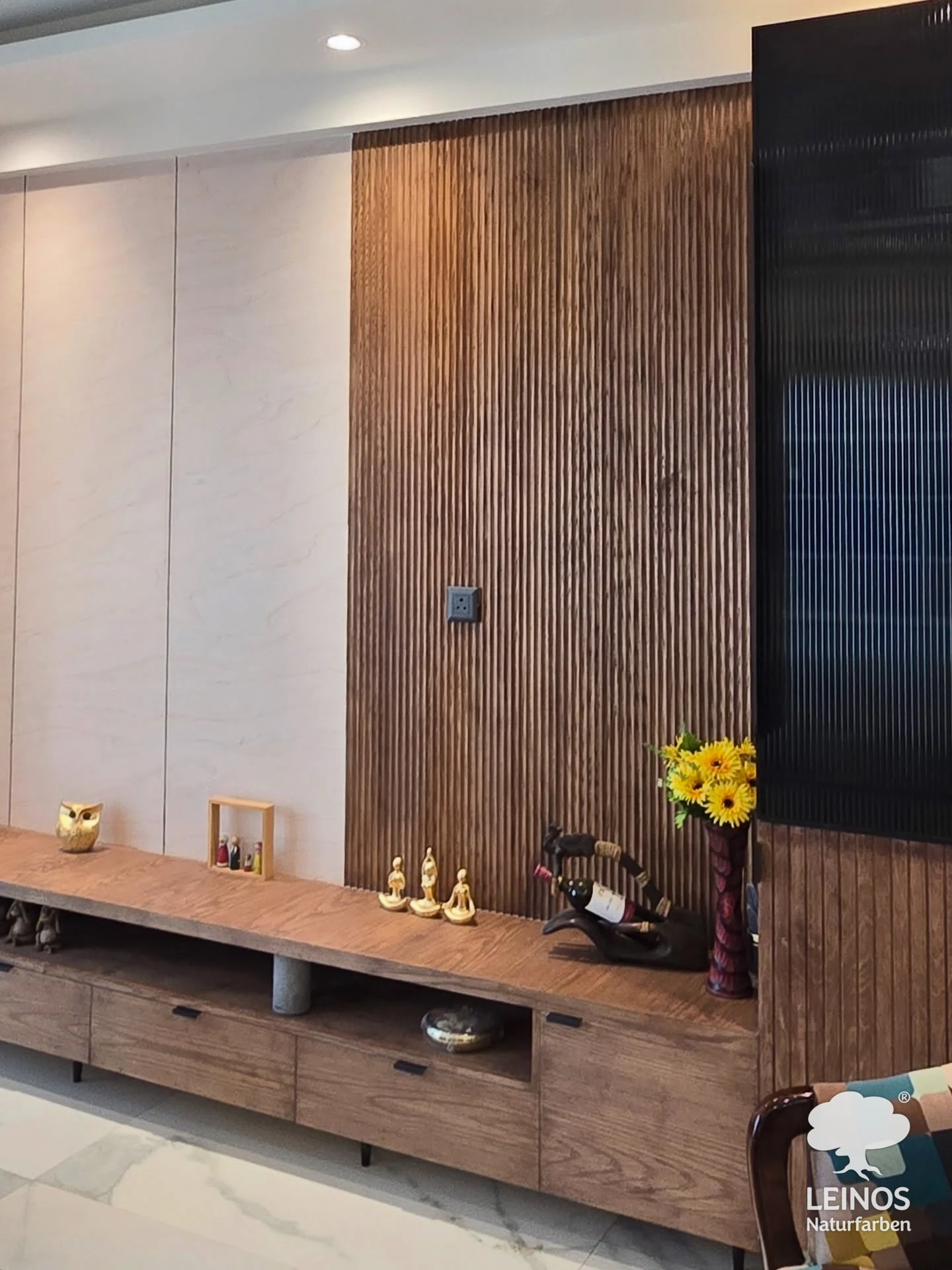
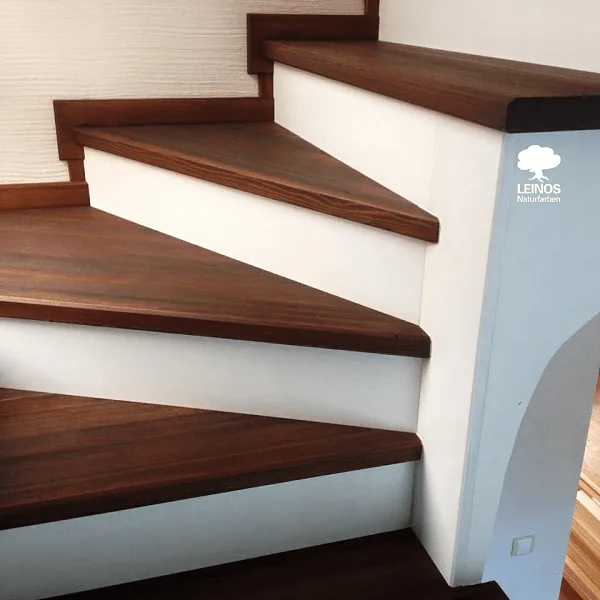
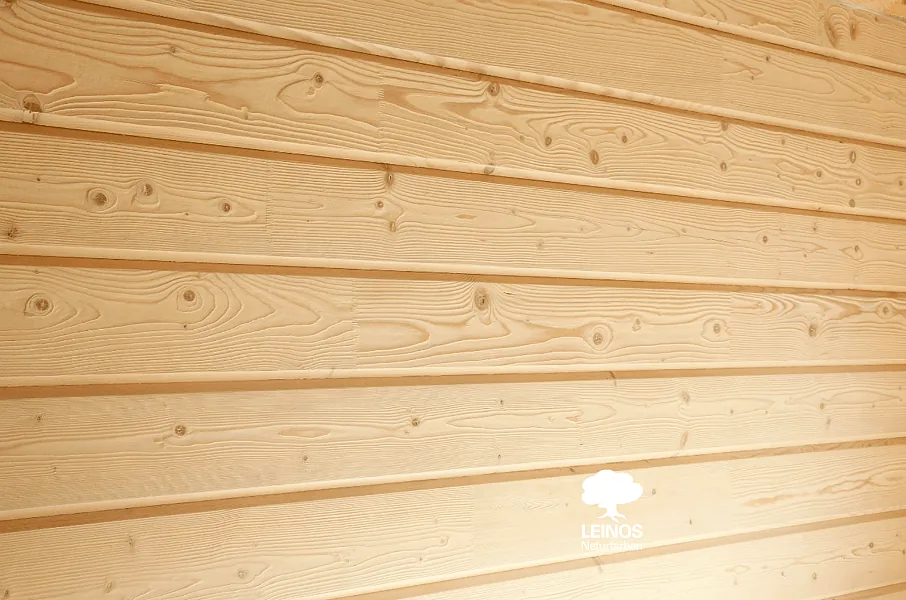
Teak doors, windows and reeded panels plus a stone column in a private Bengaluru home, finished by Mudhra Decors in two LEINOS oils — Interior Hardwax Oil 290 on the wood, Stone and Concrete Oil 254 on the stone — both open-pore finishes that protect without laying a film.
Gallery
The Brief
A traditional-style private home in Bengaluru, Karnataka, where the joinery and a stone column were oiled in January 2026 by Mudhra Decors, a local firm that carries out this work for private clients. Two substrates, two different LEINOS oils. The carved teak entrance door, the glazed teak windows and a reeded wooden panel took Interior Hardwax Oil 290 — a natural oil-and-wax blend made for interior wood floors, furniture, stairs and doors, which penetrates the timber and cures to a wear-resistant, water-repellent, open-pore surface. The stone column took Stone and Concrete Oil 254 — a colourless penetrating impregnation for absorbent stone, terracotta and chemically neutral concrete that is water-repellent and abrasion-resistant without significantly darkening the surface.
Two substrates under one roof is where a single all-purpose sealer usually goes wrong: wood and stone absorb differently, and a film that suits one will craze or cloud on the other. Both oils used here are penetrating and open-pore rather than film-forming, so each surface stays vapour-permeable and keeps its own character — the teak's grain and warm tone visible rather than buried, the stone's speckled colour left as it was instead of pulled down to a darkened, wet look. Both are also repairable in place: a worn area can be re-oiled without stripping and re-coating the whole element.
Coating System
Products listed for reference. Suitability depends on your specific surface, climate, and condition.
Interior Wood
290
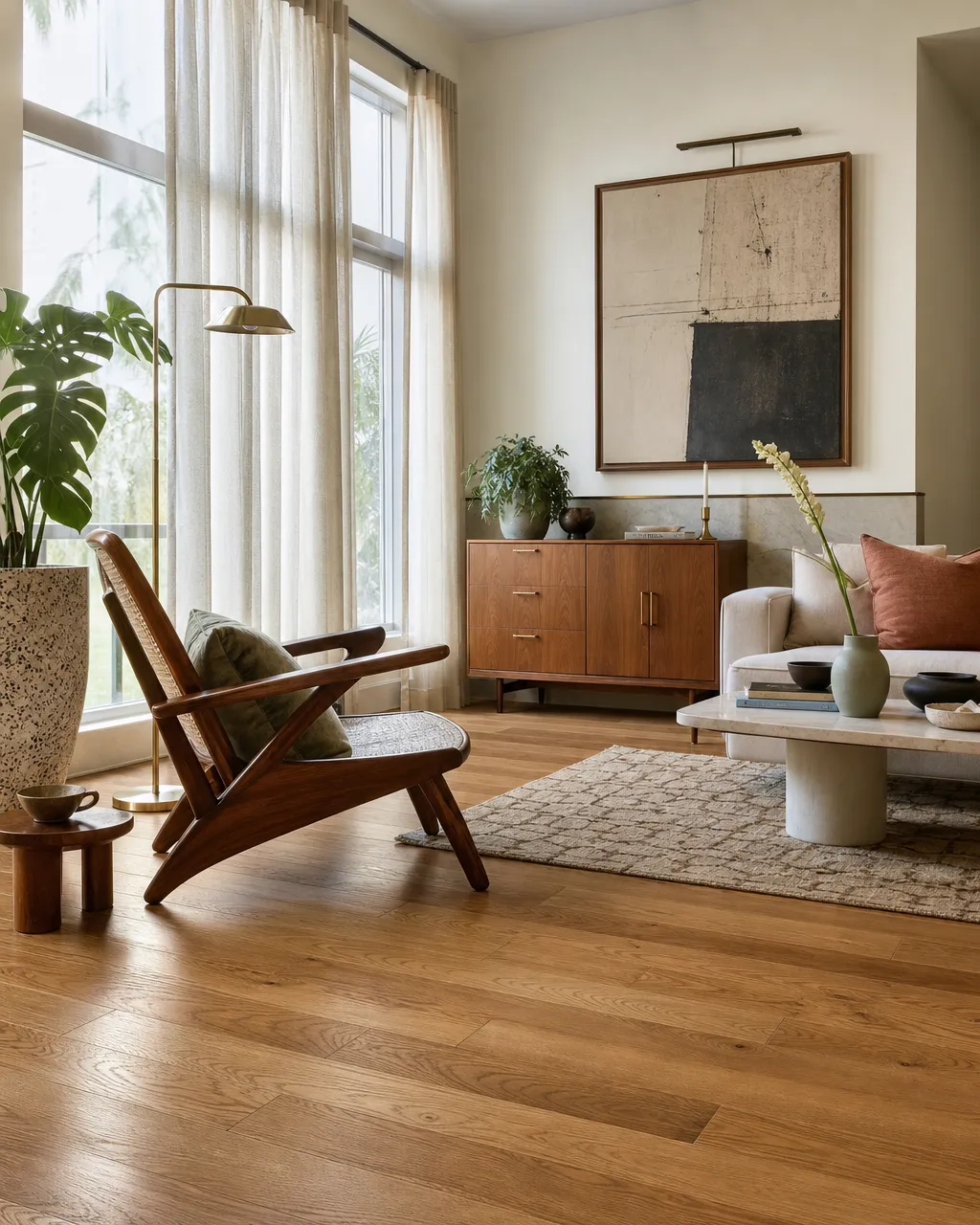
Hardwax oil for durable protection and finishing of interior wooden surfaces.
View details
Walls System
254
Penetrating impregnation oil for terracotta, absorbent tiles, and chemically neutral concrete — water-repellent and abrasion-resistant without changing the natural colour.
View detailsOutcome
One house, two substrates, two penetrating LEINOS oils — Interior Hardwax Oil 290 on the teak joinery and Stone and Concrete Oil 254 on the stone column — both open-pore and repairable by re-oiling rather than film-forming.
The teak reads as natural wood — grain, figure and warm tone visible under a low-sheen open-pore surface, with the carving and brass rosettes left crisp rather than clogged by a film. The stone column keeps its speckled pink-and-grey colour instead of the darkened, wet look a topical sealer would give it. Both surfaces stay vapour-permeable and can be maintained by re-oiling in place.
Results vary by surface condition, climate exposure, application method, and ongoing maintenance.
Updated
In their words
Highly recommended. Very good quality product and perfect suggestions by expert company persons. Very trustworthy quality and customer service.
More Projects
For Architects & Contractors
Send us the project context — surface, area, finish intent, timeline. Our specifier team replies with a system spec and pack mix.