The mechanism
Why the binder is the whole story.
Every wall paint is a dispersion: a binder that gives body and adhesion, pigment that gives colour and opacity, and a carrier that evaporates so a film can form. In a conventional acrylic emulsion the binder is synthetic acrylic polymer — plastic spheres in water that fuse into a continuous, non-porous film of petrochemical polymer sitting on the wall.
A natural resin emulsion replaces those acrylic spheres with particles of plant-derived natural resin. The film that forms is chemically different: it carries mineral fillers rather than plastic alone, stays open-pore enough to let water vapour pass (Class 1, DIN EN ISO 7783-2 — the highest vapour-permeability class), and contains no synthetic acrylic, solvent, or plasticiser. The finish on the wall looks like any quality matt emulsion; the wall behind it keeps breathing.
Durability is not the trade-off. LEINOS 660 carries wet-scrub resistance Class 3 under DIN EN 13300 — the washability classification used by the specification lines of major conventional emulsions. The natural binder is not a compromise in performance; it is a different chemistry reaching the same practical result without synthetic polymer.
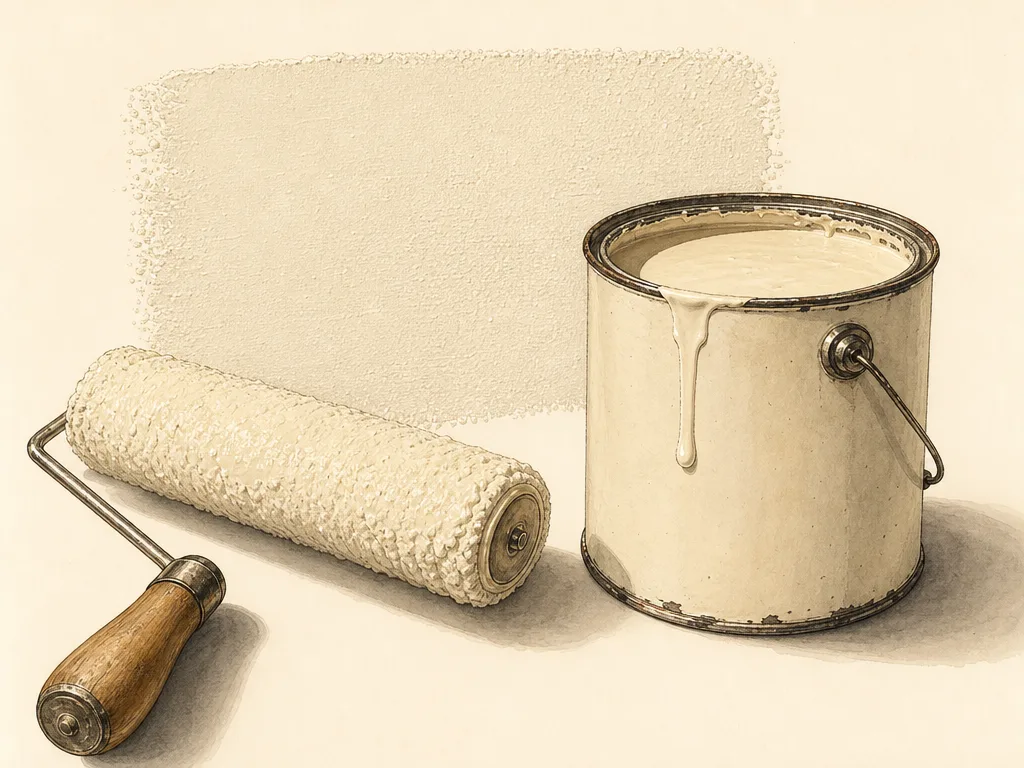
Same smooth matt wall. Different binder — plant resin instead of acrylic plastic.