Inside · Walls & Ceilings
Walls that breathe, stay matte, and let damp move back out.
Mineral walls and ceilings finished with breathable, low-odour paint — including the bathrooms and monsoon-damp rooms where ordinary plastic emulsions blister and grow mould. Here is the system we specify, with each paint matched to its own primer and filler.
- Living rooms
- Bedrooms
- Ceilings
- Damp rooms
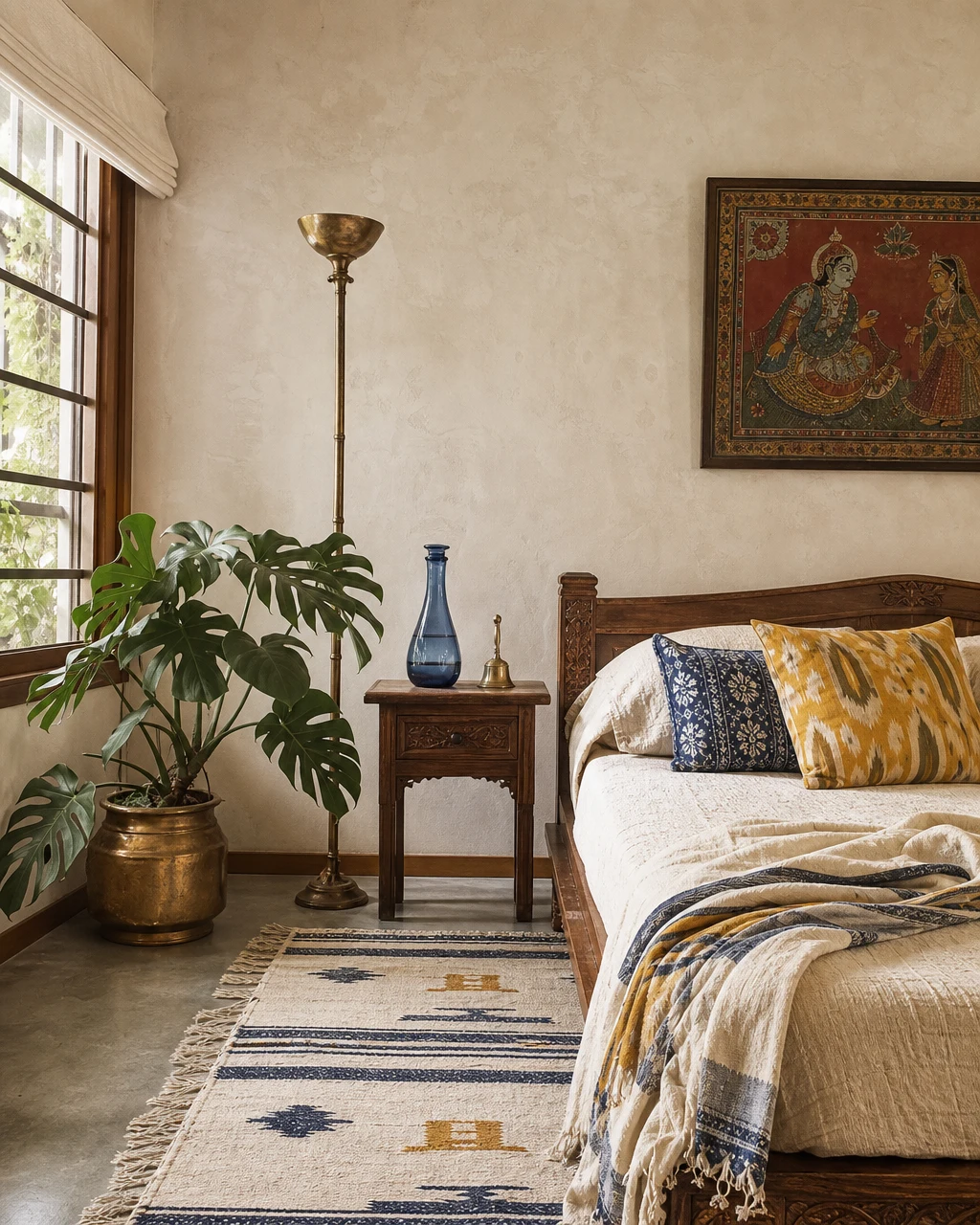
The recommended system.
Choose your paint first — an everyday breathable white, a tintable emulsion, or lime for damp rooms — and each comes with its own matched primer and filler. Two chemistries, never mixed.
For interior walls and ceilings, this is the system we specify. Start by choosing the paint for the room, then build its matched stack — the prep and primer follow from the paint, because emulsion and lime are two different chemistries.
The decision that sets the whole stack: pick the paint for the room. The emulsions (650 · 660) and the lime paint (665) are different chemistries with different primers — choose the paint first, then build its matched stack below.
Want a soft, humidity-regulating clay look in a dry room? Clay Paint 655 is a breathable clay emulsion for interior walls and ceilings with a natural matt surface that helps regulate humidity — sharing the same 620 primer as the emulsions above. It is for dry rooms only (not permanently damp or wet areas), so it sits alongside 650/660, not the lime damp-room route.
655Clay PaintThis is where the two chemistries part: each paint takes its own filler and primer, and they are not interchangeable. Follow the branch for the paint you chose above — the emulsion route, or the lime route for damp rooms.
Emulsion & clay paints (650 · 660 · 655)
Fill, then seal absorbency with Deep Sealer 620.
Lime systems — damp & mould-prone rooms (665 · 667)
Fill with lime putty, prime with Mineral Plaster Primer 622.
One optional protective topcoat — and only over Natural Resin Emulsion 660. It is not used over the lime paints (665/667) or the everyday white; the breathable mineral paints need no separate care product.
LEINOS builds two separate mineral chemistries for interior walls — and we don’t pretend one primer fits both. The breathable emulsions (650 · 660 · 655) are primed with Deep Sealer 620; the lime systems for damp, mould-prone rooms (665 · 667) are primed with Mineral Plaster Primer 622. Matching each paint to its own primer and filler is the whole point of the system above.
Why it’s demanding
What an interior wall puts a finish through
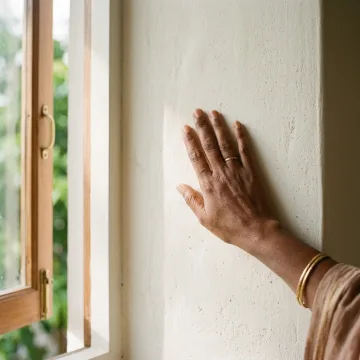
Trapped moisture
Indian walls soak up monsoon humidity; a sealing plastic film traps it and blisters off, where a breathable mineral paint lets the wall dry.
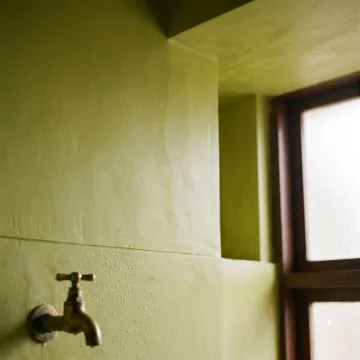
Damp & mould rooms
Bathrooms, kitchens and north walls grow mould on ordinary emulsion — only a high-alkaline lime finish resists it without a chemical biocide.
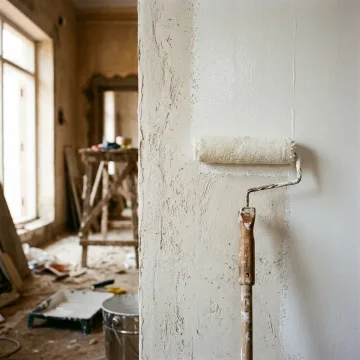
Even, matte coverage
Bare plaster, filler patches and gypsum board drink paint unevenly — without the right primer the finish flashes and patches show through.
A wall has to breathe, not seal.
A plastic emulsion film looks fine until the wall behind it can no longer dry — then it blisters and, in a damp room, it grows mould. A breathable mineral paint lets the moisture pass straight back out, so the wall stays sound and the finish stays put.
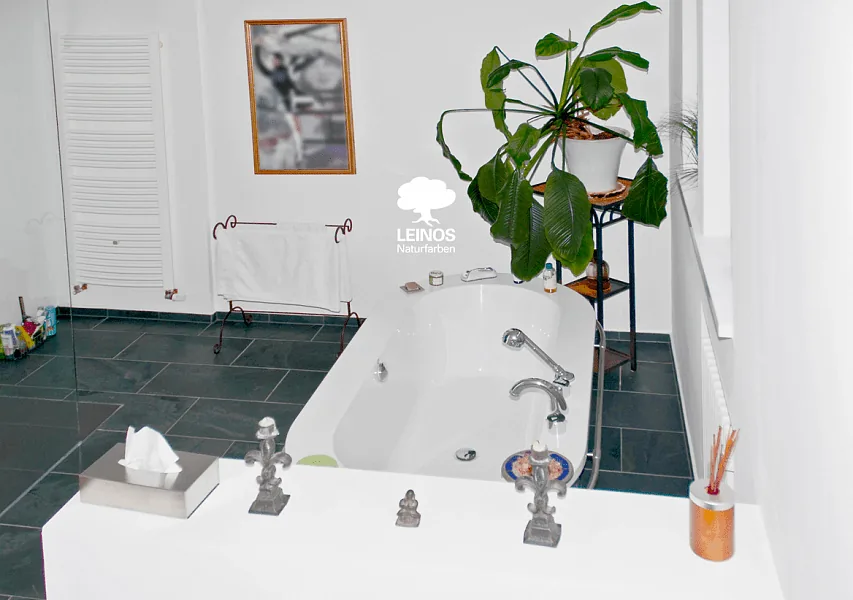
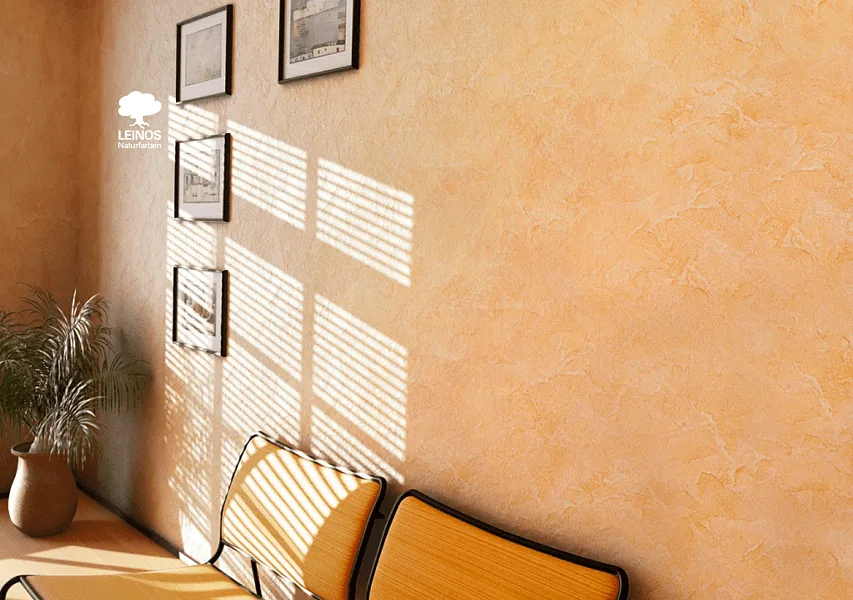
See it in real projects.
All projects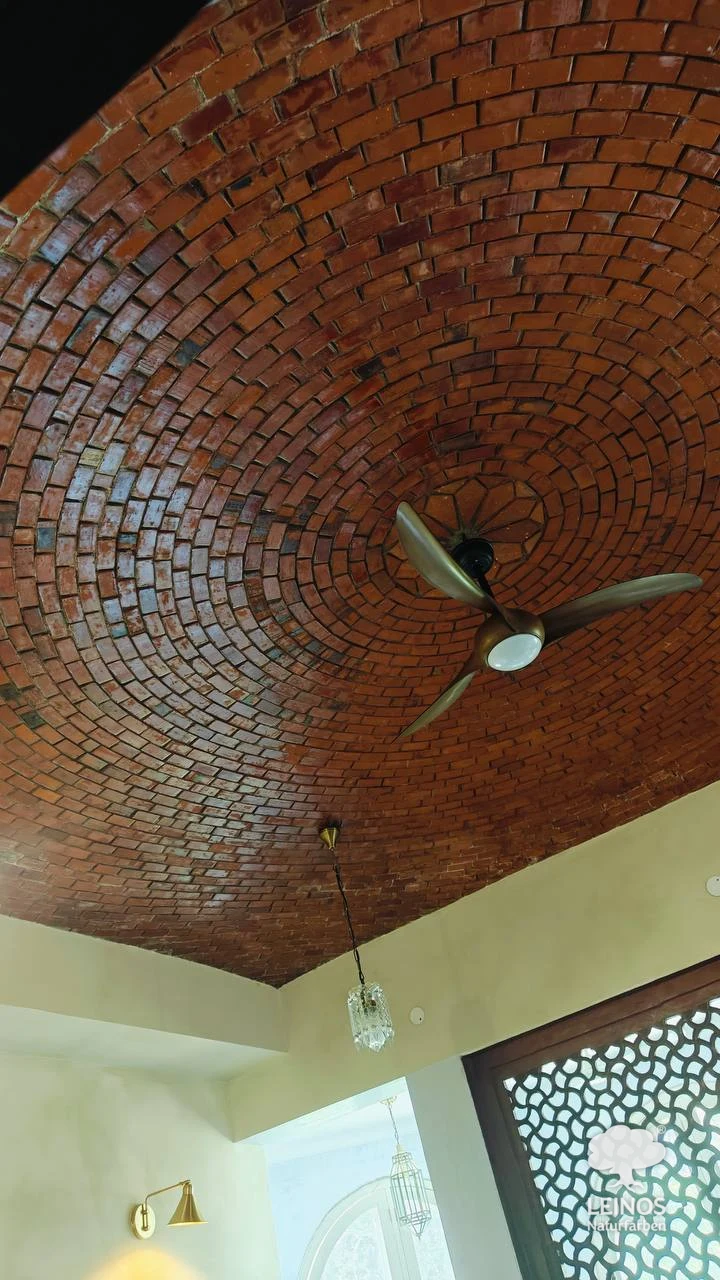
Got Questions?
Questions about walls & ceilings
Quick answers on formulation, application and Indian-climate suitability. Pulled from our full FAQ and TDS library.
- Lime Paint 665. Its high alkalinity (pH ~13) makes the surface naturally antibacterial and mould-resistant, it is highly vapour-permeable, and its TDS states it is suitable for humid rooms. Prime damp, chalking or very absorbent surfaces with Mineral Plaster Primer 622 first. The emulsion paints (650, 660) are for normal dry rooms and are not specified for permanently damp, mould-prone walls.
- Because the paints are two different chemistries. The emulsion and clay paints (650, 660, 655) are primed with the water-based Deep Sealer 620. The lime systems (665, 667) are a mineral, high-alkaline chemistry primed with Mineral Plaster Primer 622 — named directly in the 665 TDS — and 620 is not specified under lime. Matching each paint to its own primer is the load-bearing decision in this system.
- Usually yes. Bare plaster, filler patches and gypsum board are absorbent and drink paint unevenly, which makes the colour flash and patch. For the emulsions, prime with Deep Sealer 620 (diluted 1:1) to even out absorbency; for the lime systems, treat chalking and very absorbent surfaces with Mineral Plaster Primer 622. Fill cracks and joints first — gypsum filler 684 for the emulsion route, lime filler 683 for the damp lime route.
- Only one, and only for one paint: Wall Wax Finish 350 is an optional protective finish over Natural Resin Emulsion Paint 660, leaving an open-pore film that resists dirt and abrasion. It is not suitable over lime or silicate paints, so it is never used on 665 or 667 — those breathable mineral finishes are left as they are. If you want lime in a damp room, talk to us about the 621 fixative for chalky substrates before you start.
Ready to paint your walls?
Open a product to download its TDS, or talk to a LEINOS specialist about your room, your plaster and whether it sees damp before you order.
Written by the LEINOS India technical team, in collaboration with
Reincke Naturfarben R&D, Lower Saxony.
Last updated