

1L
Covers
110–180 sq ft
1 coat, absorbent mineral
Best For
Touch-up, small repair zone, single small bedroom or bath wall.
DEEP SEALER · ART. 620
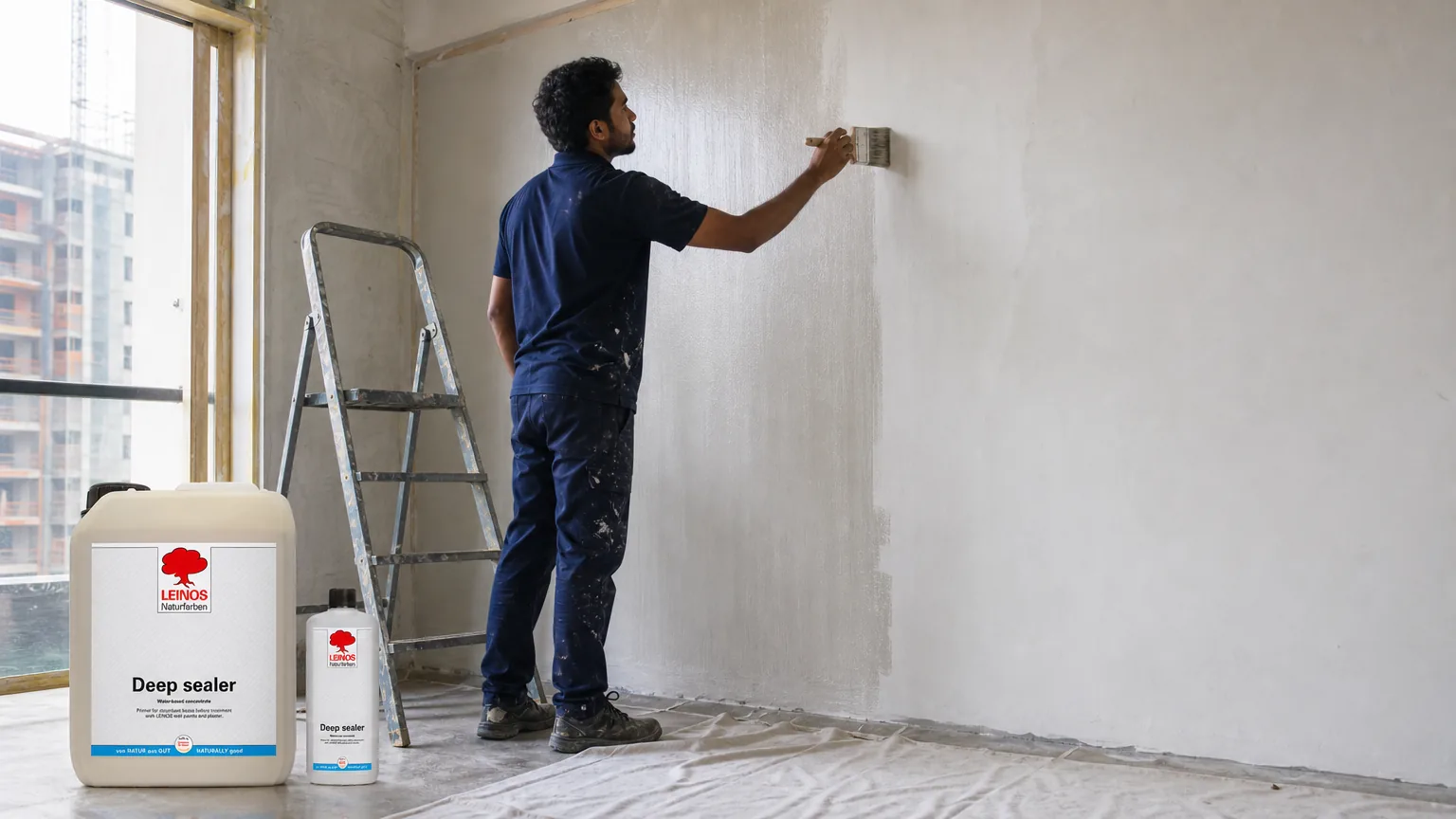
LEINOS 620 Deep Sealer — water-based deep-penetrating primer for highly or variably absorbent interior wall substrates. Saponified shellac and natural-resin soap flow into the pore network; carnauba and beeswax bind substrate dust and even the absorbency canvas. Solvent-free, plasticiser-free. VOC less than 1 g/l. Made in Germany by Reincke Naturfarben since 1985.
Mechanism & Use
Substrate absorbency varies square metre by square metre — chalking lime, patched repair zones, bonded ingrain wallpaper, gypsum board partition walls. Variable absorbency is the silent failure mode behind patchy topcoat finish. 620 brings the substrate to a single, even, controlled absorbency: saponified shellac and natural-resin soap flow into the pore network, carnauba and beeswax cure as the binding film, and the topcoat that follows lays down at uniform thickness and reads as a single colour register.
Shellac and natural-resin are saponified by potash into water-soluble soap form. Dilute 1:1 with water; the primer flows into the pore network rather than sitting on the surface.
Carnauba and beeswax cure inside the pore network as the water phase evaporates — bind substrate dust, present an even matt absorbency face for the topcoat.
Covers the natural-resin emulsion line (660 / 650), clay paint (655), casein (640), plaster effect (680). For lime paint (665), use 622 Mineral Plaster Primer instead.
Plasticiser-free; VOC less than 1 g/l (EU Cat. a). Mild BIT preservative for can-stability — the cured film on the wall contains no biocide and no solvent.
Where It Lives
Gypsum-board partition walls (drywall) in contemporary apartment fit-outs
Most common contractor case in Indian apartment shell fit-outs — gypsum board partition walls are highly absorbent and absorbency varies from board to board. One coat of 620 diluted 1:1 with water evens the canvas; the natural-resin emulsion topcoat (660) or interior white topcoat (650) that follows lays down at uniform thickness across the whole wall. Use 620 on plasterboard before further treatment with LEINOS wall paints.
Chalking lime plaster + very porous cement plaster + patched repair zones
Older lime plaster walls that chalk powder under a fingertip touch, very porous freshly cured cement plaster, mixed-substrate zones where wall has been repaired in patches — all read as highly variable absorbency to a topcoat. 620 saponified soap chemistry penetrates into the pore network, the wax phase binds the chalking dust into the wall, the absorbency canvas evens out. The topcoat sits true.
Bonded ingrain wallpaper feature walls (Raufaser) over absorbent substrate
Common in Indian apartment fit-outs as a textured feature-wall solution. Bonded ingrain wallpaper firmly adhered to a mineral substrate is a TDS-listed substrate for 620 — the primer flows through the wallpaper into the substrate beneath and binds both surfaces into a single uniform absorbency canvas. The clay paint (655) or natural-resin emulsion (660) topcoat that follows reads as a single matt surface with the wallpaper texture visible beneath. Vinyl or plastic-coated wallpaper is NOT a suitable substrate.
OSB-board feature walls in contemporary fit-outs
Contemporary fit-outs that mix exposed OSB structural board with painted finished walls — the OSB-board surface takes 620 + a mineral topcoat (655 clay or 660 natural-resin emulsion) and reads as a unified matt mineral surface across the substrate mix. TDS-supported via the 655 + 620 systemChain (locked pilot 9). The OSB substrate must be firmly adhering, dust-free, and sealed at the edges.
Old, firmly-adhering matt emulsion walls — repaint over an existing finish
620 is listed for use over “old, firmly adhering coats of wall paint.” Common Indian repaint scenario — an apartment with an existing matt emulsion or mineral paint that is sound, matt-finish (not glossy), firmly adhering, and not flaking. Clean thoroughly + dust-free + light mechanical key if any residual sheen, then 620 evens the absorbency face and the new topcoat lays down at uniform thickness. Glossy emulsion or intact vinyl wallpaper is NOT suitable — strip back to absorbent substrate or mechanically key first.
Mixed-substrate apartment shells — same primer across the entire wall plan
Real Indian apartment shells carry mixed substrates across a single floor plan: gypsum-board partition walls in some rooms, lime-plastered structural walls in others, bonded ingrain wallpaper on a feature wall, patched repair zones around electrical work or window frames. 620 spans all of these in one primer spec line — the contractor primes the whole shell to a single uniform absorbency canvas before the topcoat colour goes on. One primer, one workflow, one spec line.
Compliance · Natural Ingredients · EU
Three anchors that let architects and contractors specify 620 alongside any LEINOS natural-chemistry topcoat without the acrylic-primer disclosure.
EU Compliance
EU limit 30 g/l · Cat. a interior matt walls (water-borne) · Directive 2004/42/EC.
Institutional Pledge
Reincke Naturfarben — full-ingredient-disclosure pledge for natural building products.
The TDS is downloadable below — substrate range, dilution canon, drying time, application temperature, pack coverage. The Safety Data Sheet (SDS) is supplied on request from LEINOS India for the full hazard register and the trace-functional-additive disclosure. Where you need a written specification packet — full ingredient declaration, VOC compliance letter for an architect’s submittal, substrate-compatibility statement for a mixed-substrate apartment shell, or a primer-and-topcoat system brief tied to a project topcoat colour register — it is available to architects and contractors on request. Use Get Expert Advice above.
Read The Full TDSStep by Step
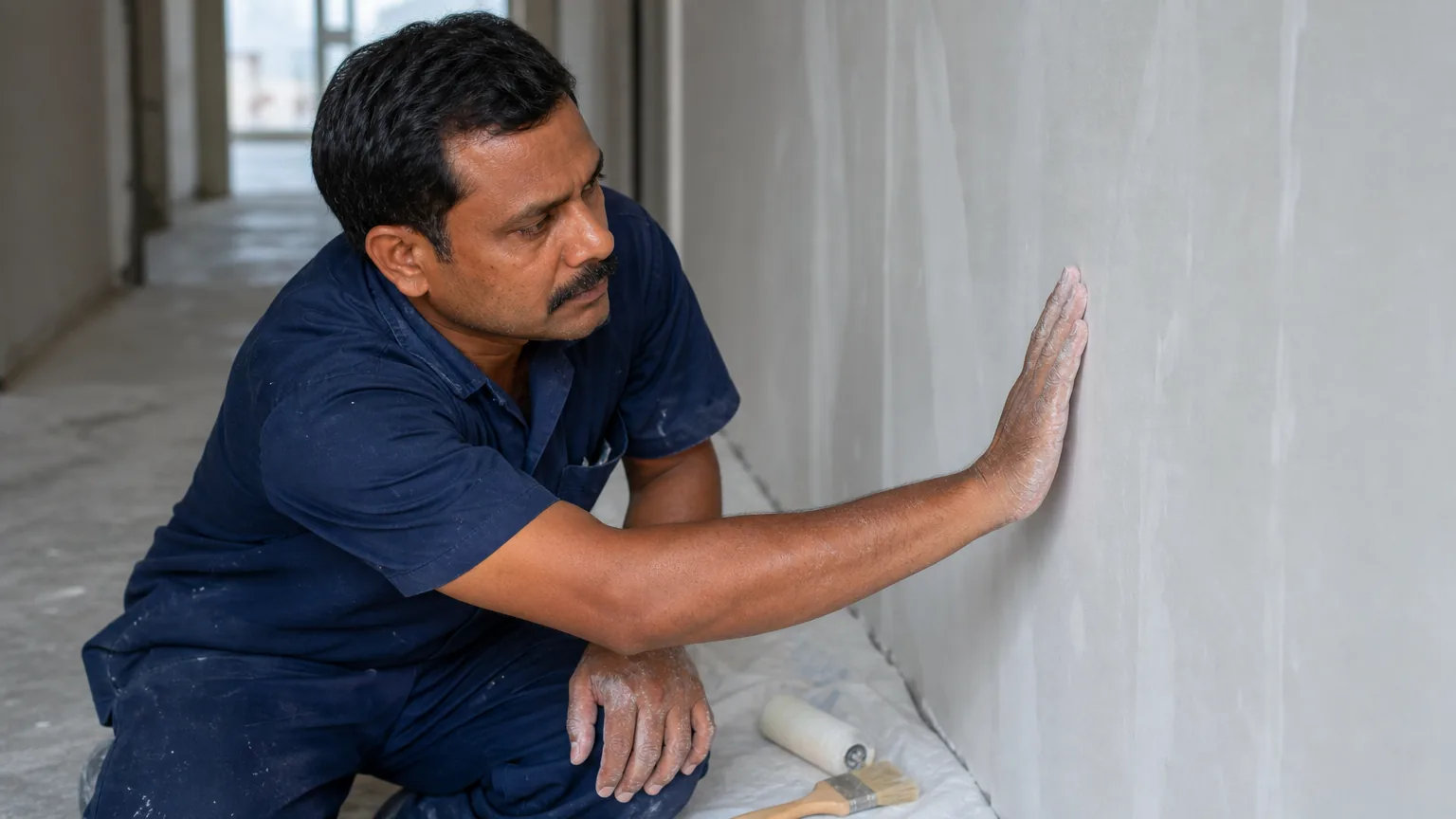
Substrate inspection — the wall must be dry, clean, free of dust and grease. Test absorbency: a damp brush stroke should darken the surface evenly. Mineral plasters cured 2-3 weeks. Gypsum board, bonded ingrain wallpaper, and OSB-board: firmly adhering, dust-free. For repaints, the existing coat must be sound, matt-finish, firmly adhering, not flaking — light mechanical key if any residual sheen.
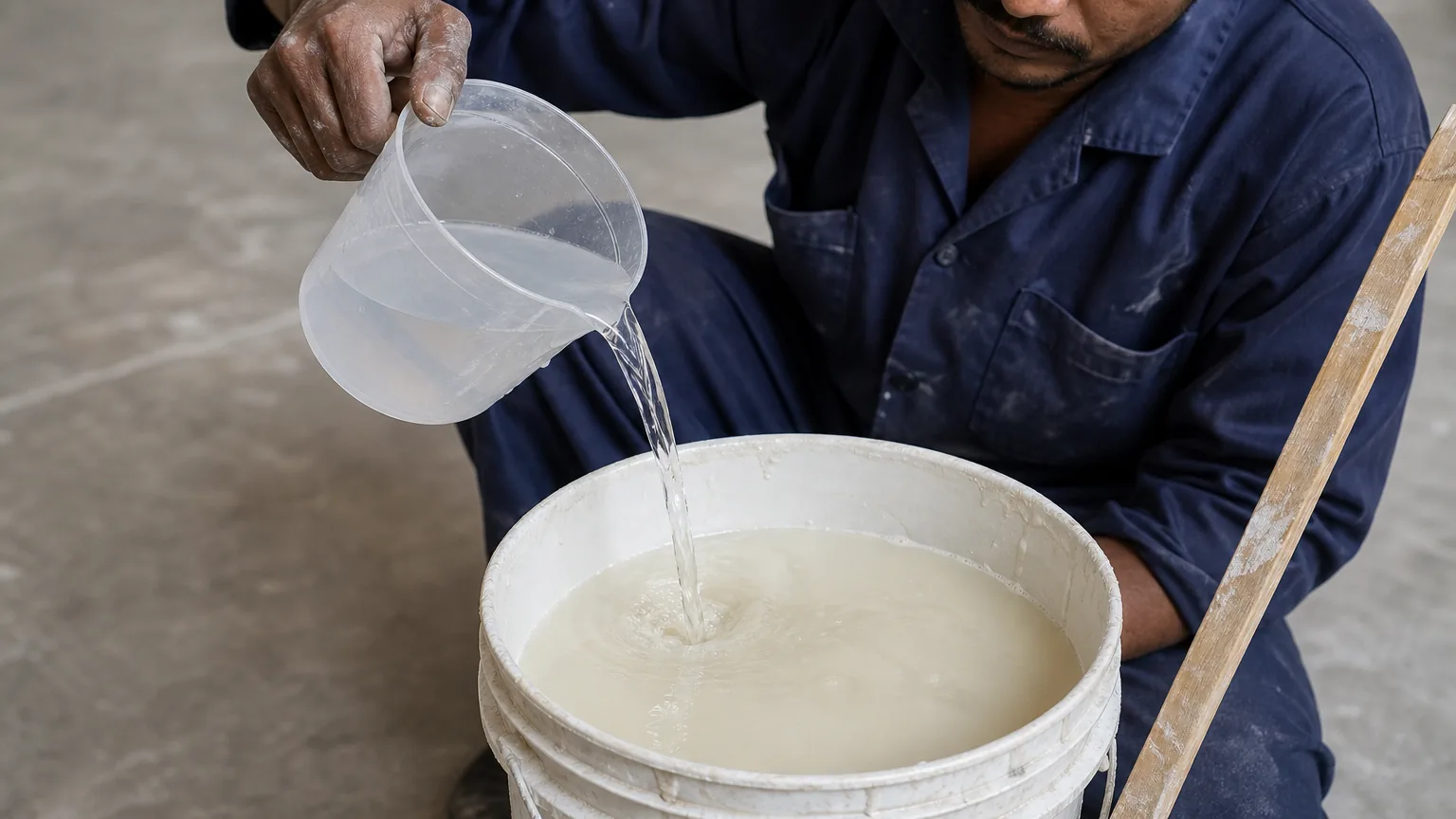
Dilute 1:1 with water before use — TDS explicit. Pour 620 into a clean painter’s bucket, add an equal volume of cold tap water, stir thoroughly until the liquid reads uniform translucent off-white. Do not apply 620 undiluted — the chemistry depends on water-carrier penetration into the substrate.
Apply by brushing, rolling, or spraying. Ambient and substrate temperature above 15 °C (TDS minimum). Work in all directions so the saponified soap penetrates the pore network uniformly; on roller, finish with light cross-strokes. The primer goes on as a transparent wash and cures invisible — the test is the dried absorbency face, not the wet appearance.
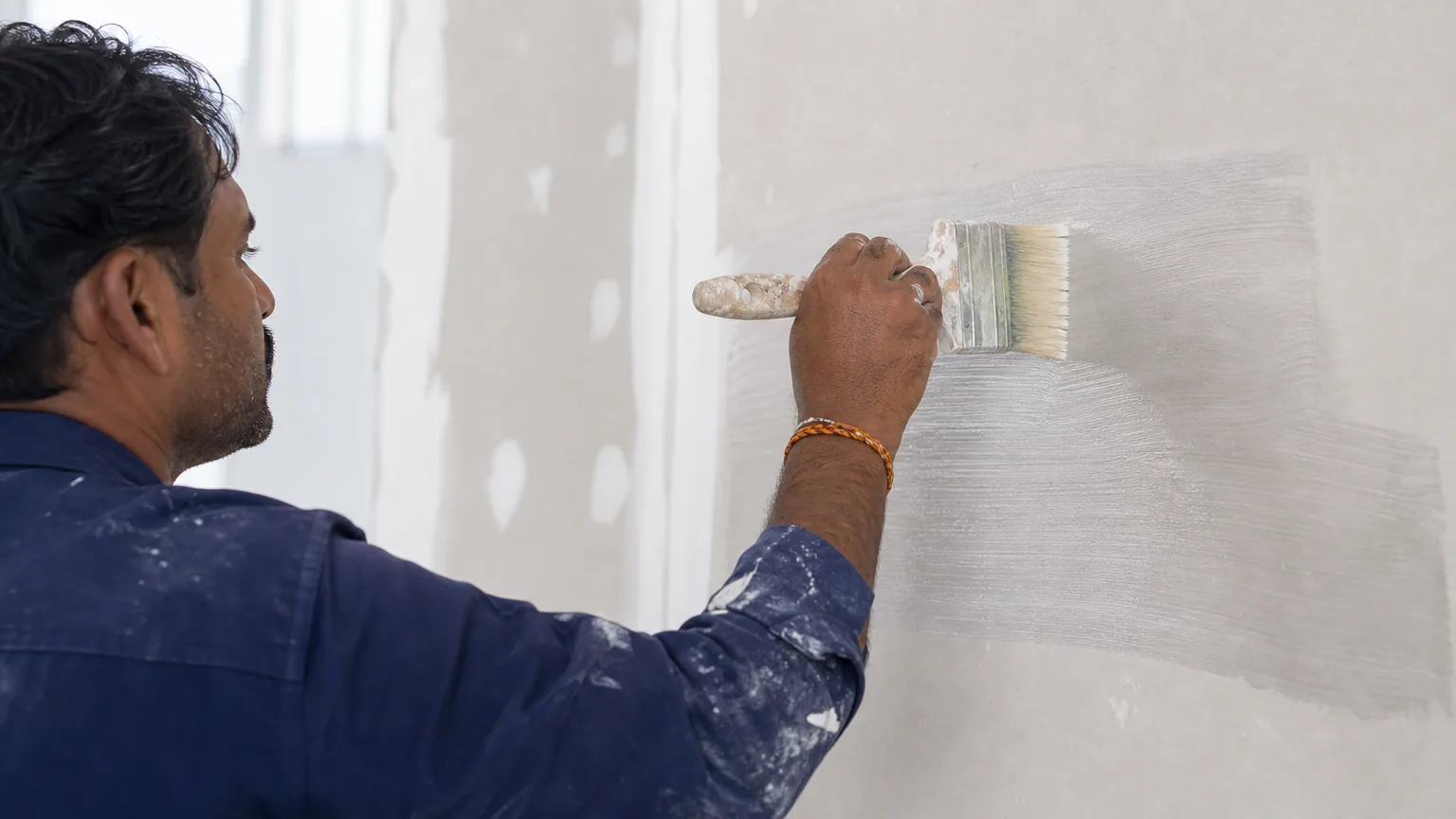
One coat is typically sufficient. Touch-dry 2-4 hours at normal room temperature. CRITICAL: the substrate must remain MODERATELY ABSORBENT after priming — do not over-prime. The primer evens absorbency variability; the topcoat needs an absorbent face to bond. Optional second light coat only for very highly absorbent or chalking substrates.
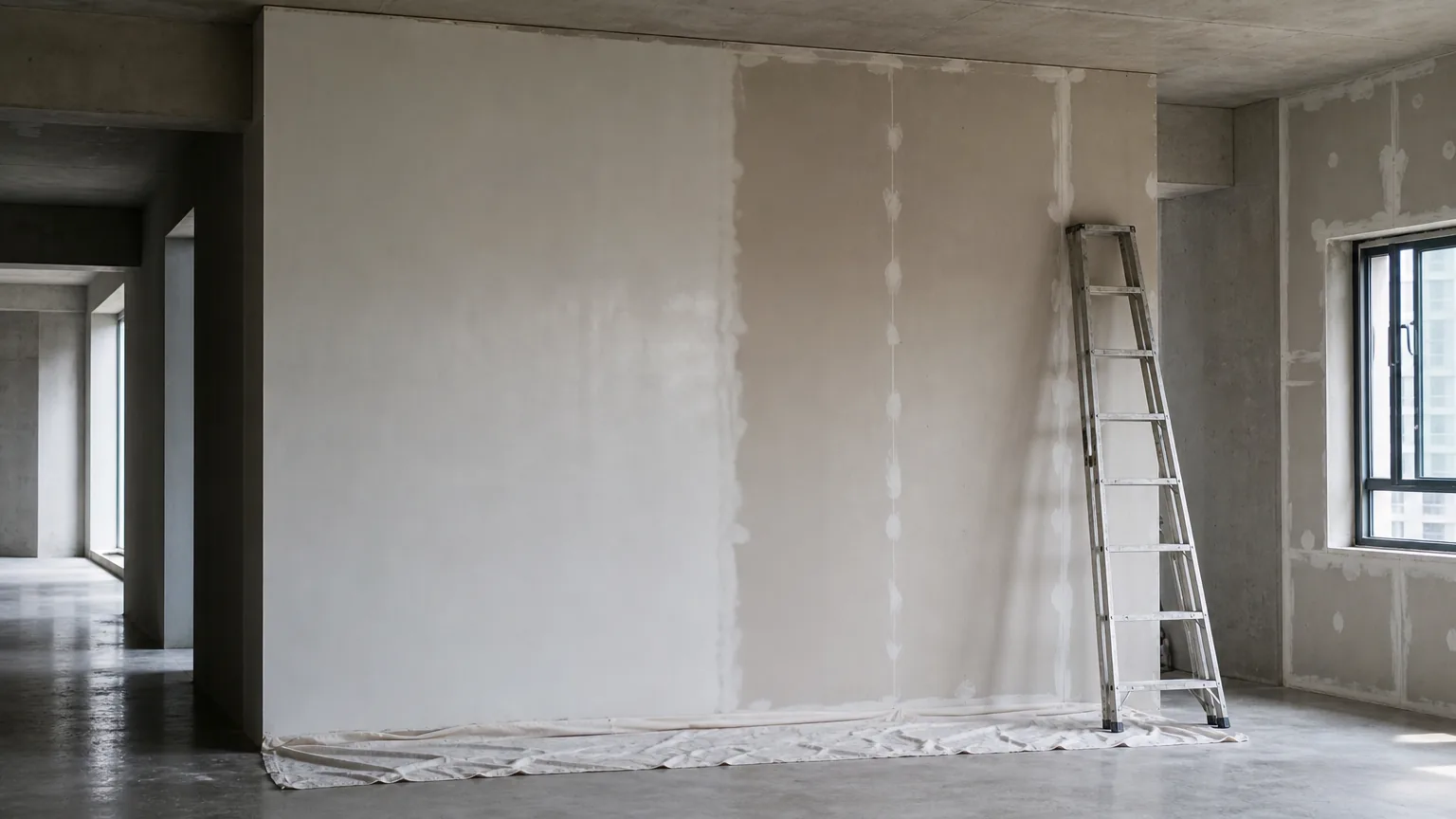
Topcoat-ready check + cleaning. Lightly damp-brush an inconspicuous area — moisture should darken evenly across the wall, not patchier in any zone. Once uniform, the wall is ready for the topcoat (660, 650, 655, 640, 680 per project spec). Clean tools immediately with cold tap water — saponified soap and wax rinse clean before cure sets in. Store closed pail dry, cool, frost-protected.
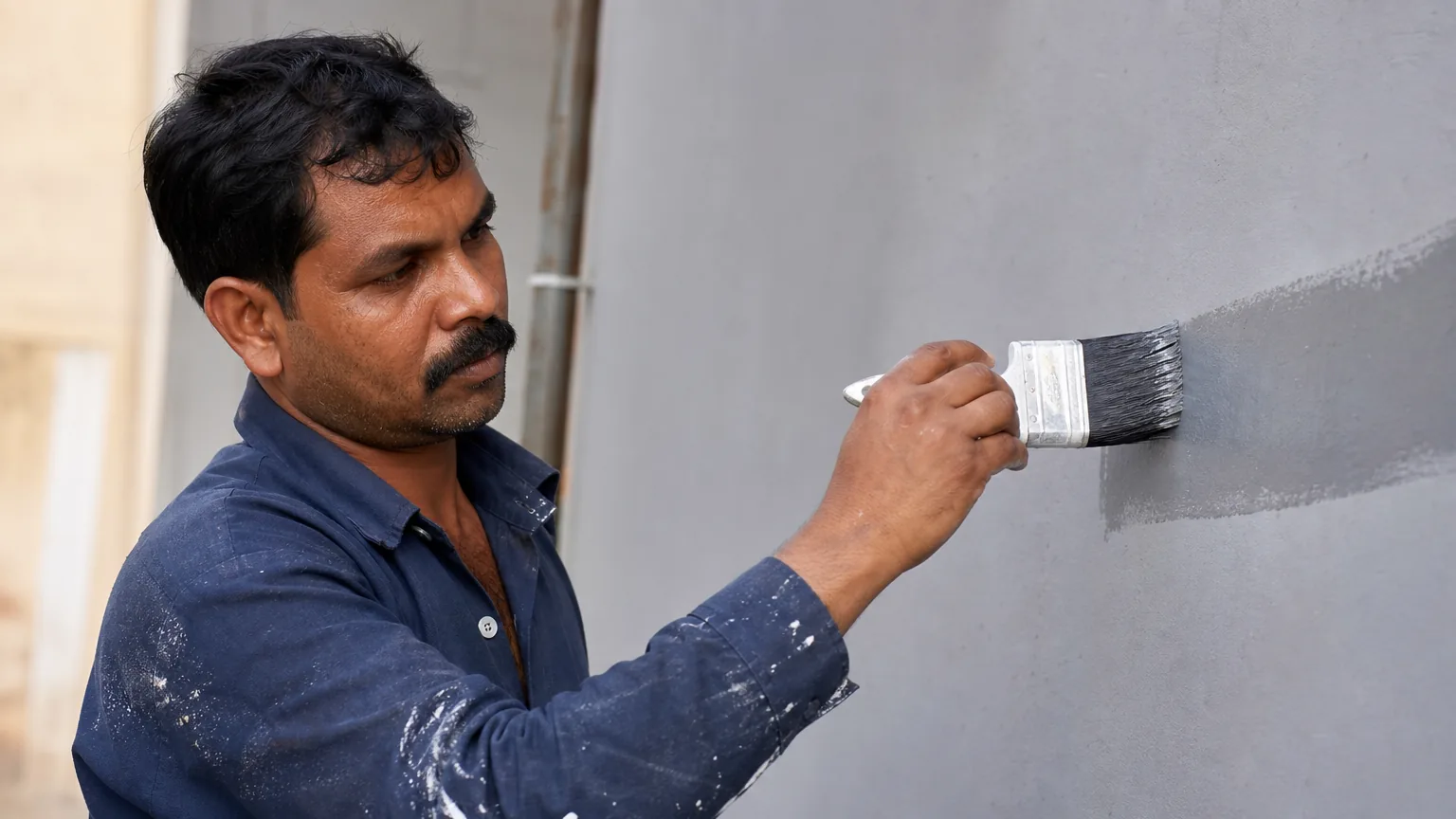
Application Conditions
Coats & Recoating
Cleaning & Storage
First time with Deep Sealer? Our technical team runs complimentary on-site walkthroughs for contractors — full application protocol, start to finish.
System & Substrates
One primer spec line covers the LEINOS apartment fit-out range — natural-resin emulsion (660 architect-line, 650 contractor-line), clay paint (655 premium decorative), plus TDS-listed casein (640) and plaster effect (680). For lime paint (665), specify 622 Mineral Plaster Primer instead. Dilute 1:1 with water; the substrate must remain moderately absorbent after priming for the topcoat to bond.
The Coating System
Primer plus topcoat — the full chain.
Topcoat Options
Choose the finish character; the primer underneath stays the same.
Substrate Fit
Suitable
Honest Limits
Use With Care
Coverage & Pack Sizes
Coverage varies with substrate absorbency. Chalking lime plaster and stipple-finished gypsum consume more than smooth skim plaster. TDS-published coverage assumes 1:1 dilution with water — never apply 620 undiluted. One coat is the canon for sound absorbent substrates; optional second coat for very highly absorbent or chalking substrates.
1L
Covers
110–180 sq ft
1 coat, absorbent mineral
Best For
Touch-up, small repair zone, single small bedroom or bath wall.
2.5L
Covers
275–450 sq ft
1 coat, absorbent mineral
Best For
Single full room, feature wall section, or small apartment project.
10L
Covers
1100–1800 sq ft
1 coat, absorbent mineral
Best For
Full apartment shell-fit-out, contractor project, multi-room development.
Enter your area to see how much material — and the most efficient pack mix — you’ll need for 1 coat.
Full calculatorRelated Work
Documented mineral surface projects. Captions show which LEINOS finish was used.
Full Declaration
Every ingredient declared on the label. The Trust Hub explains what each one does and the standards behind it.
Shellac (lac-beetle natural resin) and natural rosin-derived resin converted to soap form by potash (potassium carbonate). Water-soluble at point of application — flows into the pore network of absorbent substrates. As the water phase evaporates, the soap precipitates back into film-forming components held inside the cured wax phase. The depth of penetration is what makes the “deep sealer” name accurate.
Carnauba + Beeswax (Wax Binder Phase)
Carnauba wax (palm-derived, highest melting point of natural waxes) and beeswax (apiculture natural wax). The wax phase cures inside the substrate pore network as the water phase evaporates — binds substrate dust into the cured film, holds the saponified resin in place, and presents the even matt absorbency face that the topcoat sees. Same wax canon as LEINOS oil-wax topcoats (290 Hardwax Oil) — natural-materials chemistry, not synthetic-polymer chemistry.
Cellulose Thickener + Potash (Rheology + Saponification)
Cellulose thickener holds the saponified suspension stable in the wet pail and at point of application. Potash (potassium carbonate) is the saponifying agent — it converts the shellac and natural resin into soap form so they dissolve in water and flow into the substrate. Water is the carrier — evaporates after application, the cured film contains no water and no solvent.
Mild Preservative · Benzisothiazolinone (Tier 2)
1,2-benzisothiazol-3(2H)-one (BIT) at preservative-level concentration keeps the wet pail stable through the 2-year shelf life. TDS verbatim disclosure — may cause allergic reactions in sensitised individuals (standard wet-paint allergen register). The cured primer film on the wall contains no biocide and no solvent; the preservative role applies only to the wet pail in storage. SDS supplied on request from LEINOS India for the full hazard register.
Got Questions?
Quick answers on formulation, application and Indian-climate suitability. Pulled from our full FAQ and TDS library.
For Architects & Specifiers
Technical and safety documents — citable in project specifications.
Need a Recommendation?
Four ways to reach our India team — pick the one that fits how you work.
For Trade & Specifiers
Full TDS / SDS library, specification support and trade pricing — direct from the manufacturer.
Documents
TDS / SDS
Per-product datasheets and safety sheets, downloadable in English.
Specification
NCS Match
Custom colour briefs and material samples mixed at our Delhi lab.
Trade
Direct Pricing
Volume tiers, project quoting and stock allocation through our trade desk.
Written by the LEINOS India technical team, in collaboration with
Reincke Naturfarben R&D, Lower Saxony.
Last updated
Want to represent LEINOS in your city?
Become a Dealer