The mechanism
Open-pore protection, not a sealed coat.
A conventional polyurethane varnish builds a continuous synthetic film on the surface. That film is hard and impermeable — it keeps water out, but it also locks moisture in, and when seasonal movement makes the timber swell and shrink the rigid film cracks, bubbles, and peels. The failure is the film.
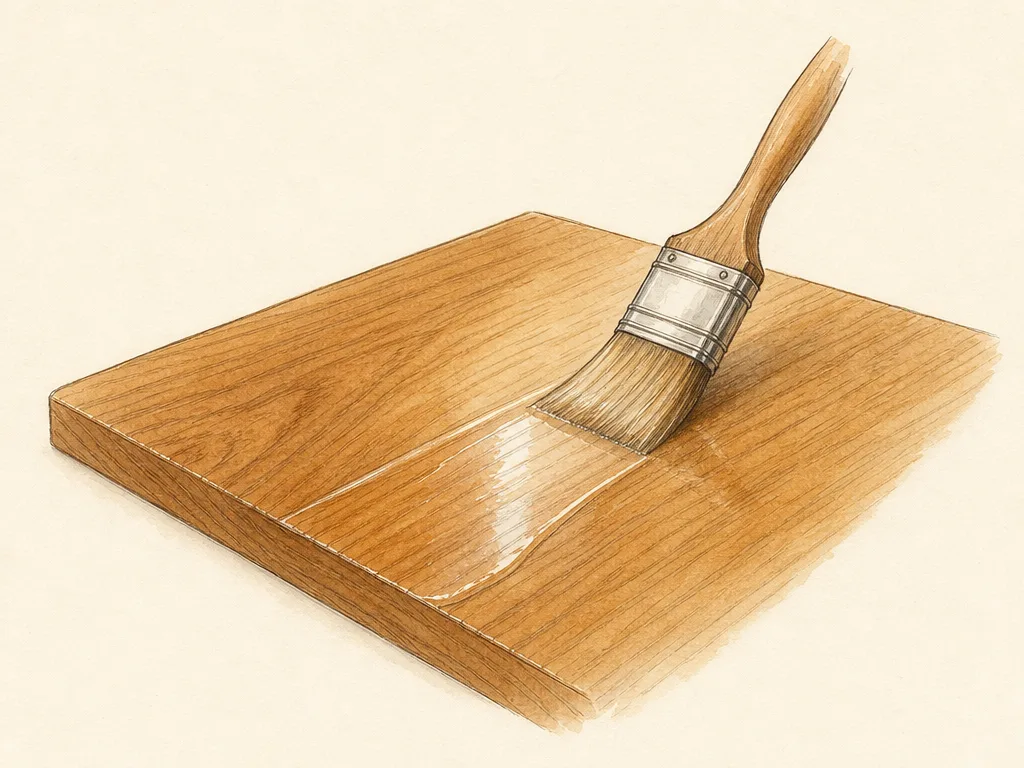
A natural-resin wood finish works differently. Stand oil, castor oil, and natural resin esters penetrate the surface layers and cure to a weather-resistant, water-repellent finish that stays open-pore — water vapour still passes through, so the wood keeps regulating its own moisture. Water is repelled at the surface; vapour keeps moving out through the finish, and there is no closed film to crack under the movement of the timber.
The result sits between a penetrating oil, which lives entirely inside the wood, and a film-forming PU, which sits on top. The surface is harder and more closed than an oiled finish — it takes more daily wear and resists weathering more aggressively — without giving up the vapour-permeability that keeps natural finishes durable on moving timber.
Hard enough to weather a monsoon season. Open-pore enough to let the timber breathe.