
0.25L
Covers
15–20 sq ft
2 coats, absorbent wood
Best For
Test patch, shade approval, or a single small item — a window sash or a stool.
WATER-BASED WOOD STAIN · INTERIOR & EXTERIOR · ART. 266
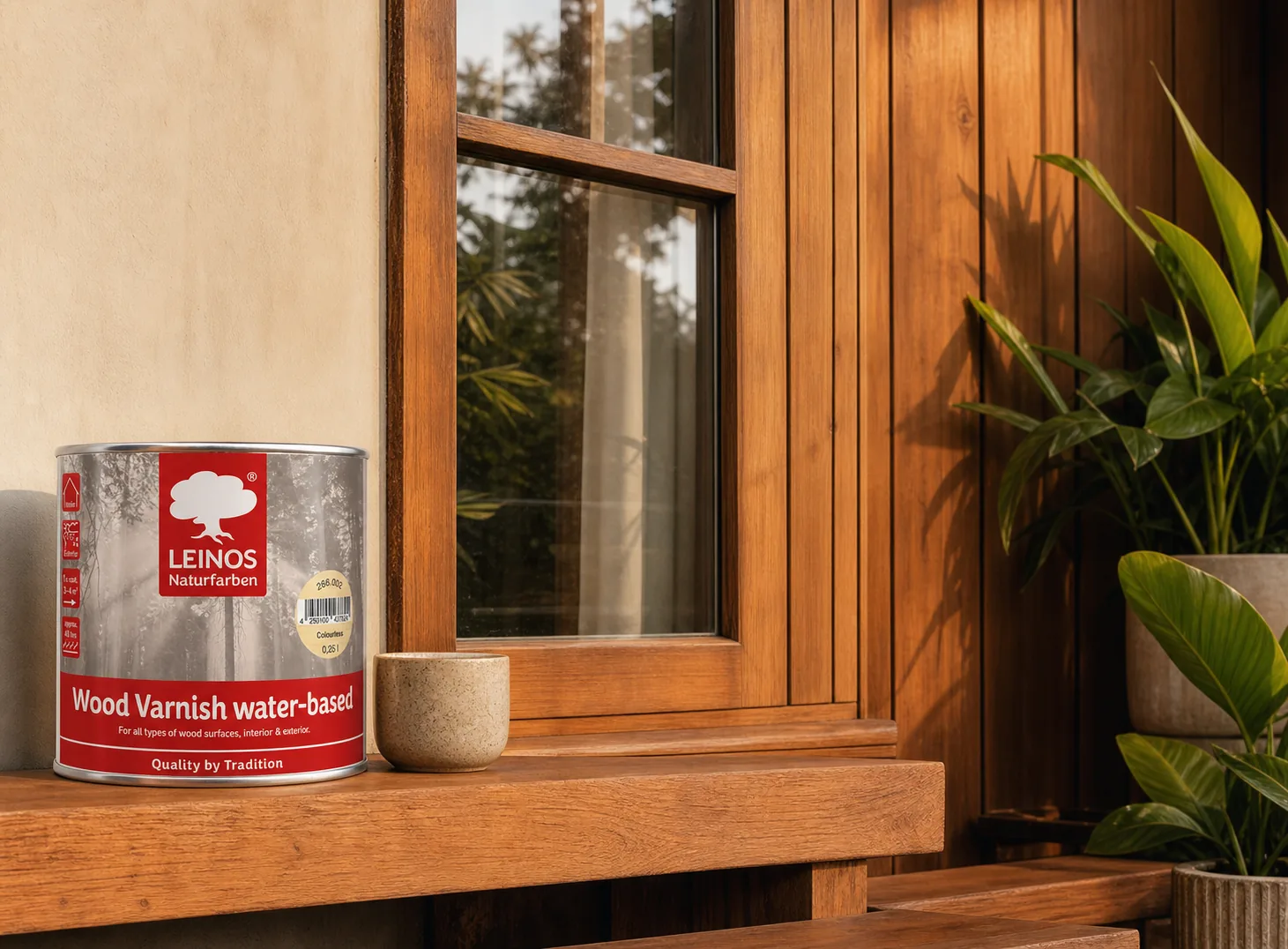
LEINOS 266 is an open-pore wood stain carried in water, not solvent. A plant-oil emulsion soaks into the grain, colours the wood, and keeps the surface vapour-permeable. Two self-priming coats — thinned and cleaned with water. 30 g/l VOC. Made in Germany by Reincke Naturfarben.
Ready-Mix Shades
13 ready-mix shades — from Colourless to Anthracite — carried in a low-VOC water base. Test-patch first: because 266 is translucent, the dried shade differs from the fresh colour in the can.
002
Colourless
022
Pine
041
Teak
057
Swedish Red
062
Walnut
063
Mahogany
072
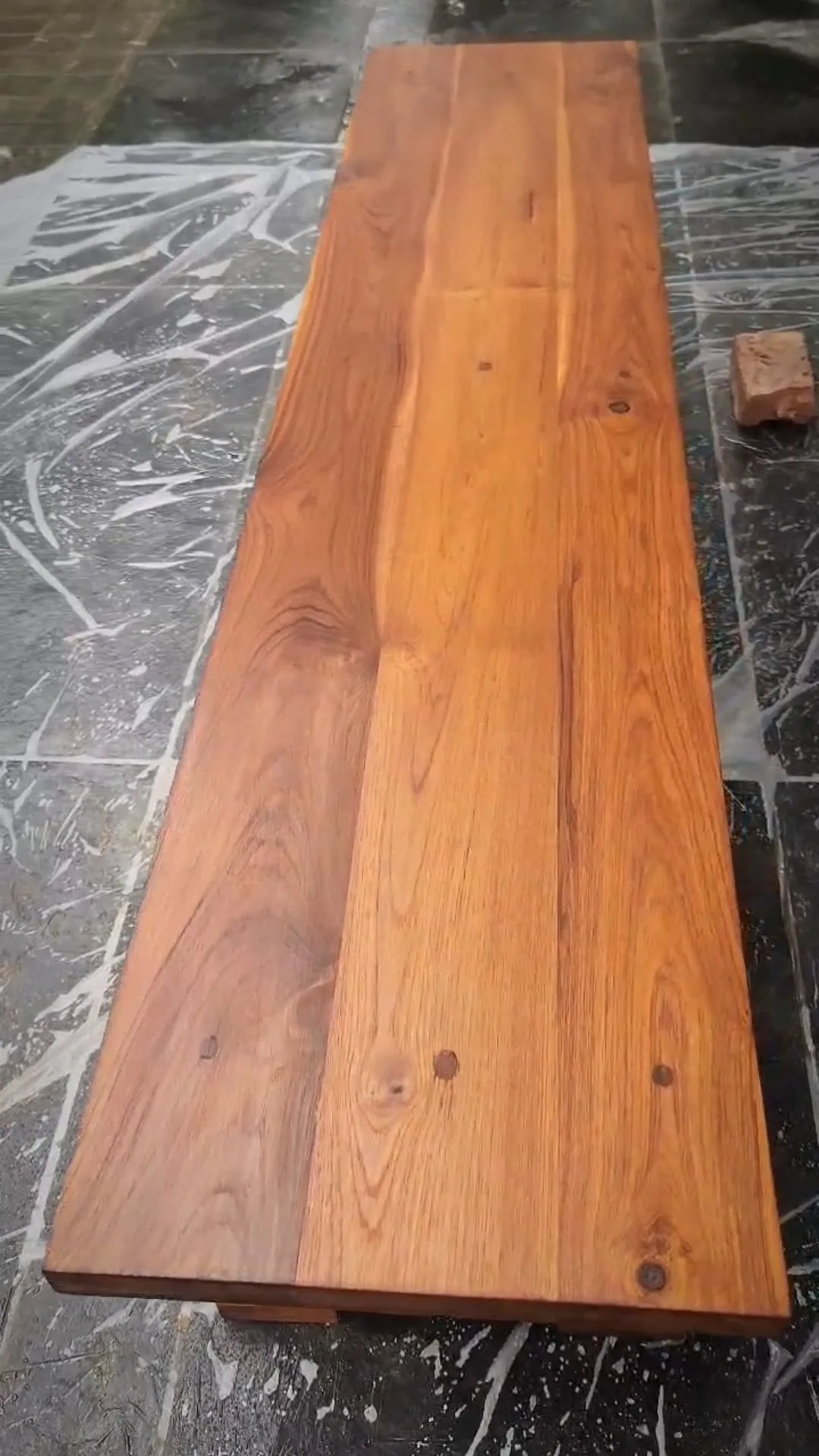
Oak
082
Rosewood
102
Ebony
202
White
212
Light Grey
403
Pigeon Blue
731
Anthracite
Wood is a living material — actual colour depends on species, grain density, and substrate age. Each shade you see here is a reference. Our specialists confirm the final match with you before specification.
Beyond the Standard Range
Custom NCS or RAL tinting at our Delhi lab — any architectural reference matched across the full colour palette. Bring the spec, take the shade home.
Two notes from the manufacturer: 002 Colourless carries no UV-protective pigment — use it to preserve the natural tone, not for weathering protection on sun-exposed surfaces; and because this is a translucent stain, the grain and any old coating show through, so strip previous finishes completely and always apply a test patch. All pigmented shades carry UV-screening mineral pigment.
Mechanism & Use
A plant-oil binder emulsified in water + carnauba wax + mineral pigments — open-pore protection that colours the grain, repels rain, and stays low-emission indoors and out.
A water-borne plant-oil emulsion soaks into the grain and colours the wood — no surface film to crack or peel.
Open-pore and vapour-permeable: interior moisture escapes outward instead of being trapped under a film.
Carnauba wax and the cured oil emulsion bead off rain and dirt while the surface stays breathable.
Carried in water at 30 g/l VOC — low odour, water cleanup, suited to occupied interiors as well as facades.
Where It Lives
Interior panelling, trim & furniture
Low VOC and low odour make 266 comfortable to use in occupied rooms — the water-based advantage indoors.
Timber windows & doors
Open-pore stain refreshes coat-on-coat without peeling; the grain stays visible.
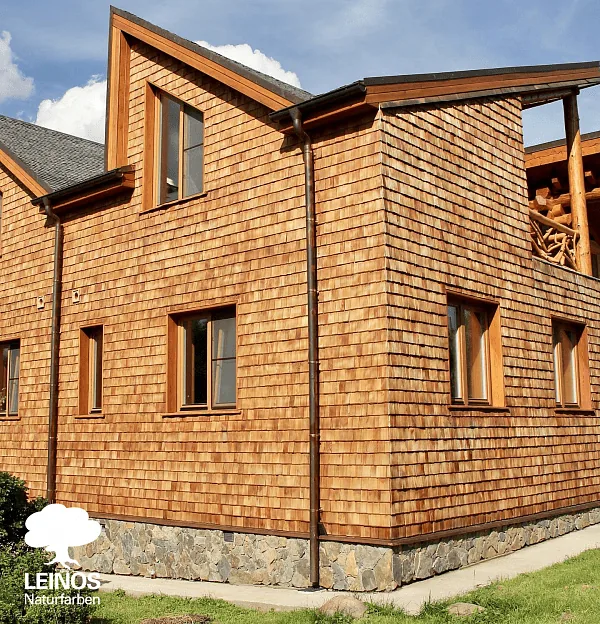
Vertical cladding & facade timber
Breathable, water-repellent protection for softwood and hardwood siding.
Fences, pergolas & garden woodwork
Weather-facing timber that needs water-repellency without a brittle film.
Softwood joinery
Especially suited to pine, spruce, and cedar — the woods 266 was formulated around.
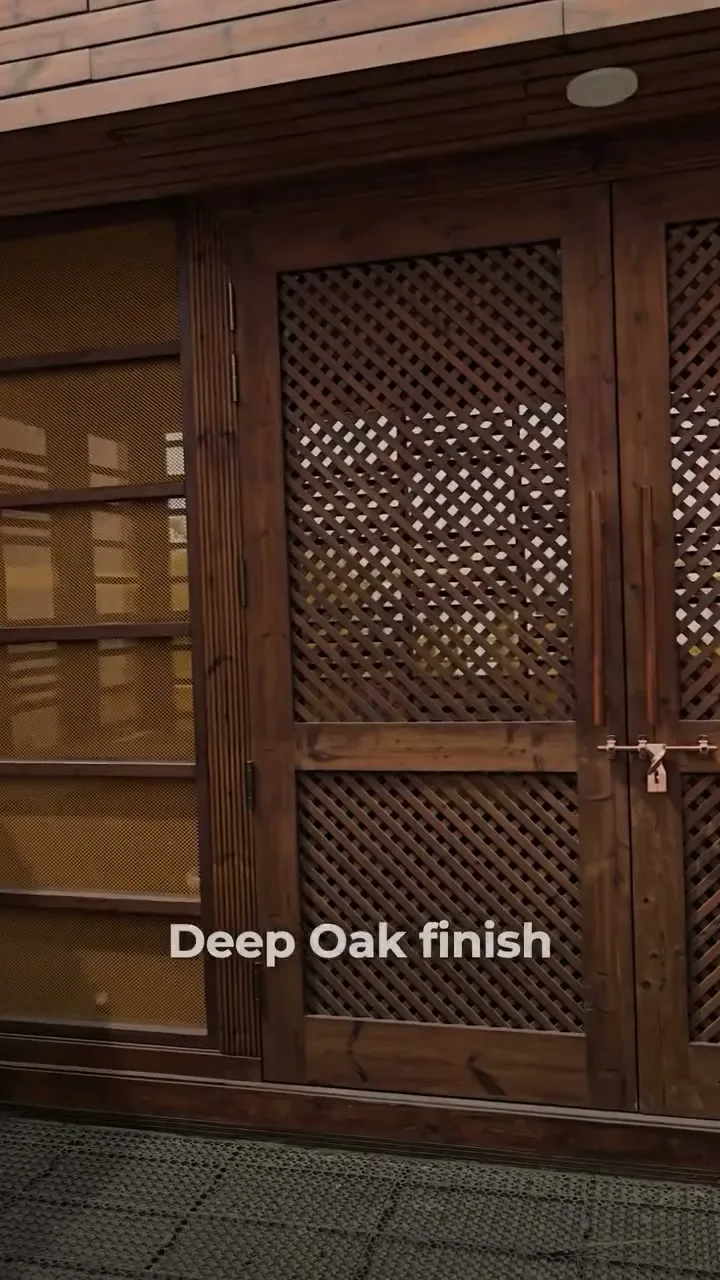
Heritage shutters & jali screens
Translucent colouring keeps the grain and profile detail legible.
Compliance · VOC · InVeNa · Made in Germany
Three anchors for a water-based natural finish: near-zero VOC, full-ingredient disclosure, and German manufacture. No borrowed claims — 266 carries no toy-safe or institutional-lab certification, and we say so.
Low Emission
Near-zero VOC for a water-based woodstain — well under the 130 g/l EU limit (Cat f minimal-build, Directive 2004/42/EC). Water-thinnable · GISCODE BSW20.
Ingredient Disclosure
Reincke Naturfarben — full-ingredient-disclosure pledge for natural building products.
Open-pore stains weather predictably. Refresh is a single brush coat over a swept-clean surface — no sanding back to bare wood, no peel-strip step. Because 266 is water-based, that refresh is low-odour and cleans up with water. A film coating fails differently: it cracks, lifts, and locks moisture beneath the failure line. We choose the failure mode that is recoverable.
Read The Full TDSStep by Step
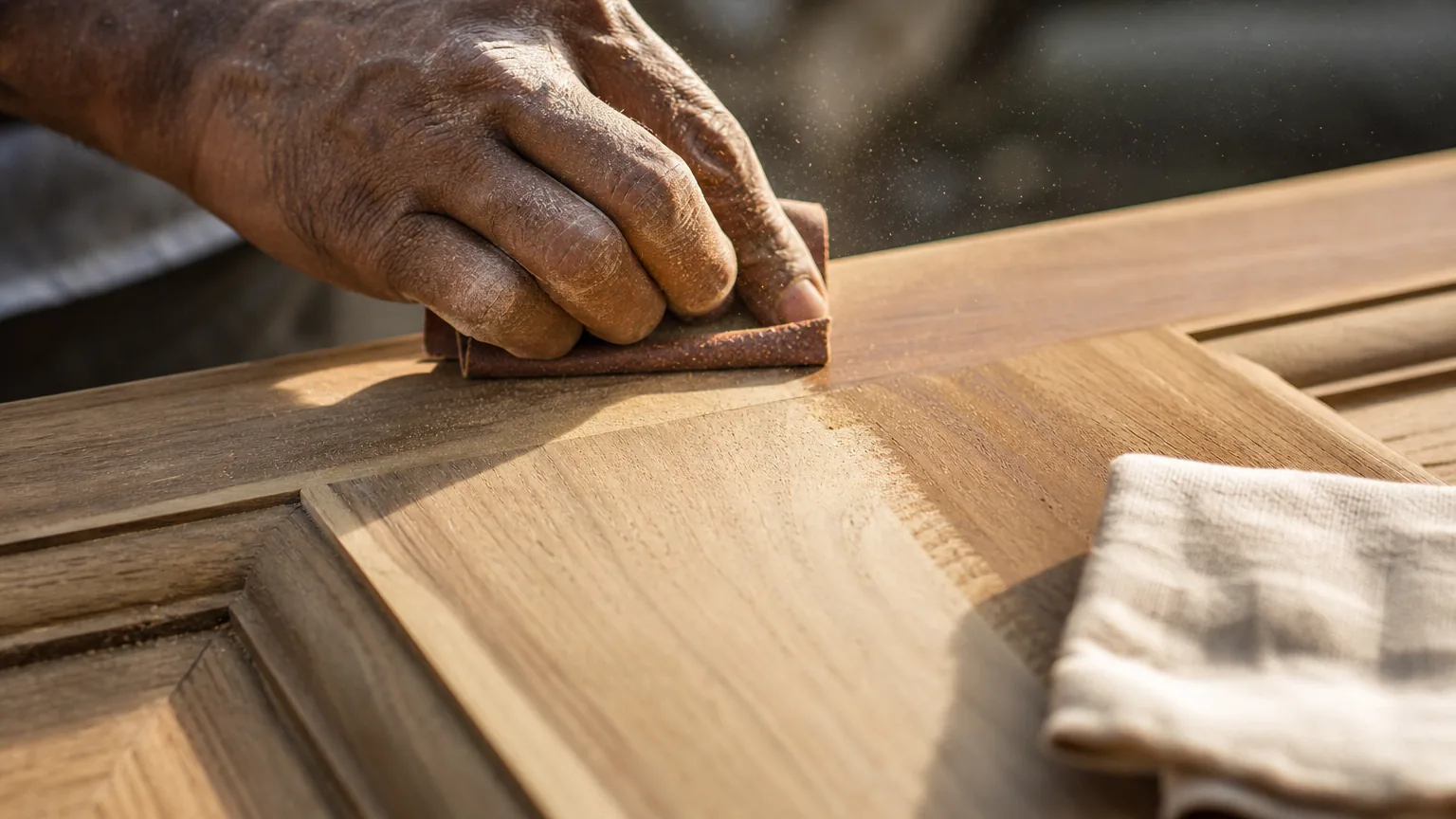
Prepare the substrate — clean, grease-free, and absorbent. Remove old coatings completely; because 266 is translucent, anything left behind shows through. Sand along the grain with 150-grit and wipe off the dust. Room and surface temperature not below 16 °C.
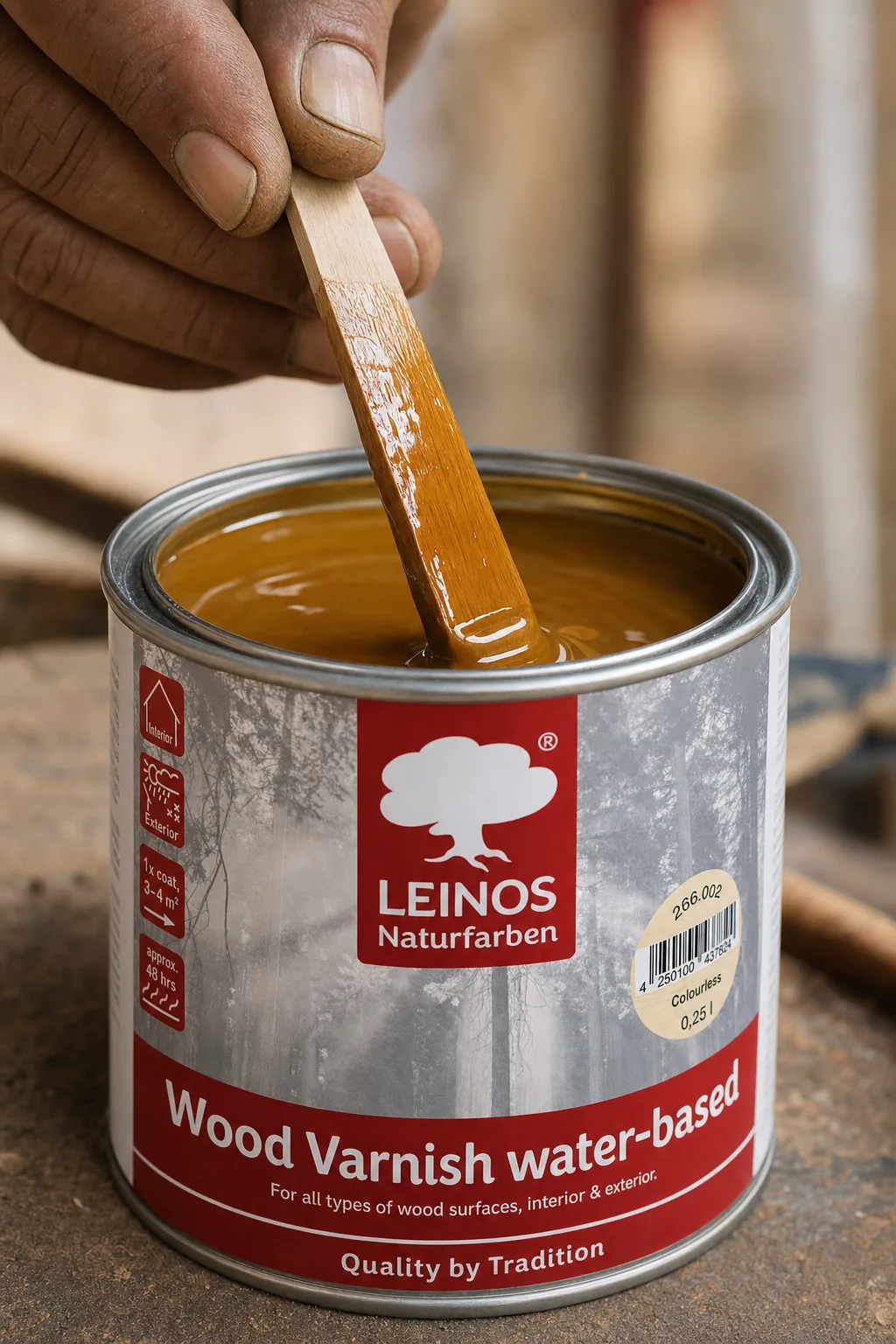
Stir thoroughly before you start — lift off any skin, then mix well so the pigments and oils are evenly dispersed. 266 is ready to use; if needed it can be thinned up to 2–5% with water.
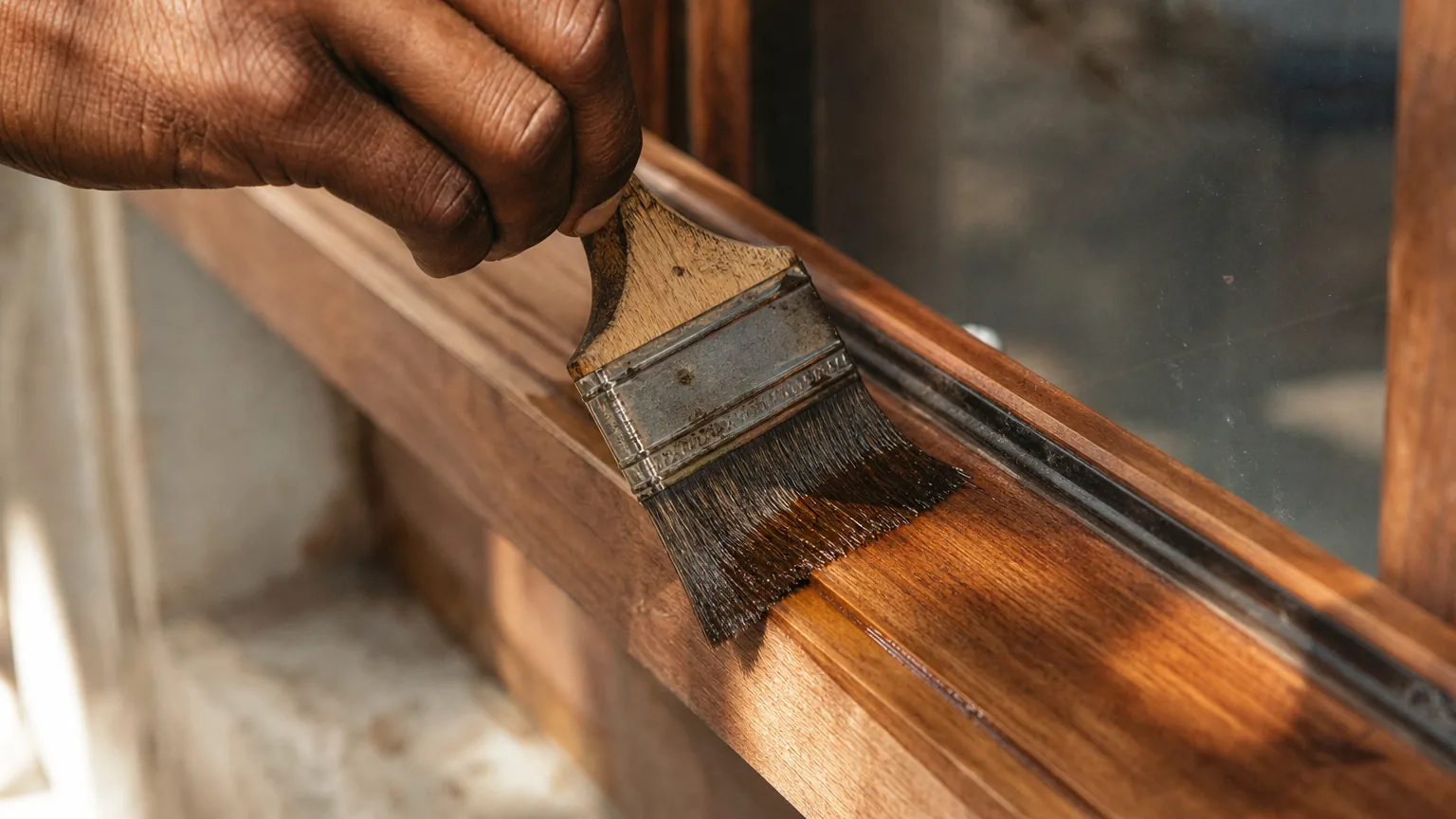
Apply the first coat thinly and evenly along the grain with a glaze brush or roller. Work sparingly — how much the first coat takes depends on how absorbent the wood is. One even pass; no puddles.
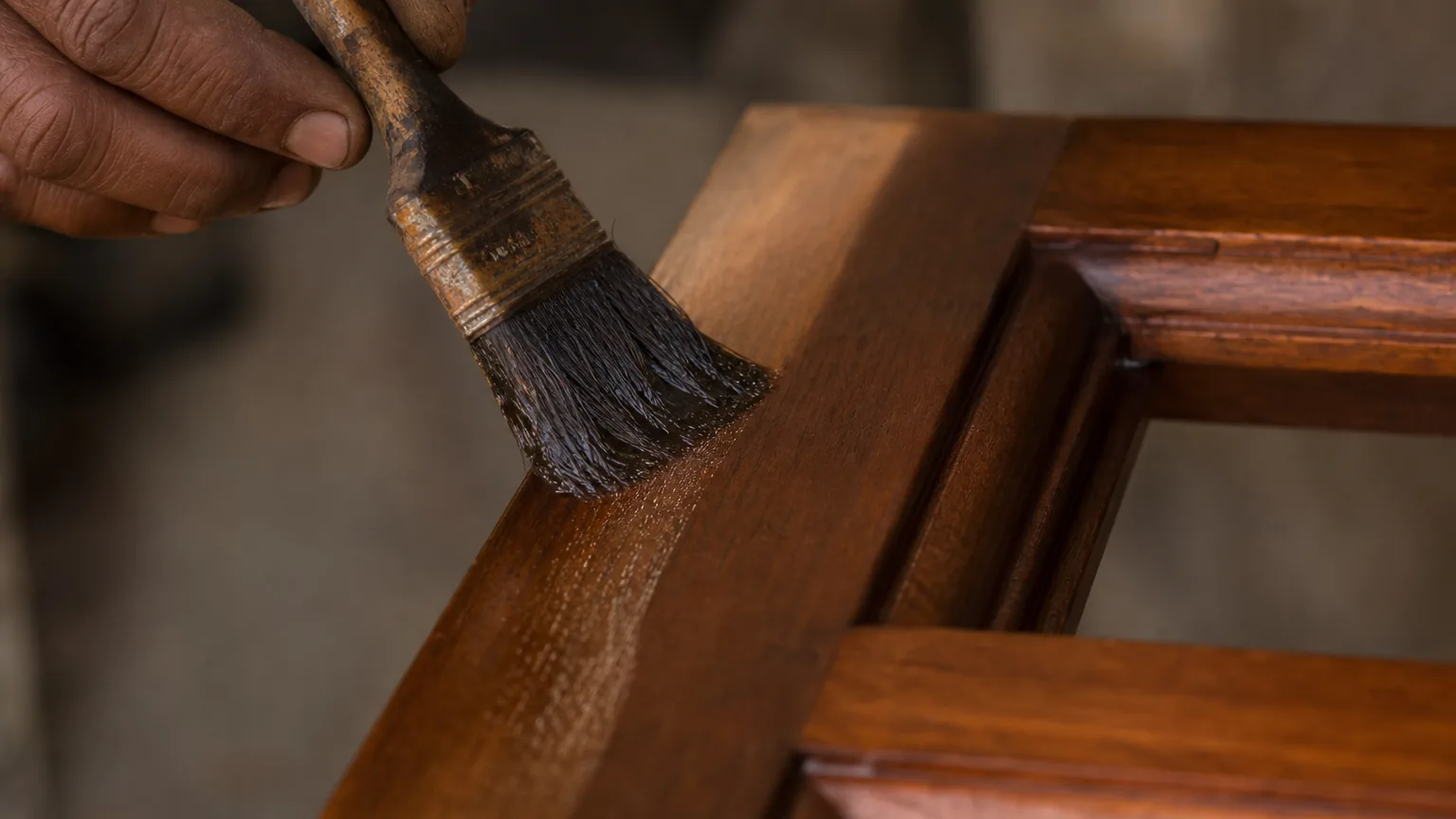
Recoat after approx. 4–6 hours. The second coat builds the protection and deepens the shade to the finished colour. Keep to the grain direction; no sanding needed between coats.
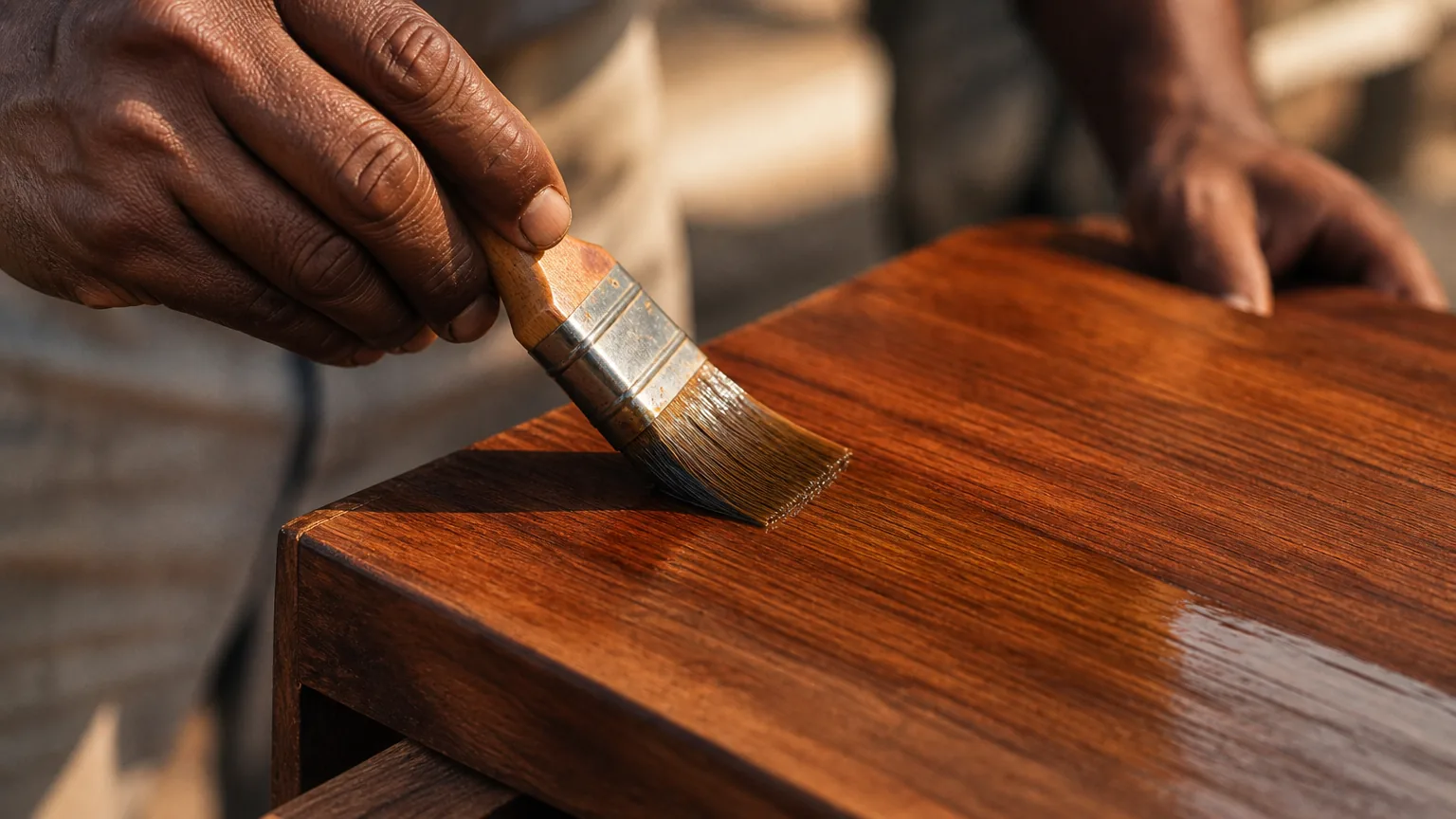
Keep coverage even and thin — thick coats do not dry well. 266 can also be sprayed (airless or HVLP) for cladding and larger runs. Always brush out a test patch first: the dried shade differs from the fresh colour in the can.
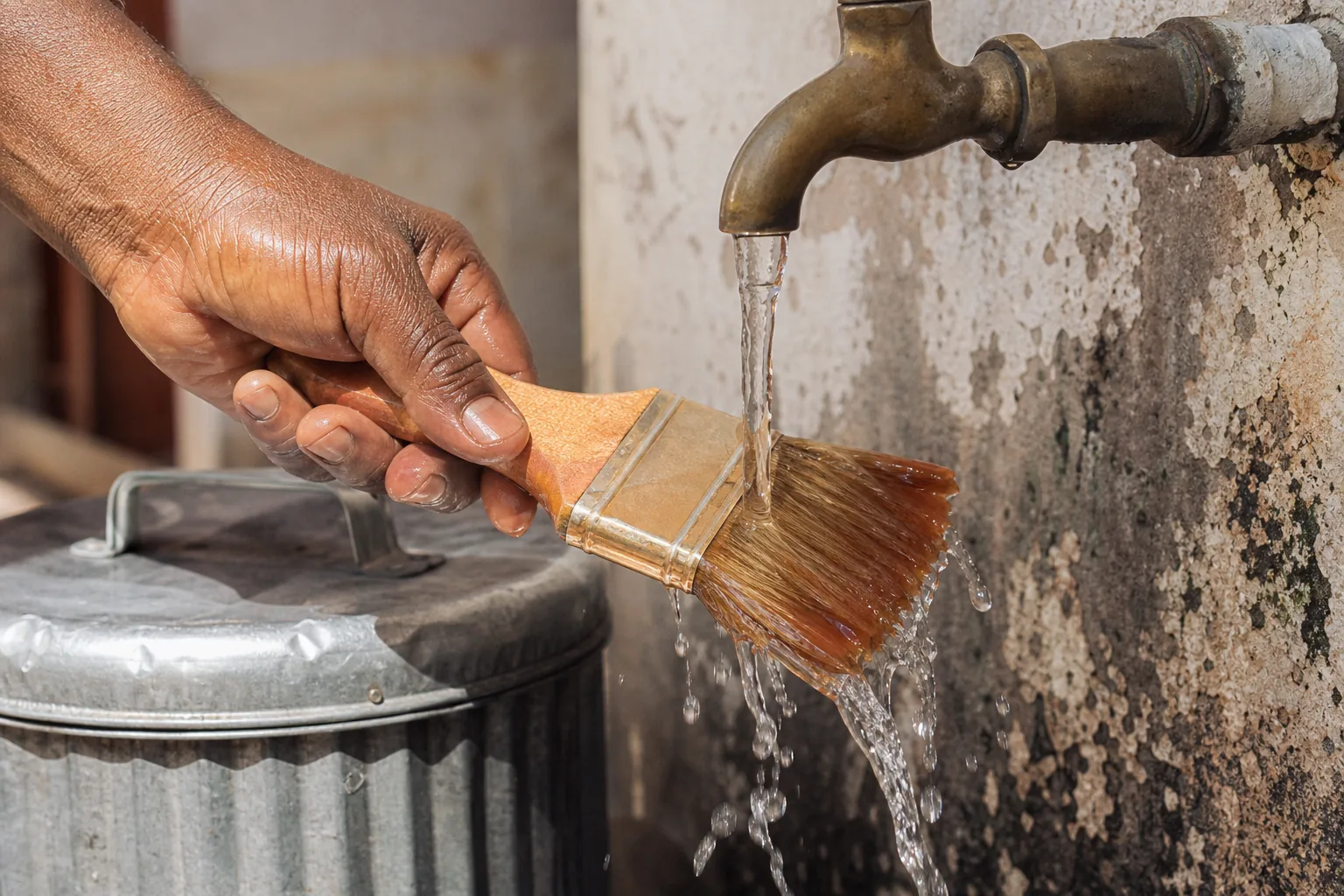
Clean up and cure — thin and wash tools with water (a mild soap solution lifts oily brush residue). Let the surface cure for about 2 days before it takes wear; a fan speeds drying and cuts odour. Store product-soaked cloths airtight in metal or under water — the drying plant oil can self-ignite.
Application Conditions
Coats & Recoating
Cleaning & Storage
First time with Wood Varnish, Water-Based? Our technical team runs complimentary on-site walkthroughs for contractors — full application protocol, start to finish.
System & Substrates
266 is a self-contained system: two thin coats on clean, absorbent timber. The first coat seals and colours; the second builds protection and shade depth. No separate primer is specified.
The Coating System
Primer plus topcoat — the full chain.
Substrate Fit
Suitable
Honest Limits
Use With Care
Coverage & Pack Sizes
Coverage assumes two thin coats on absorbent timber. Actual spread depends on whether the wood is sawn, planed, or sanded, and on its absorbency.
0.25L
Covers
15–20 sq ft
2 coats, absorbent wood
Best For
Test patch, shade approval, or a single small item — a window sash or a stool.
0.75L
Covers
50–55 sq ft
2 coats, absorbent wood
Best For
A window, a door, or a small furniture piece.
2.5L
Covers
165–190 sq ft
2 coats, absorbent wood
Best For
Cladding runs, fences, and multi-window or multi-door jobs.
Enter your area to see how much material — and the most efficient pack mix — you’ll need for 2 coats.
Full calculatorRelated Work
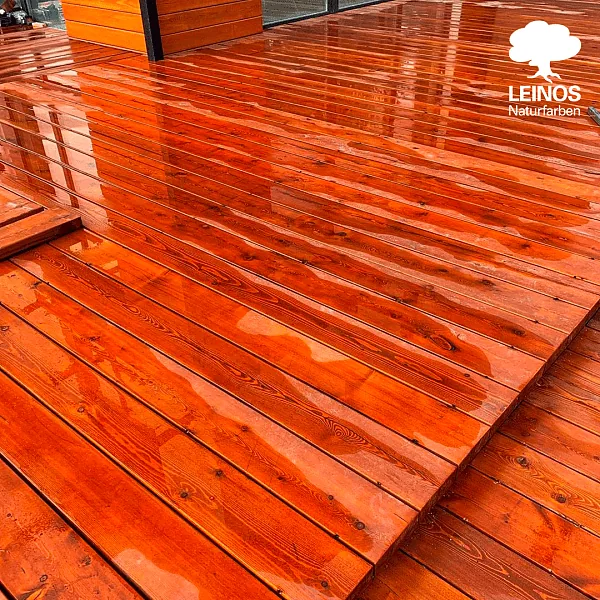
Documented exterior wood projects. Captions show which LEINOS finish was used.
Full Declaration
Every ingredient declared on the label. The Trust Hub explains what each one does and the standards behind it.
Water-Based Natural-Oil Emulsion
A plant-oil binder emulsified in water (Bindemittelemulsion auf Naturölbasis). It soaks into the grain and cures by oxidation as the water leaves — the reason 266 works as an open-pore stain and cleans up with water instead of solvent.
A hard natural wax from the carnauba palm. It gives the cured surface its water-repellency and a soft satin sheen without closing the pores, so the wood stays breathable.
Talc (Mineral Filler)
A fine mineral filler (Talkum) that adds body and an even, matte lay-down, helping the stain sit uniformly while keeping the finish vapour-permeable.
Zirconium Drier
A cobalt-free siccative (zirconium neodecanoate) that cures the oil emulsion. We use the milder zirconium chemistry rather than cobalt.
Mineral Pigments
Iron oxides, titanium dioxide, and carbon for UV screening and colour stability across the twelve tinted shades. The Colourless variant (002) omits pigment.
In-Can Preservatives
A small BIT + CMIT/MIT system keeps the water-based product stable in the can. We disclose it honestly: it can cause allergic reactions in sensitised individuals. It is an in-can preservative, not an active film biocide.
Got Questions?
Quick answers on formulation, application and Indian-climate suitability. Pulled from our full FAQ and TDS library.
For Architects & Specifiers
Technical and safety documents — citable in project specifications.
Need a Recommendation?
Four ways to reach our India team — pick the one that fits how you work.
For Trade & Specifiers
Full TDS / SDS library, specification support and trade pricing — direct from the manufacturer.
Documents
TDS / SDS
Per-product datasheets and safety sheets, downloadable in English.
Specification
NCS Match
Custom colour briefs and material samples mixed at our Delhi lab.
Trade
Direct Pricing
Volume tiers, project quoting and stock allocation through our trade desk.
Written by the LEINOS India technical team, in collaboration with
Reincke Naturfarben R&D, Lower Saxony.
Last updated
Want to represent LEINOS in your city?
Become a Dealer