
0.75L
Covers
100–135 sq ft
1 coat, absorbent wood
Best For
Test boards, small joinery, single-piece priming.
WOOD PRIMER · ART. 150
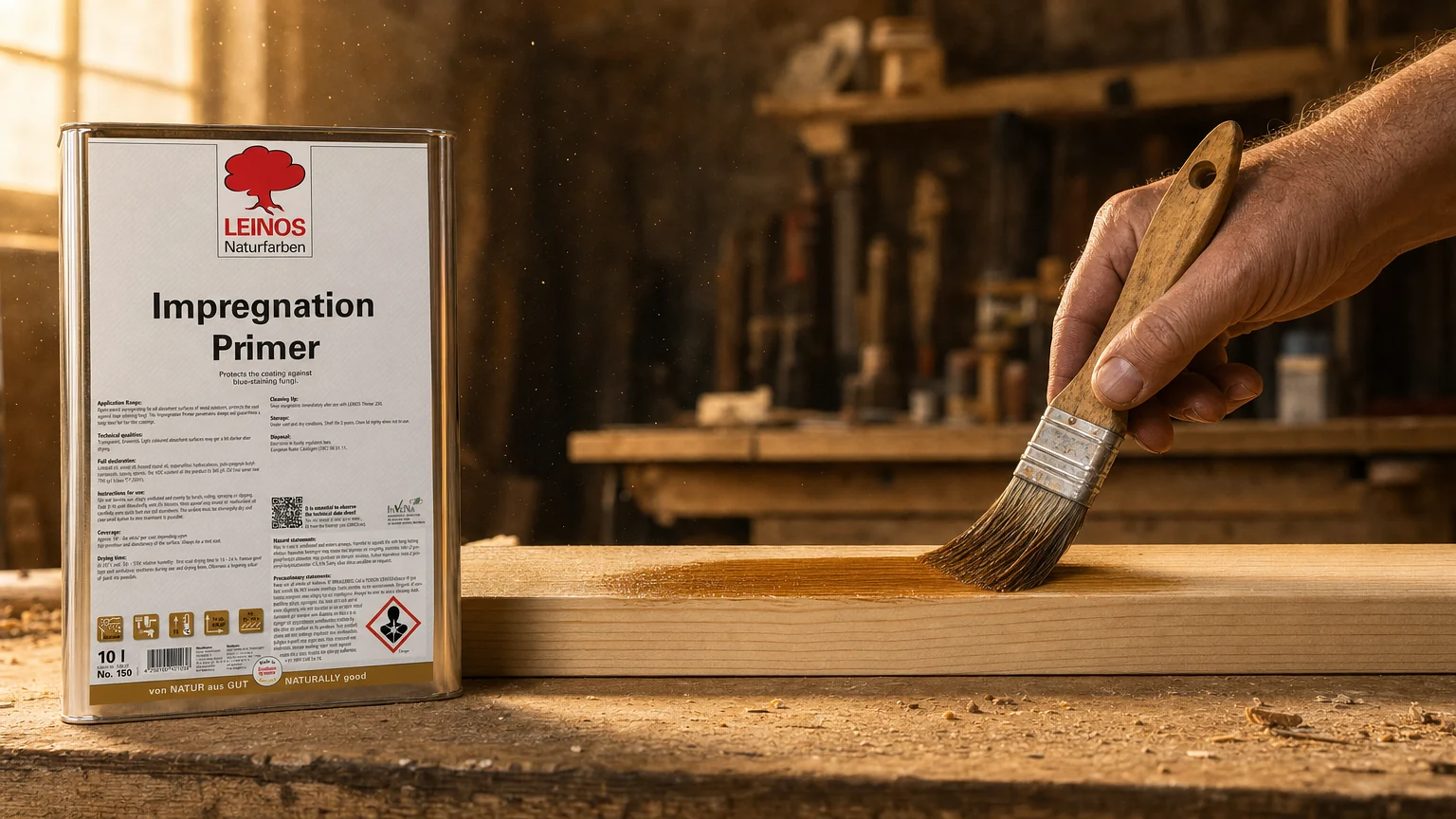
LEINOS 150 — open-pore impregnation primer for untreated softwood and absorbent hardwood. IPBC sapstain barrier, 130–180 sq ft/L coverage, 16–24 h cure. Brushed in under Wood Varnish 260, Weatherproof Paint 850 and, outdoors, the lacquer system.
Mechanism & Use
Linseed oil + isoaliphatic carrier penetrate the grain — a REACH-registered IPBC barrier interrupts the blue-stain fungal cycle on softwood and monsoon-exposed timber.
Isoaliphatic carrier pulls linseed oil into the wood pores, not just the surface.
Cures without forming a film. Vapour stays free to move through the grain.
Polymerised oil binds loose end-grain and evens the absorption pattern for the topcoat.
IPBC biocide stops blue-stain fungi before the topcoat seals the surface.
Where It Lives
Mumbai softwood doorframes
Jobsite doors and casements before LEINOS stain or varnish topcoats.
Pune window casements
Softwood window units, priming for outdoor varnish under monsoon.
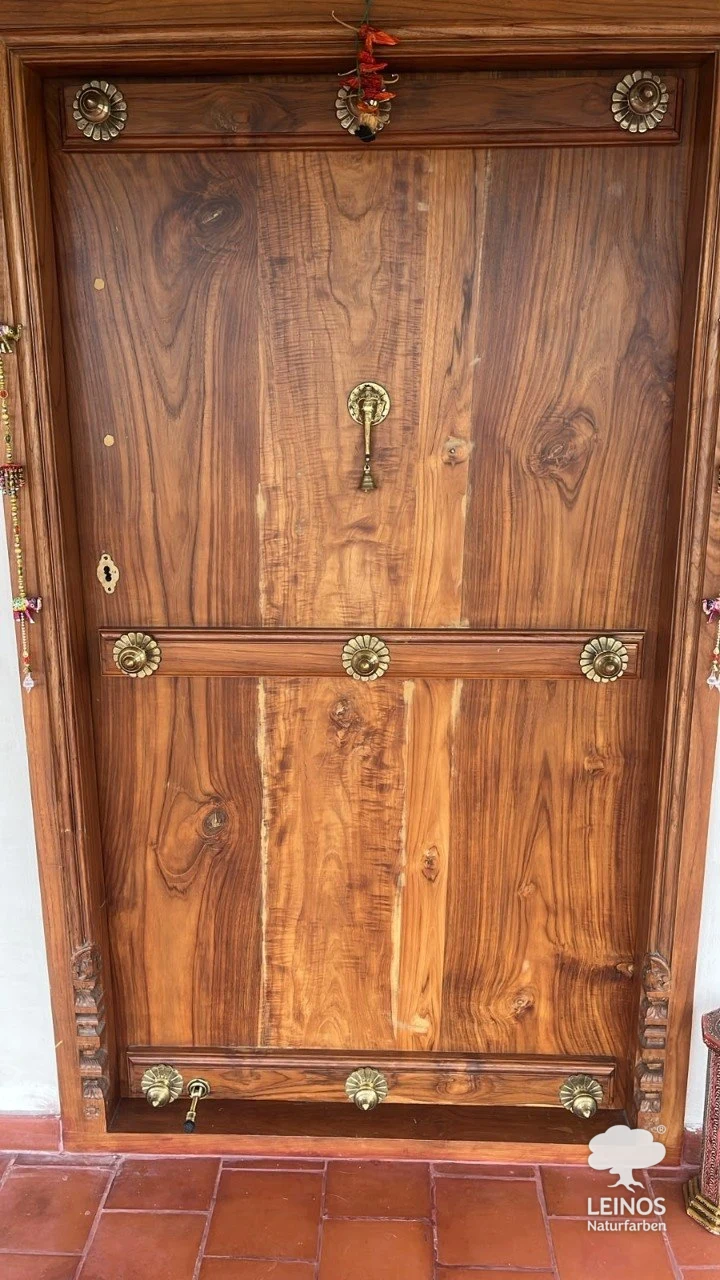
Goa teak end-grain
Sealing absorbent end-grain on decking and outdoor furniture.
Kerala rosewood prep
Heritage timber prep after weathering, before refinish.
Workshop dipping tanks
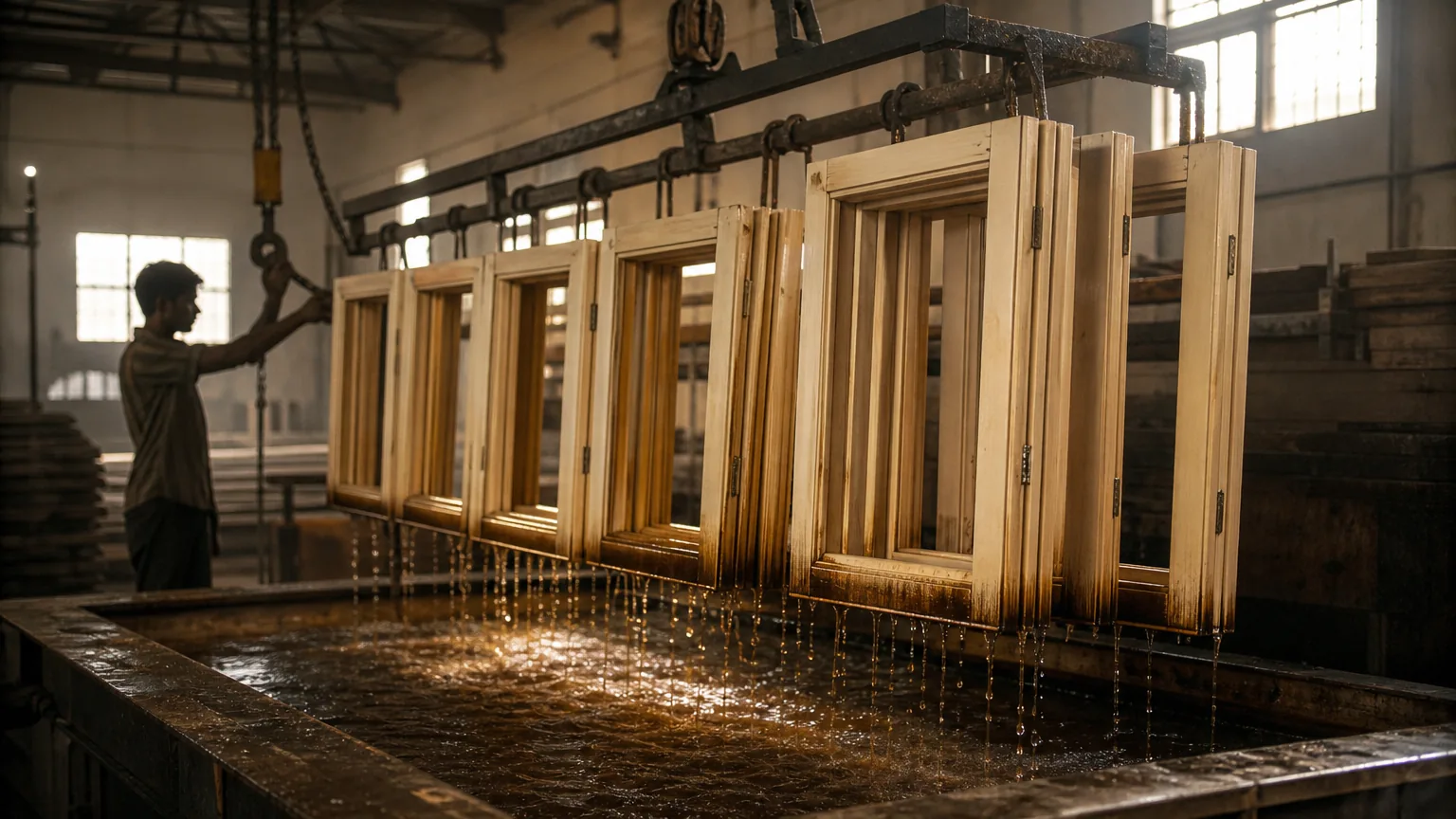
Batch processing of softwood furniture before topcoat.
Carpenter pre-stain prep
Even absorbency under LEINOS Wood Varnish 260 series.
Compliance · EU · REACH
Four anchors that let architects specify Primer 150 under the LEINOS Wood Varnish system without disclaimers.
Institutional Pledge
Reincke Naturfarben — full-ingredient-disclosure pledge for natural building products, biocide content disclosed honestly.
Biocide Compliance
Iodopropynyl Butylcarbamate (0.1–0.6%) — REACH-registered film-protection biocide. Active against blue-stain fungi on softwood and monsoon-exposed timber.
Origin
Manufactured by Reincke Naturfarben GmbH in Horneburg, Lower Saxony, est. 1985.
Primer 150 contains IPBC at 0.1–0.6%, disclosed under EUH208 per the InVeNa pledge. The biocide is the trade-off for sapstain protection on softwood and monsoon-exposed timber. For dense pre-treated hardwood without blue-stain risk, the primer can be skipped (see the FAQ for the 3-state primer logic).
Read The Full TDSStep by Step
Prepare the substrate. Dry, clean, dust- and grease-free, absorbent. Sand softwood with 120-grit; for weathered teak or rosewood, pair with LEINOS 940 Anti-Greying Fluid first. Solid sawn wood only, no painted or sealed substrates.
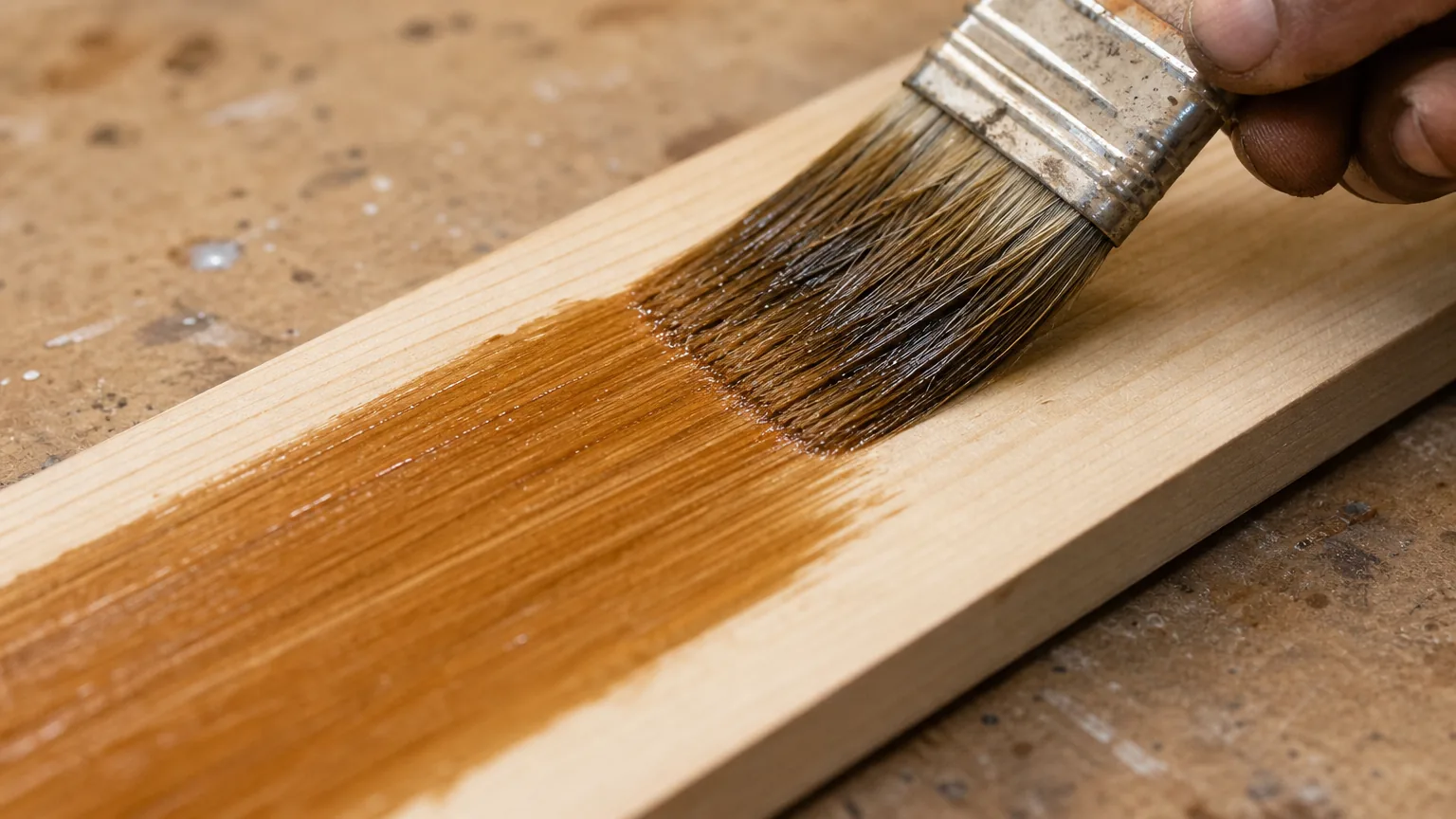
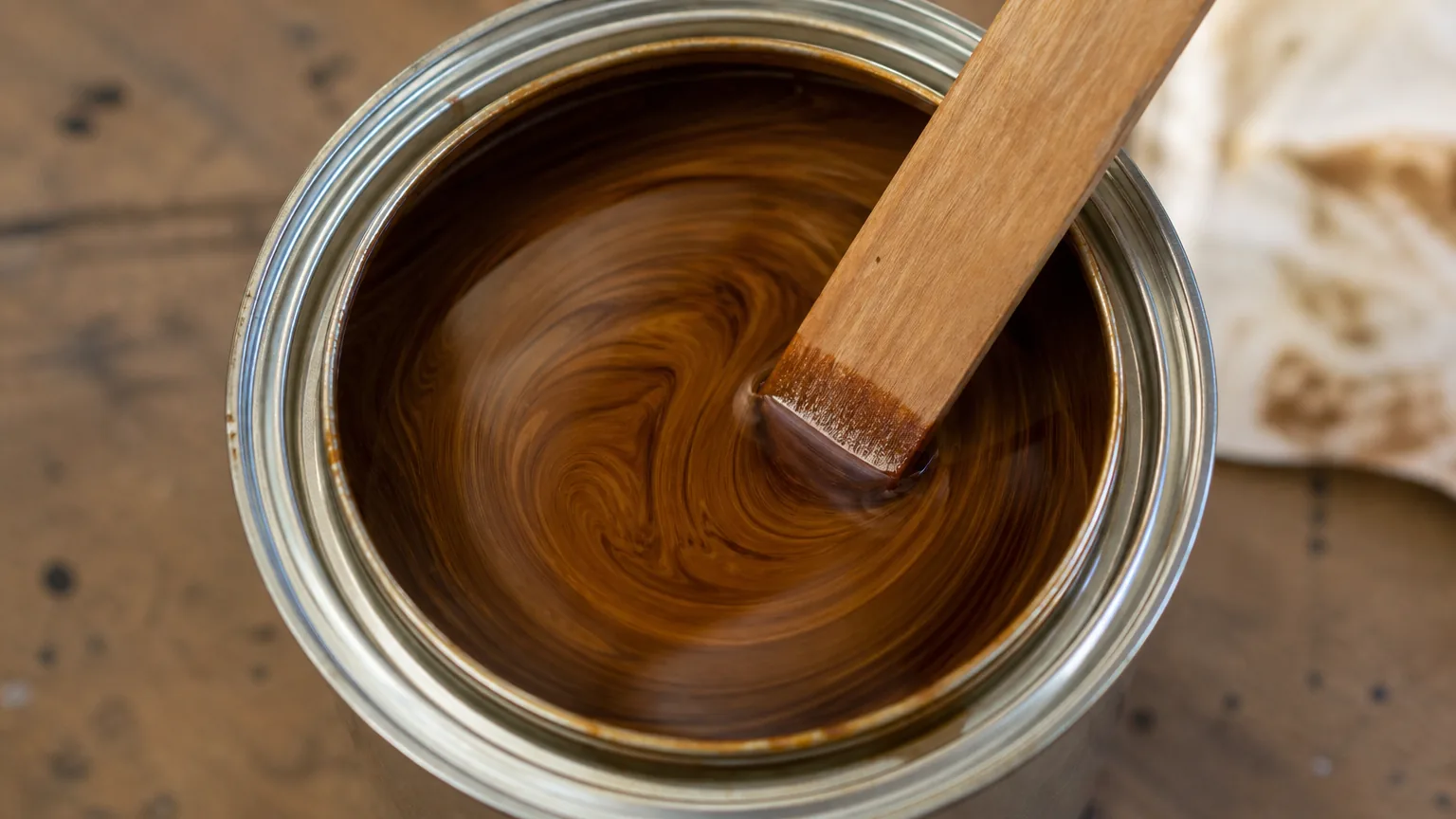
Stir 150 thoroughly before use: open the can, mix with a wooden stir-stick to re-blend the natural binder and IPBC. Do not thin.
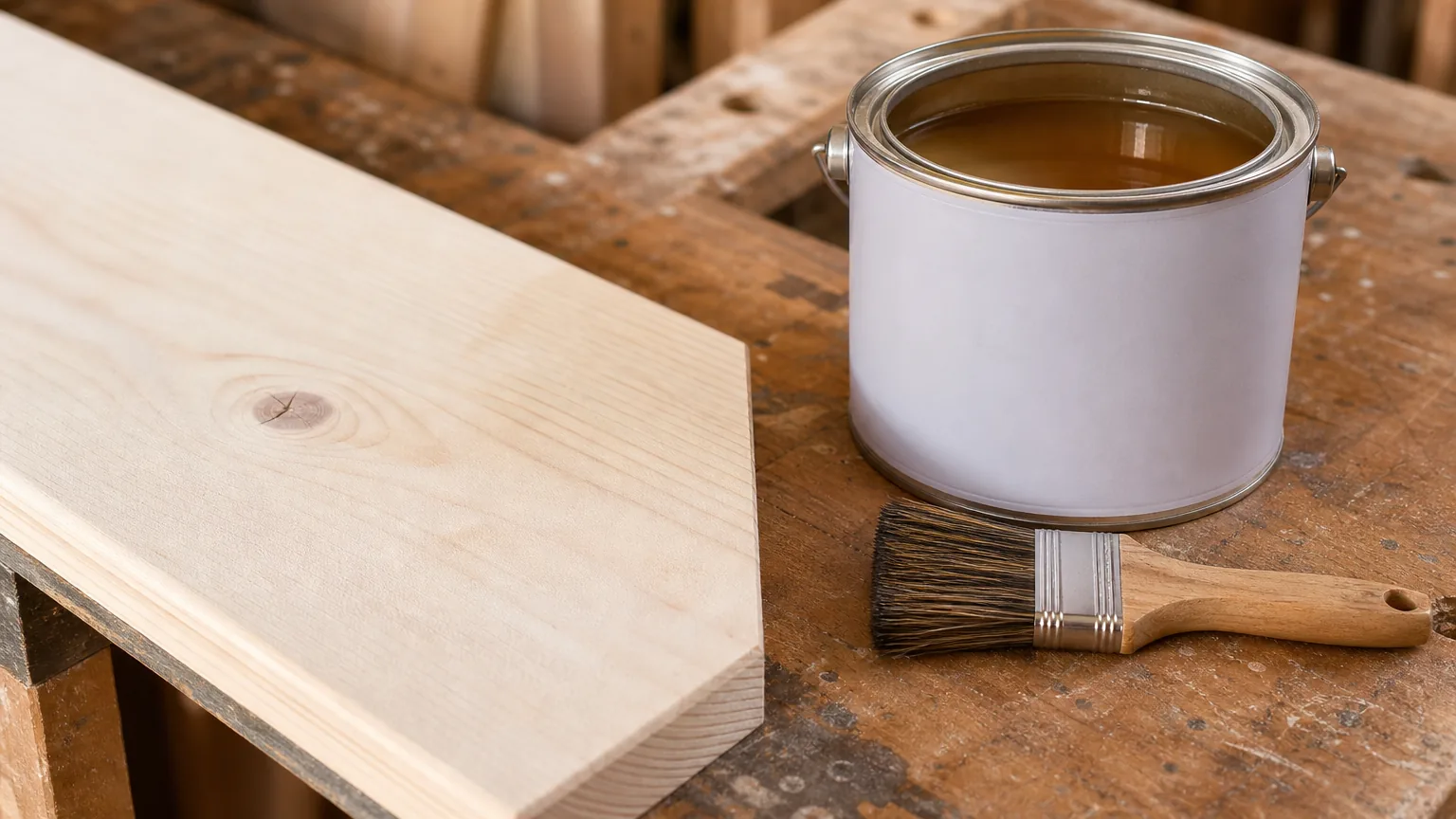
Apply undiluted by brush — work with the grain, generous coat. The wood should visibly absorb the primer; light-absorbent zones may darken slightly (normal). Roller works on flat panels; workshop dipping is the method for batch processing.
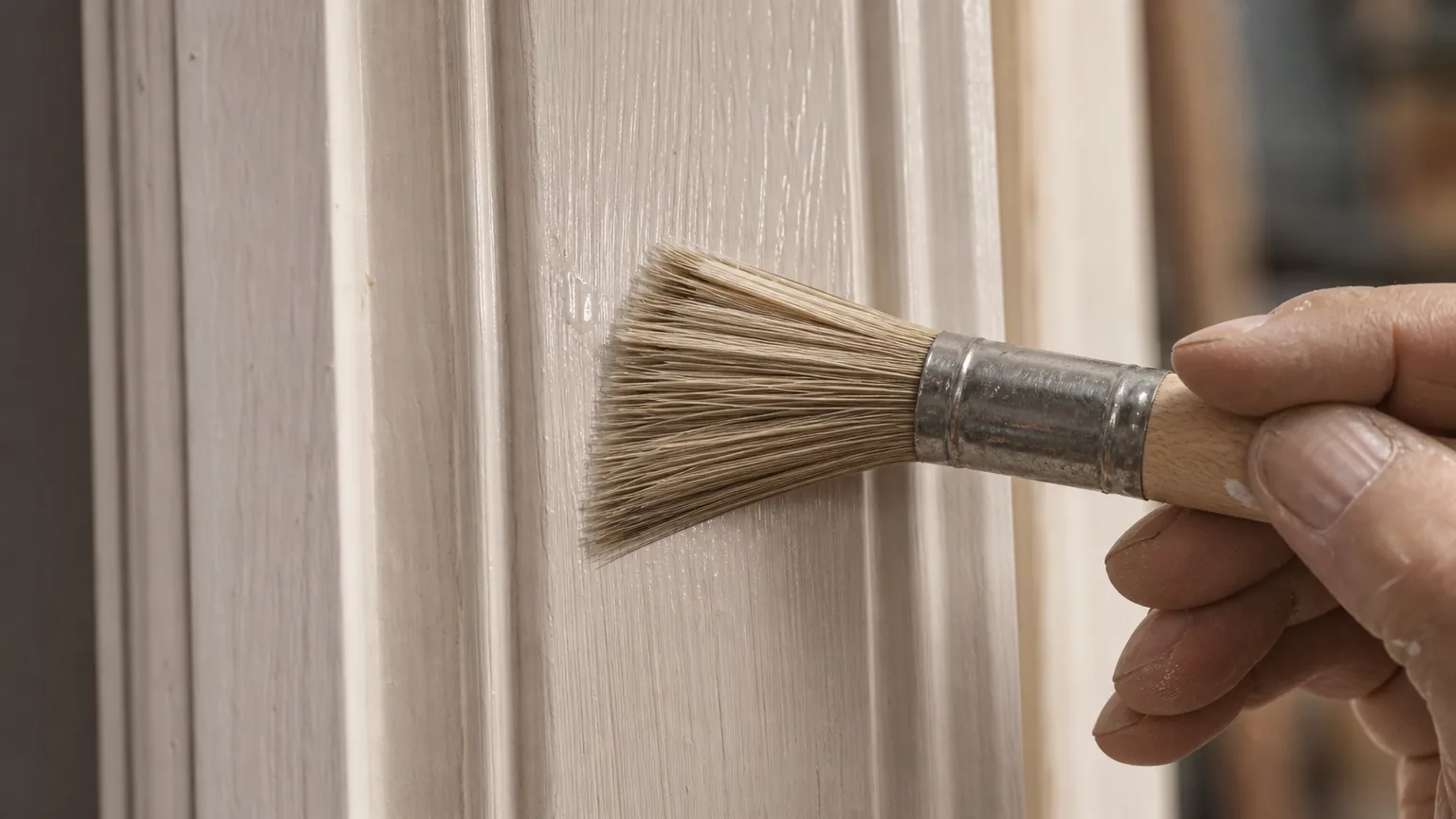
Redistribute at ~20 minutes. Brush back any glossy excess sitting on denser zones so the cured surface stays open-pored, not film-coated.
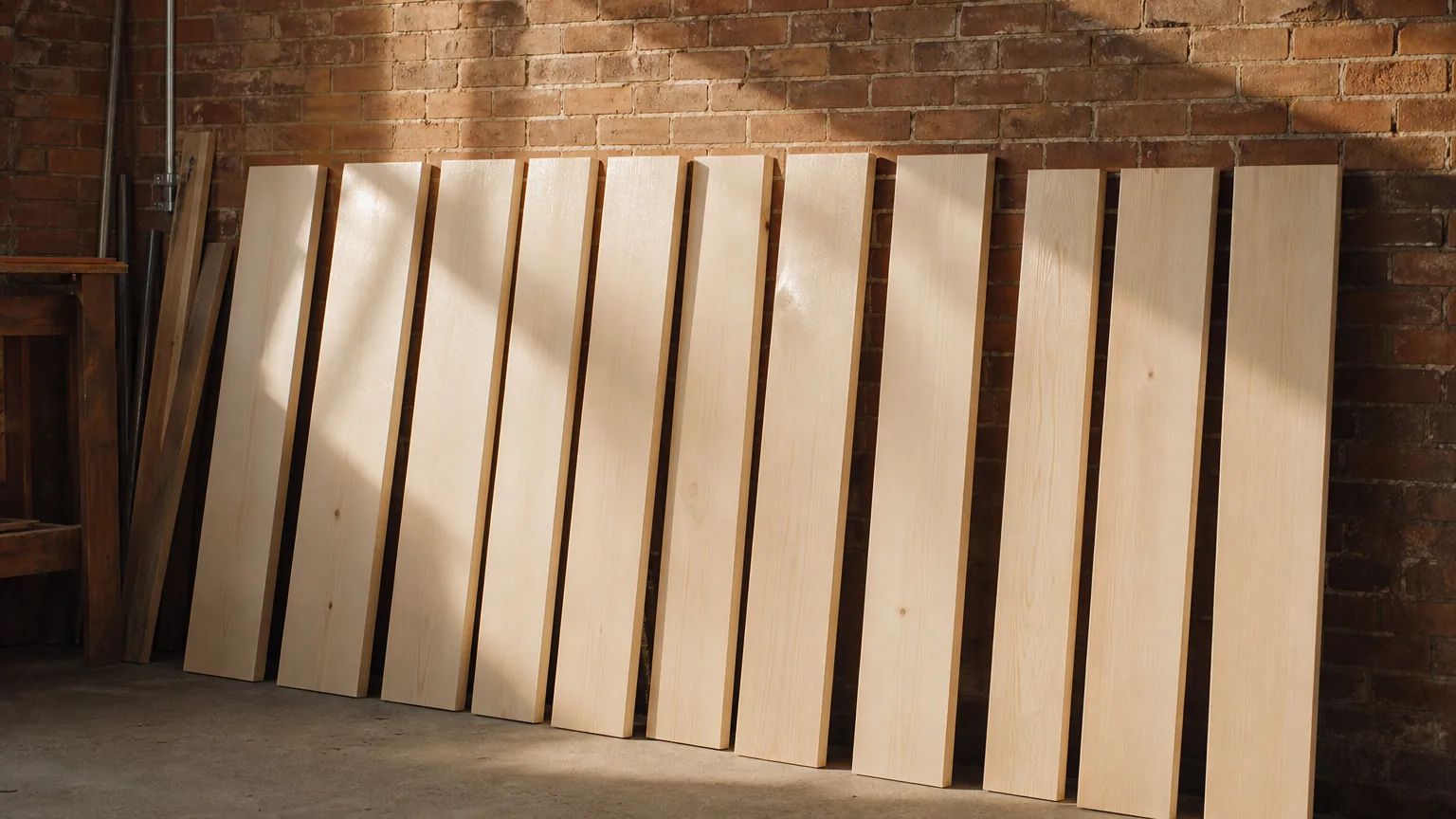
Dry 16–24 hours at 20°C and 50–55% RH. Higher humidity extends drying — ensure good fresh-air circulation through the workshop or jobsite. Surface should feel dry-to-touch and look matte before overcoating.
Apply your LEINOS topcoat. Primer 150 is a single-coat primer — there is no second coat of 150. Once the primed surface is fully cured (16–24 h), brush on LEINOS Wood Varnish 260 (the canonical exterior topcoat over 150) or Weatherproof Paint 850. For an opaque lacquer, Resin Lacquer Primer 810 comes next, then Finishing Lacquer 840. For interior projects, the LEINOS system uses a different primer (220 Primer Oil, no biocide) under Wood Varnish 261 or Hardwax Oil 290. The primer-evened absorbency means the topcoat goes on uniformly across softwood and hardwood — no blotchy zones, no sapstain bleeding through.
Application Conditions
Coats & Recoating
Cleaning & Storage
First time with Impregnation Wood Primer? Our technical team runs complimentary on-site walkthroughs for contractors — full application protocol, start to finish.
The Coating System
LEINOS runs a two-primer system. Primer 150 (with IPBC sapstain biocide) goes first under exterior finishes: Wood Varnish 260, Weatherproof Paint 850, and the lacquer system (810, then 840 or 845) on exterior, old or damp-exposed wood. It shares its linseed-oil base with Primer Oil 220; 150 adds the film fungicide. INTERIOR projects use the sister primer 220 Primer Oil (no biocide) under Wood Varnish 261 or Hardwax Oil 290. Penetrating oils (236 terrace, 240 hard oil, 280 countertop, 290 hardwax) need no primer — the TDS for each finish covers substrate prep directly.
The Coating System
Primer plus topcoat — the full chain.
Topcoat Options
Choose the finish character; the primer underneath stays the same.
Substrate Fit
Suitable
Honest Limits
Use With Care
Coverage & Pack Sizes
Coverage assumes single-coat primer on absorbent softwood. Variation depends on substrate porosity and grain.
0.75L
Covers
100–135 sq ft
1 coat, absorbent wood
Best For
Test boards, small joinery, single-piece priming.
2.5L
Covers
325–450 sq ft
1 coat, absorbent wood
Best For
Mid-size jobs — doors, window frames, single-room batches.
10L
Covers
1300–1800 sq ft
1 coat, absorbent wood
Best For
Workshop dipping tanks and contractor pre-finish runs.
Enter your area to see how much material — and the most efficient pack mix — you’ll need for 1 coat.
Full calculatorDocumented Applications
Documented interior wood projects. Captions show which LEINOS finish was used.
Full Declaration
Every ingredient declared on the label. The Trust Hub explains what each one does and the standards behind it.
Cold-pressed flax-seed oil is the LEINOS signature drying oil. Polymerises with oxygen over 16–24 hours to bond inside the wood grain without forming a surface film. Sourced from flax (no sunflower).
Isoaliphatic Carrier
Refined isoparaffin solvent (30–40% by mass per Reincke SDS L-150). Thins the formulation so the linseed oil reaches deep into the wood pores, then evaporates fully during the 16–24 h cure. EUH066: repeated exposure may cause skin dryness.
Sapstain Biocide (IPBC)
Iodopropynyl Butylcarbamate at 0.1–0.6%: a REACH-registered film-protection biocide active against blue-stain fungi (Aureobasidium pullulans and related) per Directive 528/2012. Kept at minimum effective concentration; EUH208 allergic-reaction disclosure on label per InVeNa pledge.
Drying Catalysts (Mn + Ca)
Manganese neodecanoate and calcium 3,5,5-trimethylhexanoate at 0.1–0.5% each. Accelerate the oxidative polymerisation of the linseed-oil base. Cobalt-free: LEINOS does not use cobalt-based driers.
Got Questions?
Quick answers on formulation, application and Indian-climate suitability. Pulled from our full FAQ and TDS library.
For Architects & Specifiers
Technical and safety documents — citable in project specifications.
Need a Recommendation?
Four ways to reach our India team — pick the one that fits how you work.
For Trade & Specifiers
Full TDS / SDS library, specification support and trade pricing — direct from the manufacturer.
Documents
TDS / SDS
Per-product datasheets and safety sheets, downloadable in English.
Specification
NCS Match
Custom colour briefs and material samples mixed at our Delhi lab.
Trade
Direct Pricing
Volume tiers, project quoting and stock allocation through our trade desk.
Written by the LEINOS India technical team, in collaboration with
Reincke Naturfarben R&D, Lower Saxony.
Last updated
Want to represent LEINOS in your city?
Become a Dealer