


0.75L
Covers
50–70 sq ft
2 coats, absorbent wood
Best For
Single window or panel door, touch-ups, sample swatches.
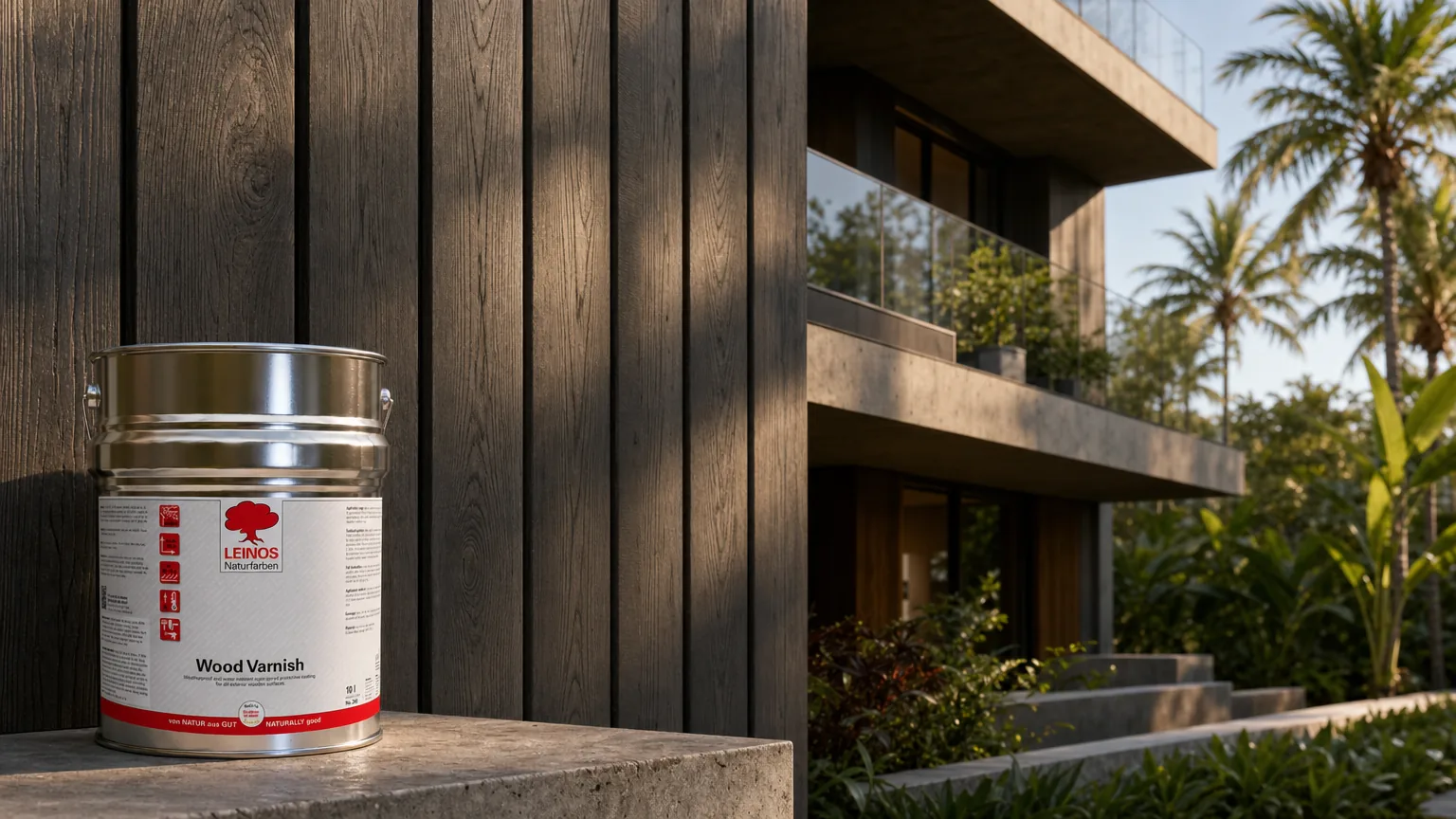
PREMIUM EXTERIOR WOOD FINISH · ART. 260
LEINOS 260 — open-pore stain for timber facades and cladding. Vapour-permeable. IPBC sapstain protection.
Ready-Mix Shades
12 ready-mix shades — the largest exterior-stain palette in the LEINOS catalogue. Custom NCS or RAL tinting available at our Delhi lab.
002
Colourless
022
Pine
042
Teak Dark
056
Nordic Red
062
Walnut
072
Oak
082
Rosewood
102
Ebony
123
Frisian Blue
202
White
212
Light Grey
733
Anthracite Grey
Wood is a living material — actual colour depends on species, grain density, and substrate age. Each shade you see here is a reference. Our specialists confirm the final match with you before specification.
Beyond the Standard Range
Custom NCS or RAL tinting at our Delhi lab — any architectural reference matched across the full colour palette. Bring the spec, take the shade home.
Two shade-specific caveats apply per manufacturer TDS: 002 Colourless contains no UV-protective pigment — use it where colour preservation is the goal, not weathering protection; 202 White is specified for sheltered exterior surfaces only (eaves, soffits, deep-veranda timber), not sun-exposed elevations. All pigmented shades carry UV-screening mineral pigment density that stabilises Indian hardwoods across monsoon cycles. Beyond the 12 ready-mix, any NCS or RAL code is tintable at our Delhi lab.
Mechanism & Use
Three plant-derived drying oils + natural resin matrix + mineral pigments + IPBC sapstain layer — open-pore exterior protection that lets the wood breathe.
Linseed, tung, and castor oils soak into the grain. No surface film to crack.
Natural resin esters cross-link inside the wood, flexing with seasonal movement.
Vapour-permeable finish. Wood releases interior moisture instead of trapping it under a film.
Built-in IPBC fungicide interrupts the blue-stain mould lifecycle before it blackens the wood.
Where It Lives
Wooden cladding & facade panels
Vertical timber siding on Bengaluru and Hyderabad new builds; full-height facade compositions.
Jali screens & lattice grilles
Decorative perforated woodwork. The open-pore finish does not bridge across the lattice gaps.
Heritage timber windows
Old Delhi haveli louvres, Goa Portuguese windows, Mumbai art-deco grilles. Refreshes coat-on-coat without peeling.
Panel doors
Entrance and internal-courtyard doors in premium residences and boutique hospitality.
Pergolas, gates, fences
Garden hardscape exposed to sun and rain cycles. IPBC protects against fungal staining.
Roof overhangs & eave soffits
Protected timber elements that need water-repellency plus vapour permeability.
Compliance · ihd · ift · DIN · REACH
Five institutional anchors that let architects specify 260 for heritage windows, doors, and claddings without disclaimers.
Wood Institute
Tested per ihd Dresden guidelines for weathering resistance, vapour permeability, and mortar staining.
Window Authority
Tested for compatibility with sealing profiles — critical for timber windows under Indian humidity cycles.
Skin-Contact Safe
Saliva and perspiration resistant per DIN 53160. Not toy-safe due to fungicide.
Biocide Compliance
REACH-registered IPBC (<0.6%) protects against blue-stain mould per EU Biocide Regulation 528/2012.
Open-pore stains weather predictably. Refresh is a single brush coat over a swept-clean surface — no sanding back to bare wood, no peel-strip step. A film coating fails differently: it cracks, lifts, and locks moisture beneath the failure line. We choose the failure mode that’s recoverable.
Read The Full TDSStep by Step
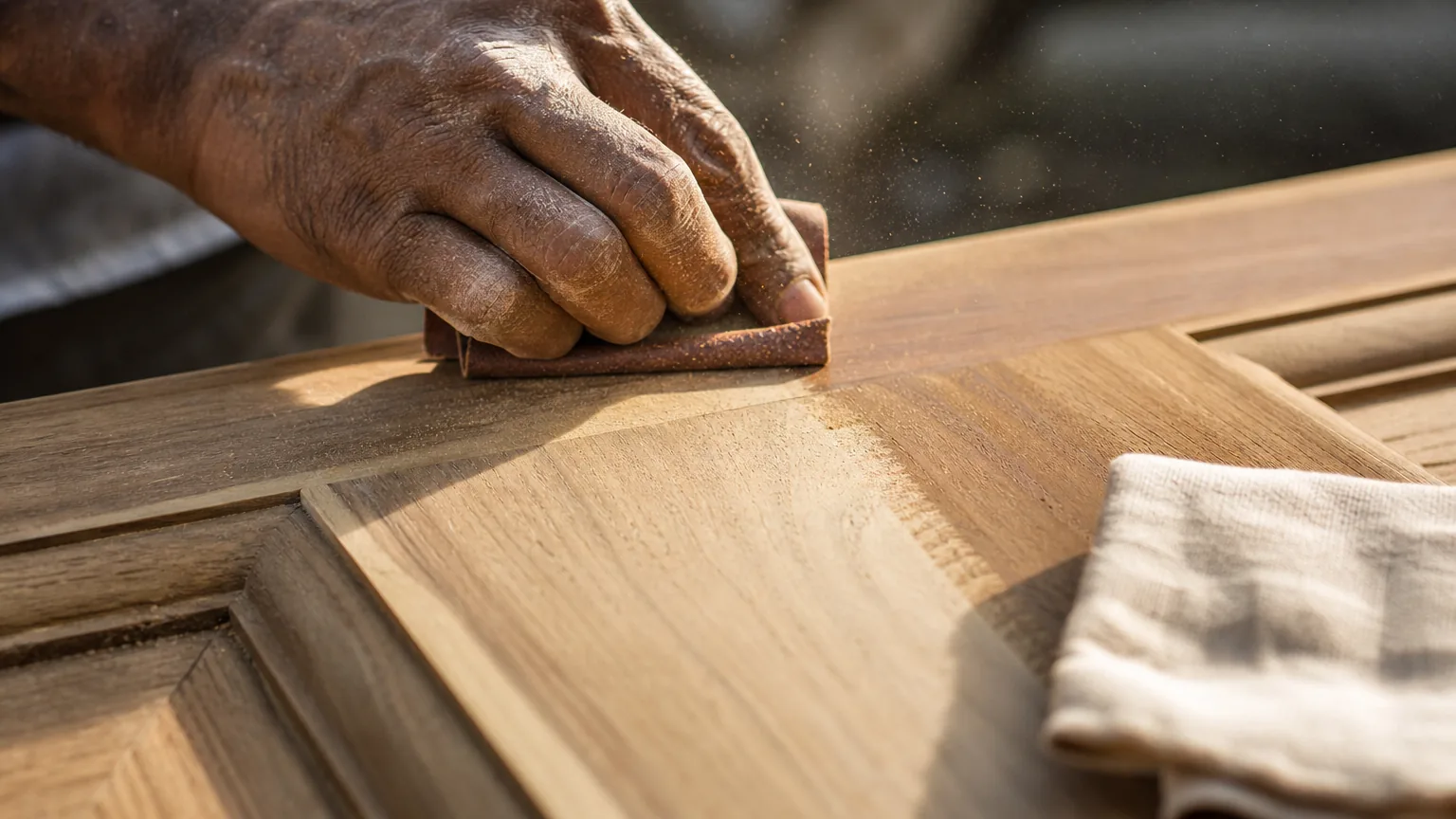
Prepare the substrate — dry, sound, clean, grease-free, dust-free, absorbent. Sand to 120 grit in the direction of the grain. Wipe with a lint-free cloth. Surface and ambient temperature above 15 °C, no rain forecast 48 h ahead. Avoid direct midday sun on the application surface.
Prime absorbent timber with LEINOS Wood Primer 150 — required for untreated/absorbent softwood (pine, cedar, spruce). Brush one coat in the direction of the grain. Let dry 12–16 hours before topcoat. Skip primer for dense pre-treated hardwood with intact previous finish.
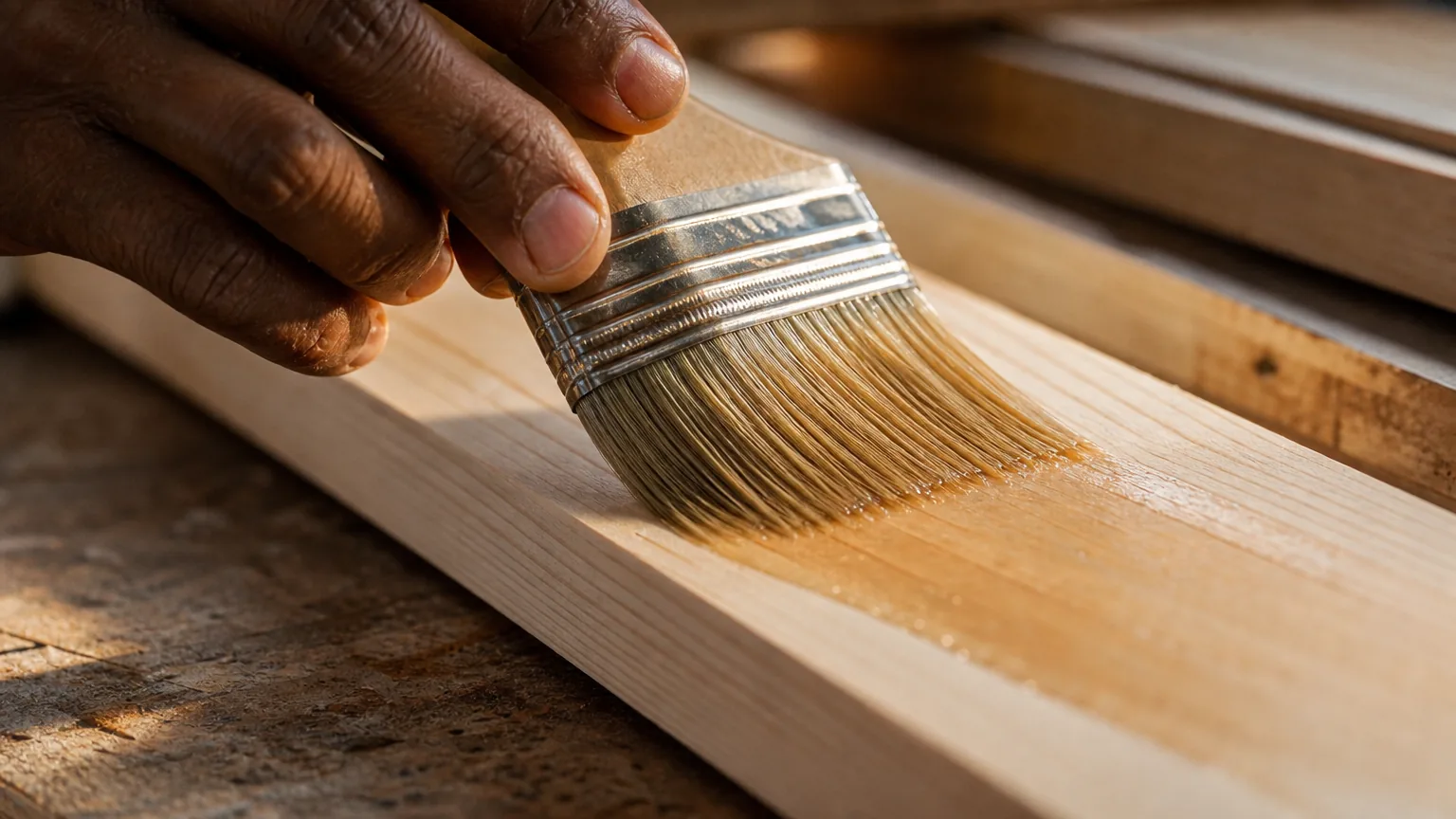
Apply the first coat of 260 — stir thoroughly before brushing (pigments and oils settle). Brush evenly in the direction of the grain. Spread thin: no puddles, no excess pooling. One pass per board. Coverage approx. 135–180 sq ft per litre per coat.
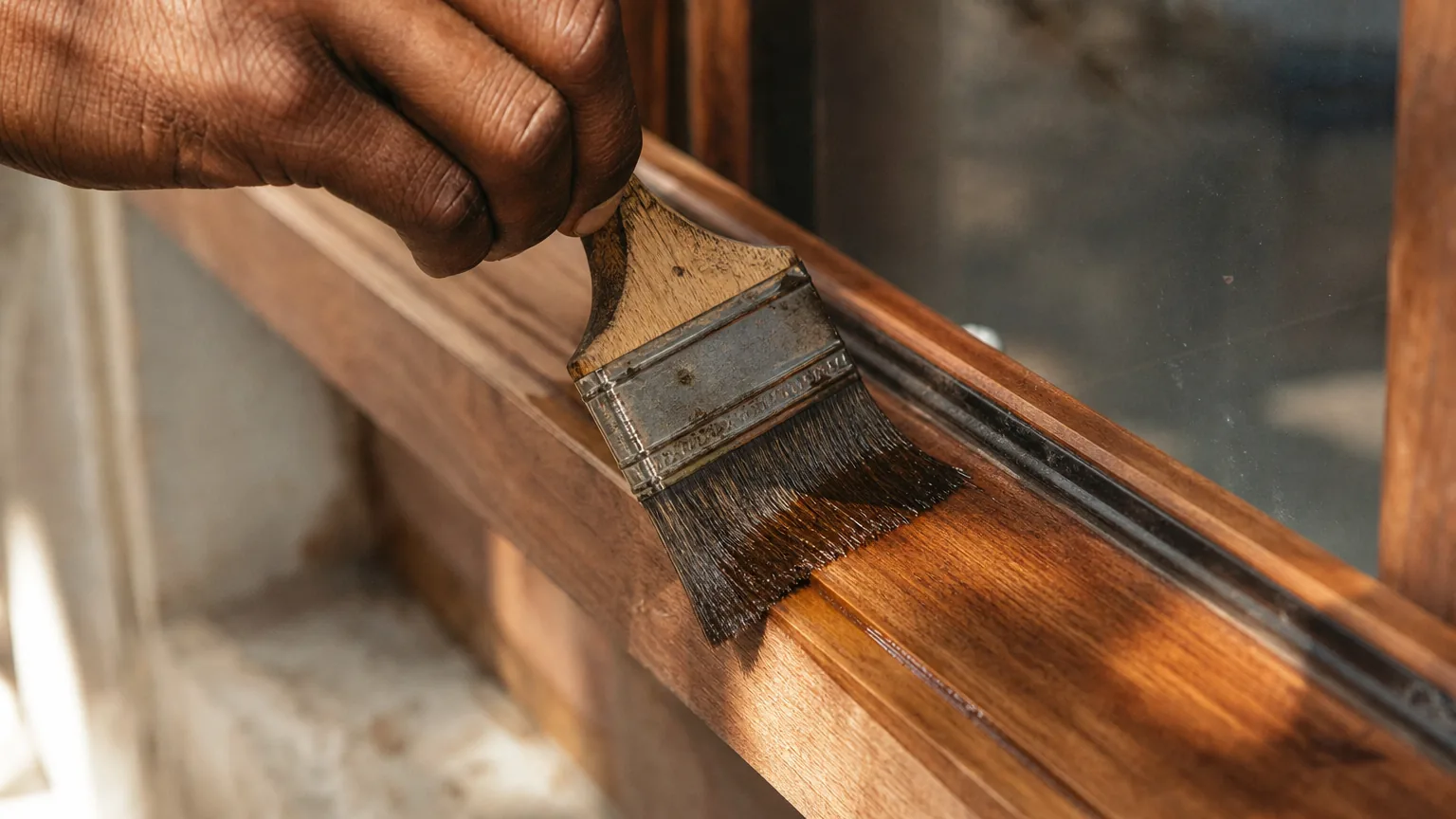
Recoat after 16–24 hours of drying (longer at high humidity — 24–36 h in active monsoon). Apply second coat in the same grain direction. Sufficient ventilation throughout cure. No sanding required between coats.
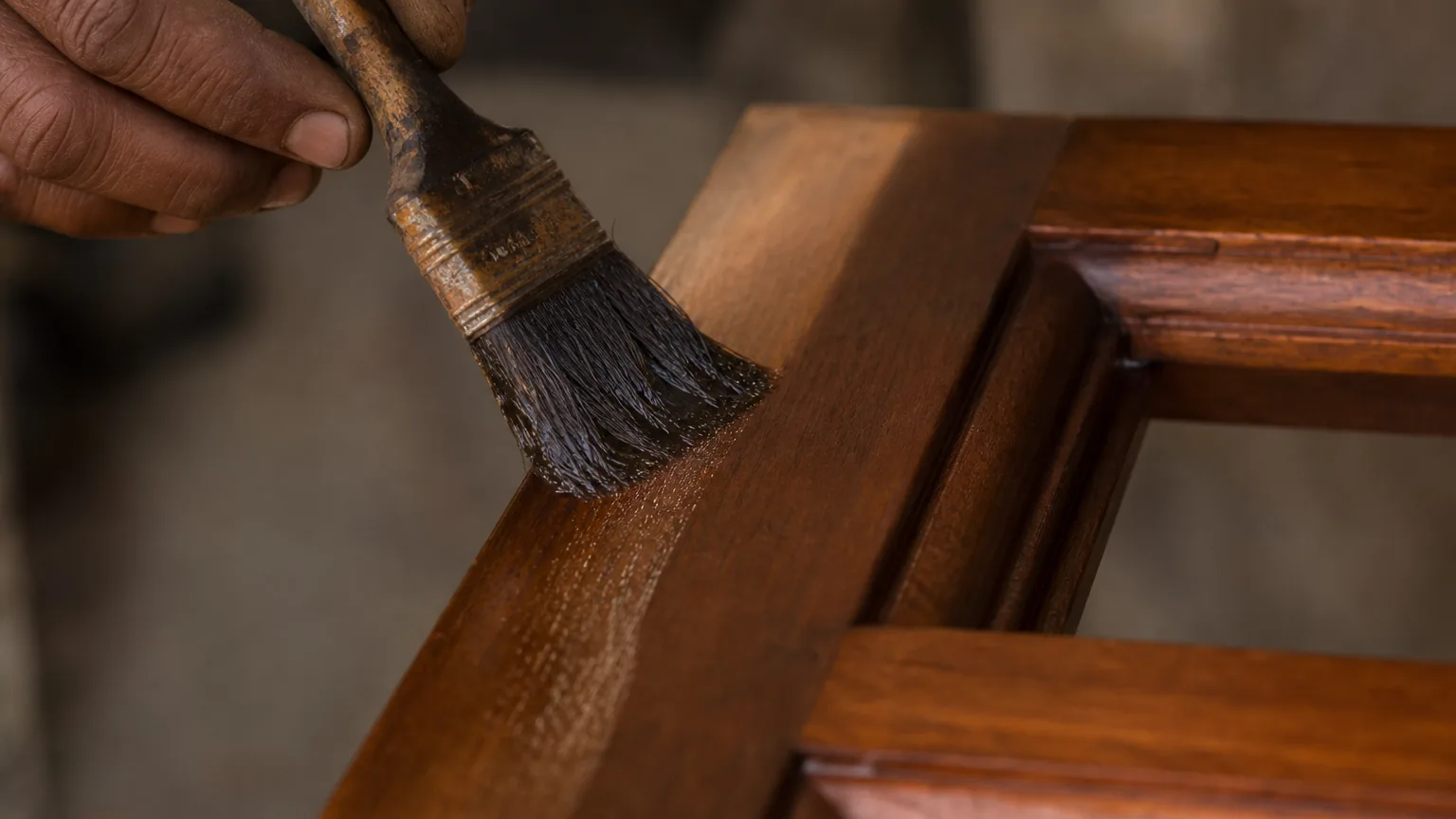
Apply the third thin coat for weather-facing surfaces — manufacturer-recommended for south- and west-facing windows, doors, and cladding under direct Indian sun. Three thin coats outperform two thick coats: better penetration, better UV-pigment density, longer service life.
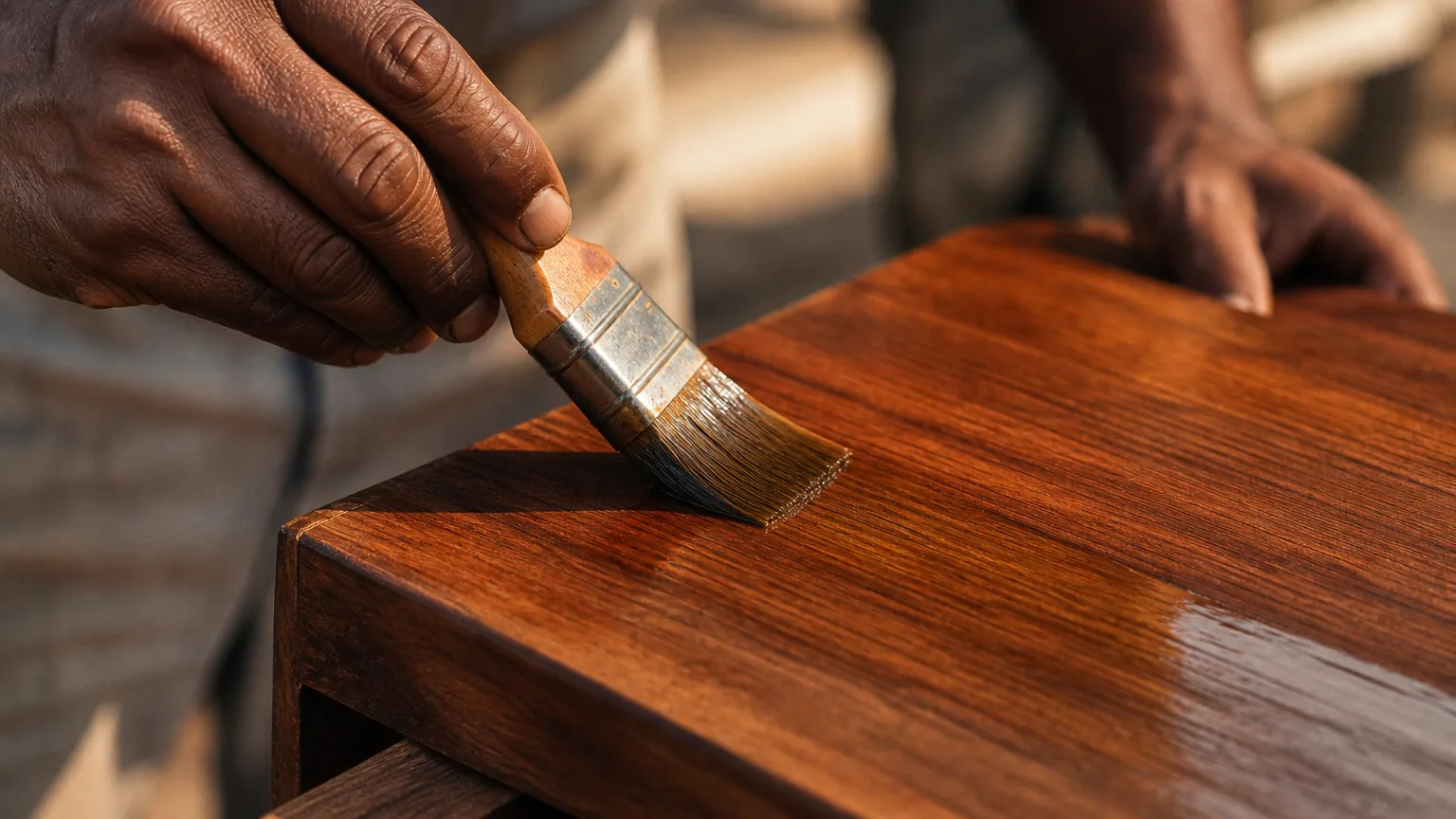
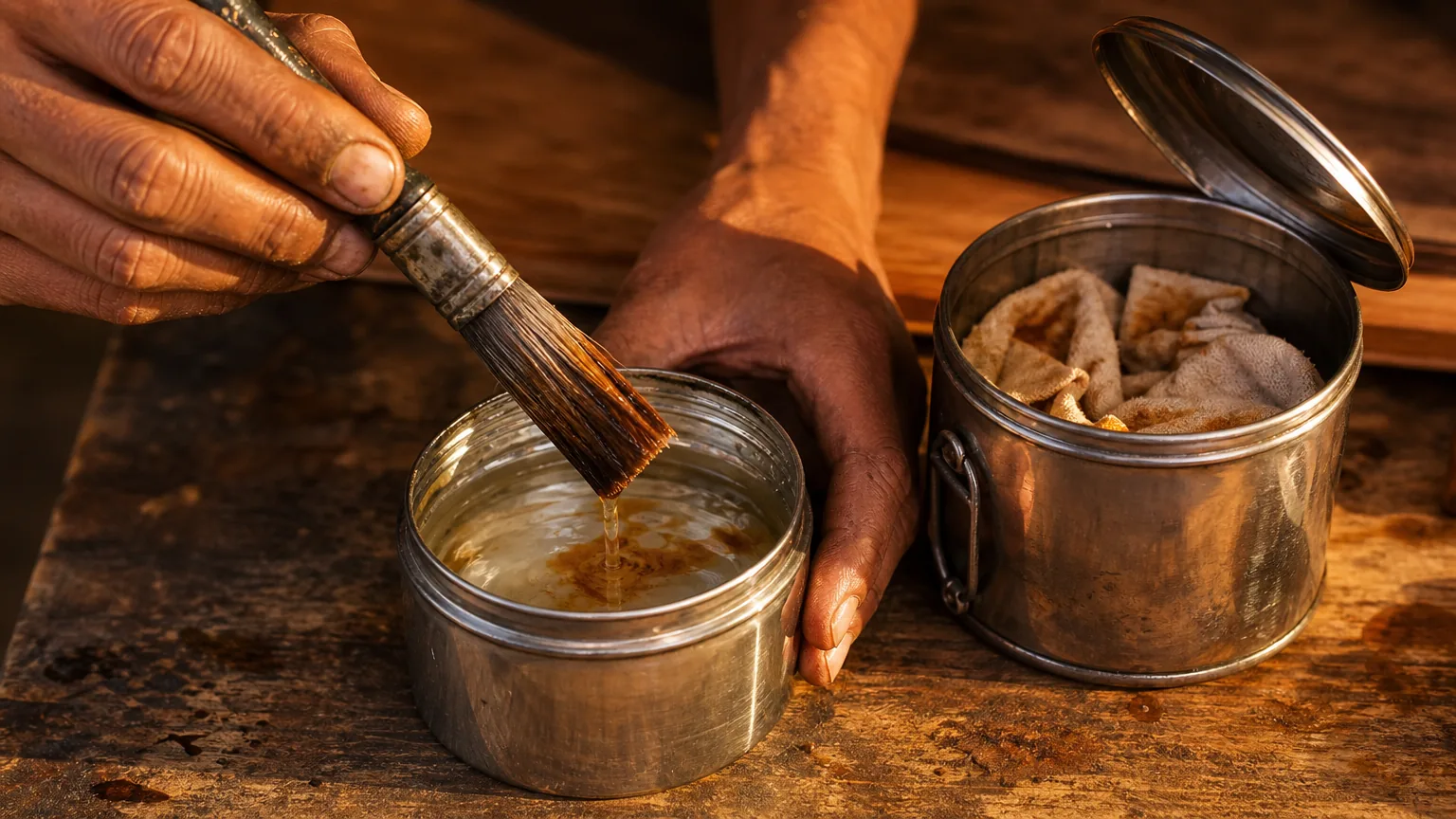
Cure and protect — surface workable after 24 hours, full cure 7–14 days. Protect from rain and dew during the cure window. Dispose of oil-soaked rags in a sealed metal container or under water — spontaneous combustion risk.
Application Conditions
Coats & Recoating
Cleaning & Storage
First time with Premium Wood Varnish? Our technical team runs complimentary on-site walkthroughs for contractors — full application protocol, start to finish.
System & Substrates
Prime absorbent or untreated timber with LEINOS Wood Primer 150, then 2–3 thin coats of 260. Skip the primer for dense pre-treated hardwood with intact previous finish.
The Coating System
Primer plus topcoat — the full chain.
Substrate Fit
Suitable
Honest Limits
Use With Care
Coverage & Pack Sizes
Coverage on the card assumes 2–3 thin coats on absorbent exterior wood. Variation depends on substrate density and grain.
0.75L
Covers
50–70 sq ft
2 coats, absorbent wood
Best For
Single window or panel door, touch-ups, sample swatches.
2.5L
Covers
170–225 sq ft
2 coats, absorbent wood
Best For
Most-specified site pack — multi-window heritage restorations, jali screens, fence sections.
10L
Covers
675–900 sq ft
2 coats, absorbent wood
Best For
Whole-facade cladding, multi-door installations, hospitality projects.
Enter your area to see how much material — and the most efficient pack mix — you’ll need for 2 coats.
Full calculatorDocumented Applications
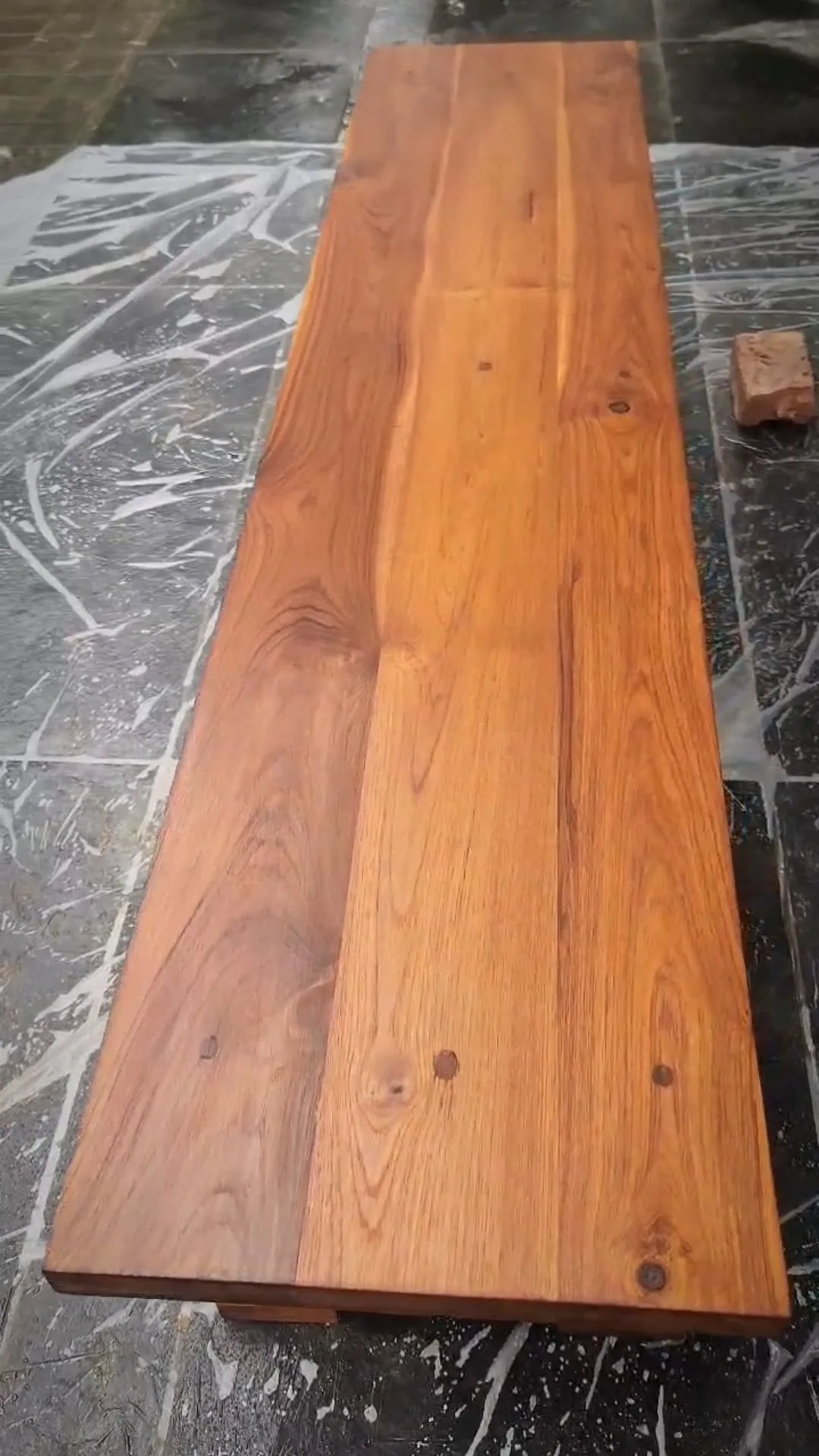
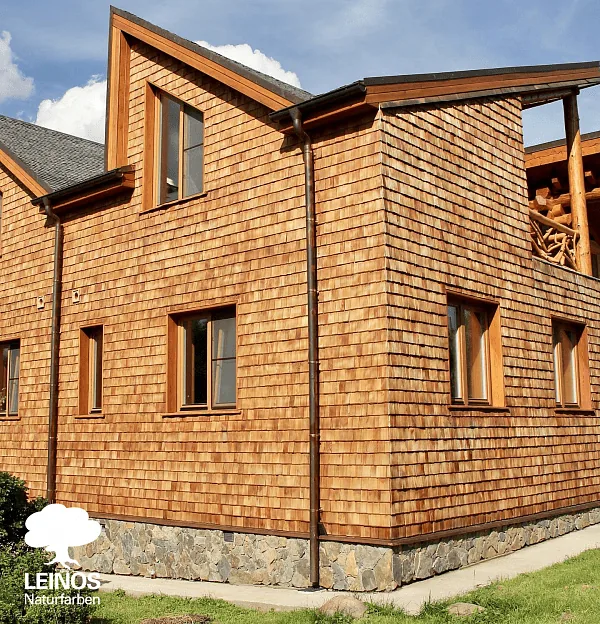
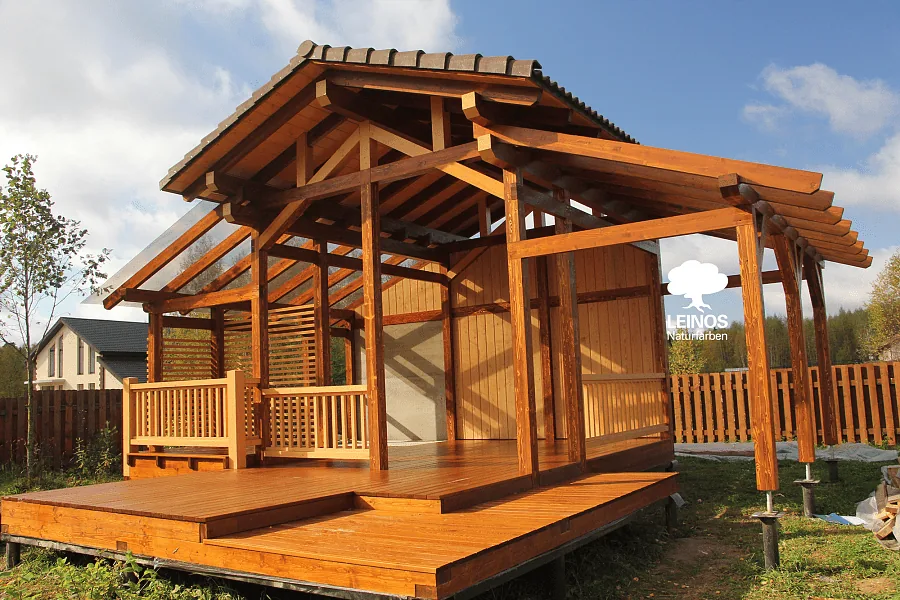
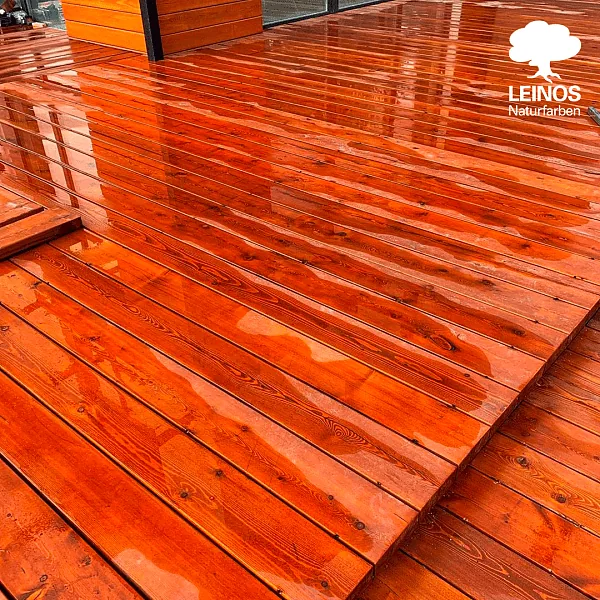
Documented exterior wood projects. Captions show which LEINOS finish was used.
Full Declaration
Every ingredient declared on the label. The Trust Hub explains what each one does and the standards behind it.
Cold-pressed flaxseed oil (Leinöl), the drying-oil base of every LEINOS finish since 1985. Polymerises with oxygen into a chemically-cured matrix that bonds inside the wood grain. Provides the penetrating chemistry that lets 260 work as an open-pore stain instead of a film coating.
Tung Oil
Chinaholzöl, pressed from the seeds of Aleurites fordii. The German painting industry’s traditional weather-grade drying oil — faster cure than linseed, harder cured film, exceptional water-repellency. Used alongside linseed for the exterior-grade durability that windows and doors face under Indian monsoon.
Castor Oil
Non-drying co-oil (Ricinenöl), pressed from Ricinus communis seeds. Brings flexibility to the cured matrix and resists yellowing under UV — critical for windows and doors that move dimensionally through seasonal humidity swings.
Natural Resin Esters
Rosin-ester binders, pine-derived (Naturharzester). Cross-link the cured oils into a flexible matrix bonded inside the wood fibres. Mineral pigments (iron oxides, titanium dioxide, carbon) and zinc oxide are dispersed through the resin matrix — pigments for UV screening and colour stability, zinc oxide as a mild supplementary fungistat.
IPBC Fungicide
Iodo-2-propynyl-butyl-carbamate (Jodo-propynyl-butyl-carbamat), at less than 0.6% concentration. Industry-standard biocide for protecting timber from sapstain (blue-stain) mould. REACH-registered under EU Biocide Regulation 528/2012. We disclose it honestly: this is not toy-grade, and may cause allergic reactions in sensitised individuals.
Got Questions?
Quick answers on formulation, application and Indian-climate suitability. Pulled from our full FAQ and TDS library.
For Architects & Specifiers
Technical and safety documents — citable in project specifications.
Need a Recommendation?
Four ways to reach our India team — pick the one that fits how you work.
For Trade & Specifiers
Full TDS / SDS library, specification support and trade pricing — direct from the manufacturer.
Documents
TDS / SDS
Per-product datasheets and safety sheets, downloadable in English.
Specification
NCS Match
Custom colour briefs and material samples mixed at our Delhi lab.
Trade
Direct Pricing
Volume tiers, project quoting and stock allocation through our trade desk.
Written by the LEINOS India technical team, in collaboration with
Reincke Naturfarben R&D, Lower Saxony.
Last updated
Want to represent LEINOS in your city?
Become a Dealer