Inside · Kitchen Worktops & Food Contact
A worktop you can chop on, wipe down, and trust.
Bare wooden worktops, butcher blocks and chopping boards — sealed with a food-safe oil that soaks into the wood, renews in place, and never needs stripping. Here’s the system we specify for kitchen surfaces that meet food.
- Worktops
- Boards
- Counters
- Tables

The recommended system.
One certified food-safe oil does the whole job — Countertop Oil 280 primes, seals and re-oils the wood, with no separate primer and no second product.
For any wooden surface that meets food — worktops, butcher blocks, breakfast counters — this is the simplest system on the site: one certified oil, applied and renewed, plus a plant-based cleaner for everyday wiping.
There’s no separate maintenance product — the worktop renews itself. Wipe it day-to-day, and top up the oil whenever the wood looks dry. (Vegetable Soap 930 is a general cleaner, not a food-contact product — for chopping boards, just wash, dry and re-oil with 280.)
Other LEINOS oils name worktops too — Hard Oil 240 and Hard Oil Clear 241 are migration-tested to EN 71-3 — but only Countertop Oil 280 carries a food-contact certificate (EC 1935/2004 + LFGB). For any surface food touches it is the one we specify; for a sideboard, desk or cabinet, see Furniture & Cabinets.
Why it’s demanding
What a kitchen worktop has to survive
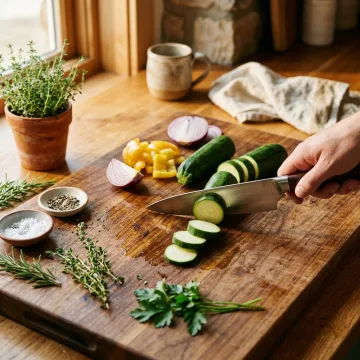
Food contact
Knives, raw food and daily prep mean a worktop finish has to be certified safe to touch food.
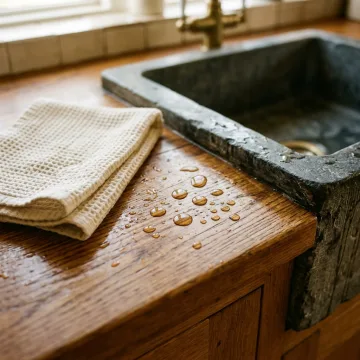
Water & washing
Sink splashes, wiped spills and washing-up soak a worktop far more than any table.
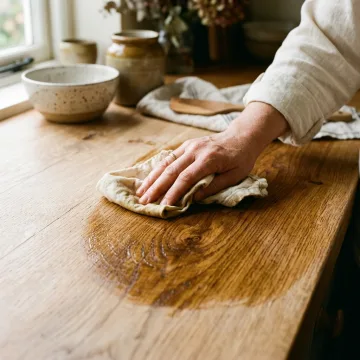
Renews in place
A worktop oil has to renew where it wears — a dry patch is re-oiled, never sanded back.
Food-safe is a certificate, not a feeling.
Plenty of finishes are called “food-safe once cured.” Countertop Oil 280 is actually tested for it — migration-tested to EN 71-3 and certified to EU Regulation (EC) 1935/2004, the standard written for the materials food is sold and served on.
See it in real projects.
All projectsBengaluru, Karnataka
Hand-Oiled Figured-Wood Serving Board in Bengaluru
View projectBengaluru, Karnataka
Solid Teak Chopping Board Set, Food-Safe Oiled in Bengaluru
View project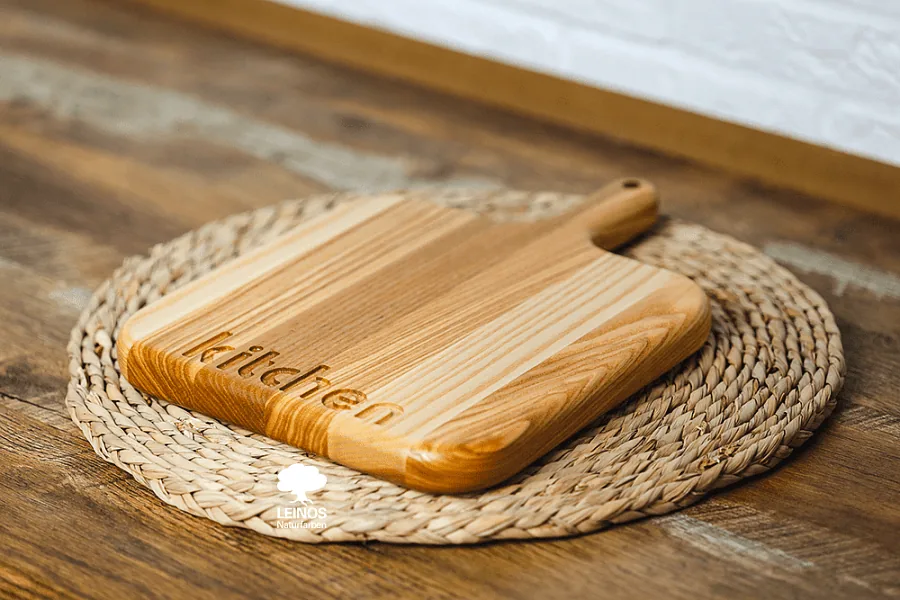
Jaipur, Rajasthan
Wooden Cutting Board with Food-Safe Oil
View project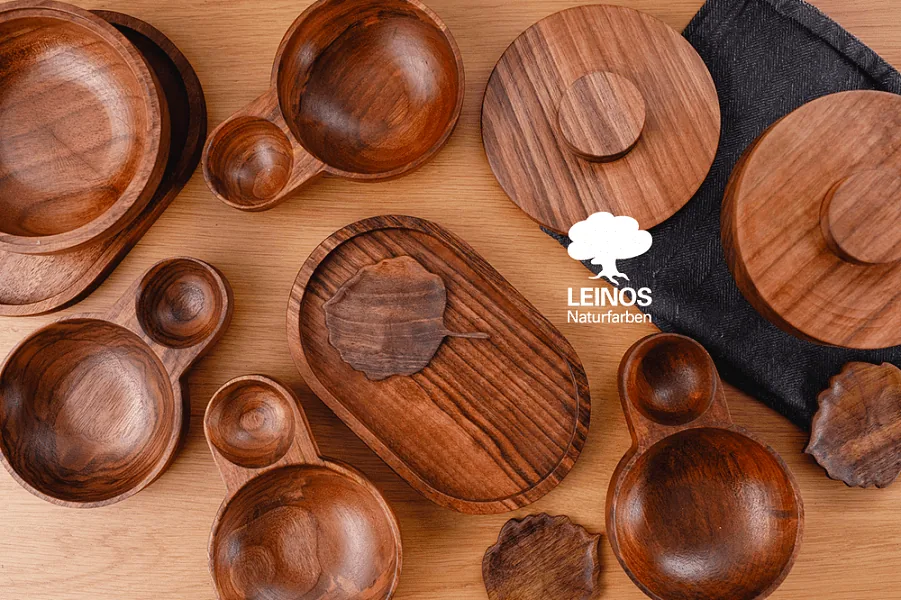
Mysuru, Karnataka
Hand-Carved Walnut Tableware Collection
View projectGot Questions?
Questions about kitchen worktops & food contact
Quick answers on formulation, application and Indian-climate suitability. Pulled from our full FAQ and TDS library.
- Yes. Countertop Oil 280 is migration-tested to EN 71-3 (stated on its TDS) and certified for food contact to EU Regulation (EC) 1935/2004 and the German LFGB, tested by WESSLING. It is ready for food contact about seven days after the final coat, once fully cured.
- Both name worktops in their data and are migration-tested to EN 71-3, but neither carries a food-contact certificate (EC 1935/2004 / LFGB). For any surface food touches — worktops, boards, counters — we specify Countertop Oil 280, the only LEINOS oil with that certification.
- No. Countertop Oil 280 is a self-priming penetrating oil — the same product is the first coat, the second coat and every future re-oil. Sand the bare wood smooth and strip any old lacquer or PU back to raw, absorbent timber, then oil directly. Apply at least two coats above 15 °C.
- For everyday cleaning use Vegetable Soap 930 diluted in water (about 30–50 ml per 10 L) — a plant-based cleaner for oiled wood. It is a general surface cleaner, not a food-contact product, so for chopping boards just wash with water, dry well, and re-oil. When the wood looks dry or worn, freshen it with another thin coat of 280 — no sanding, no stripping; allow about seven days to cure before food contact again.
Ready to oil your worktop?
Open Countertop Oil 280 to download its TDS and food-contact certificate, or talk to a LEINOS specialist about your timber before you order.
Written by the LEINOS India technical team, in collaboration with
Reincke Naturfarben R&D, Lower Saxony.
Last updated