Origin
A 5 000-year-old paint binder.
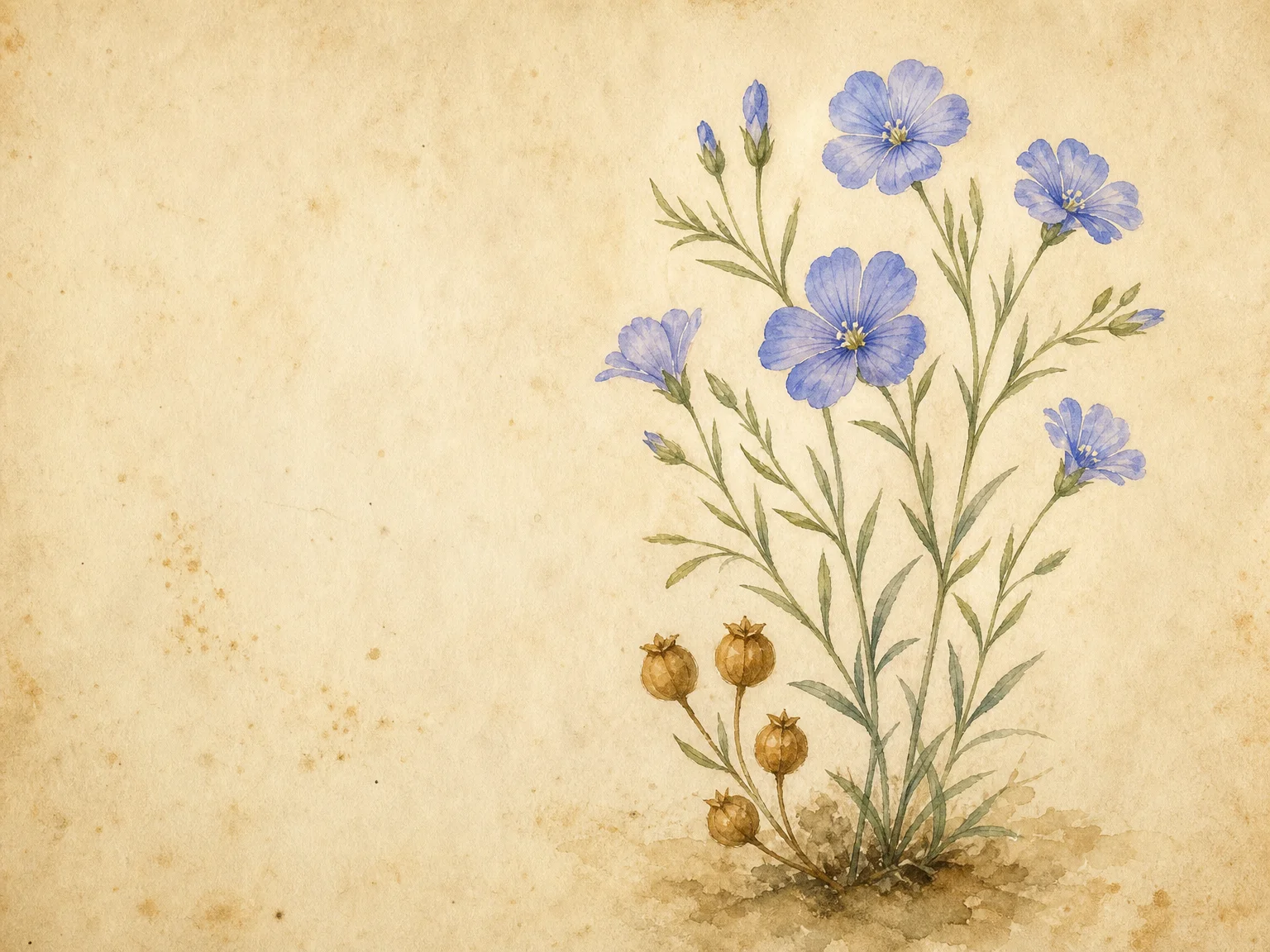
Flax (Linum usitatissimum) is one of the earliest plants cultivated by humans — Bronze Age sites in Europe and the Near East show evidence of seed crushing for oil, alongside the fibre that became linen. Ancient Egyptian preparations of linseed oil are documented in tombs and household inventories.
From the late eighteenth century until the 1950s, linseed oil was the dominant binder in exterior architectural paint across Europe and North America. Old-master oil paintings — from van Eyck onward — use it as a pigment binder. The post-war shift to petroleum-derived alkyd resins displaced it commercially, but never on technical grounds: the chemistry that worked for five centuries still works.
LEINOS Naturfarben took its name from Lein — the German word for flax. The brand began in Horneburg in 1985 by formulating wood finishes around cold-pressed linseed oil. Forty years later, the recipe core has not changed.
Lein gave LEINOS its name — and every recipe its base.