

0.25L
Covers
15–20 sq ft
2 coats, absorbent wood
Best For
Touch-ups, a single frame, or a sample before full spec.
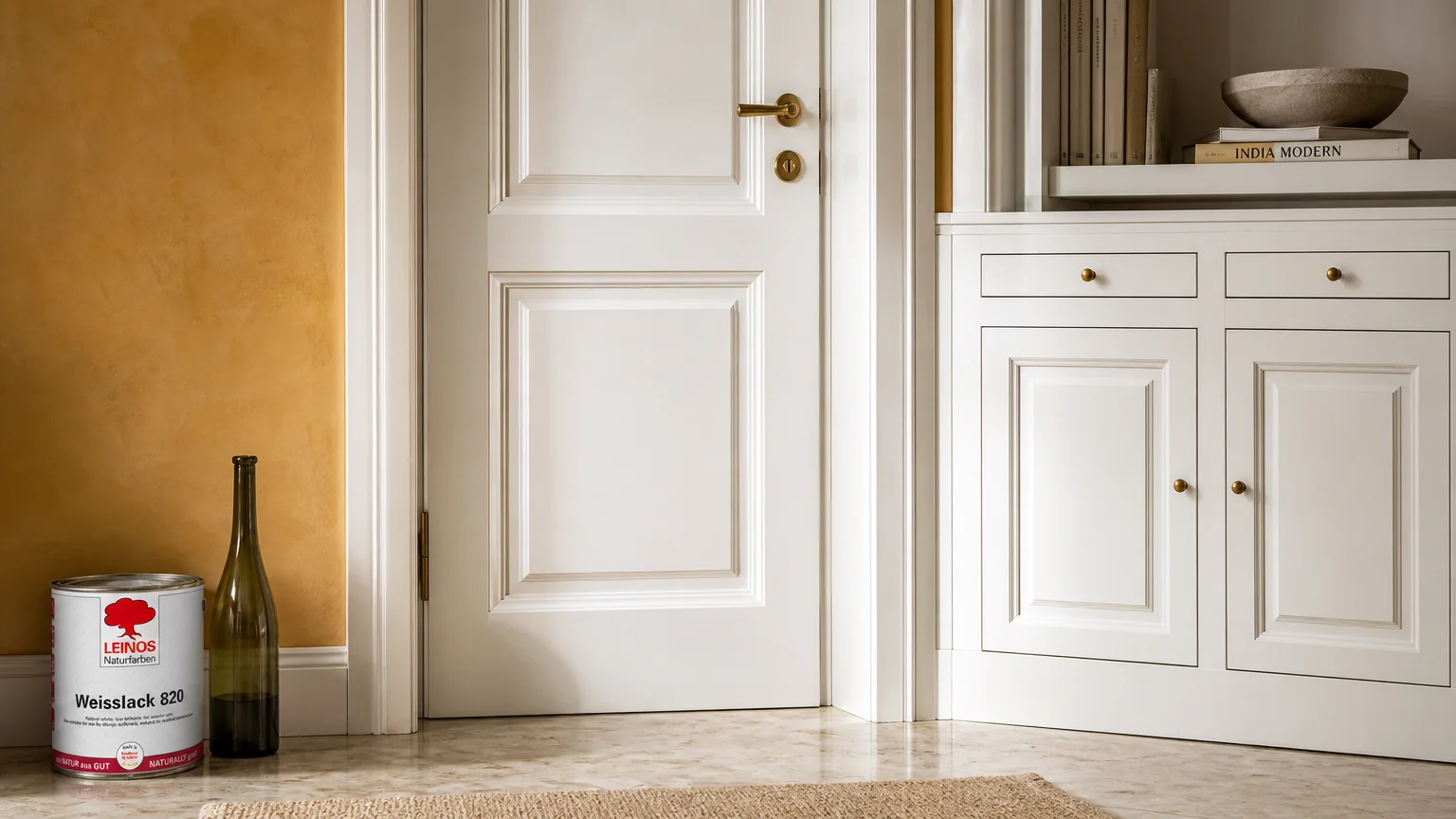
INTERIOR WHITE COVER LACQUER · ART. 820
LEINOS 820 — an open-pored, silk-gloss white cover lacquer for interior woodwork, metal and neutral stone. High opacity and good hardness, low yellowing and water-vapour permeable — the natural-white finish for the LEINOS lacquer system.
Mechanism & Use
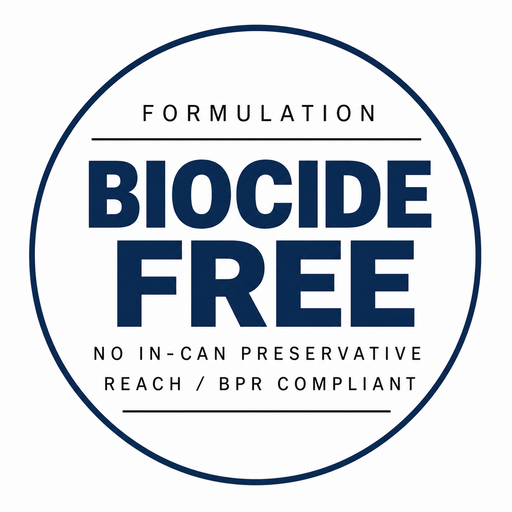
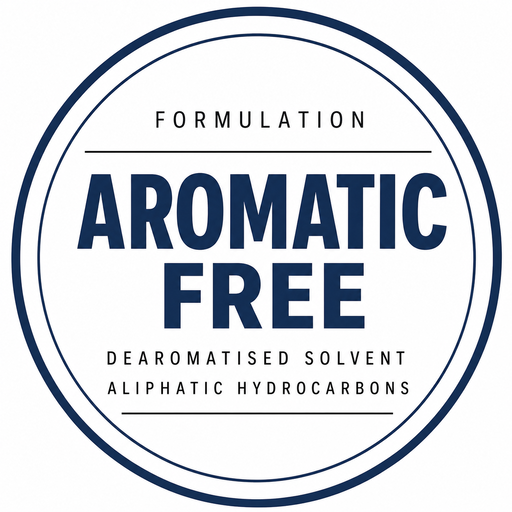
An open-pored plant-oil cover lacquer that builds a silk-gloss, natural-white film — high opacity and good hardness, low yellowing, and biocide- and aromatic-free.
A plant-oil binder oxidatively cures in air into a waterproof, elastic film with good hardness that flexes with the wood instead of chipping.
Titanium dioxide gives high opacity and covering power, so the natural-white comes up solid in one to two coats over the primer.
The film stays open-pored and water-vapour permeable with low yellowing, so interior wood can still breathe and the white stays clean.
No in-can biocides and a dearomatised aliphatic solvent — made in Germany by Reincke Naturfarben.
Where It Lives
Interior windows and doors
Dimensionally-stable interior joinery in a silk-gloss natural white.
Furniture, cabinets and trim
Painted furniture, built-ins and mouldings indoors.
Interior stairs and floors
Hard-wearing natural-white on wooden treads and boards.
Radiators and heating covers
A heat-stable silk-gloss white for interior heating bodies.
Interior metalwork
Railings, grilles and steelwork indoors — not aluminium or galvanized.
Neutral stone
A bonding white coat on interior mineral surfaces.
Compliance · EU · Origin
The honest anchors that let specifiers put 820 on interior joinery, furniture, stairs and radiators — no over-claiming.
820 is a film-forming interior lacquer, so a damaged coat is repaired by sanding the area back and re-lacquering — not spot-oiling. It contains cobalt octoate as a drier (a possible allergen, declared on the label) and is biocide- and aromatic-free. The TDS is downloadable; the full SDS is available to architects and contractors on request — use Get Expert Advice above.
Read The Full TDSStep by Step
Prepare and prime — the surface must be dry, firm, clean, grease- and dust-free, and not absorbent. Prime bare interior wood, metal or stone with LEINOS Resin Lacquer Primer 810; deep-prime strongly absorbent wood with Priming Oil 220 first, or Wood Primer 150 in damp areas.
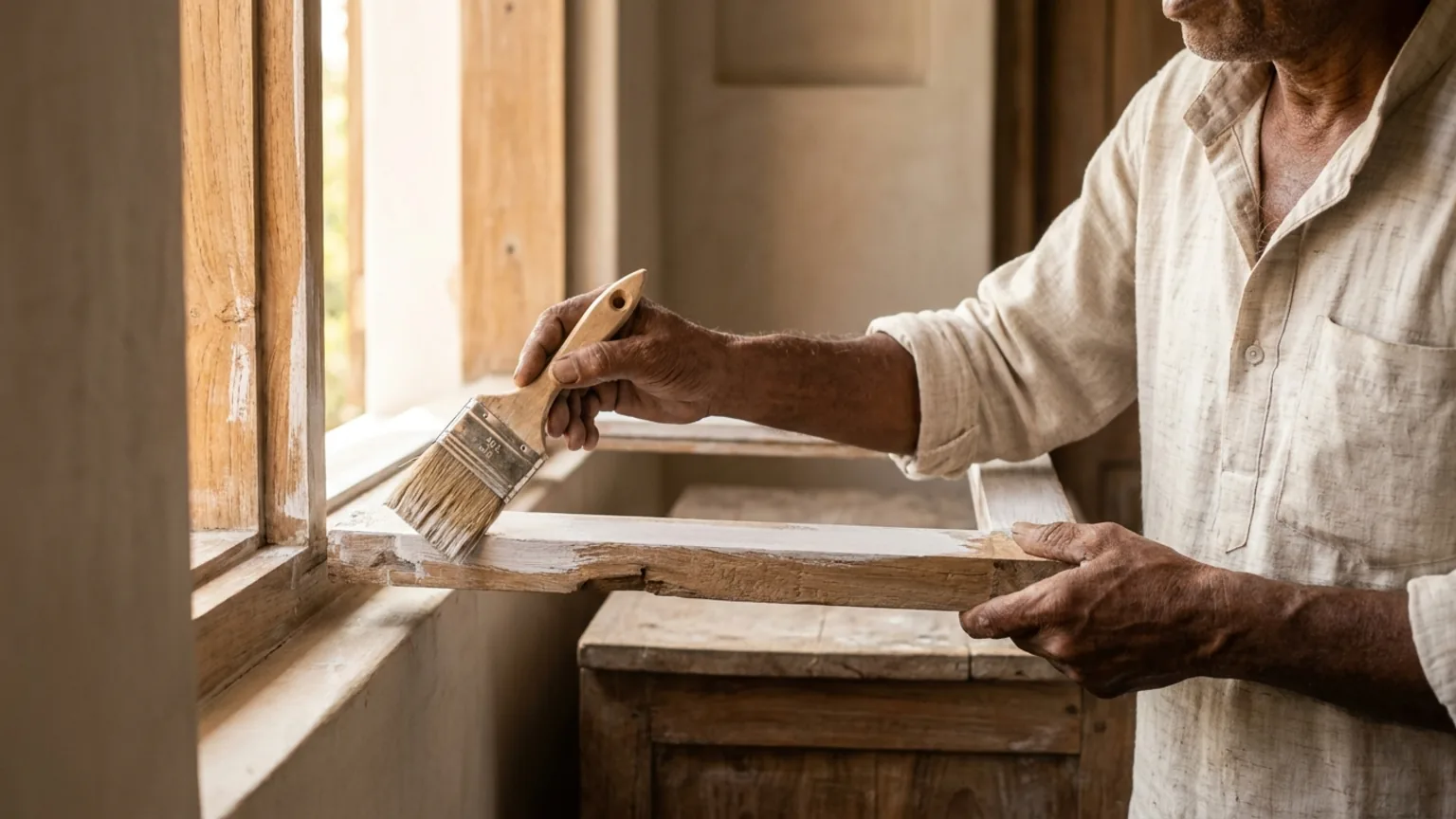
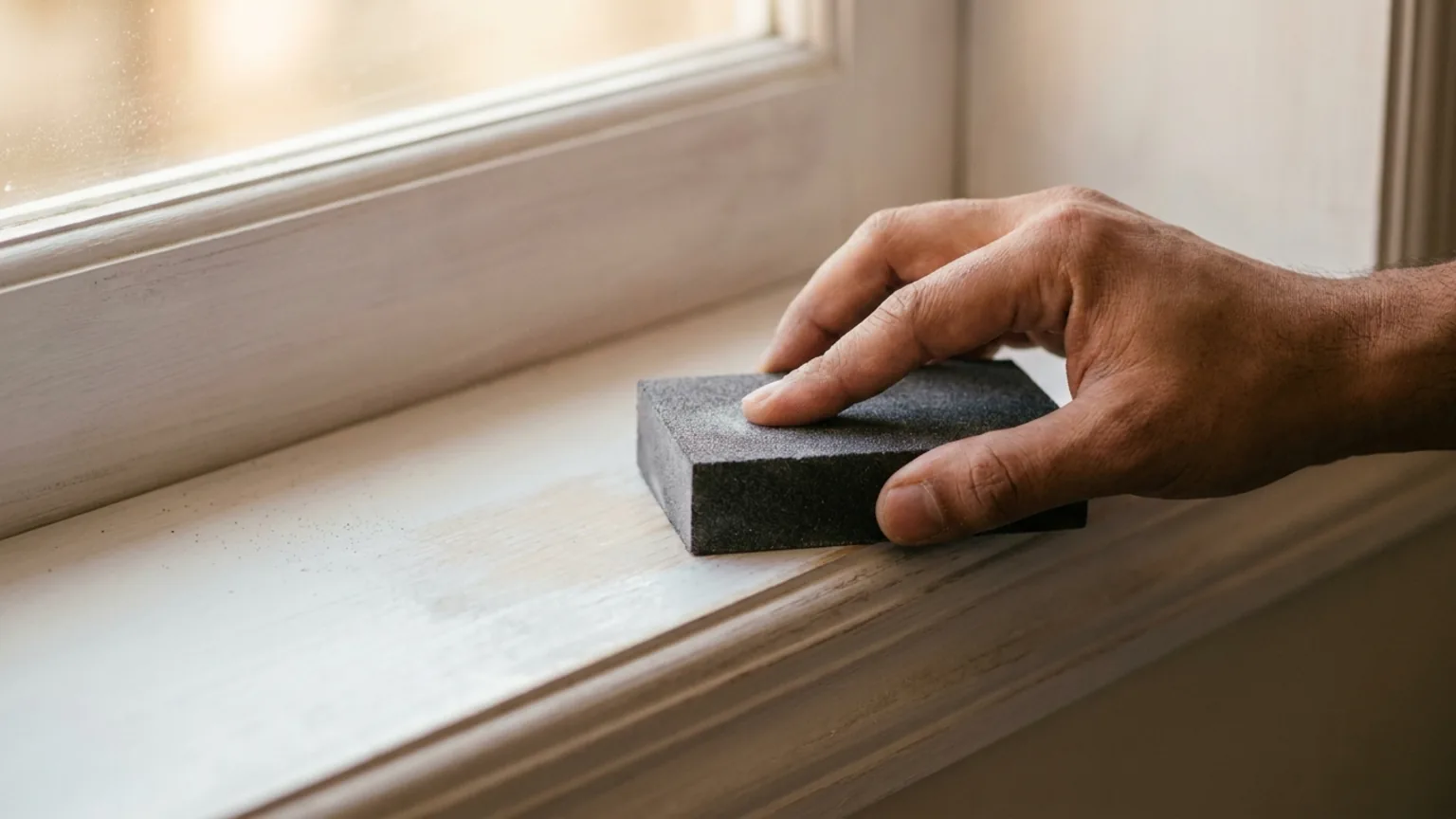
Sand the primer — once the primer has dried, sand with 150/180 grit and dust off to leave a smooth, even key for the lacquer.
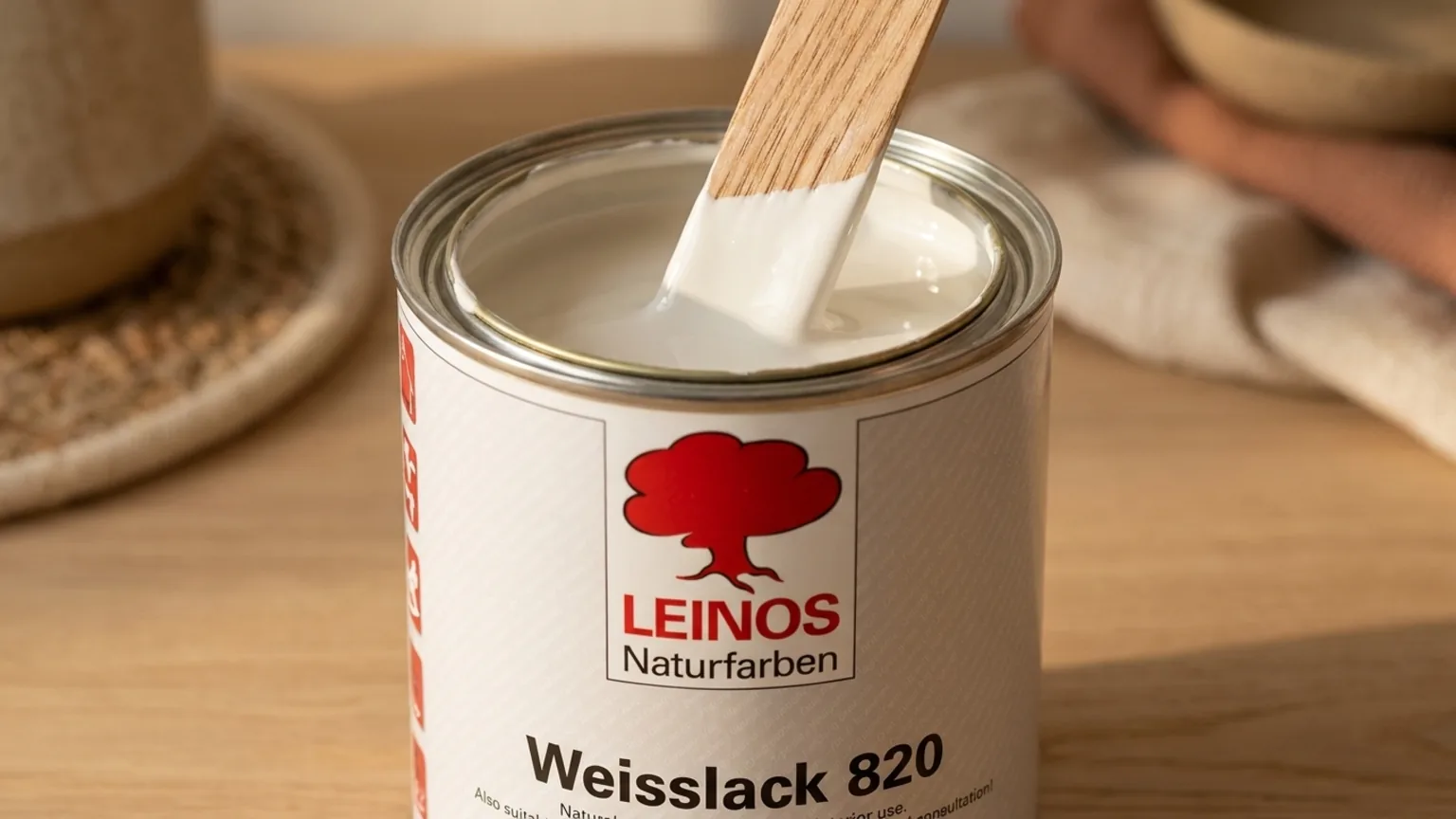
Stir the lacquer — stir 820 thoroughly before use; if a skin has formed in the tin, lift it out rather than stirring it in.
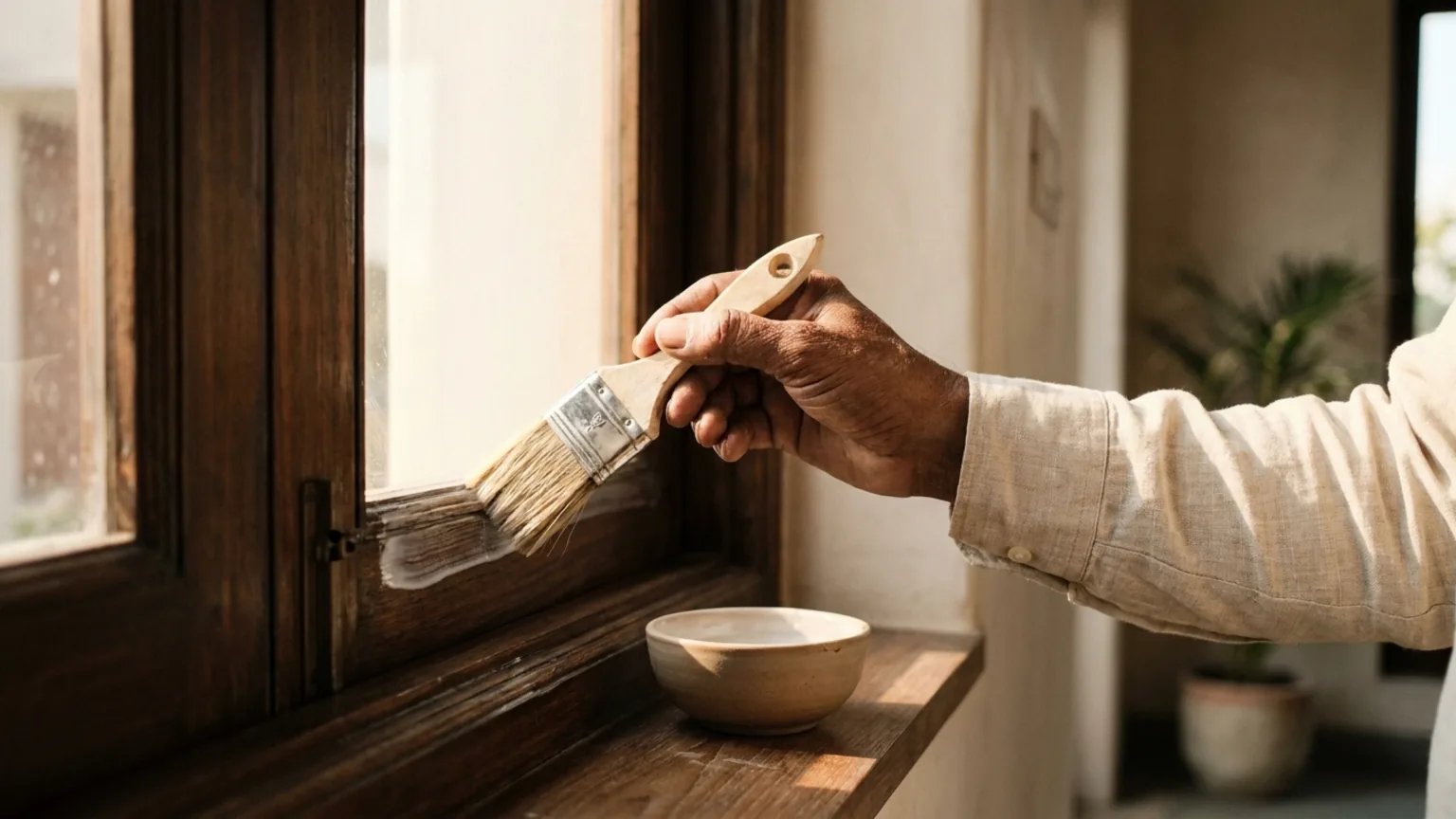
Apply the first coat — brush, roll or spray one thin, even coat (approx. 110–155 sq ft per litre) at room and surface temperatures above 15 °C. Apply sparingly, because too heavy a film dries poorly.
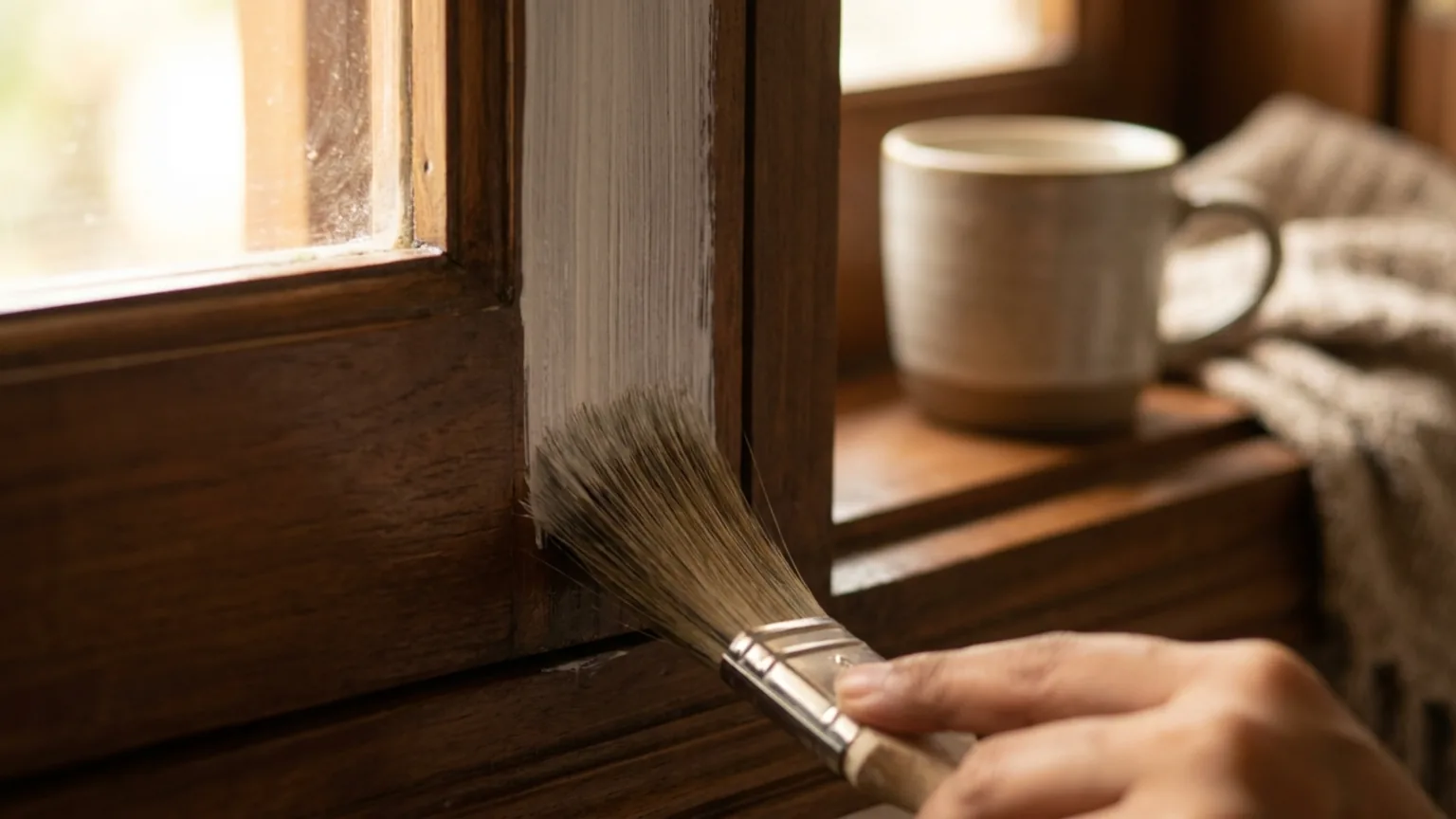
Sand and second coat — after about 24 hours (dust-dry approx. 8–10 h), sand lightly with P180, dust off and apply the second coat. Keep a fan running: the film cures by taking up oxygen.
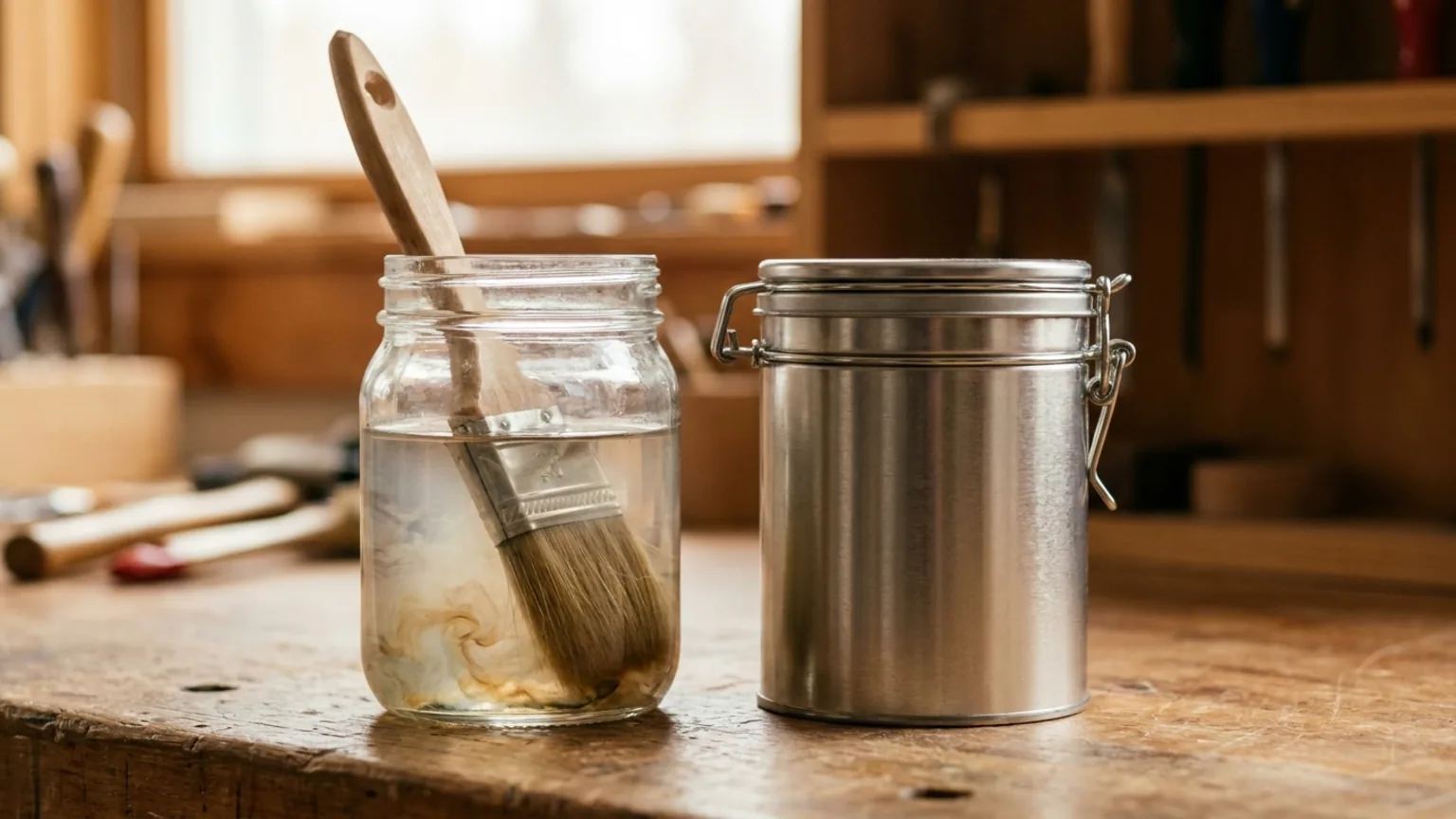
Clean up and cure safely — clean tools with LEINOS Verdünnung 200 (thinner), not water. Store oil-soaked rags under water or in a sealed metal tin — self-ignition risk. The final silk-gloss sheen settles over 2–3 weeks.
Application Conditions
Coats & Recoating
Cleaning & Storage
First time with White Lacquer? Our technical team runs complimentary on-site walkthroughs for contractors — full application protocol, start to finish.
System & Substrates
On bare interior wood, metal or stone, prime first with Resin Lacquer Primer 810 — then one to two coats of 820. Need a colour instead of white? Finishing Lacquer 840 covers in ten shades, and Mix 845 tints to any NCS or RAL.
The Coating System
Primer plus topcoat — the full chain.
Substrate Fit
Suitable
Honest Limits
Use With Care
Coverage & Pack Sizes
Coverage assumes one to two coats over a primed, sound interior surface. Absorbency and texture change the rate.
0.25L
Covers
15–20 sq ft
2 coats, absorbent wood
Best For
Touch-ups, a single frame, or a sample before full spec.
0.75L
Covers
40–60 sq ft
2 coats, absorbent wood
Best For
A door, a cabinet, or a set of interior window frames.
2.5L
Covers
140–195 sq ft
2 coats, absorbent wood
Best For
A windows-and-doors package, stairs or built-in joinery.
Enter your area to see how much material — and the most efficient pack mix — you’ll need for 2 coats.
Full calculatorDocumented Applications
Recent projects finished with White Lacquer. Factual captions, real footage — no staged photography.
Full Declaration
Every ingredient declared on the label. The Trust Hub explains what each one does and the standards behind it.
Plant-oil binder
The film former — it oxidatively cures in air into a waterproof, elastic, hard silk-gloss film that flexes with the wood instead of cracking.
Titanium dioxide & mineral fillers
Titanium dioxide gives the natural-white opacity and covering power; mineral fillers build the body and the even, open-pored silk-gloss surface.
Aliphatic hydrocarbons
A dearomatised (aromatic-free) hydrocarbon carrier flows the lacquer out level, then evaporates during cure. Clean tools with LEINOS Verdünnung 200, not water.
Drying agents (incl. cobalt octoate)
Metal-soap driers catalyse the oxidative cure. Cobalt octoate is one of them — a possible allergen, declared honestly on the label rather than hidden.
Got Questions?
Quick answers on formulation, application and Indian-climate suitability. Pulled from our full FAQ and TDS library.
For Architects & Specifiers
Technical and safety documents — citable in project specifications.
Need a Recommendation?
Four ways to reach our India team — pick the one that fits how you work.
For Trade & Specifiers
Full TDS / SDS library, specification support and trade pricing — direct from the manufacturer.
Documents
TDS / SDS
Per-product datasheets and safety sheets, downloadable in English.
Specification
NCS Match
Custom colour briefs and material samples mixed at our Delhi lab.
Trade
Direct Pricing
Volume tiers, project quoting and stock allocation through our trade desk.
Written by the LEINOS India technical team, in collaboration with
Reincke Naturfarben R&D, Lower Saxony.
Last updated
Want to represent LEINOS in your city?
Become a Dealer