
2.5L
Covers
70–110 sq ft
2 coats, absorbent mineral
Best For
Single feature wall, damp room, or accent area.
SILICATE INTERIOR WALL PAINT · ART. 690
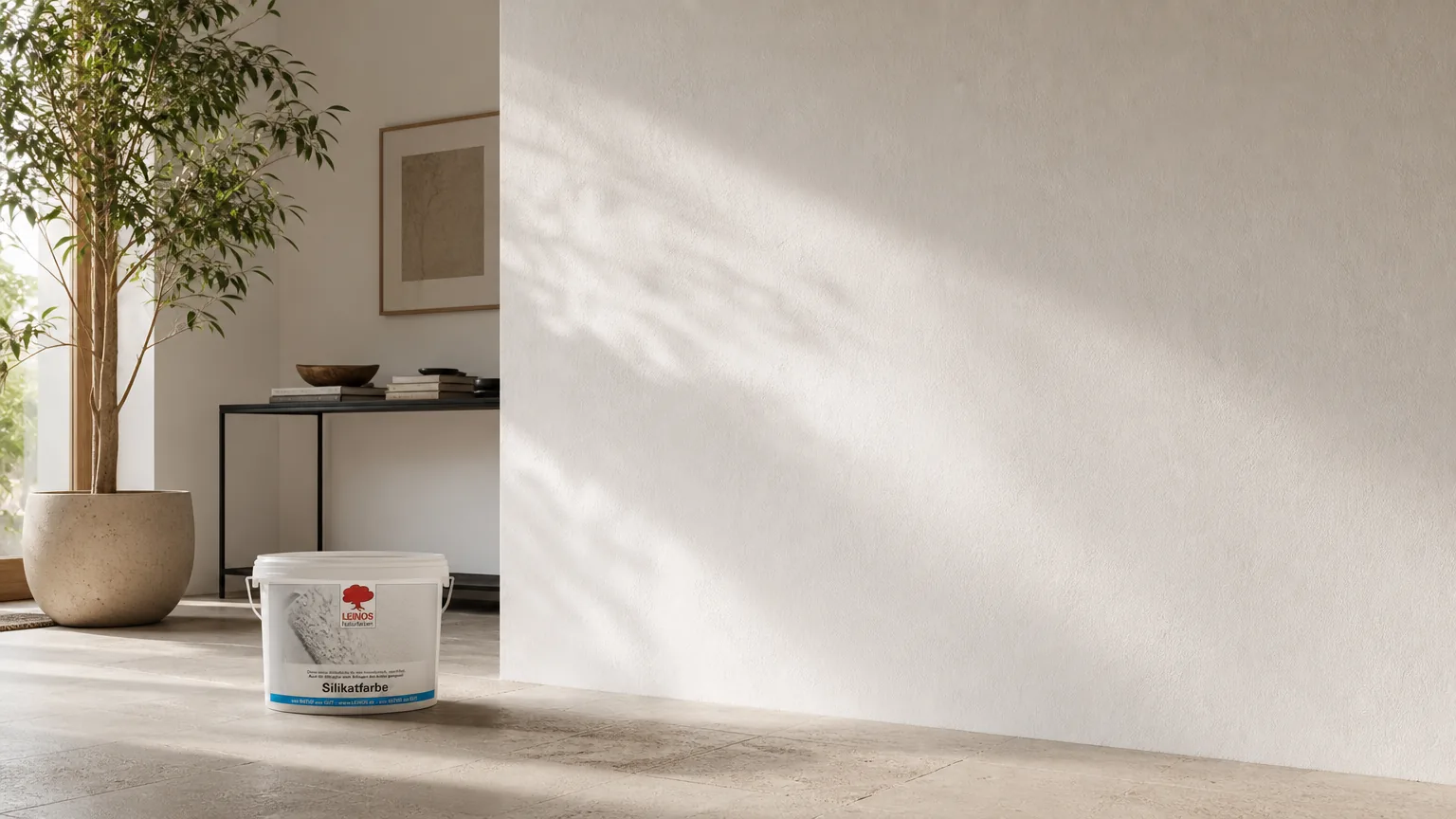
LEINOS 690 — a dispersion-silicate interior wall paint. Potassium water-glass fuses chemically with the mineral wall (silicification), not a film on top. Highly vapour-permeable (Sd ≈ 0.01 m); its alkaline surface (pH ≈ 11) prevents mould without biocides; scrub-resistant Class 2. For heritage conservation and modern mineral architecture. Made in Germany by Reincke Naturfarben since 1985.
Mechanism & Use
Potassium water-glass reacts with the silicates already in the mineral wall — the paint becomes part of the substrate, stays vapour-open, and denies mould a foothold. A mineral layer, not a polymer film.
Potassium water-glass (potassium silicate) reacts with the silicates in lime plaster, cement, and mineral render — chemical bonding, not adhesion. As the water leaves, what remains is a silicate network continuous with the wall itself. The coat becomes a mineral layer of the wall, not a film on top of it.
The cured silicate layer is open-pore. Water vapour passes freely in both directions — monsoon humidity absorbed and released seasonally, no sealed film, no bubbling, no delamination. The wall behaves as a mineral wall should.
Alkaline pH approx. 11 plus silicification leave no organic food source for mould, algae, or fungi. The protection is the chemistry of the coat itself — not a leaching biocide additive that washes out over time.
A deep, non-reflective mineral natural-white that reads flat under interior light. Wet-scrub resistant to DIN EN 13300 Class 2 and washfast — durable enough for kitchens, corridors, and high-traffic interiors.
Where It Lives
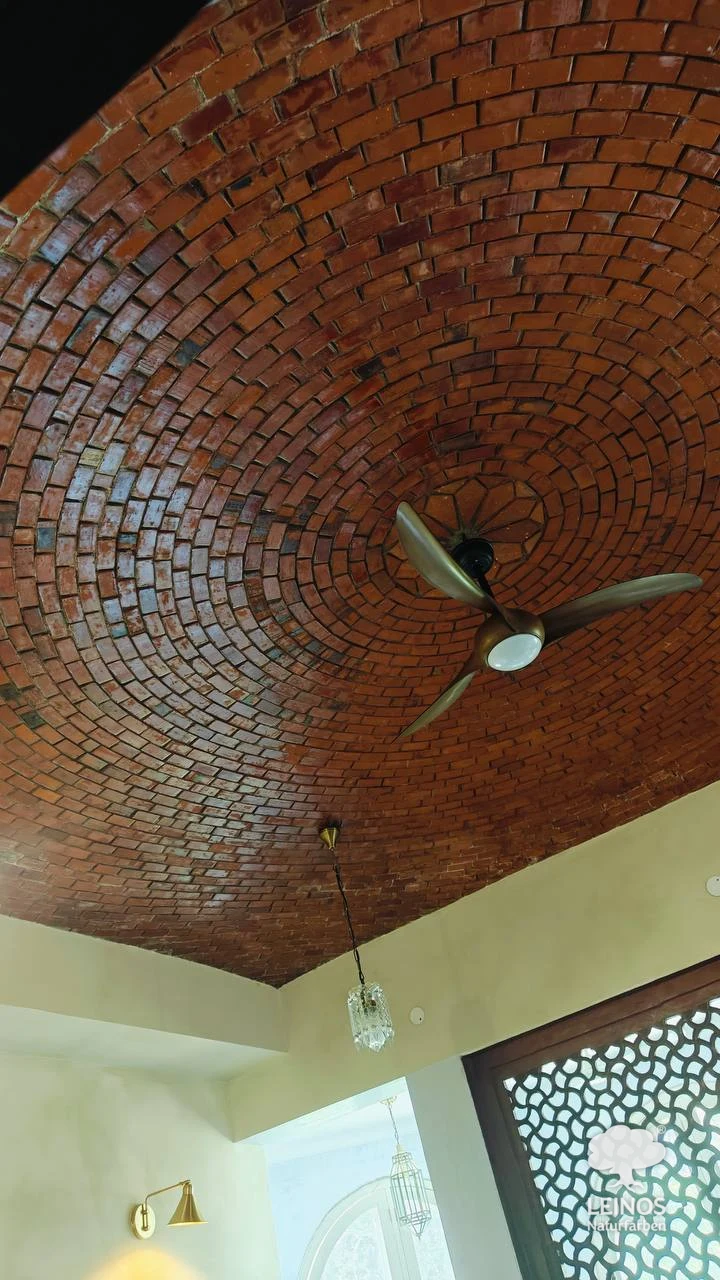
Rajasthani & Lucknow heritage interiors
Jaipur, Udaipur, Jodhpur, Lucknow heritage residences and hotels. Original lime-plastered walls that reject modern emulsion films. 690 fuses into the wall’s own mineral matrix by silicification — conservation-grade, breathable, and always recoatable.
Modern mineral-architecture interiors
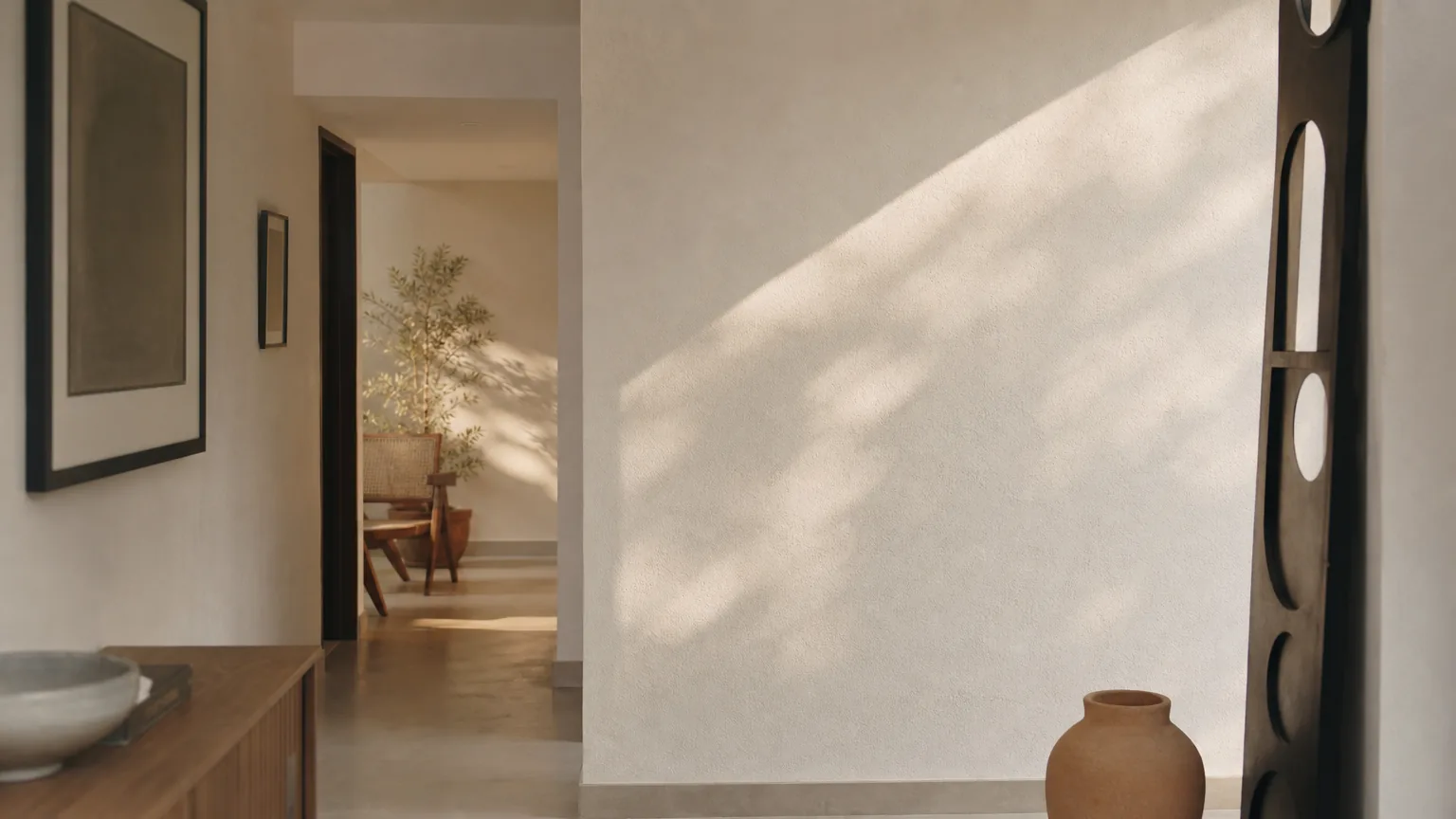
Cement- and lime-plastered contemporary homes and studios (Studio-Lotus / AD-India register). A deep matt mineral white with a chemically bonded, biocide-free surface — the texture and depth conventional emulsion cannot produce.
Coastal-humidity damp rooms, kitchens & bathrooms
Mumbai, Goa, Kochi, Chennai. Where standard emulsion bubbles and peels under steam and monsoon humidity, the vapour-open silicate coat (Sd ≈ 0.01 m) and its mould-preventing alkaline surface handle the wall stress — and its Class 2 scrub resistance takes wiping down.
Wellness studios, ayurvedic spas, yoga shalas
Health-led interiors where solvent-free, breathable, biocide-free mineral coatings are part of the air-quality story. No off-gassing, no leaching additive, and no plastic film between occupant and substrate.
High-traffic corridors, stairwells & hospitality
Hotels, clinics, schools, and offices where walls are wiped often. The scrub-resistant Class 2 mineral surface stays washfast and matt, while the silicification bond resists the flaking that defeats softer heritage limewashes.
Restored heritage hotels, museums & conservation interiors
Where the specification requires traditional mineral materials with documented German manufacturing rigour. LEINOS as the bridge between Indian heritage craft and EU compliance documentation.
Compliance · Natural Ingredients · EU
Three anchors that let architects specify 690 for heritage-conservation and modern mineral projects without disclaimers.
EU Compliance
EU limit 30 g/l · Cat. a interior matt walls (water-borne) · Directive 2004/42/EC.
Institutional Pledge
Reincke Naturfarben — full-ingredient-disclosure pledge for natural building products.
The TDS is downloadable below. Where you need a written specification packet — full ingredient declaration, VOC compliance letter for an architect’s submittal, or a silicate-system compatibility statement for a heritage-conservation project — it is available to architects and contractors on request. The safety data sheet is supplied on request. Use Get Expert Advice above.
Read The Full TDSStep by Step
Substrate + primer. The wall must be dry, sound, load-bearing, and clean. Prime raw plaster, gypsum plaster, and gypsum board with LEINOS 621 Silicate Primer; also prime patchy or repaired areas so absorbency is even. Test substrates with water-soluble, discolouring content by misting a small area first. Note: on smooth substrates the primer leaves a slightly grainy texture — this is expected.
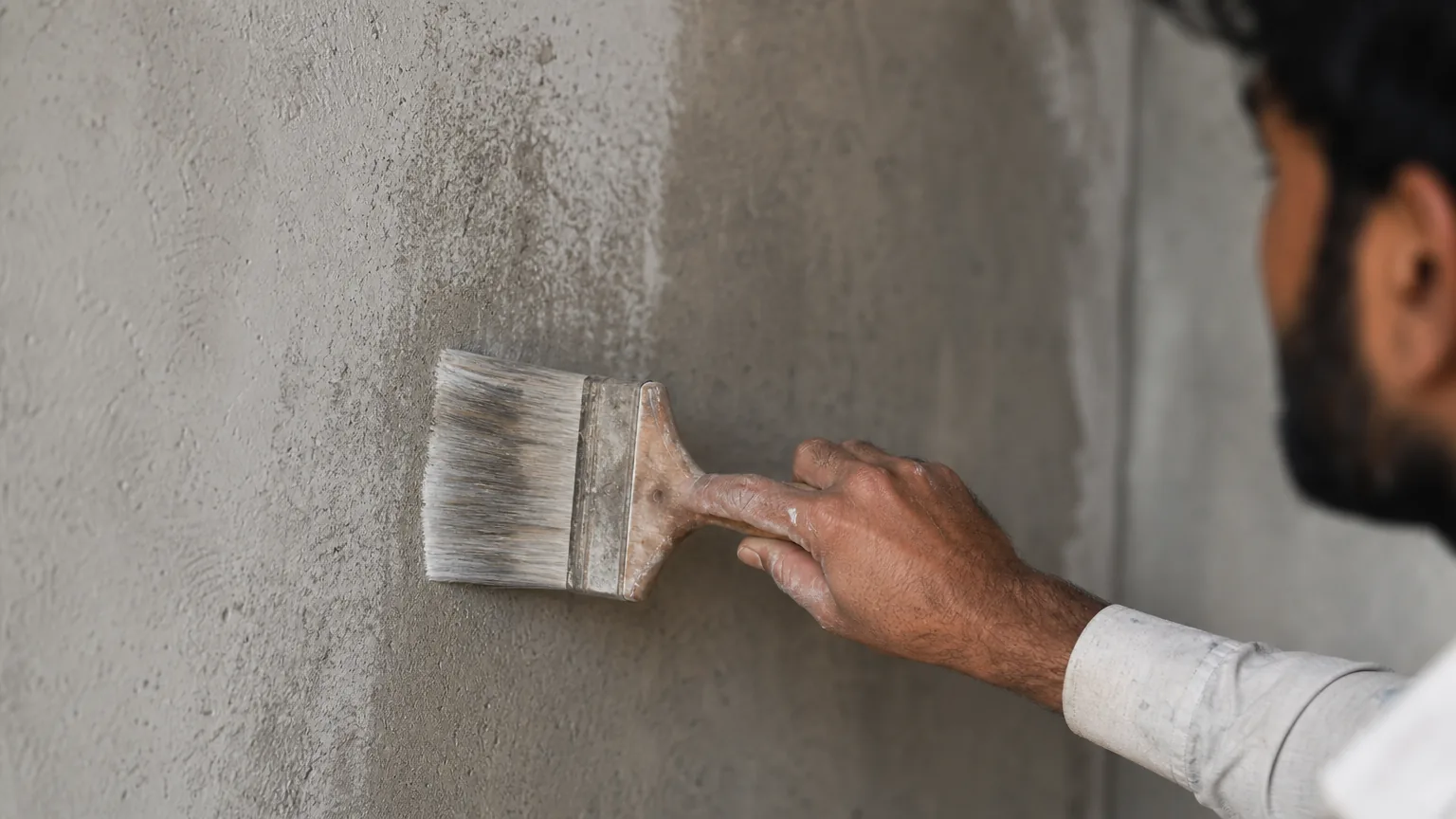
Stir thoroughly and sieve. Silicate paint settles in the pail — stir the LEINOS 690 tin well and sieve the paint to remove any dried skin from the rim or lid before use. This is a material-typical step for silicate paints and gives an even, blemish-free coat.
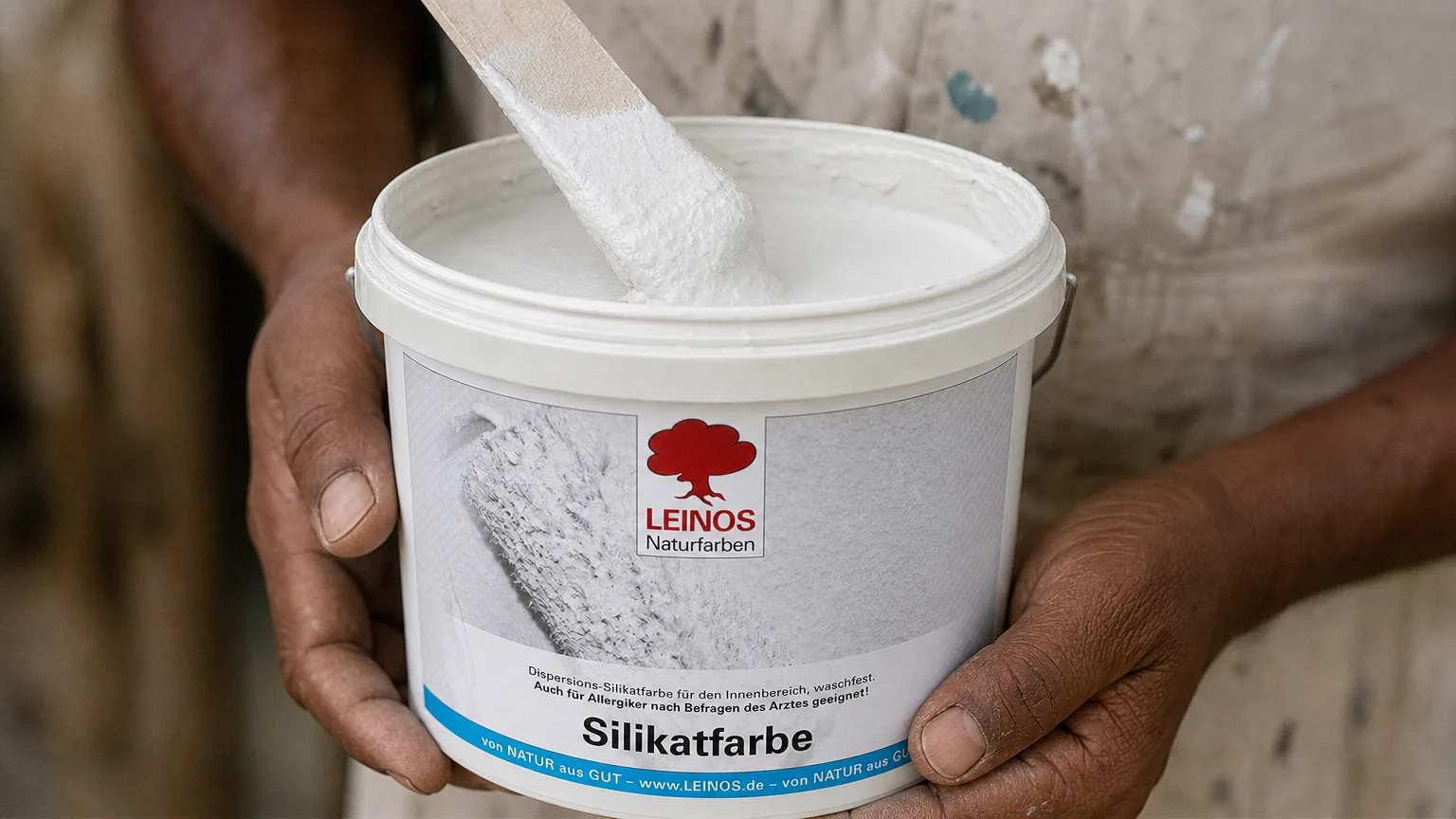
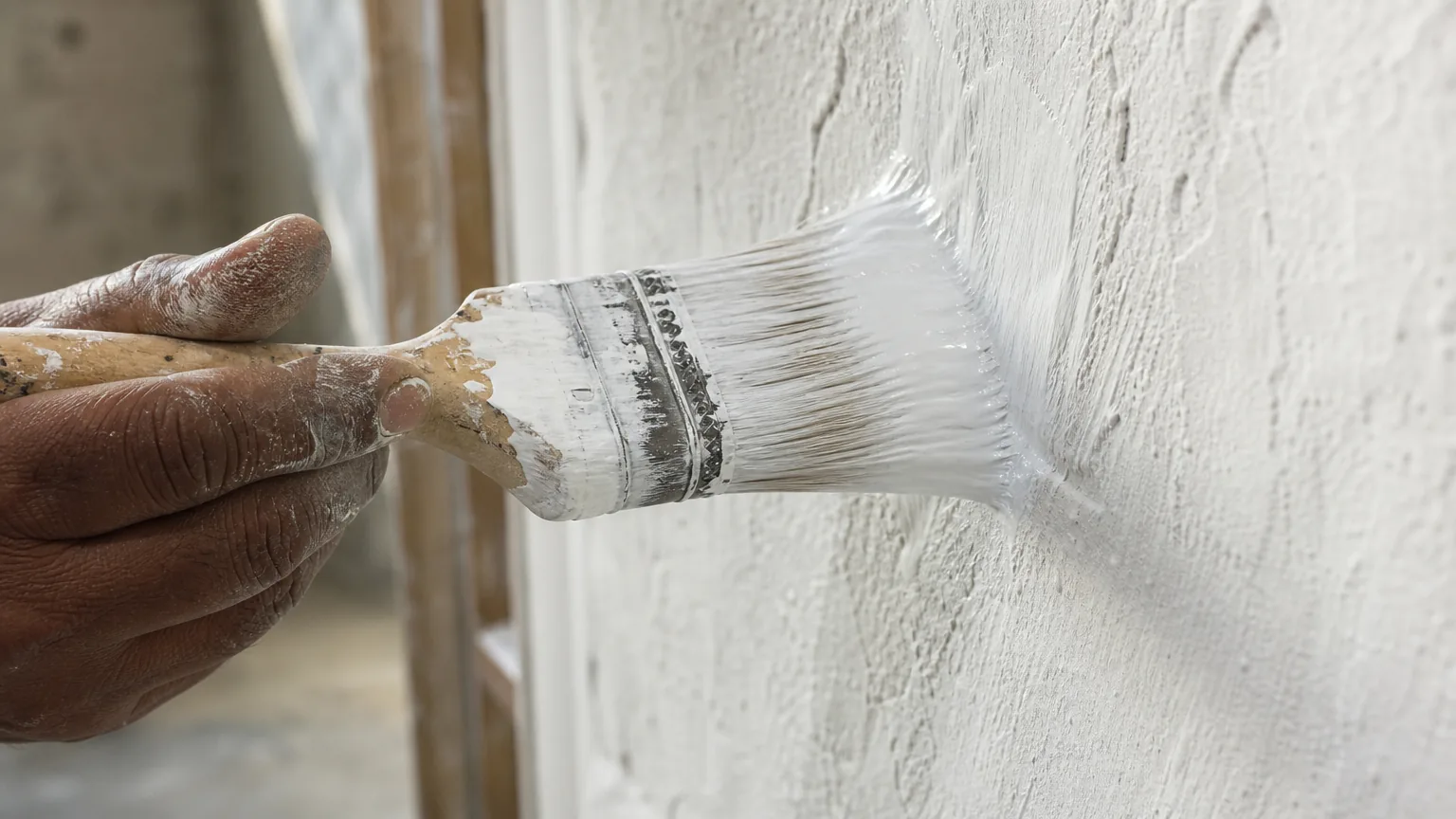
First coat — brush, roller, or airless. Apply the first coat evenly by brush, roller, or airless spray; it may be diluted with up to 10% water if needed. For airless, work at approx. 100 bar with a 0.25 mm nozzle, no gun filter, 50° spray angle, and sieve the paint first. Work in overlapping strokes so the silicate penetrates uniformly.
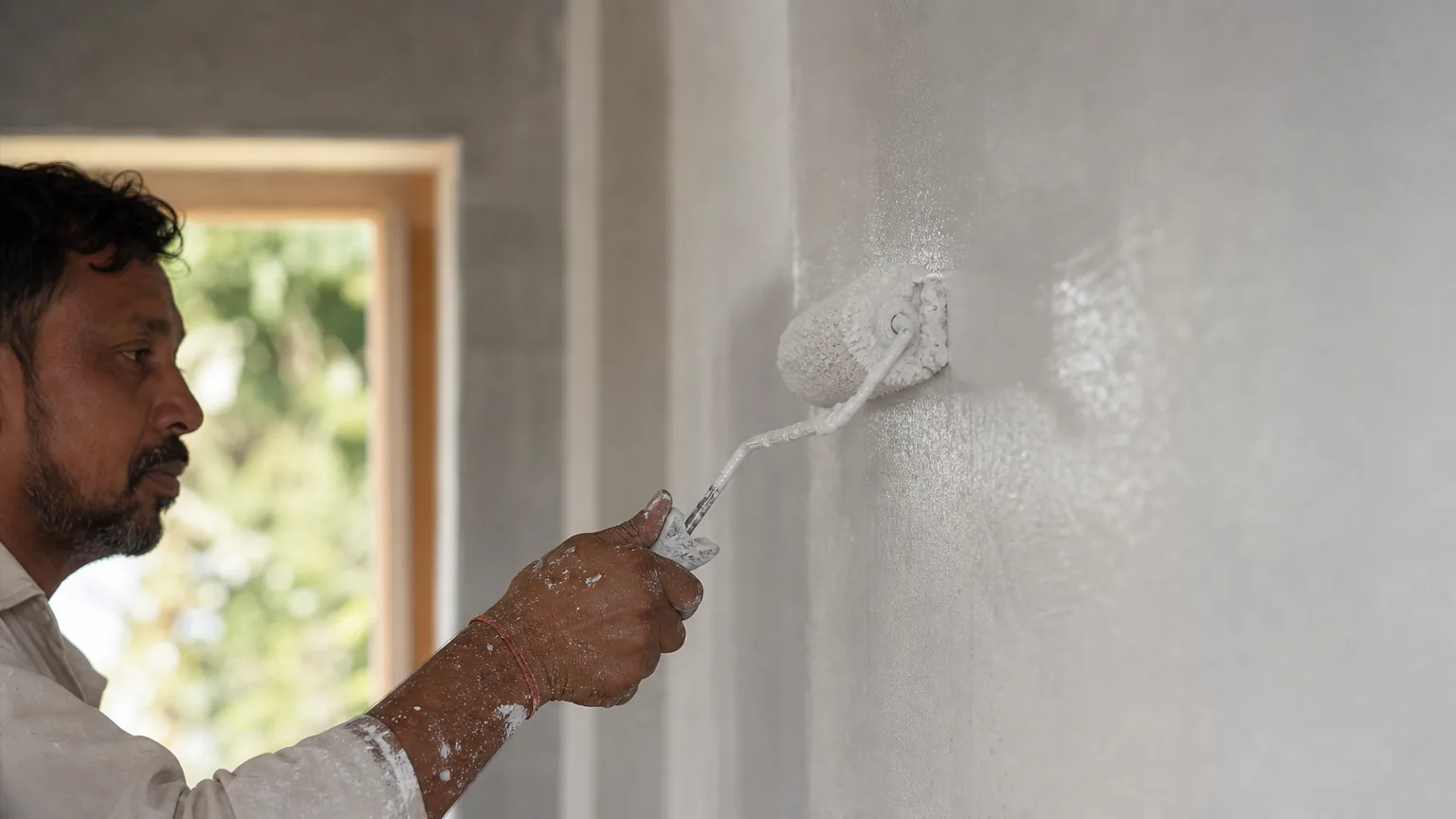
Final coat — undiluted, after approx. 4 hours. Once the first coat is dust-dry (about 3 hours) and recoatable (about 4 hours) at 20°C / 50% RH, apply the final coat undiluted. Two coats bring the wall to uniform matt mineral opacity. Ensure good ventilation throughout.
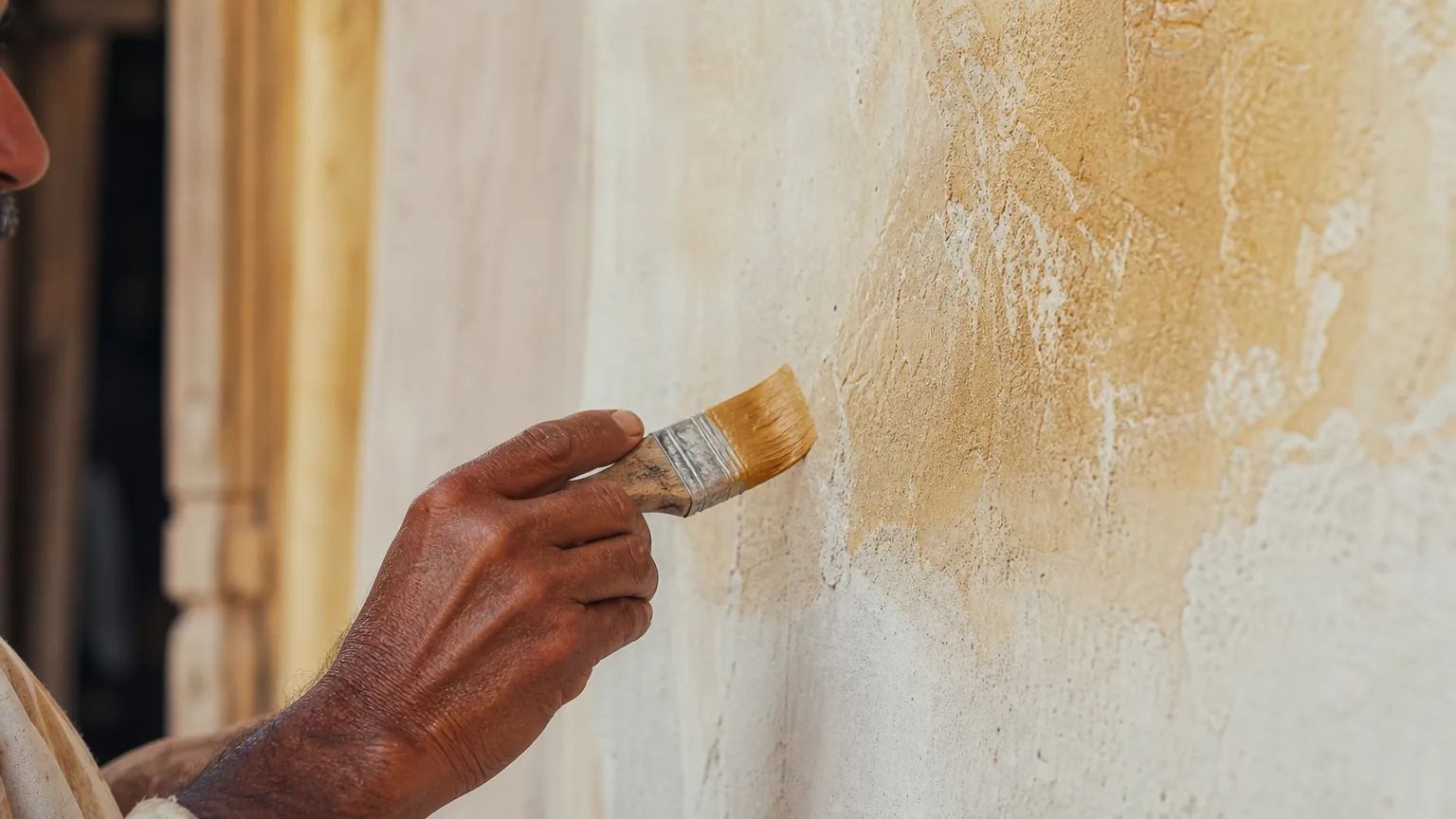
Optional glaze / on-site tint. After 24 hours of full cure the wall can be decorated with a translucent glaze: thin LEINOS 621 Silicate Primer with water 1:3 to 1:5 and add the alkali-resistant LEINOS 668 Pigment Concentrate. For a solid custom colour, tint the paint on site with 668. Only alkali-resistant pigments survive the silicate chemistry.
Cured mineral finish + cleaning. The finished wall is a deep matt mineral natural-white, scrub-resistant and washfast. Clean tools immediately with water and LEINOS 930 Vegetable Soap. The alkaline paint is only a hazard while wet — the cured mineral surface is inert.
Application Conditions
Coats & Recoating
Cleaning & Storage
Airless Spray
Nozzle: 0.25 mm. Gun filter: none. Working pressure: approx. 100 bar. Spray angle: 50°. Sieve the paint before spraying.
First time with Silicate Paint? Our technical team runs complimentary on-site walkthroughs for contractors — full application protocol, start to finish.
System & Substrates
Two coats of 690 over sound mineral plaster — with 621 Silicate Primer first on raw plaster, gypsum, or patchy absorbency. Silicate paint behaves as a chemically continuous mineral layer, not a coating film.
The Coating System
Primer plus topcoat — the full chain.
Tinting On Site
Mix your own custom shade at the site with LEINOS pigments.
Substrate Fit
Suitable
Honest Limits
Use With Care
Coverage & Pack Sizes
Two coats are the canonical specification, roughly 54–86 sq ft per litre per coat. Highly absorbent or heritage substrates use more; prime with 621 first to even the draw.
2.5L
Covers
70–110 sq ft
2 coats, absorbent mineral
Best For
Single feature wall, damp room, or accent area.
10L
Covers
270–430 sq ft
2 coats, absorbent mineral
Best For
Full room, multi-room project, or heritage conservation work.
Enter your area to see how much material — and the most efficient pack mix — you’ll need for 2 coats.
Full calculatorRelated Work
Documented mineral surface projects. Captions show which LEINOS finish was used.
Full Declaration
Every ingredient declared on the label. The Trust Hub explains what each one does and the standards behind it.
Water
The carrier. Evaporates during cure — what remains is the silicate network bonded to the substrate. Solvent-free, water-borne formulation.
Potassium Water-Glass (Potassium Silicate)
The reactive binder. Reacts with the silicates in lime plaster, cement, and mineral render (silicification) — chemically fuses the paint into the wall rather than forming a film. The chemistry that defines silicate paint.
Mineral Pigments
Alkali-resistant mineral pigments carry the matt natural-white body and opacity (DIN EN 13300 contrast-ratio Class 2). On-site tinting uses the lime-fast pigments of 668 Pigment Concentrate.
Organic Binder
A small organic binder fraction (dispersion silicate) gives the paint single-pail workability and scrub resistance without compromising the mineral, vapour-open character of the coat.
Got Questions?
Quick answers on formulation, application and Indian-climate suitability. Pulled from our full FAQ and TDS library.
For Architects & Specifiers
Technical and safety documents — citable in project specifications.
Need a Recommendation?
Four ways to reach our India team — pick the one that fits how you work.
For Trade & Specifiers
Full TDS / SDS library, specification support and trade pricing — direct from the manufacturer.
Documents
TDS / SDS
Per-product datasheets and safety sheets, downloadable in English.
Specification
NCS Match
Custom colour briefs and material samples mixed at our Delhi lab.
Trade
Direct Pricing
Volume tiers, project quoting and stock allocation through our trade desk.
Written by the LEINOS India technical team, in collaboration with
Reincke Naturfarben R&D, Lower Saxony.
Last updated
Want to represent LEINOS in your city?
Become a Dealer