Terrace Wood Oil
Penetrating oil-resin finish for exterior wood, designed for terraces, decking, and outdoor timber.
View product detailsCare & Maintenance · Solutions
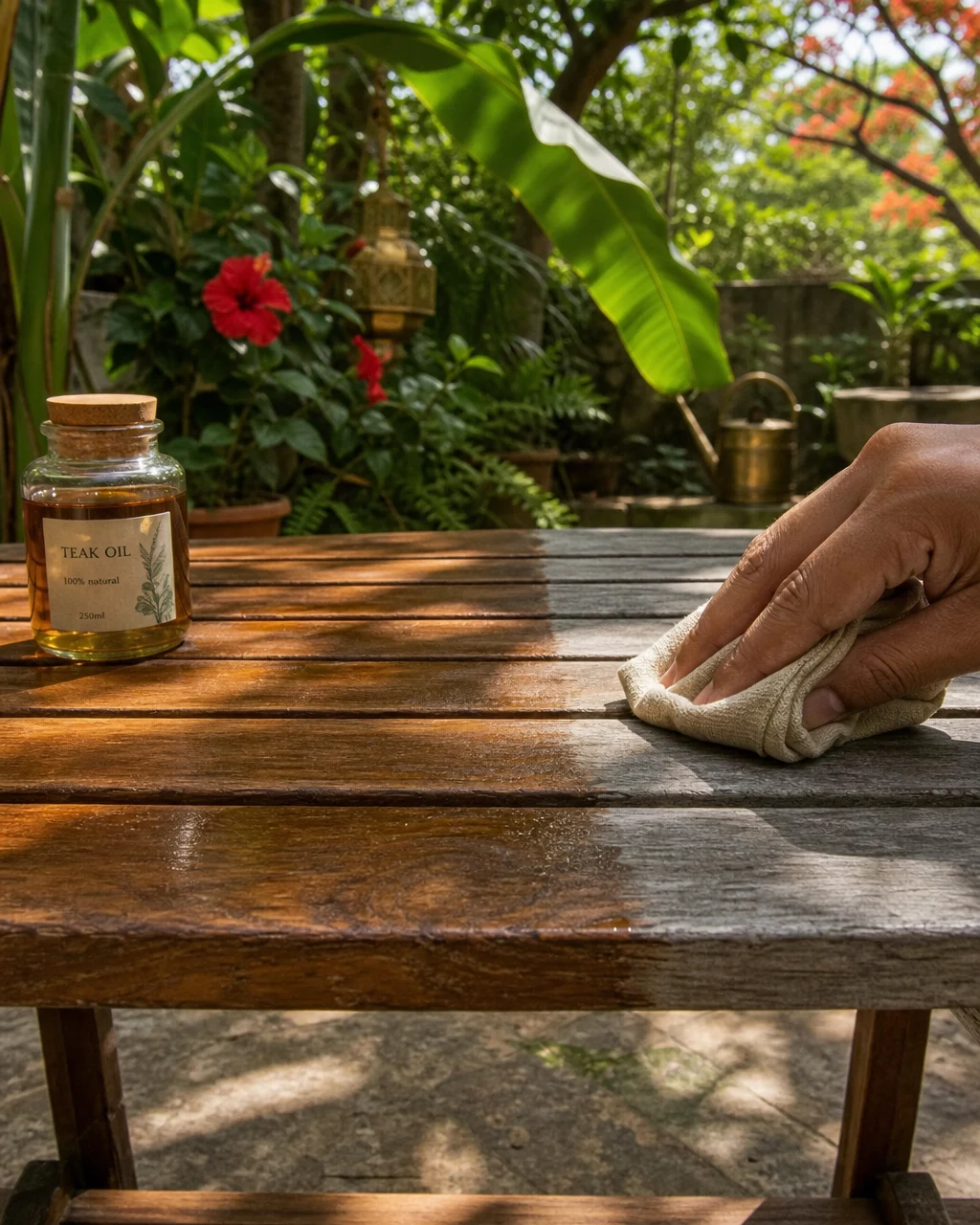
A teak deck on a Mumbai rooftop, a sheesham bench in a Bangalore garden, a bangkirai planter on a Goa beach house — outdoor wood in India lives through three weathers a year: pre-monsoon heat (April–May, UV peak), monsoon (June–September, RH 80–95% with standing rain on horizontals), and dry winter (October–March). Greying within 12 months is the documented Indian-climate behaviour, not a finish failure — and not the same European 2–3 year cycle most TDS sheets assume. The maintenance set documented for that reality is three products: Vegetable Soap 930 for the seasonal wash, Anti-Greying Fluid 940 for UV tone restoration, and Terrace Wood Oil 236 for the annual refresh coat (the same SKU that finishes the timber on first install — re-applied as a single thin coat, no sanding).
Find your application
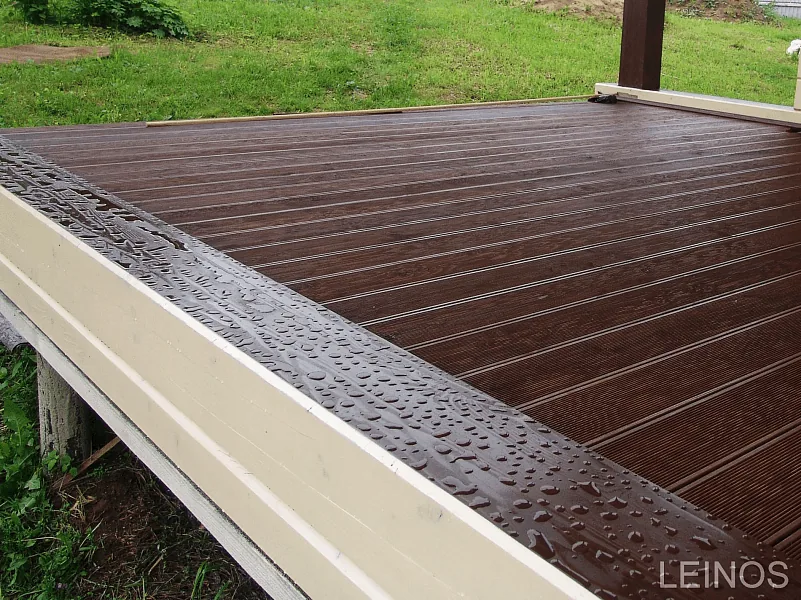
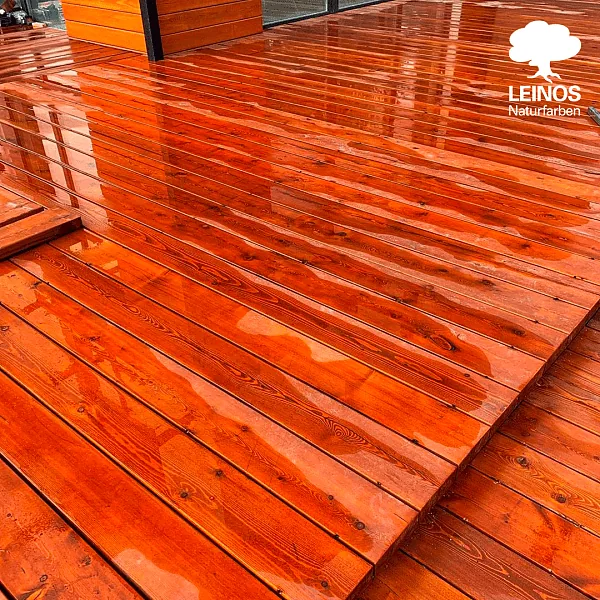
Walkable horizontal exterior wood — rooftop and patio decks, pool surrounds, garden boardwalks. The largest UV-exposed surface in the outdoor stack, with monsoon ground-water pooling, daily foot traffic, and 12-month greying as the documented Indian-climate norm. Annual cycle: 930 deep wash (April) → 940 anti-greying only if visible UV-greying (May) → 236 single refresh coat (May–June, before monsoon onset). Coastal decks (Goa, Mumbai, Chennai) run the same cycle every 6 months — salt-air doubles the load.
3 compatible productsPenetrating oil-resin finish for exterior wood, designed for terraces, decking, and outdoor timber.
View product detailsCleaning and refreshing product for greyed wood surfaces. Restores natural warm wood tone without sanding using oxalic acid and coconut oil surfactants.
View product detailsFat-replenishing cleaner for oiled, waxed, and lacquered surfaces. Universal cleaning product from plant-based renewable raw materials.
View product detailsSystem & Substrates
For first install on bare wood, see Exterior Terraces & Decking (deck boards) or Exterior Outdoor Furniture (chairs, tables, planters).
The Coating System
Primer plus topcoat — the full chain.
Long-term Care
Extends the life of the finish over the years.
Step by Step
The deck refresh weekend should land 72 h before the first expected monsoon rain. Inland Bangalore / Pune: late April through May. Coastal Goa / Mumbai / Chennai: run a second cycle in October–November because salt-air halves the interval. Work in shade or evening — surface temperature below 30 °C. Sun-heated boards flash-cure the oil before it can penetrate.
Three-point check. (1) Bead test on three zones (rooftop / chajja-covered / open-sky south-facing) — if water beads → that zone is intact, if it darkens → that zone needs 236 refresh. (2) Tone check — original warm honey vs UV-grey silver; greyed zones need 940 first. (3) Structural check — push a screwdriver into the worst-looking board; firm resistance → maintenance route is right; sinks in → that board needs replacement, not refresh. Photograph the deck before starting.
Dilute 30–50 ml per 10 litres of water. Scrub each board along the grain with a stiff deck brush. Focus on the ground-water pooling spots — low corners, joint lines between boards, the shadow zone under planter bases, and the kick-strip where the deck meets a wall or railing. Rinse with clear water from a garden hose. Allow the deck to dry — 24 h inland in dry season, 48–72 h post-monsoon, 5–7 days on Goa/Mumbai coastal decks. Confirm wood moisture below 14% with a pin meter before proceeding.
Skip if the deck is still its original warm tone. On greyed zones (typically open-sky and south-facing boards): protect plants in surrounding beds with plastic sheeting, divert run-off away from soil. Brush 940 along the grain, work into the wood pores. Contact time 15 min (light greying) to 60 min (heavy weathered grey) — re-wet the surface if it dries. Scrub with a stiff brush, then rinse thoroughly with a garden hose — no oxalic-acid residue should remain in the boards or in the surrounding garden bed. Allow 1–2 days drying before the oil step.
Annual refresh is a single thin coat, not the 2-coat first install. Stir 236 well. Brush thinly along the grain, working in 2–3 m² sections to maintain a wet edge. Coverage 140–250 sq ft / litre depending on board absorbency. Avoid puddles between boards or in low spots; spread any pooling within 20 minutes. No sanding required — the refresh oil bonds into the existing finish. Ambient and surface temperature 10–30 °C; never apply in direct sun on a heated board.
Dust-dry after 6–8 h, foot-traffic safe after 48 h, full cure 72 h. Plan the refresh weekend so foot traffic resumes on day 3 (apply Friday evening → walkable Sunday afternoon → fully cured following Tuesday). Keep planter saucers and outdoor furniture off the boards through cure. Oil-soaked cloths must go into an airtight metal container or be submerged in water before disposal — spontaneous combustion risk on warm Indian afternoons.
December–March is for targeted maintenance, not a full cycle. Wash the high-wear zones — door-threshold approach, dining-area centre, the path to the stairs — with diluted 930. Refresh any small zone where the bead test fails by brushing a thin dab of 236 along 2–3 boards and feathering into the surroundings. No 940 needed mid-year unless visible new greying appears on a south-facing zone. Document where wear concentrates so next pre-monsoon cycle can weight there.
System Composition
Why It Works
Pick the Right Build
The canonical preventive deck cycle. 930 wash → 940 only where greying shows → single 236 refresh coat. Schedule the refresh weekend 72 h before the first expected rain. Most inland Bangalore / Pune / Hyderabad decks run this cycle once a year. The deck enters monsoon protected and water-bead-tight.
930 (universal) + 940 (greyed zones only) + 236 (1 thin coat full deck)
The corrective deck cycle. Wash to remove monsoon algae and mildew that accumulated on the boards → assess where water no longer beads → 940 on zones that turned grey through the rains → 236 spot-refresh on the failed-bead boards only (not full deck unless multiple zones failed). For coastal decks this is the second full cycle of the year.
930 (universal) + 940 (selective) + 236 (selective spot-refresh)
Run the full pre-monsoon AND full post-monsoon cycles — coastal salt-air carries NaCl that bonds with morning dew on horizontal boards and accelerates both oil oxidation and lignin breakdown. Halve the inland interval. Expect 940 in most cycles, not just occasional ones. Coastal decks also benefit from monthly 930 wash through the dry season to flush salt deposits before they crystallise into the boards.
930 + 940 + 236 every 6 months — pre and post monsoon both
No full cycle — targeted maintenance only. Wash the door-threshold approach, the dining-area centre, the stairs path, and any heavy-traffic line. Brush 236 along 2–3 boards in any failed-bead zone, feather into surroundings. No 940 unless visible new greying appears on a south-facing zone. Plan around it — most boards do not need attention this window.
930 (diluted spot wash) + 236 (brush dab, feathered)
What to Expect
What to Avoid
Scope & Limits
This care solution covers maintenance of oil-finished exterior wood: terrace decks, rooftop and patio decking, garden tables and chairs, lounge chairs, garden benches, picnic benches, planter boxes, garden gates, fence panels, and similar outdoor solid-wood objects where the existing finish is oil-based (LEINOS 236 / 223 or comparable).
In the wild
Common Questions
Next step
Move into the filtered catalogue, or jump back to surface choice if you're still scoping the project.
Adjacent applications
Need a Recommendation?
Four ways to reach our India team — pick the one that fits how you work.