Terrace Wood Oil
Penetrating oil-resin finish for exterior wood, designed for terraces, decking, and outdoor timber.
View product detailsWood Surfaces · Solutions
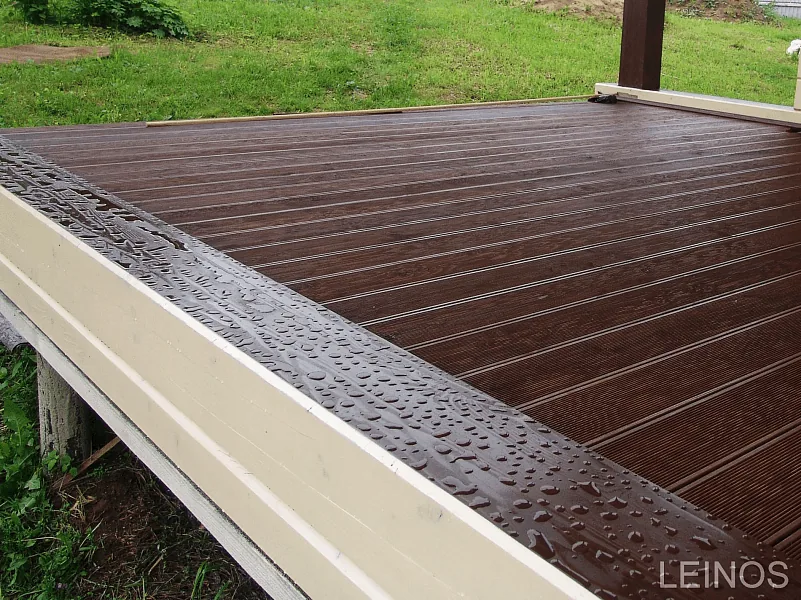
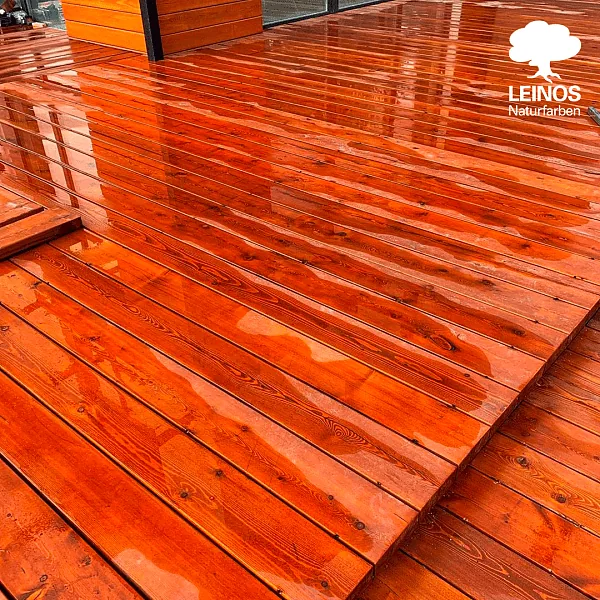
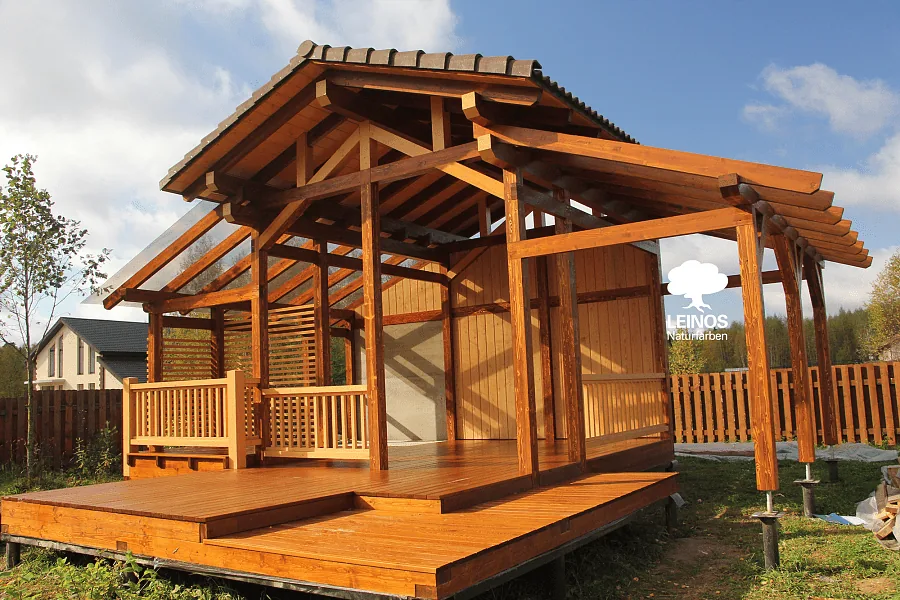
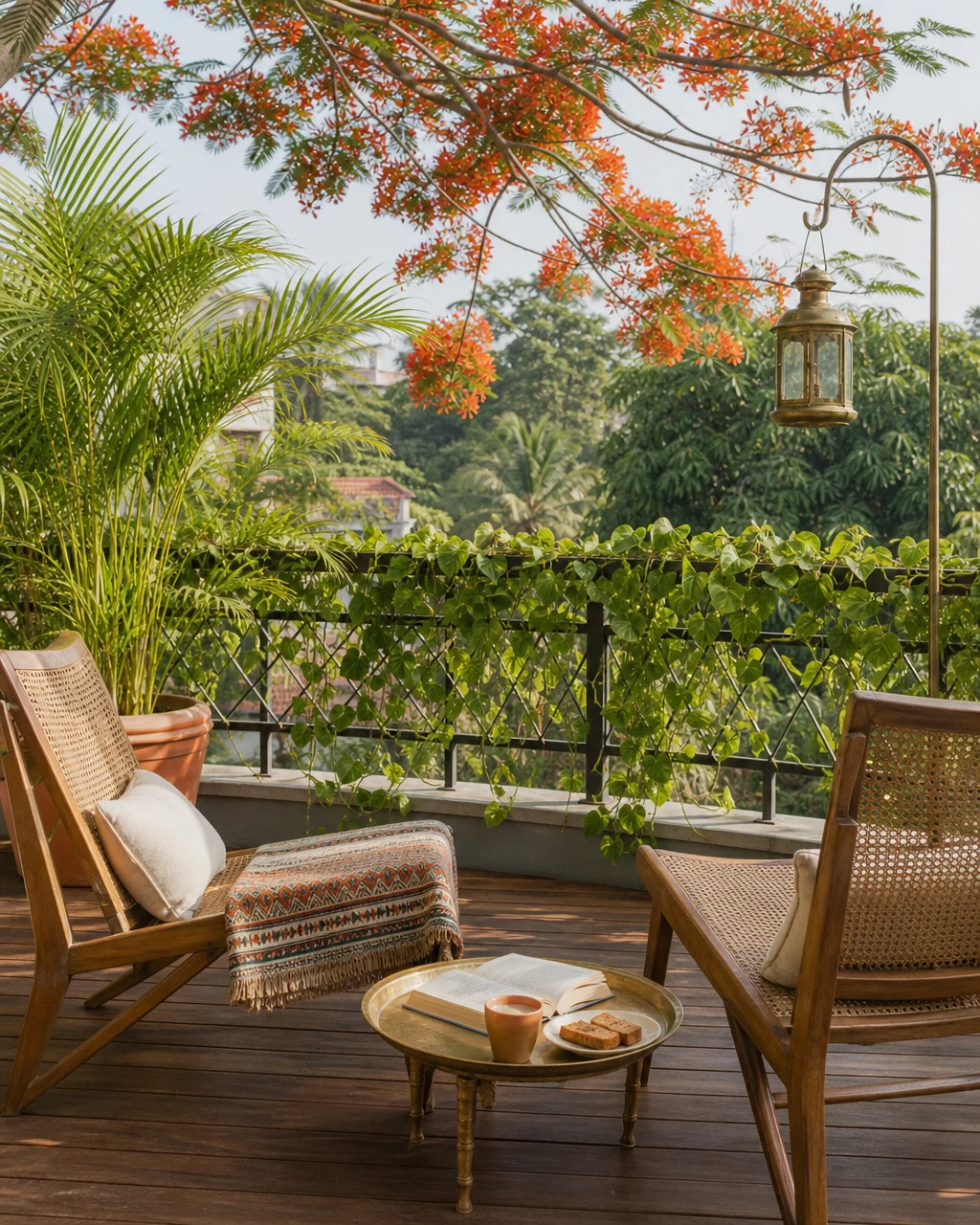
A teak rooftop deck in Mumbai, a sheesham terrace under a Bangalore garden chajja, a bangkirai pool surround on the Goa coast — exterior walkable timber earns its life in the brutal Indian outdoor reality: monsoon RH 80–95% with standing rain pooling on horizontal boards, UV greying within 12 months on untreated tropical hardwood, salt-air corrosion on coastal decks. Two LEINOS oils are documented for that reality, split by wood species: Terrace Wood Oil 236 for softwood and standard hardwood (cedar, pine, sheesham, mango), Teak Oil 223 for dense tropical hardwoods (teak, Burma teak, bangkirai, ipe). Both tested with built-in IPBC sapstain protection.
Find your application
Residential rooftop or patio deck — horizontal, open-sky UV exposure. Mumbai high-rise rooftop teak, Bangalore garden sheesham, Goa beachfront bangkirai. Wood species decides the product: dense tropical hardwood → Teak Oil 223 (deep impregnation, 1–2 coats); softwood, cedar, pine, sheesham → Terrace Wood Oil 236 (2 coats wet-on-wet OR 3 thin coats). Sand P80–P100. Indian climate re-oil cycle: ~12 months on horizontal boards vs European ~24 months. UV-greying within 12 months on untreated tropical hardwood is normal.
2 compatible productsPenetrating oil-resin finish for exterior wood, designed for terraces, decking, and outdoor timber.
View product detailsPenetrating oil-resin treatment for tropical hardwood furniture and weathered exterior timber — refreshable without sanding.
View product detailsSystem & Substrates
For weathered or greyed boards, pre-treat with Anti-Greying Fluid 940 (see Care: Exterior Terraces & Furniture). Daily cleaning with Vegetable Soap 930.
The Coating System
Primer plus topcoat — the full chain.
Topcoat Options
Choose the finish character; the primer underneath stays the same.
Long-term Care
Extends the life of the finish over the years.
Step by Step
Pressure-wash the deck to lift dirt, algae, mould spots, and post-monsoon biofilm. Use plain water at moderate pressure (1500–2000 PSI) — high pressure shreds the soft summer-grain. Let the deck dry 48–72 h before any oiling — measure moisture with a pin meter on the underside of a plank, must read ≤16% before oil goes on. Mumbai/Goa coastal decks may need 5–7 days drying after heavy monsoon.
If the deck is already greyed from UV (12+ months untreated), apply Anti-Greying Fluid 940 with a synthetic brush before any oiling. 940 restores the natural wood tone before the new oil locks it in. Let dry per its own TDS (typically 24 h). This step is NOT in the route SKU set — it is a cross-product pointer. Skip if the timber is new or recently sanded back to bare wood.
Sand the full deck surface and visible edges with P80–P100 abrasive in the grain direction. Coarser grit than interior work — exterior wood needs open pores to drink the oil deeply for UV/water protection. Pay attention to plank-to-plank gaps (rake out debris first) and end-grain at the deck perimeter (absorbs 5–10× more, flood it later). Vacuum thoroughly.
Identify the timber. Teak, Burma teak, bangkirai, ipe, or other dense tropical hardwood → Teak Oil 223 (the penetrating chemistry is engineered to break through dense end-grain that rejects standard exterior oils). Cedar, pine, sheesham, mango, pressure-treated softwood → Terrace Wood Oil 236 (the resin-fortified formulation builds water-repellency in absorbent species). If you do not know the species, do a drop test — water that beads off in seconds = dense tropical (use 223); water that absorbs in under a minute = absorbent (use 236).
Stir the chosen oil well. Apply a generous thin coat with a wide brush or roller along the grain. Work plank-by-plank to maintain a wet edge — exterior decks are too large for whole-surface wet-on-wet. Flood the end-grain at every plank cut and the deck perimeter — these absorb most. Wipe excess from plank gaps with a clean rag (oil pooled in the gap will not dry and turns sticky in monsoon humidity).
236: after 20–30 min penetration, polish the deck dry with a clean rag — no oil film must remain. Apply the second coat the same way within the wet-on-wet window. Dust-dry 6–8 h, recoatable 16–24 h, foot-traffic 48 h, full cure 72 h. 223: after 30–45 min penetration (dense tropical hardwoods need longer), wipe excess. A second coat goes on after 16–24 h only if the wood is still absorbing — a tight grain that stops drinking after one coat does not need a second.
System Composition
Why It Works
Pick the Right Build
Terrace Wood Oil 236 — 2 coats wet-on-wet (or 3 thin coats). Sand P80–P100. Re-oil yearly first 3 years, then every monsoon. Mumbai high-rise rooftops and Bangalore garden decks.
Terrace Wood Oil 236 — 2–3 coats
Teak Oil 223 — 1–2 coats deep impregnation. Sand P80–P100. Dense wood absorbs heavily — let it drink between coats. IPBC sapstain protection essential for Goa/Mumbai coastal decks.
Teak Oil 223 — 1–2 coats
Anti-Greying Fluid 940 first (cross-product pre-treatment) to restore tone, then either 236 (softwood/standard) or 223 (tropical) per the species rule. 940 is not in this route SKU set — see Care: Exterior Terraces & Furniture.
Pre-treatment 940 + topcoat (236 or 223)
What to Expect
What to Avoid
Scope & Limits
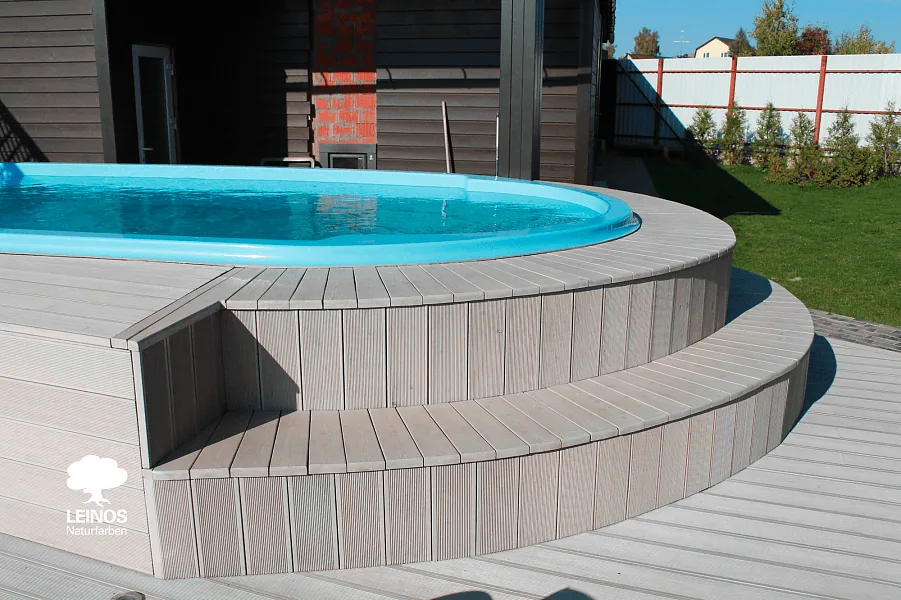
This solution applies to exterior solid-wood decks, terraces, boardwalks, timber walkways, pool surrounds, and other outdoor walkable wooden surfaces where the timber is bare or previously oil-treated.
In the wild
Common Questions
Next step
Move into the filtered catalogue, or jump back to surface choice if you're still scoping the project.
Adjacent applications
Need a Recommendation?
Four ways to reach our India team — pick the one that fits how you work.