
2.5L
Covers
135–295 sq ft
1 coat, absorbent mineral
Best For
Single feature wall, vanity area, accent zone, or small bedroom.
CLAY PAINT · ART. 655
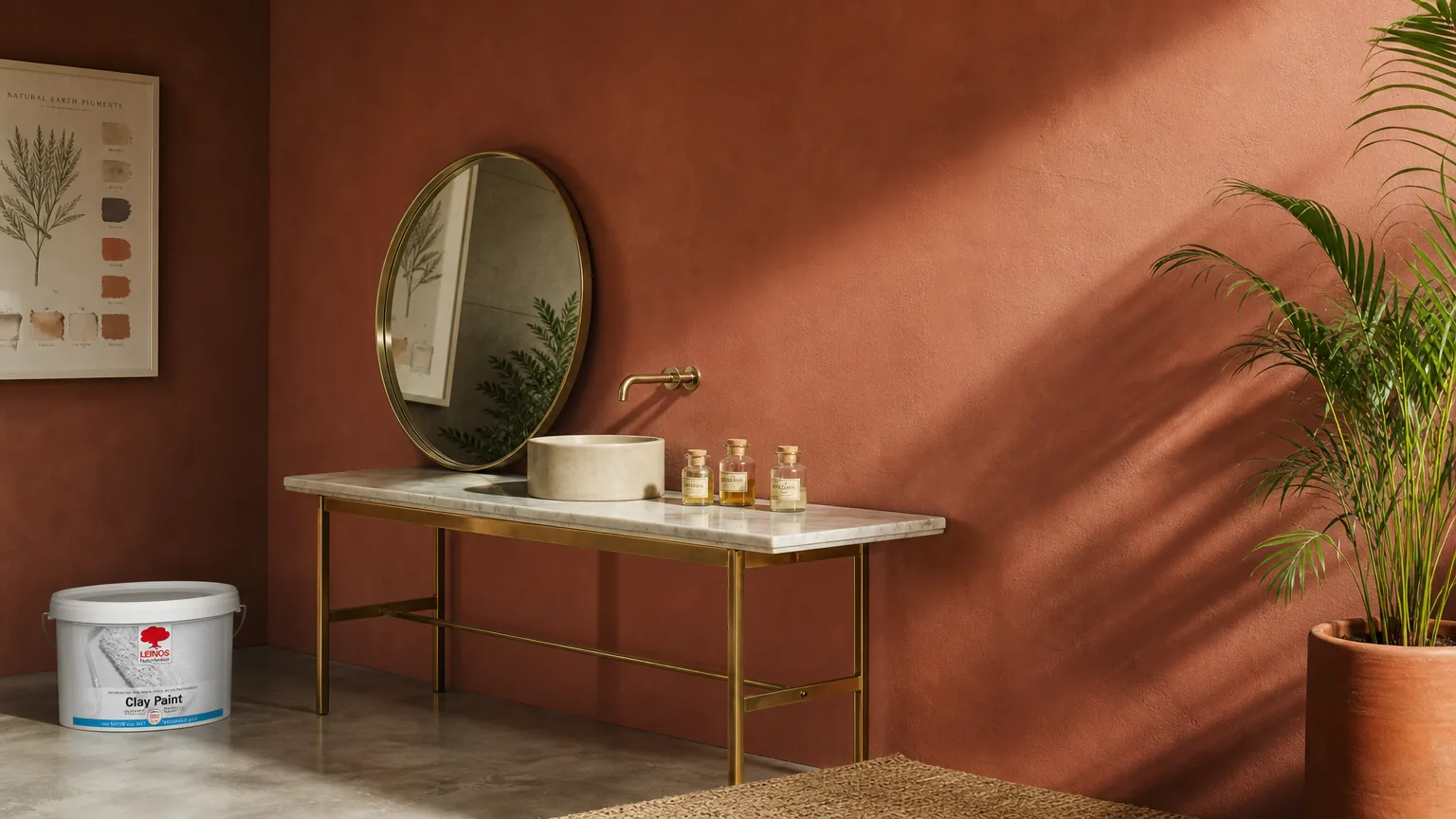
LEINOS 655 Clay Paint — a solvent-free mineral clay paint for interior walls and ceilings. Water-vapour-permeable; it supports the room’s humidity balance and sets in a matt earth-tone finish. VOC 1 g/l (EU Cat. a). Made in Germany by Reincke Naturfarben since 1985.
Mechanism & Use
The open-pore mineral surface stays water-vapour-permeable, which supports the room’s humidity balance. A starch-ester and cellulose binder holds the clay-and-chalk matrix to the substrate. Earth-tone mineral pigments live inside the matrix as substance, not as colourant suspended on a polymer film — no acrylic film between the room and the wall.
On an absorbent wall the cured clay surface stays open-pore and water-vapour-permeable, working with the room’s daily and seasonal moisture cycle. The manufacturer describes it as supporting the humidity regulation of the living space — a supporting effect, not an active dehumidifier.
Open-pore once cured — water vapour passes freely, the substrate beneath breathes, and the matt mineral surface catches raking light with the depth synthetic emulsion cannot replicate.
Iron-oxide red, ochre yellow, ochre havanna, kaolin white — mineral pigments held inside the clay matrix as part of the wall’s substance. Tinted on site with LEINOS 668 Pigment Concentrate.
Composition: water, clay, chalk, titanium dioxide, a starch-ester polymer and cellulose binder, and isothiazolinone preservatives (which may cause allergic reactions — full hazard data in the SDS). No acrylic polymer film. Solvent-free. VOC 1 g/l (EU Cat. a).
Where It Lives
Premium Mumbai + Bangalore + Delhi penthouse living rooms
Contemporary residential specifications where the feature wall is part of the architectural story, not a paint-colour decision. Iron-oxide red, ochre havanna, or off-white matt clay reads as a mineral surface — substance and depth that lime-coated heritage walls share. Two coats over 620 Deep Sealer (where the substrate is chalking or highly absorbent) on cured gypsum board, lime plaster, or cement plaster — finish-grade specifier-spec line.
Wellness studios, ayurvedic spas, yoga shalas, slow-living retreats
Health-led interior projects where the air-quality story is part of the brief. Solvent-free with low VOC (1 g/l, EU Cat. a). The water-vapour-permeable matt surface supports the room’s humidity balance and lets the wall breathe, with no acrylic polymer film between occupant and substrate. The chemistry register matches the wellness positioning.
Designer apartments, boutique hotel interiors, art galleries
Matt mineral finish with handcraft register — visible brush direction signals architect-specified work. Earth-tone palette (iron oxide, ochre, kaolin off-white) reads against contemporary furniture and art display lighting without the specular reflection of synthetic emulsion paint. Repaint cycle aligned with conventional interior wall-paint frequency; the matt clay surface mellows and deepens over the first year of use.
Bedrooms + study rooms where indoor humidity is part of the comfort story
Solvent-free. The water-vapour-permeable clay surface works with the room’s moisture cycle, so the room can feel a little less clammy in monsoon weeks and a little less arid in dry-AC winter weeks — a supporting effect, the quieter version of what limewash has done in Indian and European interiors for centuries. Paint Thursday, sleep in the room Friday once the coat dries (touch-dry approximately 6 to 12 hours at 23 °C / 50% relative humidity).
Drywall and wallpaper feature walls in contemporary fit-outs
On dry-construction (drywall) coatings and firmly-adhering ingrain wallpaper, 655 over 620 Deep Sealer reads as a unified matt mineral surface across a mixed substrate. The same canvas-evening 620 primer pattern also handles chalking lime plaster, patched repair zones, and bonded ingrain wallpaper feature walls in restored shell apartments.
Architect-specified accent walls — earth-tone palette
Tinted on site with LEINOS 668 Pigment Concentrate (compatible mineral pigment range). The brand-canon palette runs iron-oxide red, ochre yellow, ochre havanna, kaolin off-white. The matt clay surface holds saturated earth-tone shades with mineral depth that emulsion paint cannot reach. For project-specific shades — designer-specified accent colours, muted contemporary tones, paired wall-and-trim spec — Get Expert Advice above; we will route the brief to a tinted-sample workflow for architect approval before the full pail is mixed.
Compliance · Natural Ingredients · EU
Three anchors that let architects and designers specify 655 for premium residential and wellness interiors without the acrylic-polymer disclosure.
EU Compliance
EU limit 30 g/l · Cat. a interior matt walls (water-borne) · Directive 2004/42/EC.
Institutional Pledge
Reincke Naturfarben — full-ingredient-disclosure pledge for natural building products.
The TDS is downloadable below; the marketing brochure (12-page PRO deck — chemistry, tinting, system context, specifier reference) is downloadable next to it. The SDS is supplied on request from LEINOS India for the full hazard register and the trace-functional-additive disclosure. Where you need a written specification packet — full ingredient declaration, VOC compliance letter for an architect’s submittal, substrate-compatibility statement for a mixed-substrate contemporary fit-out, or a low-emission performance brief for a wellness or premium residential interior — it is available to architects and designers on request. Use Get Expert Advice above.
Read The Full TDSStep by Step
Substrate inspection — wall must be dry, sound, absorbent, clean, dust-free. Mineral plaster (lime, cement) cured 2-3 weeks. Gypsum board and bonded ingrain wallpaper: firmly adhering, free of grease, dust, loose particles. Test absorbency with a damp brush stroke. Test coat in an inconspicuous corner if substrate behaviour is in doubt.
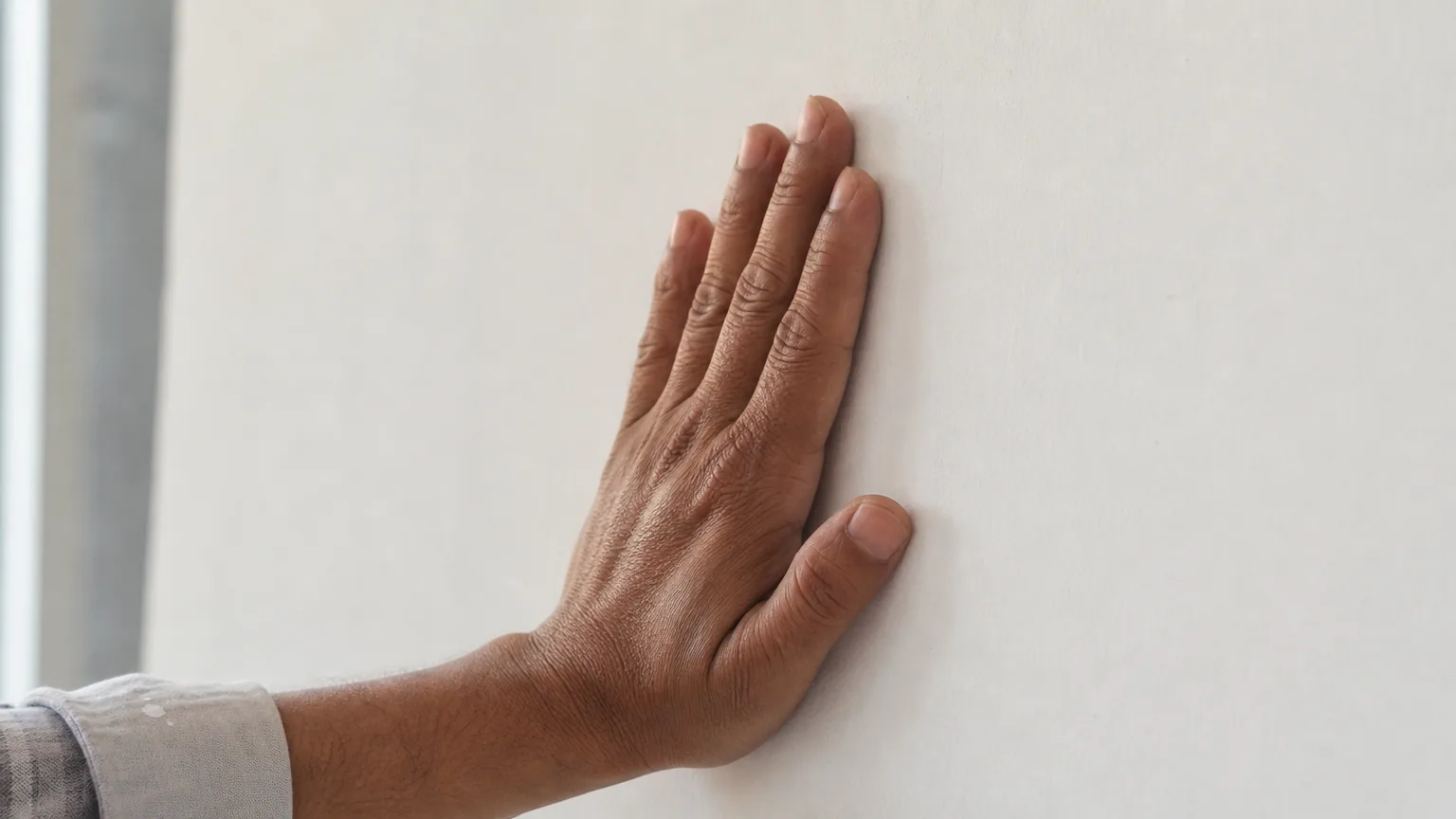
Prime highly or differently absorbent substrates with LEINOS 620 Deep Sealer — chalking lime, very porous cement, patched repair zones, gypsum board, bonded ingrain wallpaper. For sound, evenly absorbent cured mineral plaster older than 3 weeks, 620 is optional — apply 655 directly. The primer evens the absorbency canvas so the clay paint goes on at uniform thickness.
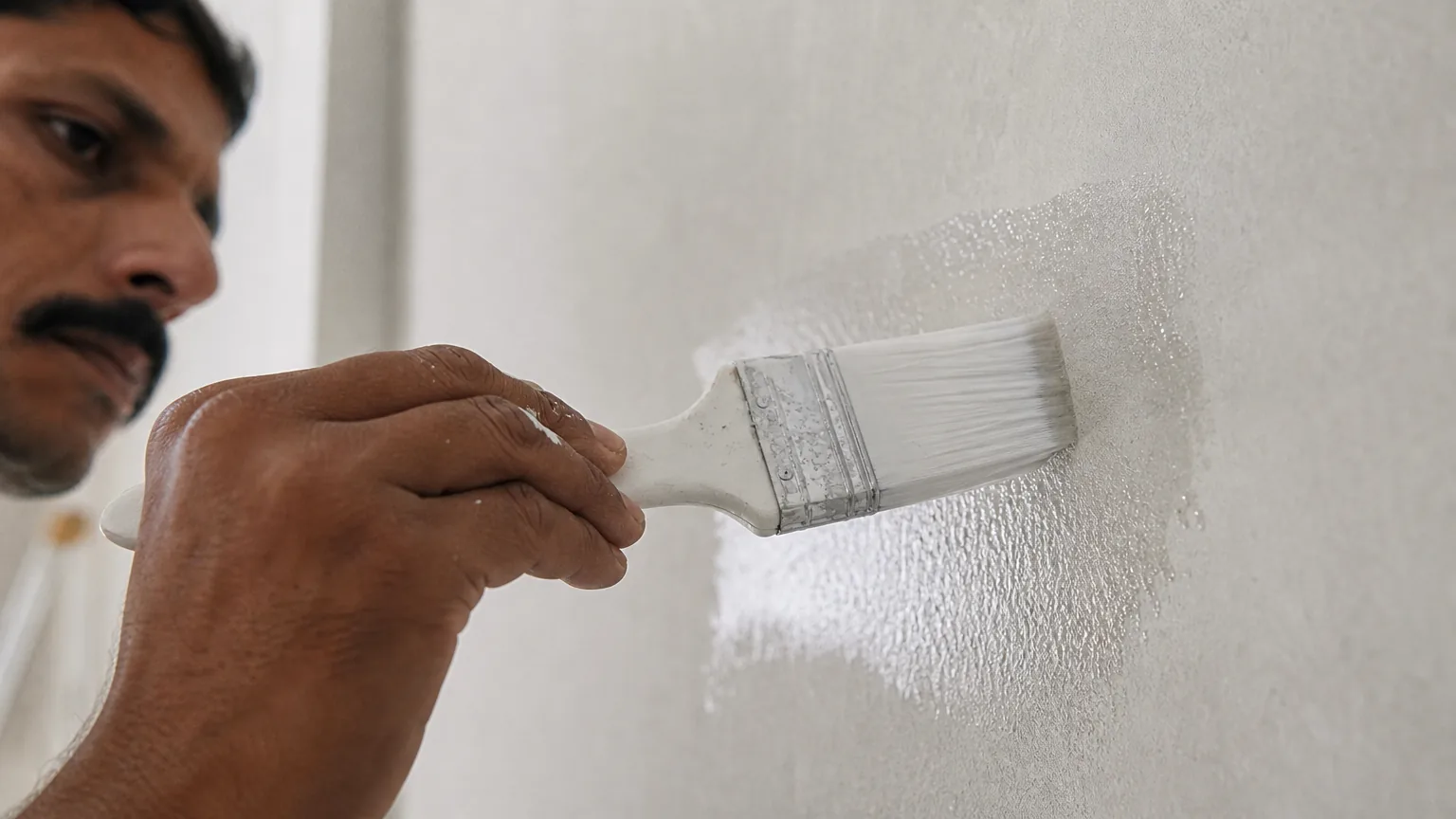
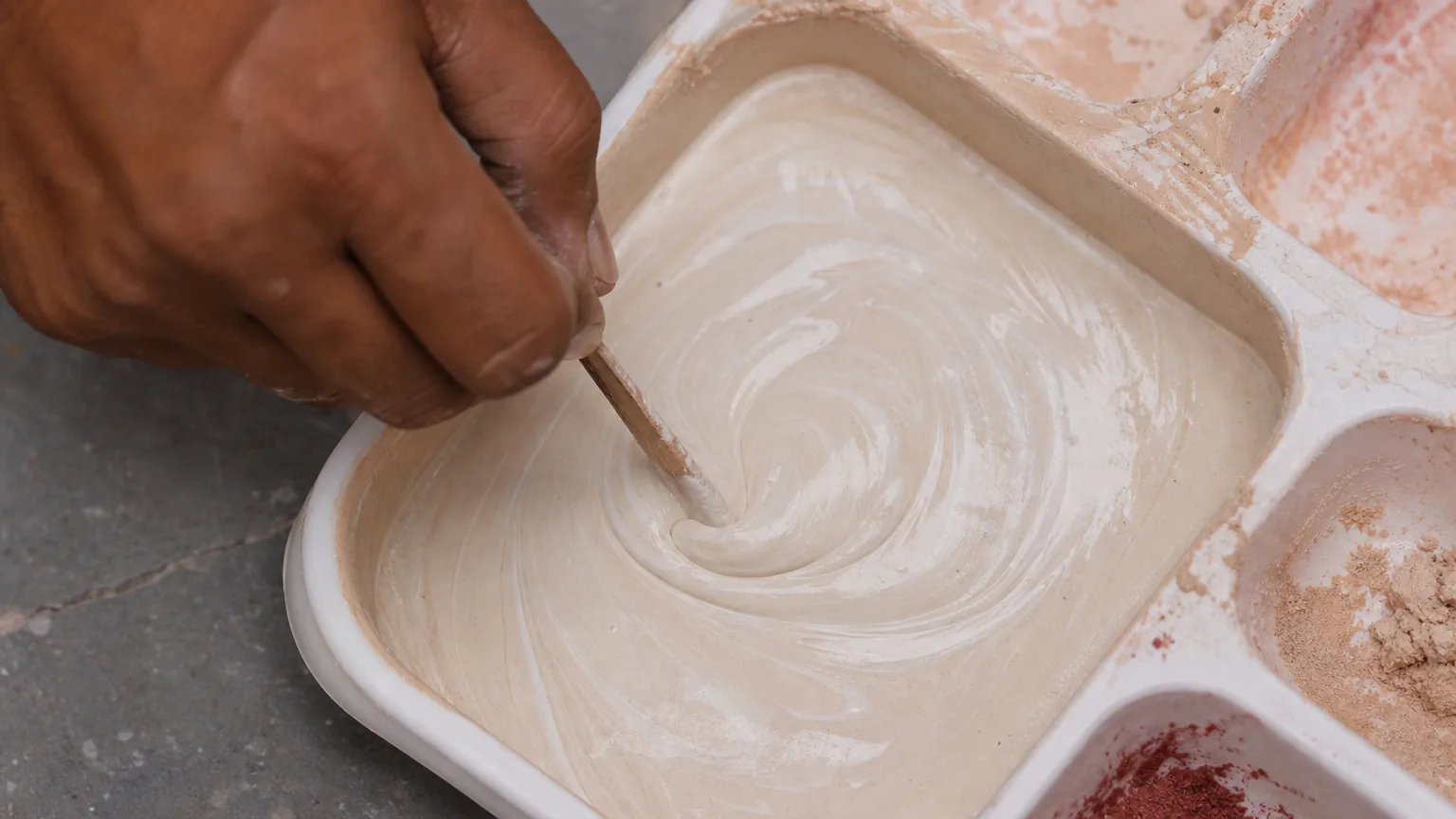
Always stir well before use and during application. Open the pail and stir the clay suspension thoroughly until the clay and mineral pigments are fully dispersed and the colour reads uniform. Clay paint settles faster than synthetic emulsion; consistent stirring keeps colour register even. Supplied ready-to-use; no dilution required.
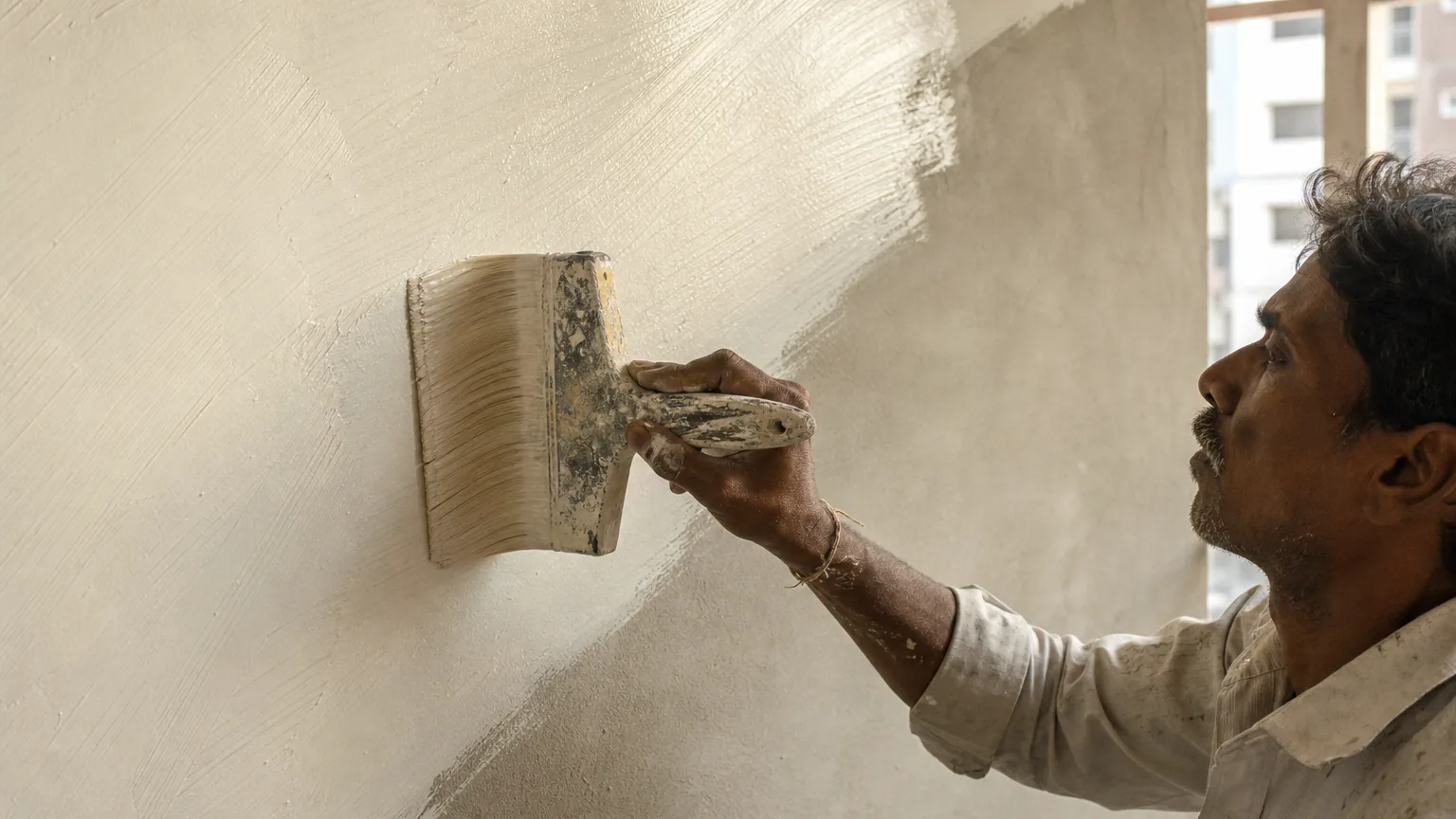
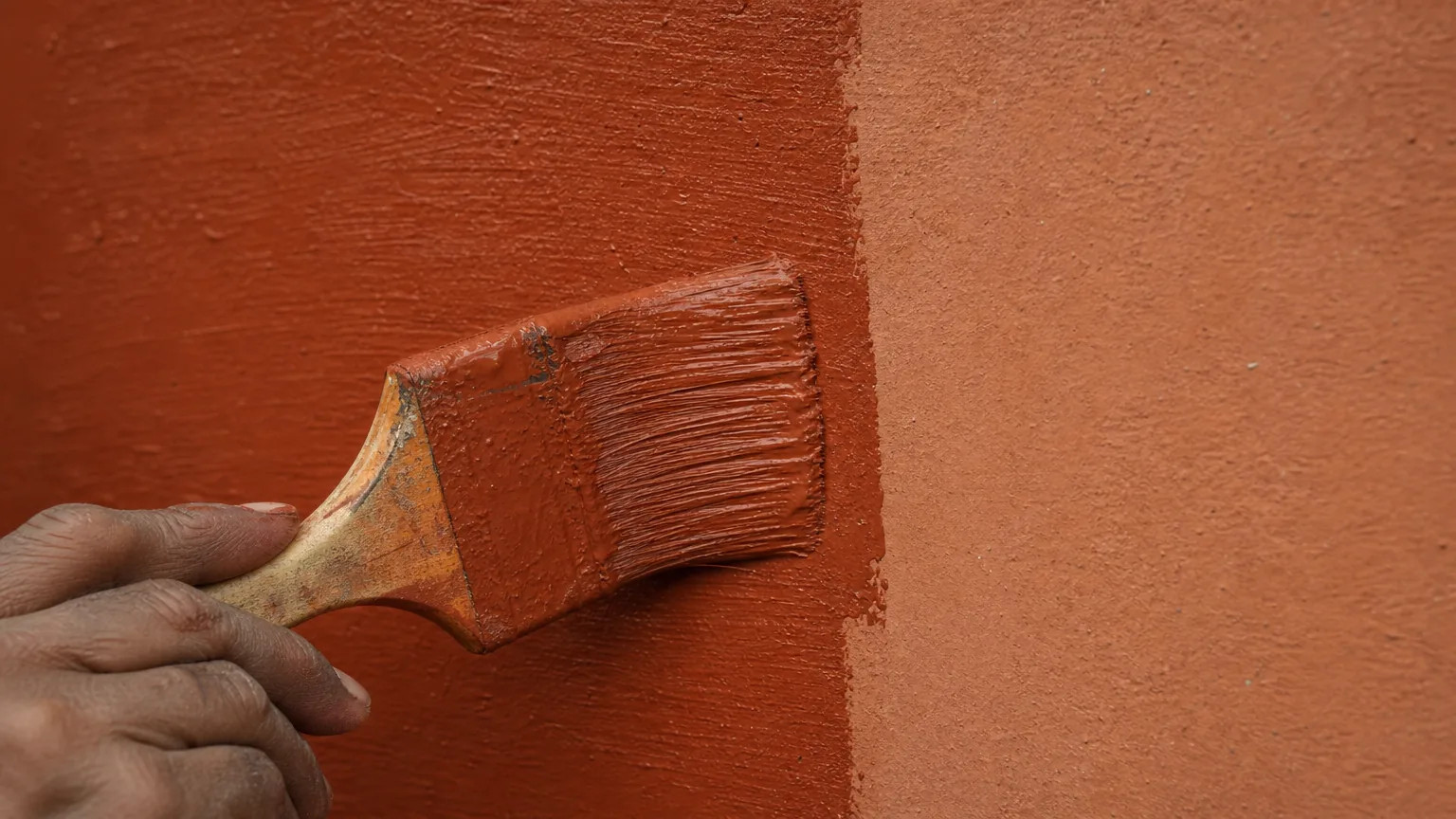
Apply evenly — spread in all directions. Brush, roller, or flat brush. On roller, finish with light cross-strokes to even the stipple; on flat brush, accept the faint visible brush direction — part of the matt clay register that signals hand-applied work. Ambient and surface temperature above 10 °C. Ventilate well.
One coat is the canon — “As a rule, 1 coat is sufficient.” The clay-cellulose matrix reaches its full matt mineral surface in a single even coat over a properly primed substrate. Touch dry approximately 6 to 12 hours at 23 °C / 50% RH — longer at higher humidity or lower temperature. Coverage approx. 150 ml/m² per coat (54-118 sq ft per litre). 10 L pack covers approx. 710 sq ft per coat.
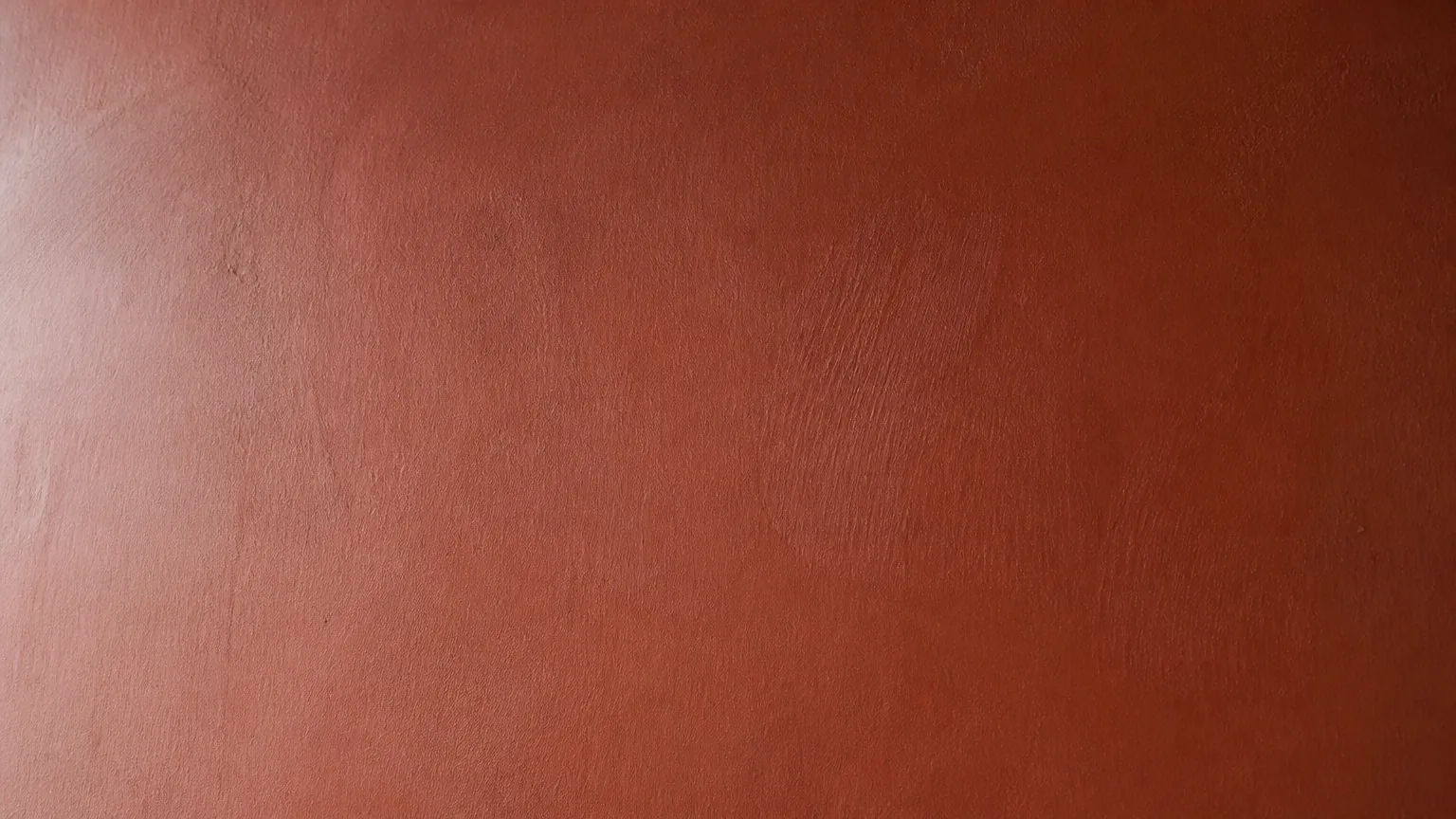
Optional second coat for highly absorbent substrates or a deeper colour register. Apply the same way as the first once the first is touch-dry. Brings the wall to its full uniform mineral depth. Clean tools immediately after use with water (LEINOS 930 Vegetable Soap optional for stubborn residues).
Application Conditions
Coats & Recoating
Cleaning & Storage
Airless Spray
Airless: Nozzles 0.38–0.58 mm. Spray angle approx. 40°–50°. Filter approx. 100–50 mesh.
First time with Clay Paint? Our technical team runs complimentary on-site walkthroughs for contractors — full application protocol, start to finish.
System & Substrates
One coat of 655 over sound mineral plaster, dry-construction (drywall) coatings, or firmly-adhering wallpaper — with 620 Deep Sealer first for chalking, highly absorbent, mixed-substrate, or drywall surfaces. Hand-applied specifier-grade register; earth-tone palette via 668 Pigment Concentrate.
The Coating System
Primer plus topcoat — the full chain.
Tinting On Site
Mix your own custom shade at the site with LEINOS pigments.
Substrate Fit
Suitable
Honest Limits
Use With Care
Coverage & Pack Sizes
Coverage varies with substrate absorbency. Chalking lime plaster and stipple-finished gypsum consume more than smooth skim plaster. One coat is the canonical specification; optional second coat for highly absorbent substrates or deeper earth-tone register.
2.5L
Covers
135–295 sq ft
1 coat, absorbent mineral
Best For
Single feature wall, vanity area, accent zone, or small bedroom.
10L
Covers
540–1180 sq ft
1 coat, absorbent mineral
Best For
Full room, full apartment, or multi-room project.
Enter your area to see how much material — and the most efficient pack mix — you’ll need for 1 coat.
Full calculatorRelated Work
Documented mineral surface projects. Captions show which LEINOS finish was used.
Full Declaration
Every ingredient declared on the label. The Trust Hub explains what each one does and the standards behind it.
The mineral body of the paint — an open-pore clay surface that stays water-vapour-permeable once cured and holds earth-tone mineral pigment within the matrix as substance. Inert, REACH-compliant.
Chalk (Calcium Carbonate Filler)
Mineral filler — provides matt opacity and the chalky surface depth characteristic of cured clay surfaces. Compatible with the binder and the clay matrix. Inert, REACH-compliant.
Titanium Dioxide
Mineral white pigment for opacity and brightness. The cured paint film is safe and not classified hazardous; standard handling applies to the wet product.
Starch-Ester Polymer + Cellulose Binder
The binder system — a starch-ester polymer together with cellulose holds the clay-and-chalk mineral matrix to the substrate as the water phase evaporates. No synthetic acrylic polymer; distinct from the natural-resin emulsion binder of 660 / 650 and from the lime carbonation cure of 665.
Preservatives (Isothiazolinones)
In-can preservatives (BIT plus a CIT/MIT blend) keep the water-borne pail stable through shelf life. The datasheet notes they may cause allergic reactions; full hazard data is in the SDS, supplied on request from LEINOS India. We disclose them in line with our full-ingredient pledge.
Got Questions?
Quick answers on formulation, application and Indian-climate suitability. Pulled from our full FAQ and TDS library.
For Architects & Specifiers
Technical and safety documents — citable in project specifications.
Need a Recommendation?
Four ways to reach our India team — pick the one that fits how you work.
For Trade & Specifiers
Full TDS / SDS library, specification support and trade pricing — direct from the manufacturer.
Documents
TDS / SDS
Per-product datasheets and safety sheets, downloadable in English.
Specification
NCS Match
Custom colour briefs and material samples mixed at our Delhi lab.
Trade
Direct Pricing
Volume tiers, project quoting and stock allocation through our trade desk.
Written by the LEINOS India technical team, in collaboration with
Reincke Naturfarben R&D, Lower Saxony.
Last updated
Want to represent LEINOS in your city?
Become a Dealer