

0.75L
Covers
80–95 sq ft
1 coat, absorbent mineral
Best For
Spot-priming stains, patch repairs, sampling.
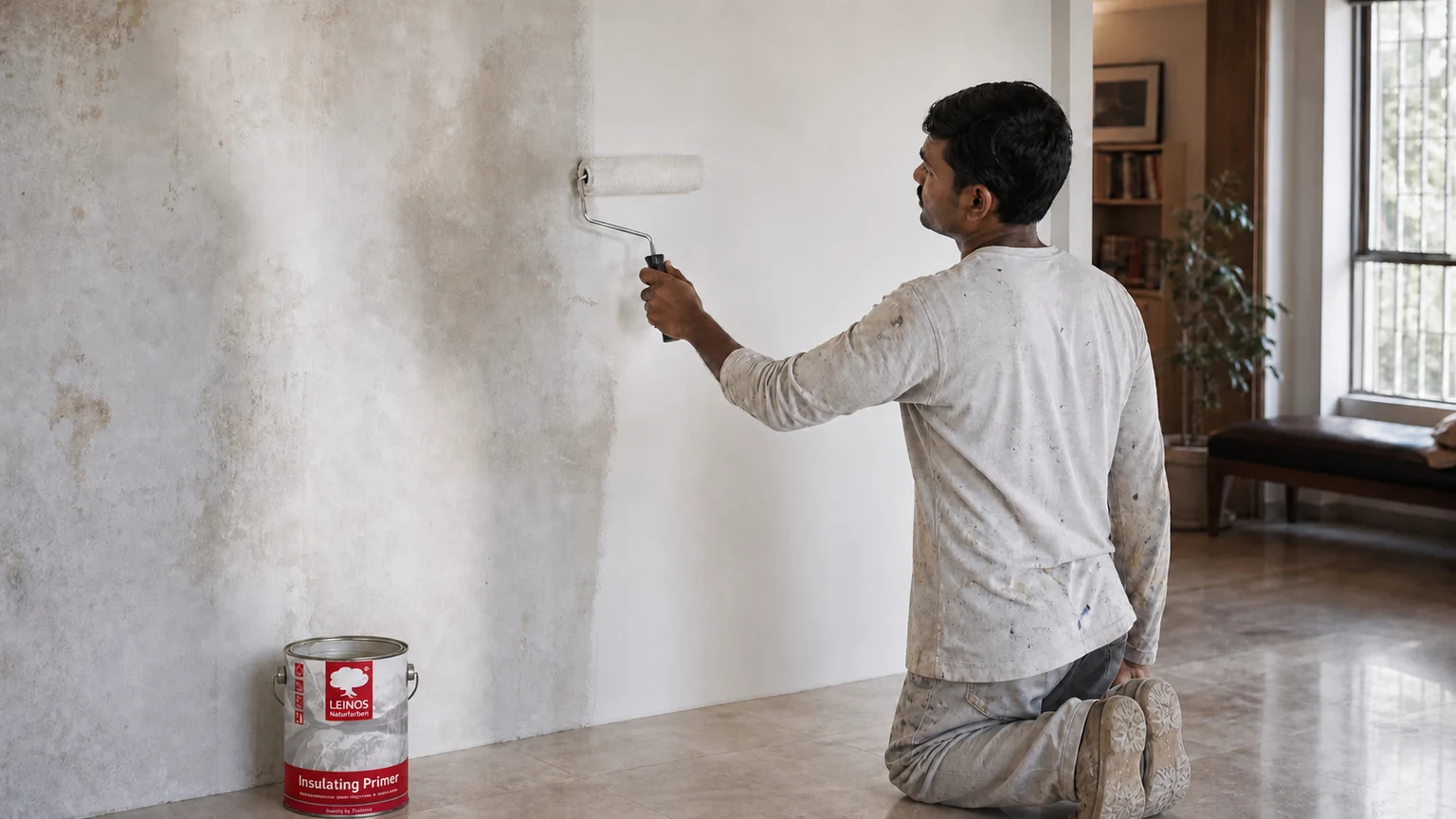
INSULATING PRIMER · ART. 815
LEINOS 815 — oil-based interior barrier primer that seals water-soluble stains (soot, nicotine, water damage) so they cannot bleed through a new wall or ceiling finish, and lays down a fine-grained rough key for textile-fibre decorative plasters. Natural-white, breathable, cobalt-free. Made in Germany.
Mechanism & Use
A plant-oil and natural-resin film seals water-soluble stains so they cannot migrate into the new finish — while mineral fillers leave a fine-grained rough key that wool and fibre plasters grip. The wall stays breathable.
The plant-oil and natural-resin-ester binder seals the surface against water-soluble substances — soot on chimney and fireplace breasts, nicotine films, old water-damage stains, dye and distemper bleed — so they cannot dissolve and wick up into a fresh water-borne finish and reappear as brown ghosting weeks later. This is the barrier (Absperr) action an ordinary absorbency primer does not perform.
Once dry, 815 leaves a deliberately fine-grained, rough matt surface. That micro-texture is a mechanical key — textile-fibre decorative wall plasters (Woll- und Faserputz) grip into it far better than onto a smooth sealer, which is why LEINOS singles out 815 as their base. The roughness is a designed feature, and the TDS is explicit that it must be accounted for when a smooth paint is planned on top instead of a plaster.
One full coat on low-to-normal-absorbency plaster, concrete, cement, chipboard, gypsum fibreboard, metal or polystyrene board; two coats on strongly absorbent plaster, plasterboard and insulating fibreboard. On non-absorbent surfaces, check adhesion on a test patch first. Interior use only.
Unlike a plastic film sealer, 815 blocks liquid water-soluble migration while staying vapour-open — the wall keeps breathing with seasonal humidity. That matters behind plaster under monsoon loads, where a trapped-moisture film would blister and delaminate.
Where It Lives
Water-damaged renovation walls
Old interiors with dried water-damage rings and damp discolouration. 815 seals the water-soluble stains so they cannot bleed up into the new finish — the repaint stays clean instead of ghosting brown weeks later.
Soot-, nicotine- and distemper-stained surfaces
Chimney and fireplace breasts with soot bleed, long-occupied rooms with nicotine films, and walls or ceilings carrying old water-soluble distemper or dye — the classic LEINOS bleed-block cases. The oil-resin barrier locks the stain layer under the primer before the modern topcoat goes on.
Ground for textile-fibre decorative plasters
The fine-grained rough surface is the mechanical key that textile-fibre decorative wall plasters (Woll- und Faserputz) grip — the use LEINOS singles out. The texture is a feature here, not a compromise.
Mixed renovation substrates
Plaster, concrete, cement, chipboard, gypsum fibreboard, plasterboard, insulating fibreboard, interior metal and polystyrene board — 815 unifies a patchwork of renovation surfaces under one breathable barrier ground.
Heritage interiors that must keep breathing
Where a plastic stain-block would trap moisture and blister under monsoon humidity, 815 blocks the bleed-through yet stays vapour-open, so the wall behaves as a breathing mineral wall should.
Renovation counterpart to 622
622 Mineral Plaster Primer evens absorbency on sound new mineral walls; 815 blocks bleed-through on stained or problem walls. Between them the LEINOS interior wall system covers both the new-build and the renovation case.
Compliance · Natural Ingredients · EU
Three anchors that let a specifier place 815 on a renovation or decorative-plaster wall system without disclaimers.
Institutional Pledge
Reincke Naturfarben — full-ingredient-disclosure pledge for natural building products.
The TDS is downloadable below. Where you need a written specification packet — full ingredient declaration, VOC compliance letter, or a bleed-block and plaster-compatibility statement for a renovation submittal — it is available to architects and contractors on request. Use Get Expert Advice above.
Read The Full TDSStep by Step
Prepare the surface — the wall or ceiling must be dry, clean, firm, and free from dust, grease, and loose material. Sweep, vacuum, and damp-wipe. Scrub back any loose or chalking old paint. Old soot, water-damage, nicotine, dye or distemper stains do not need to be removed — 815 will seal them — but the surface holding them must be sound. Fill large defects with a mineral filler and let them dry per that filler’s TDS.
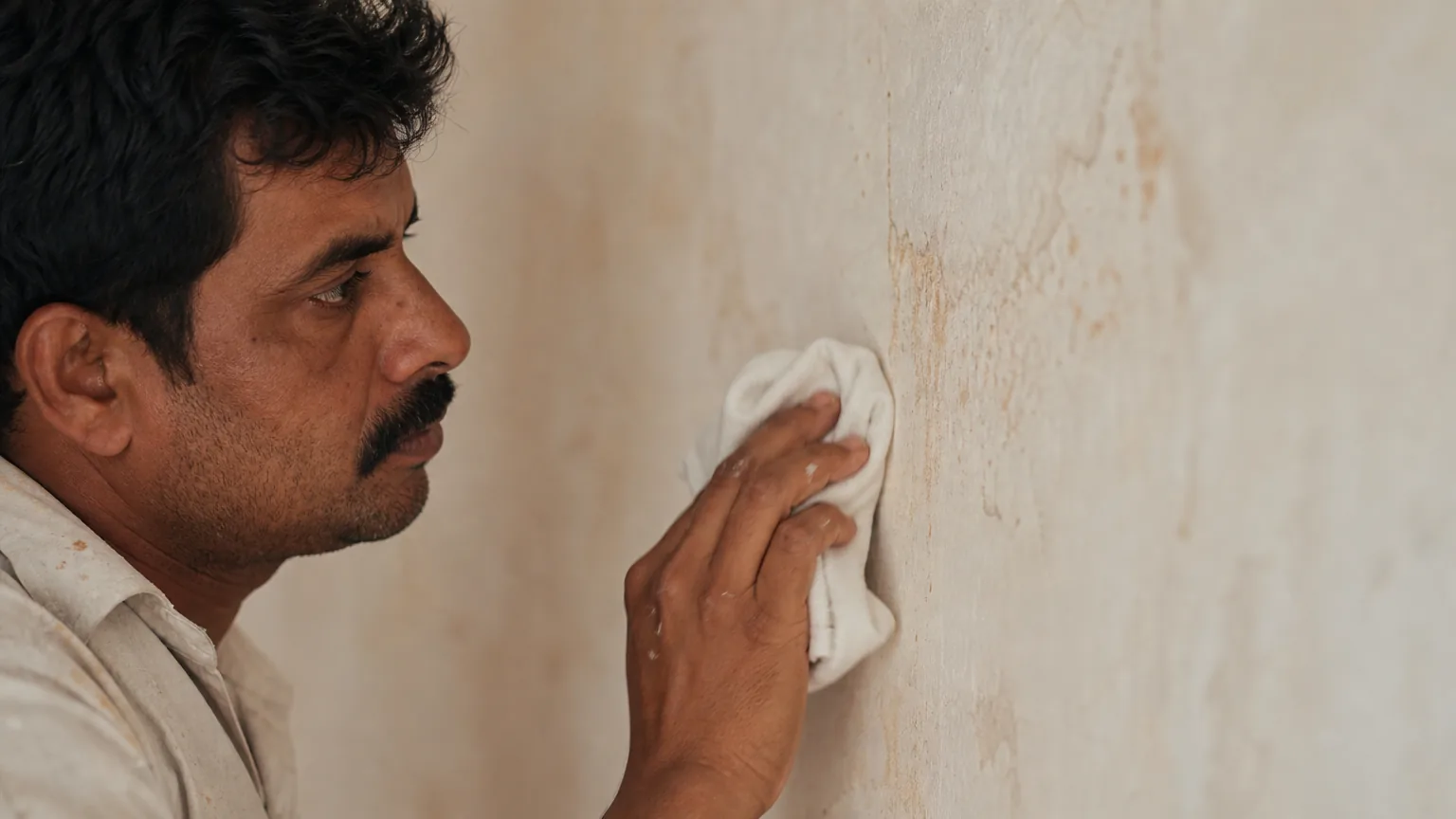
Stir thoroughly — 815 is supplied ready to use; do not thin. Stir the pack until the natural-white oil primer is uniform. Work at room and surface temperatures above 15 °C and keep the room well ventilated throughout application and drying — the oil binder and isoparaffin carrier need airflow to cure and to clear the natural raw-material odour.
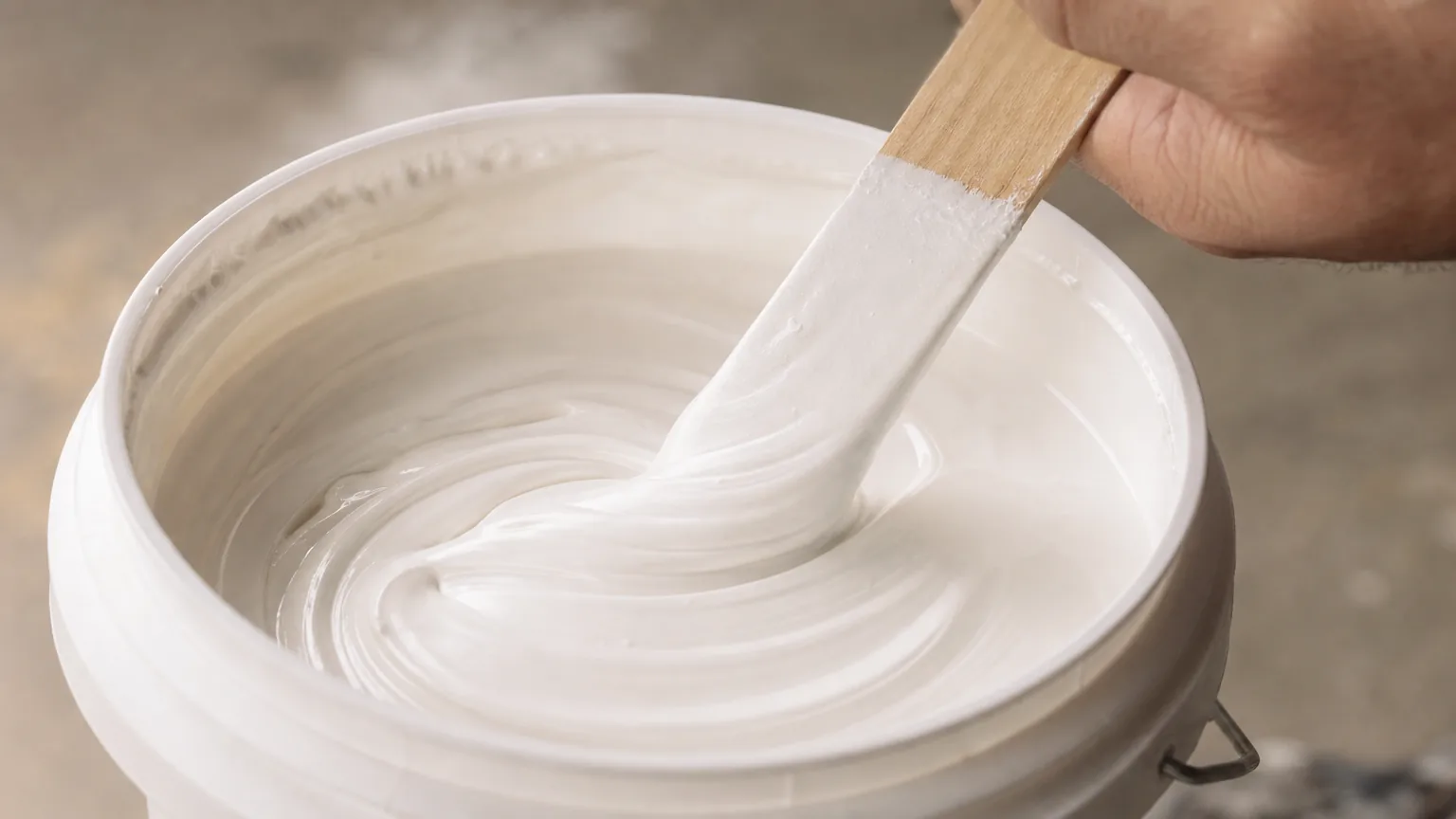
First barrier coat — apply evenly with a brush or short-pile roller, working the primer into the surface so the barrier film is closed and continuous over the stains. As the coat goes on, the old brown discolouration disappears under the opaque natural-white. On low-to-normal-absorbency plaster, concrete, cement, chipboard, gypsum fibreboard, metal or polystyrene board, one full coat is enough. Check adhesion on a test patch on any non-absorbent surface first.
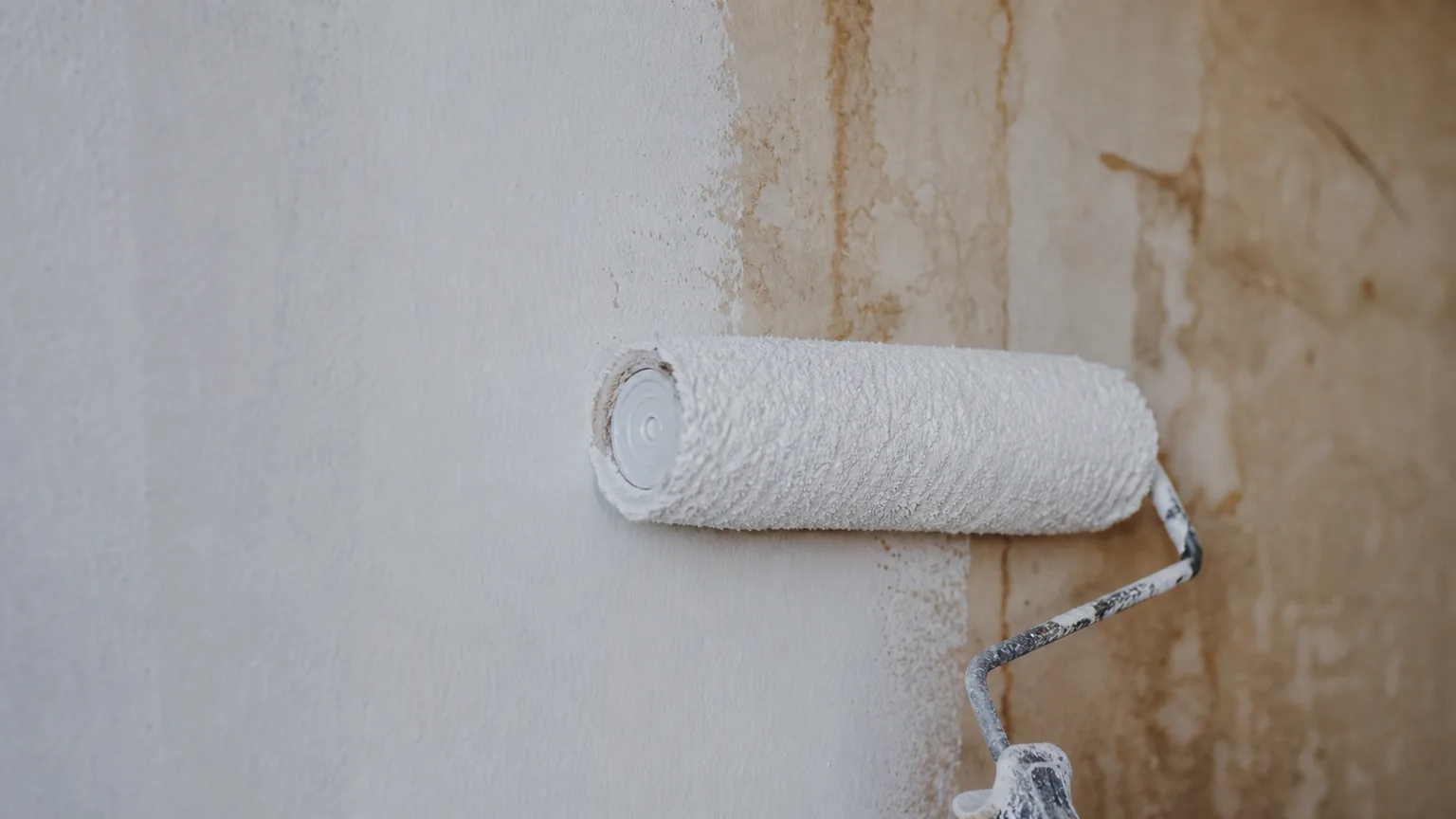
Second coat on strongly absorbent substrates — strongly absorbent plaster, plasterboard, and insulating fibreboard need two coats to close the barrier fully. Once dry, the primer leaves a deliberately fine-grained, rough matt surface — the mechanical key. Overcoatable with a further primer coat after approximately 24 hours; after a double primer coat, plan the topcoat no earlier than 4 days.

Blocked and dried — the finished primed wall reads as a uniform, opaque, natural-white matt surface with the old stains completely sealed. Dust-dry after 8–10 hours. The wall is now a closed barrier that stays breathable — ready for its decorative plaster or wall finish once the recoat window is met.

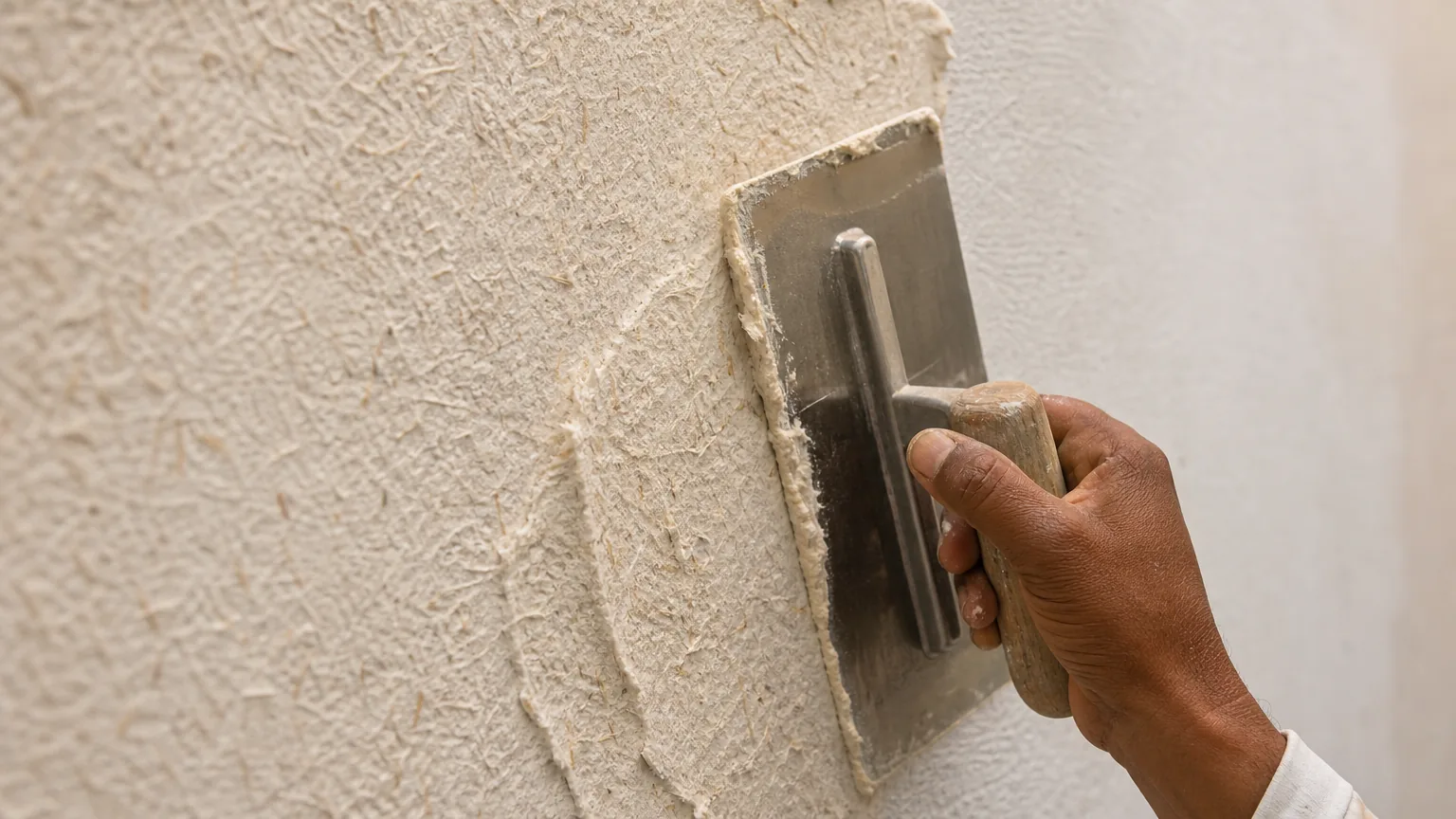
Decorative plaster or wall finish — trowel the wool or fibre decorative plaster onto the primed rough key (workable after 48–72 hours), or apply the chosen LEINOS interior wall topcoat per its own TDS where a smooth finish is planned, accounting for the primer’s texture. Canonical partners: Lime Paint 665, Natural Resin Emulsion Paint 660, Interior White Paint 650. Each topcoat carries its own coat count and cure window.
Application Conditions
Coats & Recoating
Cleaning & Storage
First time with Insulating Primer? Our technical team runs complimentary on-site walkthroughs for contractors — full application protocol, start to finish.
System & Substrates
Insulating Primer 815 is the LEINOS barrier prep coat for walls and ceilings: it seals water-soluble bleed-through (soot, nicotine, water stains) on stained or renovation surfaces and keys textile-fibre decorative plasters, while staying breathable. The topcoat is whatever wall finish you choose — a textured plaster gains from the rough key; where a smooth paint is planned, account for the primer’s fine-grained texture.
The Coating System
Primer plus topcoat — the full chain.
Topcoat Options
Choose the finish character; the primer underneath stays the same.
Substrate Fit
Suitable
Honest Limits
Use With Care
Coverage & Pack Sizes
Coverage on the card assumes one coat at the TDS maximum of 100 ml/m². Low-to-normal-absorbency substrates take one coat; strongly absorbent plaster, plasterboard and insulating fibreboard take two — plan an extra coat for those.
0.75L
Covers
80–95 sq ft
1 coat, absorbent mineral
Best For
Spot-priming stains, patch repairs, sampling.
2.5L
Covers
270–325 sq ft
1 coat, absorbent mineral
Best For
A single renovation wall or a small room barrier coat.
10L
Covers
1080–1290 sq ft
1 coat, absorbent mineral
Best For
Full-room or apartment renovation; wool or fibre plaster ground.
Enter your area to see how much material — and the most efficient pack mix — you’ll need for 1 coat.
Full calculatorRelated Work
Documented mineral surface projects. Captions show which LEINOS finish was used.
Full Declaration
Every ingredient declared on the label. The Trust Hub explains what each one does and the standards behind it.
Plant Oils (Tung · Castor · Stand oil)
The binder. Wood (tung), castor and stand oils cure into the continuous barrier film that seals water-soluble stains, while staying vapour-open so the wall keeps breathing.
Natural Resin Esters
Add film hardness and the blocking (Absperr) strength that stops bleed-through — the difference between a barrier primer and an ordinary absorbency primer.
Isoparaffins
The aliphatic hydrocarbon carrier; flashes off as the film cures. Because it is solvent-borne, clean tools with LEINOS Verdünnung 200, not water. Driers are cobalt-free.
Mineral Fillers (Talc · Calcite · Alumina · Aluminium silicate)
Build the deliberately fine-grained, rough matt key surface that textile-fibre decorative plasters grip into.
White Pigments (Titanium Dioxide · Lithopone)
Give the natural-white opacity and visual verification of the primed area. The cured film is not classified hazardous; the EUH211 spray-droplet warning applies during airless application.
Got Questions?
Quick answers on formulation, application and Indian-climate suitability. Pulled from our full FAQ and TDS library.
For Architects & Specifiers
Technical and safety documents — citable in project specifications.
Need a Recommendation?
Four ways to reach our India team — pick the one that fits how you work.
For Trade & Specifiers
Full TDS / SDS library, specification support and trade pricing — direct from the manufacturer.
Documents
TDS / SDS
Per-product datasheets and safety sheets, downloadable in English.
Specification
NCS Match
Custom colour briefs and material samples mixed at our Delhi lab.
Trade
Direct Pricing
Volume tiers, project quoting and stock allocation through our trade desk.
Written by the LEINOS India technical team, in collaboration with
Reincke Naturfarben R&D, Lower Saxony.
Last updated
Want to represent LEINOS in your city?
Become a Dealer