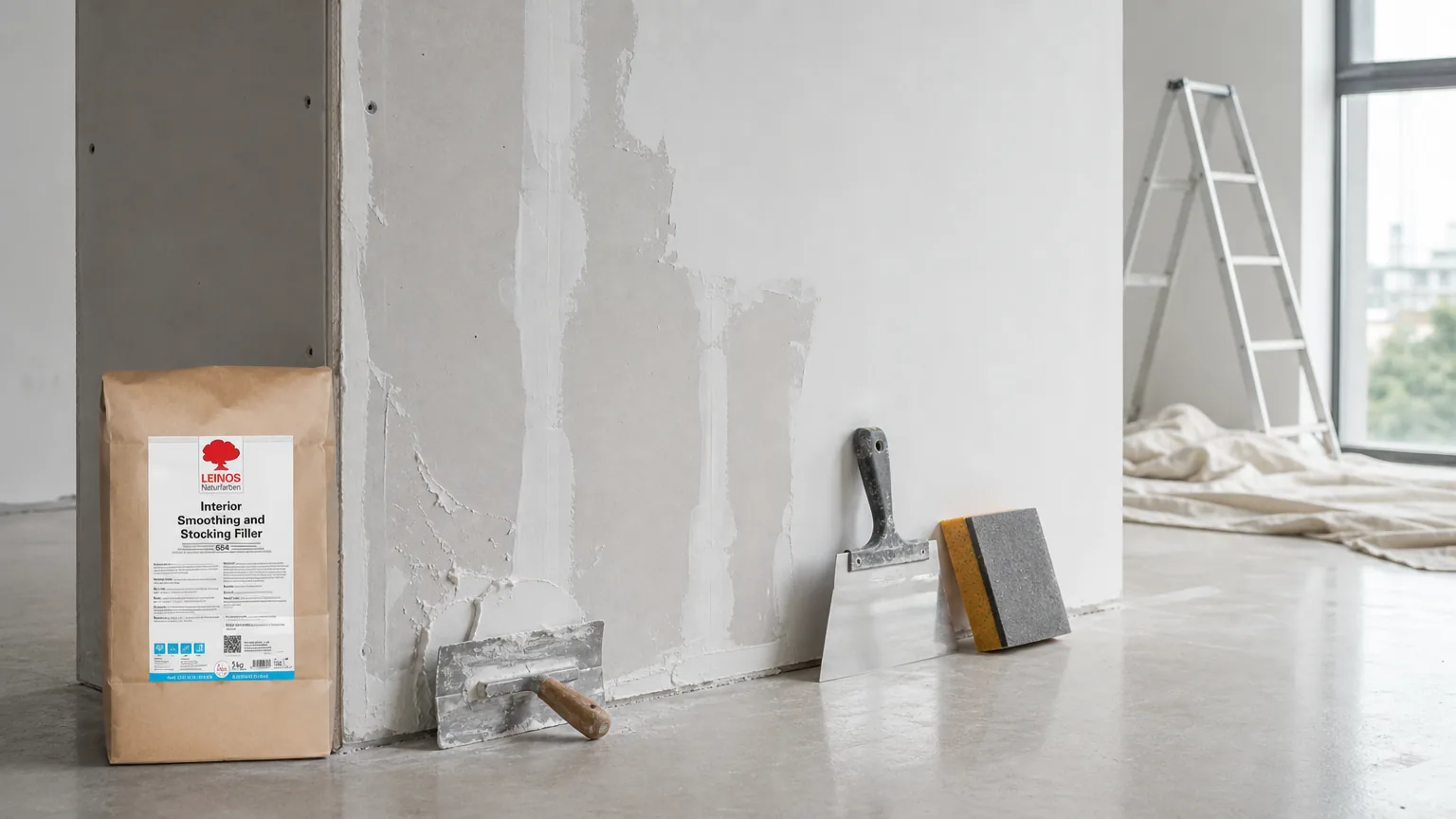
SMOOTHING & TEXTURING FILLER · ART. 684
The flat wall every finish is built on.
LEINOS 684 Interior Smoothing and Texturing Filler — a natural-gypsum powder filler for interior walls and ceilings. Fills cracks, holes, and board joints, skims surfaces flat, builds decorative texture, and spot-bonds plasterboard. Natural gypsum recrystallises into a crack-free matrix even in larger thicknesses. White, matt, sandable, tintable with LEINOS 668. Solvent-free, water-mixed. Made in Germany by Reincke Naturfarben.
Mechanism & Use
How LEINOS 684 Filler works.
An ordinary filler shrinks as it dries — pack a deep crack or a screw seat in one pass and it crazes, sinks, and needs filling again. 684 is built on natural gypsum: calcium-sulfate hemihydrate that rehydrates and recrystallises into an interlocking crystal matrix. It sets hard, dimensionally stable, and crack-free even in larger thicknesses — and the same compound fills, smooths, textures, and spot-bonds boards. The flat, sound wall it leaves is the precondition for a finish that reads true.
Crack-free gypsum cure, even in deep fills
Natural gypsum (calcium-sulfate hemihydrate) takes up the mix water and recrystallises into an interlocking dihydrate crystal matrix — it hardens by locking its own structure, not by drying-shrinkage. A deep crack, plug seat, or board joint fills crack-free in one pass instead of two or three. Methylcellulose holds the mix water so the cure is even, not flash-set.
One compound, four jobs — fill, smooth, texture, bond
Fills cracks, holes, and plasterboard joints; seats wall plugs and fixtures; skims walls and ceilings flat with a sponge board; builds decorative relief texture; and spot-bonds boards to the substrate when dotted on the back. One bag and one mix span the whole contractor prep stage.
Natural gypsum, chalk, and plant cellulose — solvent-free
Three ingredients — natural gypsum (the self-setting binder), calcium carbonate (chalk, the white matt body), and methylcellulose (plant-derived workability). Solvent-free, water-mixed, low-odour, no solvent phase to off-gas. GISCODE CP1. Made in Germany by Reincke Naturfarben.
White, matt, sandable — paint-ready or tint with 668
Dries white and matt; sands smooth after full cure, then takes the LEINOS build-up: 684 → 620 Deep Sealer (diluted 1:1) → topcoat. Left as exposed decorative texture rather than painted over, tint it with LEINOS 668 pigment concentrate. Mix 1 kg with 600 ml water; minimum +5 °C.
Where It Lives
Where 684 Lives
Filling plasterboard joints and board seams in apartment fit-outs
The most common contractor case in Indian apartment shell fit-outs — the joints between plasterboard sheets and other building boards. 684 is pressed firmly into the joint and pulled flat. Per the TDS, where the board edges are correspondingly formed (tapered), the reinforcement strip can be omitted. The joint sets crack-free and flat, ready for the full-wall skim or directly for primer and paint.
Securing wall plugs and seating fixtures during installation
Installation work leaves a wall full of small voids — wall-plug holes, fixture seats, conduit chases around electrical boxes and switch plates. 684 packs these firmly in one pass, sets hard and dimensionally stable around the plug or fixture, and pulls flat to the surrounding wall. Because gypsum recrystallisation does not shrink-crack, the filled seat does not sink and re-open the way a shrink-prone filler does.
Repairing cracks and holes across mineral interior walls
Crack and hole repair across the full range of interior mineral substrates — stone, plaster, concrete, aerated concrete, and insulation boards. The substrate must be clean, firm, dry, and load-bearing first (remove dust, dirt, wallpaper, loose paint, and any non-load-bearing plaster). 684 fills the defect crack-free even where the fill is deep, then pulls flat for a seamless repair under the finish.
Skim-smoothing whole walls and ceilings before painting
Thinned to a skim and worked with a sponge board, 684 smooths an entire wall or ceiling flat before the finish goes on. For smooth surfaces, re-fill or wet the surface evenly with the sponge board and pull off. The result is a flat, sound, dust-bound substrate — the precondition for a LEINOS topcoat that lays at uniform thickness and reads as a single colour register. Full cure before sanding and painting.
Building decorative texture and relief finishes
684 is a texturing filler as well as a smoothing one — worked with relief rather than pulled flat, it builds a decorative textured finish on walls and ceilings. Left exposed rather than painted over, it is tintable with LEINOS 668 pigment concentrate (see TDS 668) so the relief carries its own colour. A contractor-accessible decorative register that sits below the trowelled 632 Effect Spatula and 630 Scumble Filler finishes.
Spot-bonding plasterboard and building boards to the substrate
Beyond filling, 684 bonds boards. Applied in dots on the back of a plasterboard or wall-building board, the board is pressed onto the substrate and aligned — the gypsum compound sets and holds the board in place. One bag covers both the board-fixing and the joint-filling stages of a dry-lining job, so the contractor works from a single material across the build-up.
Natural Ingredients · Origin
Three mineral and plant ingredients. Solvent-free. Made in Germany.
684 carries no coating-grade DIN/EN test class — it is a gypsum-based builder’s filler, and the honest anchors are full-ingredient disclosure and German manufacture. The GISCODE classification (CP1) and disposal code sit in the technical data below.

Institutional Pledge
InVeNa Member
Reincke Naturfarben — full-ingredient-disclosure pledge for natural building products.

The TDS is downloadable below — substrate range, mix ratio, application temperature, drying canon, and the GISCODE classification. The Safety Data Sheet (SDS) is supplied on request from LEINOS India for the full hazard register. Where you need a written specification packet — full ingredient declaration, a substrate-compatibility statement for a mixed-substrate apartment shell, or a filler-primer-topcoat system brief tied to a project finish — it is available to architects and contractors on request. Use Get Expert Advice above.
Read The Full TDSCoverage
Varies by application thickness — a thin full-wall skim spreads far; deep crack and joint fills consume more. Sold by weight (1 kg / 5 kg), mixed 1 kg : 600 ml water.
Drying Time
Full curing required before sanding, painting, or wallpapering. Cure time depends on fill thickness, temperature, and humidity — a thin skim is ready sooner than a deep fill.
Tools
Putty knife, Sponge board, Mixing container
Step by Step
How to Apply
Substrate preparation. The substrate must be clean, firm, dry, and load-bearing — usable on stone, plaster, concrete, aerated concrete, insulation boards, and plasterboard. Remove dust, dirt, wallpaper, loosely-adhering paint, and any non-load-bearing loose plaster. A sound base is the precondition for a crack-free fill — 684 bonds to a firm substrate, not to dust or a flaking coat.
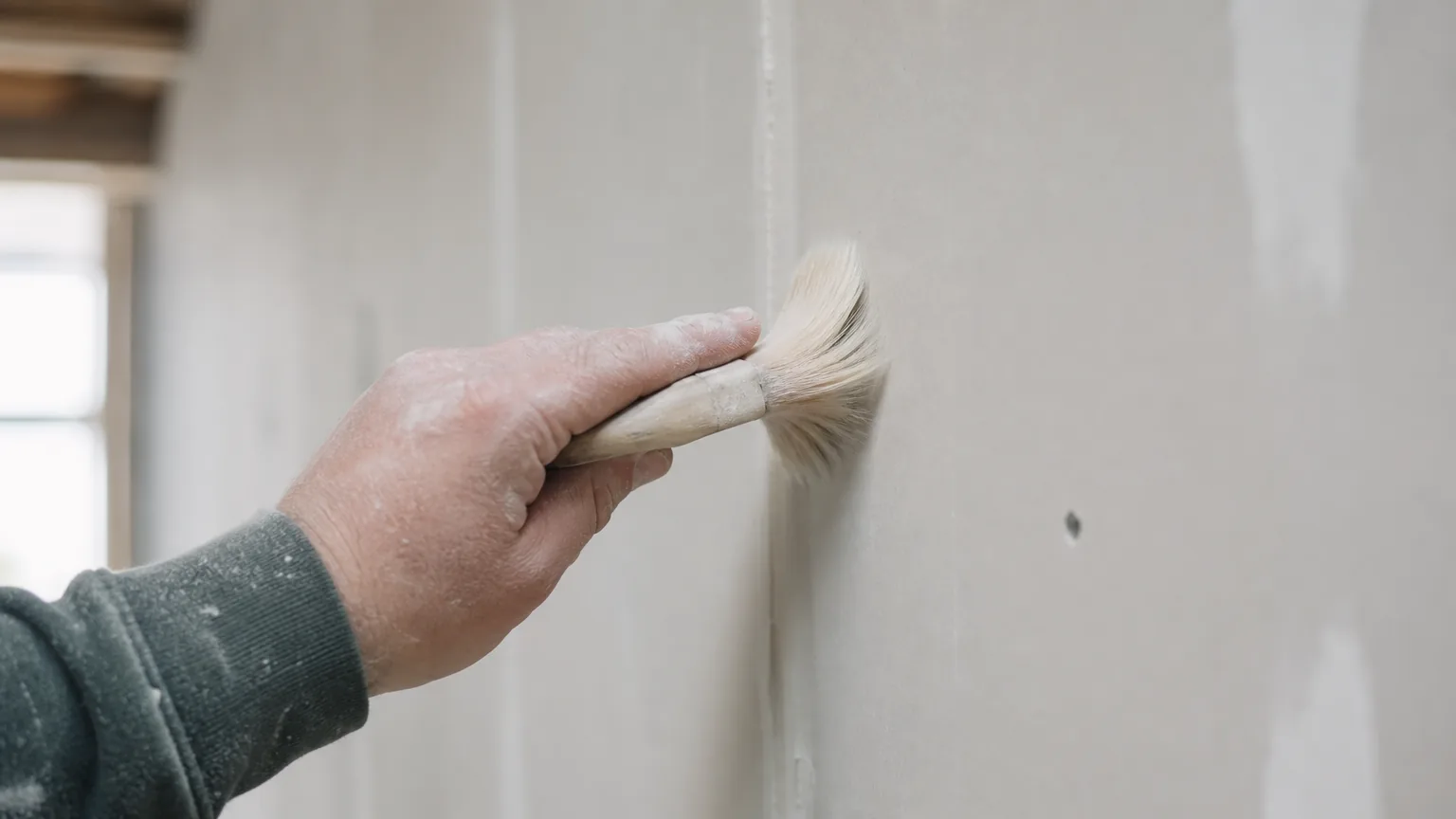
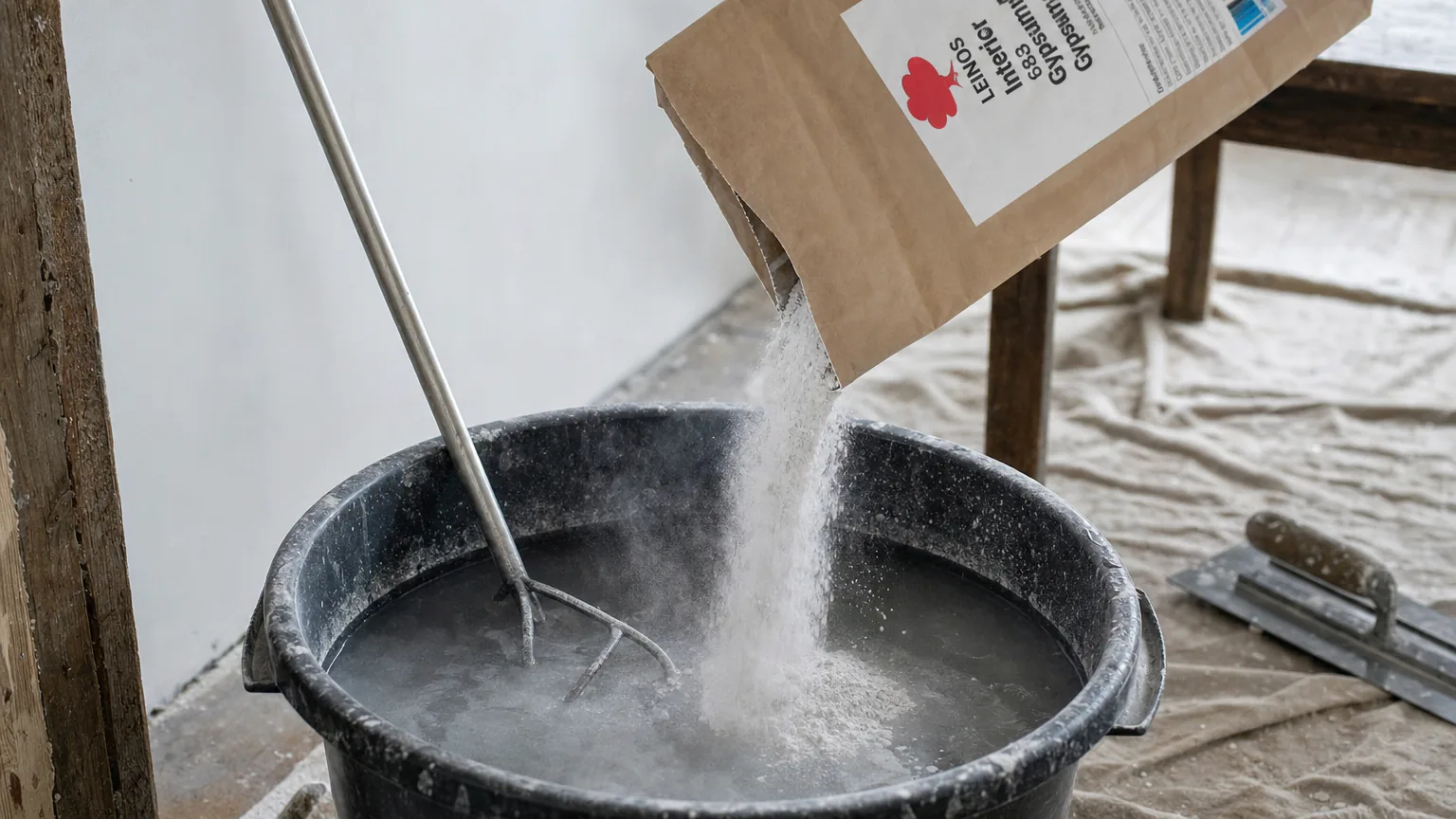
Mix the powder with water. Stir 1 kg of 684 into 600 ml of clean water in a mixing container until smooth and lump-free. Let it stand 2 to 3 minutes, then stir briefly again — the short rest lets the methylcellulose take up the water so the compound reaches full working consistency. Mix only as much as you can use before it begins to set; gypsum compounds have a working window, not an open pot life.
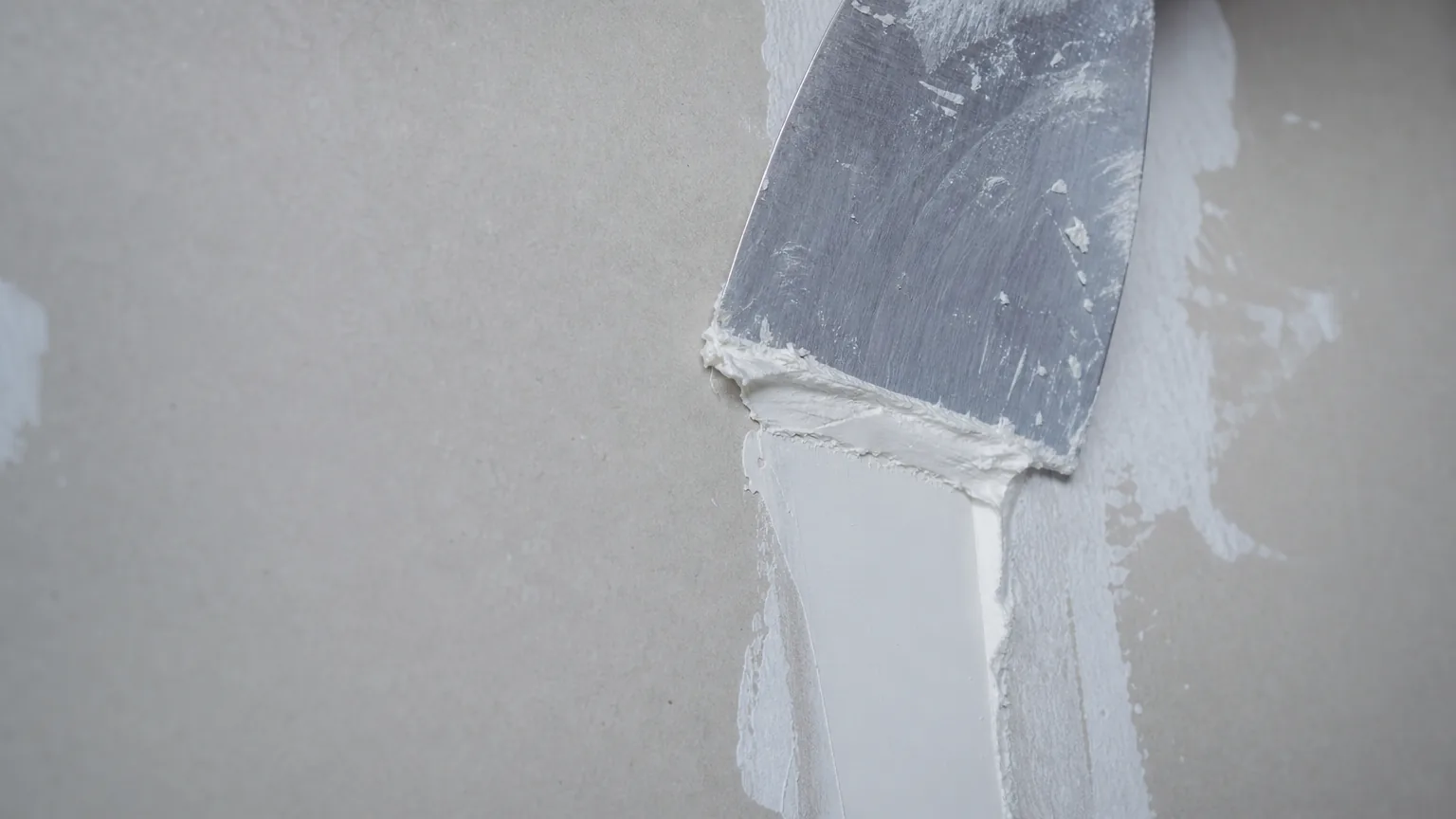
Fill cracks, holes, and joints. Press the mixed 684 firmly into the recess — crack, hole, board joint, wall-plug, or fixture seat — and pull it flat with a putty knife. Pressing firmly drives the compound to the bottom of the void so the fill sets solid all the way down. For plasterboard joints with correspondingly-formed (tapered) board edges, the reinforcement strip can be omitted per the TDS. To bond boards, apply 684 in dots on the back of the board, press onto the substrate, and align.
Smooth or texture the surface. For a flat finish, re-fill any low spots or wet the surface evenly with a sponge board and pull off until the wall or ceiling reads flat. For a decorative finish, work the compound with relief instead of pulling it flat to build a texture. Minimum +5 °C substrate and room-air temperature throughout — gypsum cures slower and weaker below the minimum.
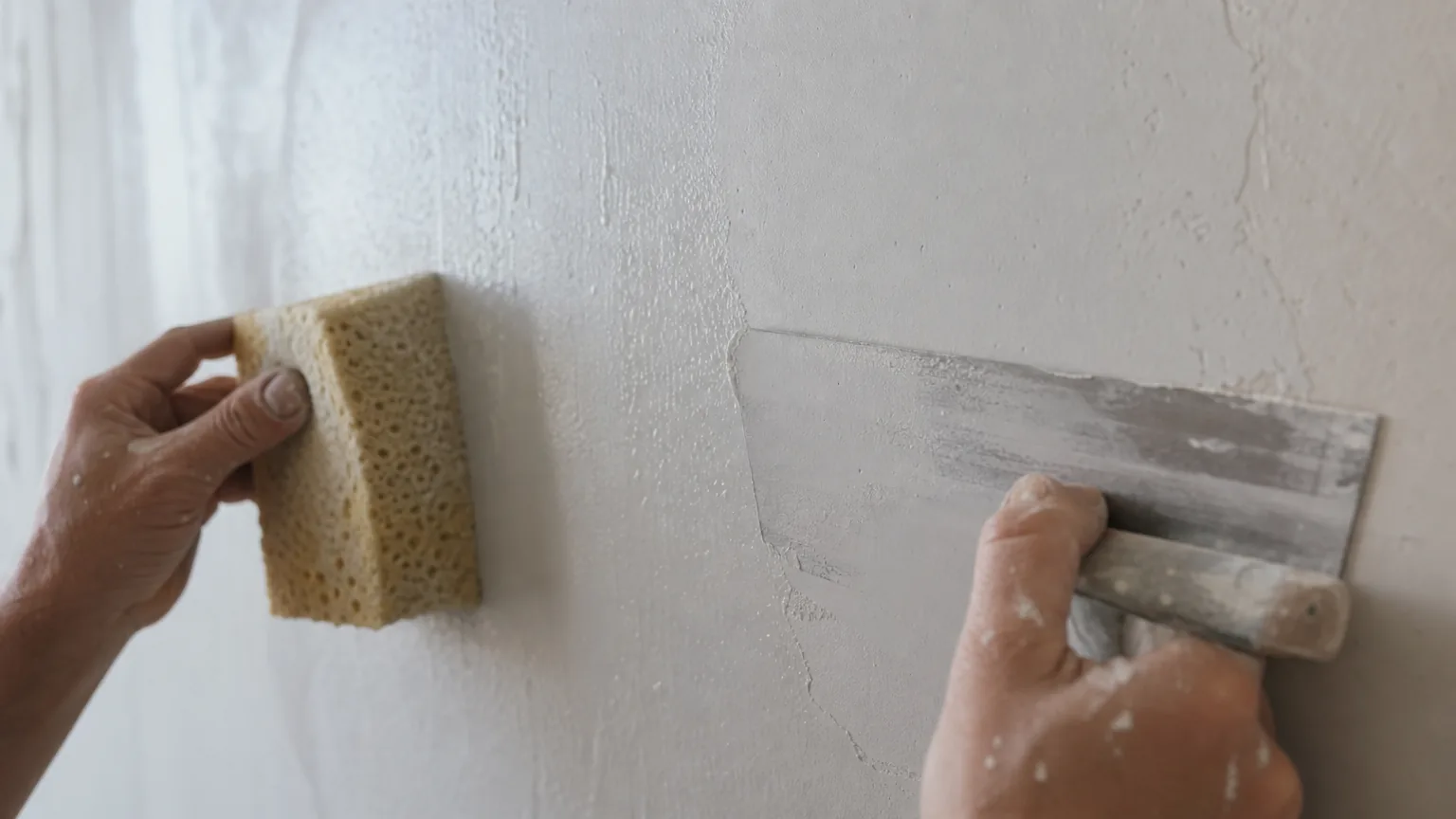
Full cure, then finish. Allow the filler to cure fully before any further work — sanding, painting, or wallpapering. Sand the cured surface smooth (wear a dust mask), then run the LEINOS wall build-up: 620 Deep Sealer diluted 1:1 to even the absorbency, then the topcoat the project specifies. Clean tools immediately with water; LEINOS Vegetable Soap 930 lifts stubborn residue. Store the closed bag dry and cool, protected from freezing — shelf life at least 2 years.
Application Conditions
- Substrate must be clean, firm, dry, and load-bearing — remove dust, dirt, wallpaper, loose paint, and non-load-bearing plaster.
- Mix ratio: 1 kg filler to 600 ml clean water; let stand 2-3 minutes, then re-stir.
- Minimum +5 °C substrate AND room-air temperature.
- Full curing required before sanding, painting, or wallpapering.
Coats & Recoating
- Sold by weight and used by application thickness — not coat-count based.
- Mix 1 kg filler to 600 ml clean water; mix only as much as you can use before it begins to set.
- Full curing required before sanding, painting, or wallpapering.
Cleaning & Storage
- Clean tools immediately after use with water; LEINOS Vegetable Soap 930 (Pflanzenseife 930) lifts stubborn residue.
- Store in a dry and cool place, protect from freezing. Shelf life in closed packaging is at least 2 years.
First time with Interior Smoothing and Texturing Filler? Our technical team runs complimentary on-site walkthroughs for contractors — full application protocol, start to finish.
System & Substrates
The gypsum filler at the base of the LEINOS wall build-up.
684 makes the wall flat and crack-free; 620 Deep Sealer (diluted 1:1) evens the absorbency over it; the topcoat the project specifies reads true on top — natural-resin emulsion (660 / 650), clay paint (655), or a trowelled decorative finish (632 / 630). Tint 684 with 668 only when it is left as an exposed texture. Interior walls and ceilings only.
The Wall Build-Up
Filler, sealer, finish.
Topcoat Options
Choose the finish character; the primer underneath stays the same.
Substrate Fit
684 works on — and what it doesn’t.
Suitable
Recommended substrates
- Plasterboard / gypsum board / drywall (joints and seams)
- Plaster (lime, cement, gypsum)
- Stone (interior mineral)
- Concrete
- Aerated concrete
- Insulation boards
Honest Limits
Where to use a different product
- Wood substrates (interior wood floors, furniture, doors, panels). 684 is a mineral wall filler — use a wood filler for wood, and the LEINOS wood-finish line for the coating, e.g. LEINOS 150 Impregnation Primer
- Exterior applications (interior walls and ceilings only per TDS). Use the LEINOS exterior facade prep + paint line outdoors.
- Permanently wet or submerged areas (shower stalls, below-waterline basement walls, pool surrounds). Cured gypsum is not water-resistant. For active-mould-risk humid bathrooms specify LEINOS 665 Lime Paint
- Loose, dusty, flaking, or non-load-bearing substrates. Remove non-bearing plaster, loose paint, and wallpaper, and dust the surface down before filling — 684 bonds to a firm base, not to dust.
Use With Care
Working safely with 684
- Keep out of reach of children.
- Avoid raising and breathing the dry powder dust when handling and mixing — mix in a ventilated space and avoid stirring up clouds of powder.
- Wear a dust mask when sanding the cured filler — sanding any set filler generates fine mineral dust.
- Avoid release to the environment. Do not wash wet-compound residues to drains, soil, or watercourses; let residues set and dispose of the solid with construction waste.
- Dispose of according to official regulations. Disposal code: EAK/EWC 08 01 12. Safety Data Sheet (SDS) is supplied on request from LEINOS India for the full hazard register.
Related Work
Mineral surface projects from our portfolio
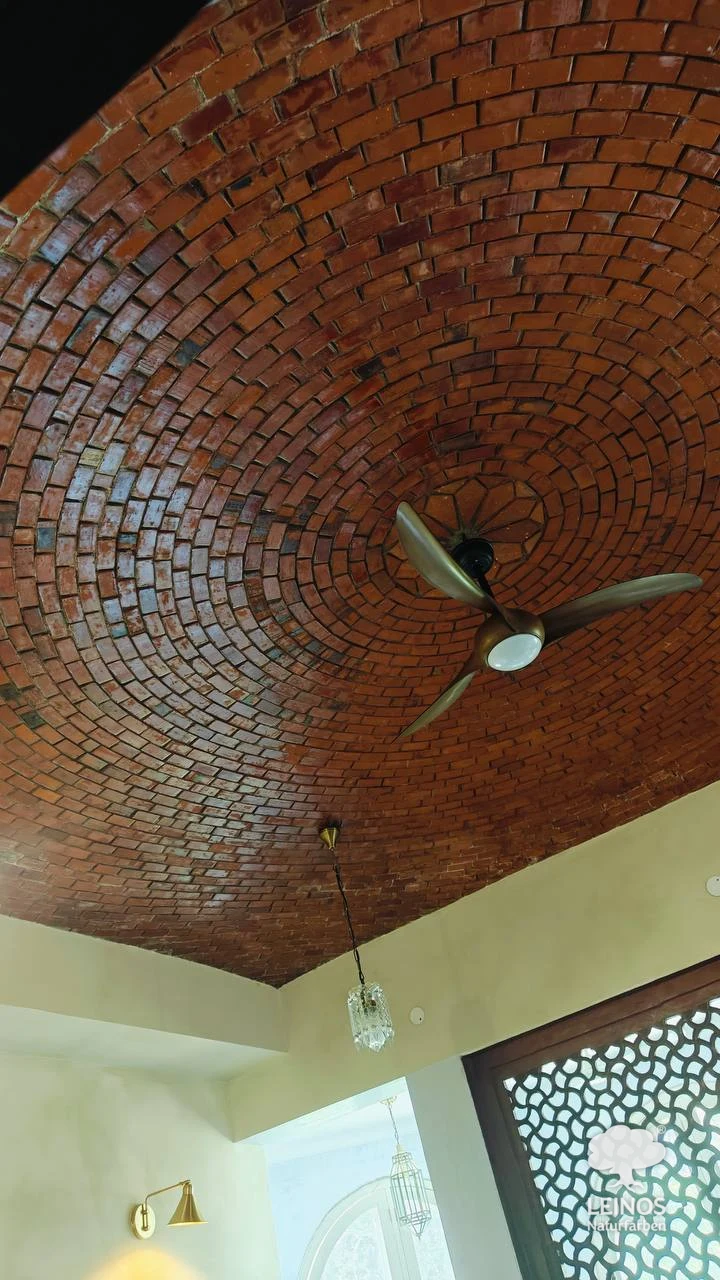
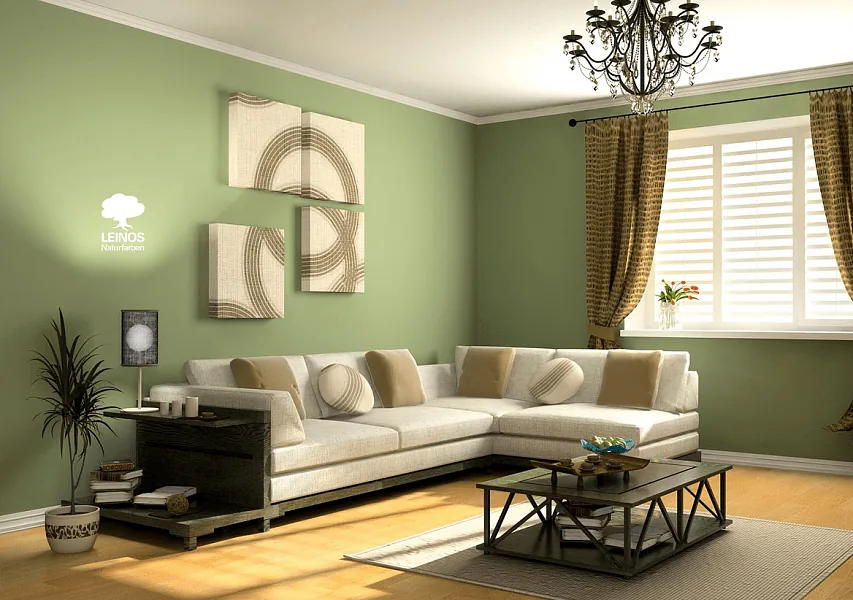
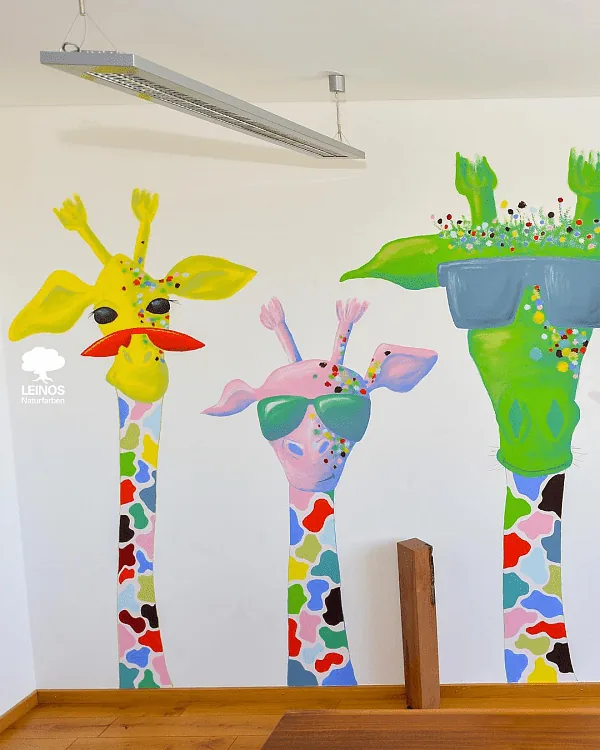
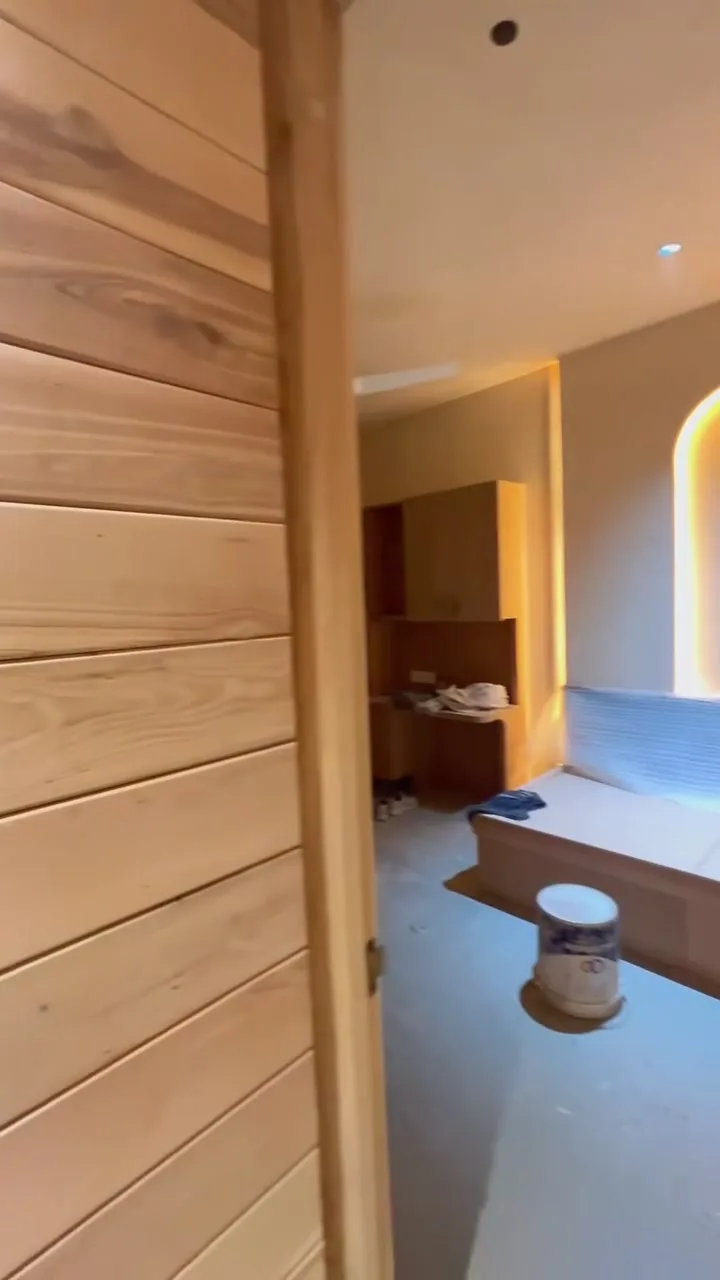
Documented mineral surface projects. Captions show which LEINOS finish was used.
Full Declaration
Composition
Every ingredient declared on the label. The Trust Hub explains what each one does and the standards behind it.
Calcium Sulfate · Natural Gypsum
The self-setting mineral binder. Finely ground calcium-sulfate hemihydrate takes up the mix water and recrystallises as calcium-sulfate dihydrate — an interlocking crystal matrix that hardens by locking its own structure rather than by drying-shrinkage. This is what lets 684 set crack-free even in larger thicknesses, where a shrink-prone filler would craze and sink.
Calcium Carbonate · Chalk
The white matt mineral body. Calcium carbonate bulks the compound, gives the cured filler its white matt surface and its sanding feel, and works alongside the gypsum to fill volume economically. A natural mineral filler — the same chalk LEINOS uses across its mineral wall products.
Methylcellulose · Plant Cellulose Thickener
Plant-derived cellulose, modified for water retention. It holds the mix water in the compound so the gypsum cures controlled and even rather than flash-setting at the surface, and it improves the spread and the grab on the substrate. A workability thickener, not a binder — the gypsum does the setting; the cellulose makes it workable.
Got Questions?
Frequently Asked
Quick answers on formulation, application and Indian-climate suitability. Pulled from our full FAQ and TDS library.
- Because it sets by gypsum recrystallisation, not by drying-shrinkage. Natural gypsum — finely ground calcium-sulfate hemihydrate — takes up the mix water, rehydrates to calcium-sulfate dihydrate, and recrystallises into an interlocking crystal matrix, hardening by locking its own crystal structure rather than by losing volume as it dries. A shrink-prone filler loses volume as the water leaves, so a deep fill crazes and sinks and needs a second and third pass; 684 holds dimension and sets crack-free even in larger thicknesses, so the deep crack or plug seat is filled in one pass.
- It is a powder you mix with water. 684 is sold by weight (1 kg and 5 kg bags) and mixed 1 kg to 600 ml of clean water in a mixing container. Stir to a smooth lump-free paste, let it stand 2 to 3 minutes so the methylcellulose takes up the water, then stir briefly again before use. Mix only as much as you can use before it begins to set — gypsum compounds have a working window, not an open pot life.
- Interior mineral walls and ceilings — stone, plaster (lime, cement, gypsum), concrete, aerated concrete, insulation boards, and plasterboard. The substrate must be clean, firm, dry, and load-bearing: remove dust, dirt, wallpaper, loosely-adhering paint, and any non-load-bearing loose plaster first. 684 bonds to a firm base, not to dust or a flaking coat. It is not for wood, for exterior use, or for permanently wet areas — cured gypsum is not water-resistant.
- Both. Most of the time 684 is groundwork — it makes the wall flat and true, then disappears under the primer and the topcoat, and the colour lives in the finish. But 684 is a texturing filler as well as a smoothing one: worked with relief rather than pulled flat, it builds a decorative textured finish that can be left exposed. When it is the finish rather than the groundwork, tint it with LEINOS 668 pigment concentrate (see TDS 668) so the texture carries its own colour.
- Yes — the canonical LEINOS wall build-up is 684 → 620 Deep Sealer → topcoat. Once the filled and smoothed wall has cured and been sanded flat, prime it with 620 diluted 1:1 with water. 620 penetrates the gypsum surface, binds the residual dust, and evens the absorbency so the topcoat lays at uniform thickness and reads as a single colour register. Then apply the finish the project specifies — natural-resin emulsion (660 / 650), clay paint (655), or a trowelled decorative finish (632 / 630).
- Minimum +5 °C for both the substrate and the room air throughout application — gypsum cures slower and weaker below the minimum. Full curing is required before any further work: sanding, painting, or wallpapering. Cure time depends on the fill thickness and the room conditions — a thin skim is ready sooner than a deep fill. Sand the cured surface smooth (wear a dust mask), then run the 620 → topcoat build-up. Clean tools immediately after use with water; LEINOS Vegetable Soap 930 lifts stubborn residue.
For Architects & Specifiers
Downloads
Technical and safety documents — citable in project specifications.
Need a Recommendation?
Talk to LEINOS
Four ways to reach our India team — pick the one that fits how you work.
For Trade & Specifiers
For Architects, Designers & Contractors
Full TDS / SDS library, specification support and trade pricing — direct from the manufacturer.
Documents
TDS / SDS
Per-product datasheets and safety sheets, downloadable in English.
Specification
NCS Match
Custom colour briefs and material samples mixed at our Delhi lab.
Trade
Direct Pricing
Volume tiers, project quoting and stock allocation through our trade desk.
Written by the LEINOS India technical team, in collaboration with
Reincke Naturfarben R&D, Lower Saxony.
Last updated
Want to represent LEINOS in your city?
Become a Dealer