Mineral Surfaces · Solutions

Decorative Mineral Finishes

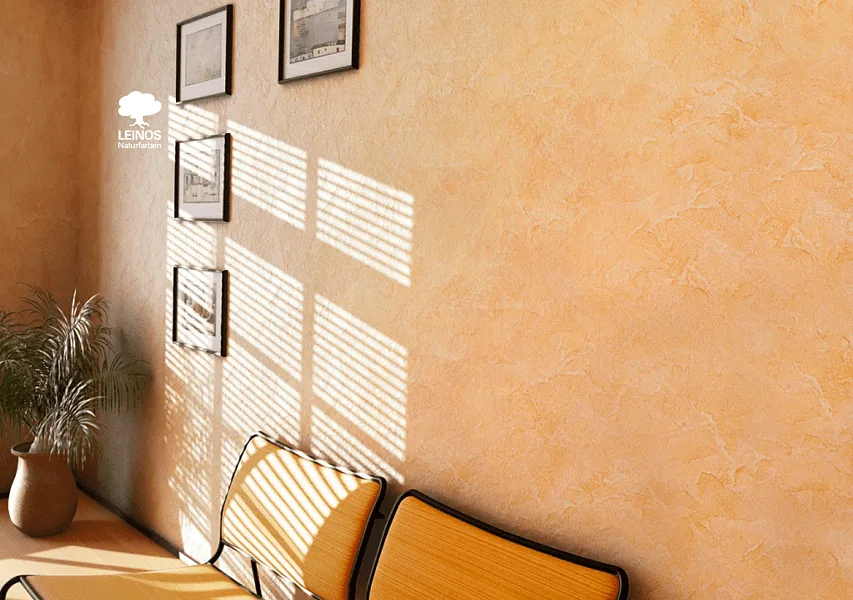
A hand-polished tadelakt powder-room wall in muted dusky-pink. A Rajasthani saffron limewash bedroom in a Jaipur restored haveli. A vintage-spatula accent wall in a Bangalore designer apartment that reads halfway between Studio Lotus and Apartamento. A pigmented Tamil oxide-red dining room in a Chettinad restoration. Decorative mineral finishes are CHOSEN, not specified — the audience is the architect, interior designer, project owner who wants a SPECIFIC visual register, and the LEINOS decorative system is the documented Indian-context delivery vehicle for it.

InteriorThree-Layer System9 compatible products
  • Artisan-character — each wall reads hand-made in raking light
  • In-batch natural mineral pigments — Indian heritage palette
  • Bespoke per-register: tadelakt, limewash, vintage, pigmented plaster
  • Breathable through Indian monsoon humidity — lime patinates, never fades
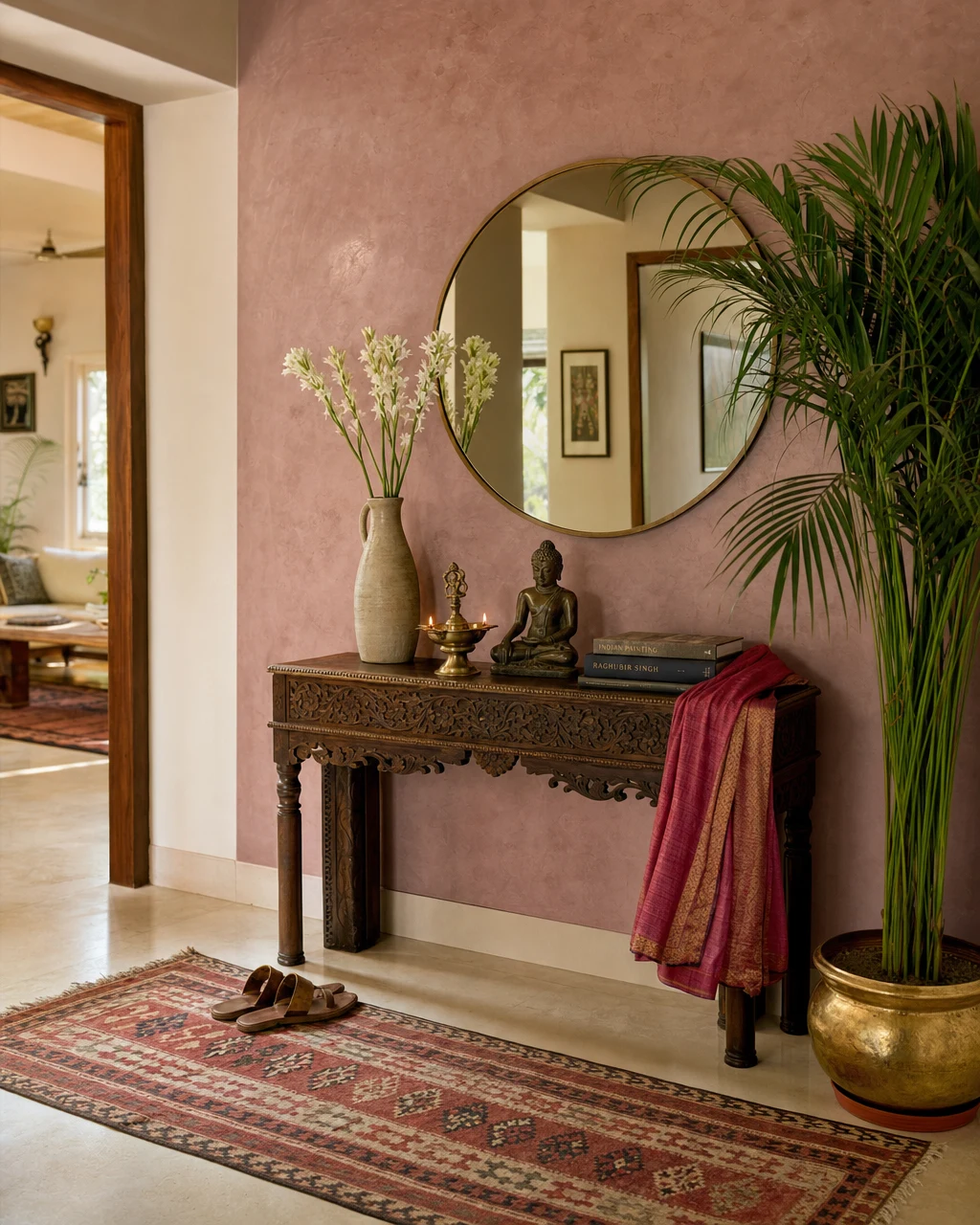
Mumbai contemporary entryway with a hand-polished tadelakt accent wall in muted dusky-pink, vintage rosewood console with brass-framed mirror, tuberose stems, brass diya, kilim runner

Find your application

Pick the substrate. We'll show what fits.

Hand-polished tadelakt-style mineral surface in muted dusky-pink, oxide-red, ochre, or pearlescent register — Vintage Finish 635 trowelled then stone-burnished for the signature wet-look sheen. Mumbai contemporary powder rooms, Bangalore villa entryway feature walls, Goa boutique-hotel reception walls. Artisan-applied only (Bijoy Jain Studio Mumbai / Studio Lotus Delhi register). 3 working days per 12 m² wall.

3 compatible products

Mineral Plaster Primer

Water-based silicate primer that evens absorbency on interior mineral walls — lime plaster, cement, clay, brick, aerated concrete, gypsum board. The prep coat under LEINOS lime, silicate, and natural mineral paints.

View product details
Vintage Finish

Rich, creamy emulsion with natural waxes for maintenance of surfaces treated with LEINOS Vintage technique. Refreshes and provides antistatic benefits.

View product details

Pigment Concentrate

Concentrated mineral pigment additive for on-site custom tinting of LEINOS water-borne natural-resin paints and decorative finishes.

View product details

System & Substrates

Four decorative registers, one mineral primer. Pigment 668 tints in-batch — single full batch, alkali-resistant shade only.

For whole-room base coverage on standard interior walls use the LEINOS Interior Walls solution (Interior White Paint 650 or Natural Resin Emulsion 660). For exterior heritage limewash see Exterior Mineral Facades.

How This System Works

1

Primer

Mineral Plaster Primer 622 — bonding primer over fresh lime, gypsum, or cement plaster. Mandatory before any tadelakt-style decorative finish; the substrate dictates the final sheen.

Mineral Plaster Primer 622 — water-based mineral bonding primer. 1 coat, dry 6 h, recoat 12 h. Required under hand-polished decorative finishes for adhesion and uniform absorption.

2

Base Coat

Vintage Finish 635 — LEINOS tadelakt-style mineral finish. Trowel-applied, smoothed at thumbprint-stage, polished with a smooth stone or soap-and-water 24 h later for the signature hand-polished sheen.

Vintage FinishRecommended

Vintage Finish 635 — mineral tadelakt-style finish. 2 thin coats, trowelled smooth then polished with stone or soap-burnishing after 24 h cure. Final sheen develops in 7–14 d as the mineral carbonates. Artisan-applied only.

× 2 coats
3

Top Coat

Optional

Pigment Concentrate 668 — used in-batch to tint the Vintage Finish before application. Dose 1–5% by weight; muted dusky-pink, oxide-red, ochre, and indigo palettes read best on the tadelakt sheen.

Pigment Concentrate 668 — alkali-stable mineral pigments for tinting Vintage Finish 635 in-batch. Shake well. Dose 1–5% by weight per intensity. Mix a full batch at once — re-mixed batches will not match.

Step by Step

How to Apply

  1. Confirm the substrate is artisan-ready

    Tadelakt-style finishes are unforgiving — every dent, ridge, screw-pop, and uneven absorption shows through the polished sheen. The substrate must be fresh lime plaster, cement plaster, or properly-prepared gypsum, sanded smooth and uniformly absorbent. RH below 70% during application; temperature 12–25°C. Bangalore villa entryway, Mumbai contemporary powder room, Goa boutique-hotel reception wall — all need a 1–2 m² mock-up board approved by the designer before scaling to the actual wall.

  2. Brief the artisan-applicator and lock the schedule

    Tadelakt is hand-polished mineral craft, not paint application — pricing is artisan-day-rate, not per-square-foot. A 12 m² feature wall takes 3 working days (substrate prep day 1, two thin coats day 2 with the polish window, stone-burnish day 3). Bangalore, Mumbai, Pondicherry, and Jaipur have small but real artisan networks; Bijoy Jain Studio Mumbai and Studio Lotus Delhi have specified this register in recent residential and hospitality projects. Lock the artisan before locking the spec — a wrong applicator will not save the finish.

  3. Apply Mineral Plaster Primer 622

    Stir 622 well. Apply 1 thin even coat with a wide brush — work into corners and edges first, then field. Dust-dry 6 h, fully recoatable 12 h. Skipping the primer is the single most common Indian-context failure on tadelakt — the Vintage Finish polishes patchy where absorption varies; the primer equalises the substrate for the artisan to work against.

  4. Pre-mix the pigment batch in full

    Decide the final pigment dose and mix the ENTIRE batch for the wall at once — Pigment Concentrate 668 at 1–5% by weight gives muted-tone-to-rich-tone. Indian decorative register reads best in dusky-pink, oxide-red, ochre, warm-grey, deep-indigo, saffron. Pearlescent variants of 668 (Gold-Satin, Sterling-Silver) work beautifully in Mumbai entryway register but cannot be mixed with each other. A re-mixed second batch will not colour-match — single-batch discipline is mandatory.

  5. Apply Vintage Finish 635 — first coat

    Load a Japanese spatula or stainless steel trowel with the tinted Vintage Finish. Apply a thin even coat with overlapping arc strokes — the LEINOS canon is 1.5–2 mm wet film, no thicker. Work the whole wall in a single session; once started the wall must finish without overnight breaks (the joint will show as a polish line forever). Let dust-dry 6–8 h before the second coat.

  6. Apply Vintage Finish 635 — second coat, smoothed at thumbprint stage

    Second coat is the visual finish coat. Apply the same thin film with the spatula, then watch the surface — when a light thumb-press no longer leaves a print but the surface is still cool and damp (typically 30–60 min after application depending on humidity), come back with a clean dry trowel held at a low 15° angle and burnish in arcing strokes. This is the smoothing pass that the eventual polish builds on — get this stage right or the polish has nothing to lift to.

  7. Stone-polish at 24 h for the wet-look sheen

    After 24 h of cure, the surface is firm enough to polish. Two paths: (a) traditional smooth river-stone polish — buff in small circular strokes until the wet-look sheen emerges; (b) olive-oil-soap burnish — wipe a thin film of natural soap (NOT detergent) over the surface and burnish with a folded cotton cloth. Both develop the signature tadelakt sheen. Coverage is slow — about 1.5–2 m²/h of polish work. Do not over-polish; the sheen lifts in 4–6 passes and over-working dulls the surface.

  8. Cure window before touch — 7–14 days carbonation through Indian monsoon humidity, re-burnish every 3–5 years

    The final colour depth and the signature wet-look sheen only emerge as the mineral carbonates with atmospheric CO₂ — 7–14 days in Indian conditions, longer in monsoon. Keep the room ventilated and avoid water splash on the surface for the full cure window. Cure-period appearance often reads slightly washed-out and chalky — this is normal and develops away as carbonation completes. Photograph the wall at 14 d, not at 24 h, for the portfolio shot. Re-burnish every 3–5 years to refresh the sheen.

System Composition

  • Substrate prep — fresh lime or cement plaster only, sanded smooth to a uniform absorbency; every flaw in the substrate will be visible in the final polished sheen
  • Mineral Plaster Primer 622 — 1 coat, dry 6 h before the decorative finish
  • Vintage Finish 635 — 2 thin trowel coats, second coat smoothed at thumbprint-stage (when the surface no longer prints to a thumb-press)
  • In-batch pigment — Pigment Concentrate 668 dosed 1–5% by weight directly into the Vintage Finish before application (muted dusky-pink, oxide-red, ochre, indigo)
  • Hand-polish after 24 h — smooth stone or olive-oil-soap burnish develops the signature wet-look sheen
  • Carbonation cure 7–14 days under Indian monsoon humidity — the final sheen and depth only emerge as the mineral cures with atmospheric CO₂

Why It Works

  • LEINOS Vintage Finish 635 + Pigment 668 + Primer 622 is the documented system for hand-polished mineral feature walls in India — a real alternative to imported Moroccan tadelakt material that ships with multi-week lead times and frequent batch-colour inconsistency.
  • The polished mineral surface is water-resistant once cured (7–14 d carbonation) — Bangalore villa powder-room sinks and Mumbai apartment entryway walls behind brass vessel-sinks work in the documented system. Continuous water immersion (shower walls below the shower-head plane) is outside the documented case.
  • Artisan-applied finishes carry artisan-character — slight tonal variation across a wall is the design intent, not a flaw. Tadelakt is the opposite of factory-coated wallpaper; the wall should read as hand-made when viewed in raking light.
  • Indian designer-revival register (Bijoy Jain Studio Mumbai, Studio Lotus Delhi, Anjali Mangalgiri Pondicherry, Chennai) has specified this stack in recent residential and boutique-hospitality projects; the artisan network in Bangalore + Mumbai + Pondicherry + Jaipur is documented and reachable.

Pick the Right Build

Which build fits your surface?

Mumbai contemporary powder room — muted dusky-pink polished tadelakt

Powder-room feature wall behind a brass vessel-sink. Primer 622 (1 coat) → Vintage Finish 635 tinted with Pigment 668 at 2% dusky-pink (in-batch) (2 coats, trowel-smoothed at thumbprint stage) → stone-polish after 24 h. 14 d carbonation cure before first water splash. Wet-look sheen reads architectural in low-light powder-room context.

622 + 635 + 668 (dusky-pink, 2%)

Bangalore villa entryway accent wall — oxide-red hand-polished tadelakt

Single feature wall in a residential entryway, daylight-front-lit. Primer 622 (1 coat) → Vintage Finish 635 tinted with Pigment 668 at 4% oxide-red (in-batch) (2 coats) → olive-oil-soap burnish after 24 h. Rich-tone Indian heritage register against IPS oxide floor; reads as quiet luxury in raking afternoon light.

622 + 635 + 668 (oxide-red, 4%)

Goa boutique-hotel reception wall — Sterling-Silver pearlescent feature

Hospitality feature wall, evening-lit by warm tungsten. Primer 622 (1 coat) → Vintage Finish 635 with Pigment 668 Sterling-Silver pearlescent at 3% (in-batch) (2 coats, trowel-smoothed) → stone-polish after 24 h. The pearlescent shifts subtly through the evening as guests move past — boutique-hotel design-language register.

622 + 635 + 668 (Sterling-Silver, 3%)

Pondicherry restoration courtyard accent — warm-ochre wet-look

French-quarter restoration, ground-floor courtyard wall under partial shade. Primer 622 → Vintage Finish 635 tinted with Pigment 668 at 5% warm-ochre (in-batch) (2 coats) → stone-polish after 24 h. The deep warm-ochre tone matches the Pondicherry French-colonial pastel register; specify with a Pondicherry artisan who has restored this period palette before.

622 + 635 + 668 (warm-ochre, 5%)

What to Expect

  • Pricing reality: artisan-day-rate not per-square-foot. A 12 m² feature wall in Bangalore or Mumbai prices at premium art-craft rates including material — not commodity paint application.
  • Schedule reality: 3 working days minimum (prep + 2 coats with polish window + carbonation cure) for a 12 m² wall. Cannot be rushed; cannot be split across non-consecutive days.
  • Sample-board reality: a 1–2 m² mock-up board APPROVED by the designer is non-negotiable before scaling to the actual wall. Tonal direction reads completely differently between sample-card and wall-scale.

What to Avoid

  • Artisan-applied only — no DIY path for tadelakt-style hand-polished finish. Wrong applicator wastes the material and shows immediately in the polished sheen.
  • Substrate must be flawless — every dent, ridge, and absorption variance shows through the polished surface. Existing painted walls cannot receive this finish without full stripping and re-plastering.
  • Not for continuous water-immersion zones (shower walls below the shower-head, swimming-pool surrounds) — water-resistant after carbonation but not water-immersion-rated.
  • Not for exterior walls — Vintage Finish 635 is documented for interior decorative use only; exterior heritage-mineral routes use the silicate or limewash systems instead.
  • Pigment Concentrate 668 pearlescent shades (Gold-Satin, Sterling-Silver) cannot be inter-mixed and must dose into a single full batch for the whole wall.

Scope & Limits

Where this system applies.

This solution applies to decorative ACCENT zones, FEATURE walls, and FOCAL-POINT applications on prepared interior mineral substrate — fresh lime plaster, cement plaster, properly-prepared gypsum, or mineral render. Mumbai contemporary powder-room walls, Bangalore villa entryway accent walls, Goa boutique-hotel reception features, Jaipur restored-haveli bedroom walls, Pondicherry French-quarter dining rooms, Chettinad restoration dining rooms — these are the documented surface contexts.

Requirements

  • Before any decorative mineral finish can be specified, the following must be confirmed:
  • Substrate is fresh lime plaster, cement plaster, or properly-prepared gypsum — uniformly absorbent, smooth, and dry to below 4% moisture before priming with Mineral Plaster Primer 622
  • Every flaw in the substrate WILL show through the decorative finish — tadelakt and bold-pigmented limewash magnify dents, ridges, screw-pops, and absorption variance into visible visual flaws
  • Artisan-applied work for tadelakt (Vintage Finish 635) and multi-tool vintage spatula register — confirmed artisan-applicator booked before locking the spec; DIY path exists only for limewash and pigmented plaster brush-application
  • Time-and-process budget acknowledged — 3 working days minimum per 12 m² wall for tadelakt and vintage spatula register (substrate + 2 coats with the polish window + carbonation cure)
  • A 1–2 m² mock-up board at 14 d carbonation cure is APPROVED by the designer before scaling — wet pigment colour is NOT the cured colour; sample-card approval is not a valid colour-approval test

Not compatible with

  • This system does not apply to:
  • Pre-painted PU, acrylic-emulsion, distemper, or oil-based painted walls — decorative mineral finishes adhere to absorbent mineral substrate only; existing painted walls must be scraped back to bare plaster before this system starts (no shortcut)
  • Gypsum board without a mineral skim-coat — bare gypsum is acceptable substrate ONLY after Mineral Plaster Primer 622 has equalised the absorbency; raw gypsum without primer fails the system
  • High-traffic scuff zones and service-grade walls — decorative mineral finishes are FEATURE-WALL register, not wall-system register; whole-room daily-wipe walls belong on Interior Walls solution with Natural Resin Emulsion 660
  • Exterior walls and weather-exposed mineral facades — Vintage Finish 635, Lime Paint 665, Lime Brush Rendering 667, Vintage Wall Ground 631, and Scumble Filler 630 are all documented for INTERIOR decorative use only; exterior mineral heritage routes use the silicate or facade limewash system

Common Questions

Frequently Asked

Next step

Ready to see the 9 compatible products?

Move into the filtered catalogue, or jump back to surface choice if you're still scoping the project.

Need a Recommendation?

Talk to

Four ways to reach our India team — pick the one that fits how you work.