Interior White Paint
The everyday natural-resin interior white wall paint for residential and commercial fit-outs. Washable Class 3, vapour-permeable Class 1, solvent-free.
View product detailsMineral Surfaces · Solutions
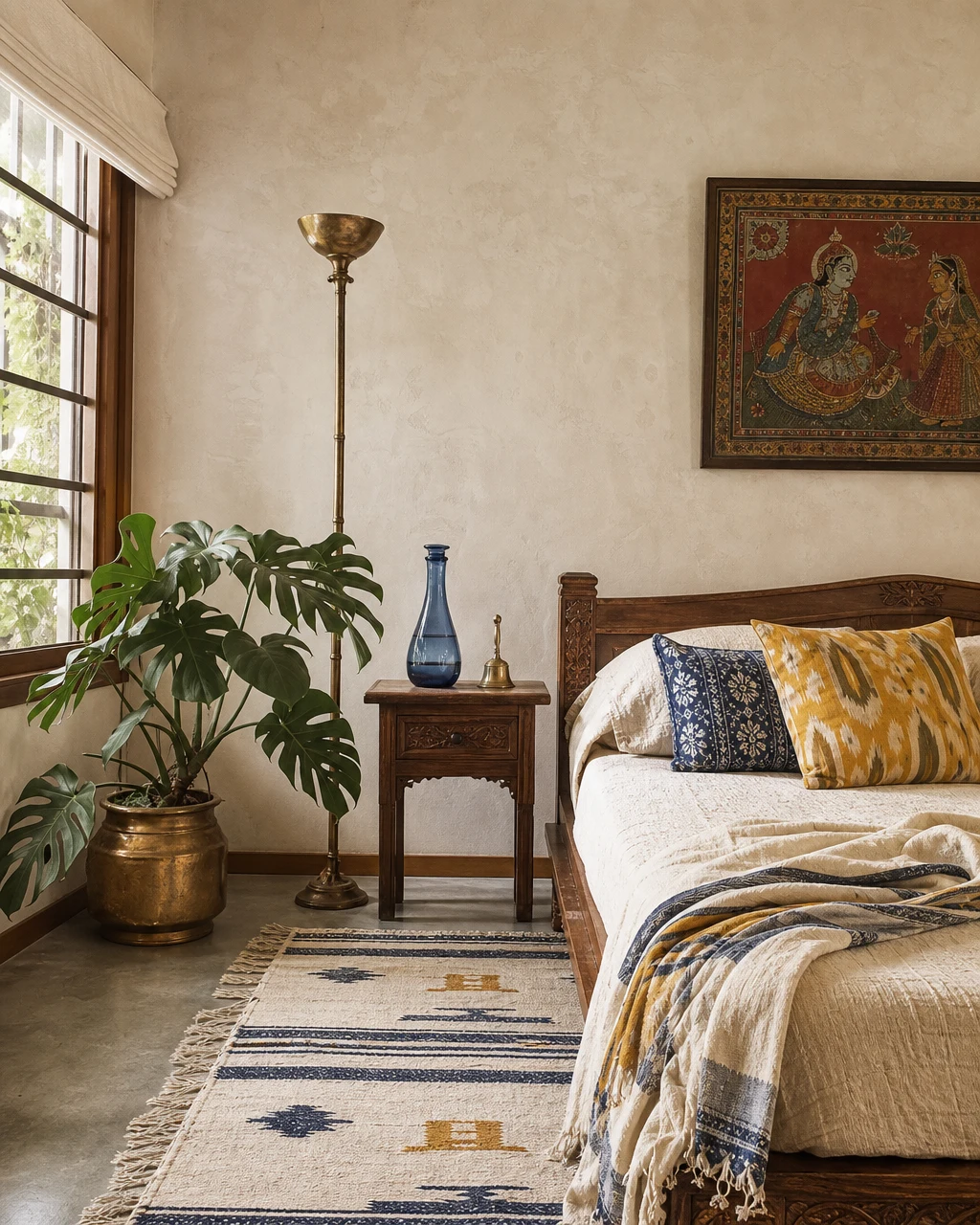
A fresh lime-plastered living room in a Bangalore apartment, a Mumbai bedroom with brass switch-plates and a Madhubani feature wall, a Pondicherry heritage reception with lime ceiling, a Goa coastal bathroom that lives in RH 95% for half the year — interior walls earn their life under cooking vapour, monsoon humidity, brass-fixture reflection, dhurri-rug dust, and the slow seasonal rhythm of an Indian household. The finishes documented for that reality are the LEINOS interior wall system — Natural Resin Emulsion Paint 660, Interior White Paint 650, Lime Brush Rendering 667 — backed by chemistry-matched primers (620, 621, 622), texture tools (683, 684) and protective Wall Wax 350.
Find your application
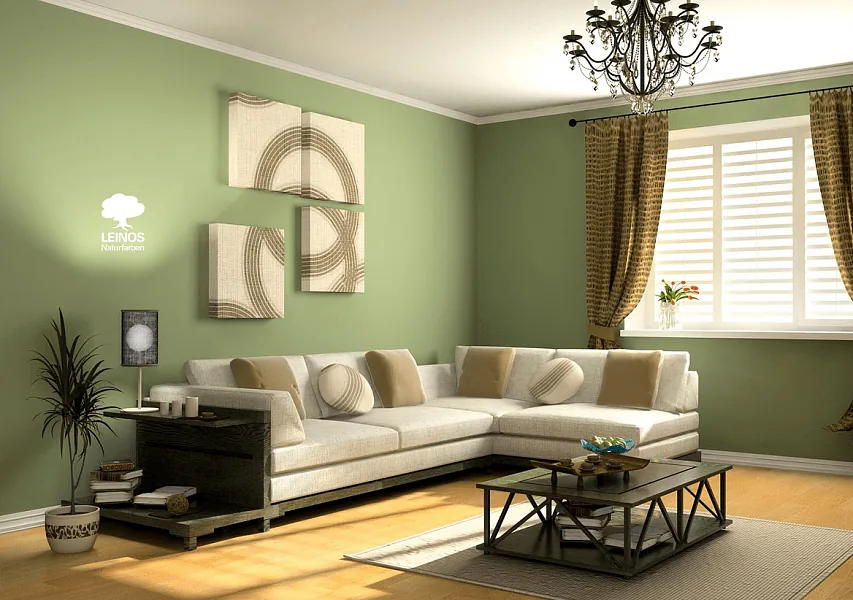
Comfort + tinted aesthetics — caned chairs, hand-loom rugs, brass fixtures, Madhubani art. Natural Resin Emulsion 660 (2 coats over Deep Sealer 620 primer) is the default for the modern Bangalore / Mumbai residential register, tintable via 668 pigment across the warm-earthy palette (sage, dusty terracotta, cream). Lime Brush Rendering 667 over Silicate Primer 621 for the breathable bedroom feature-wall heritage register. Optional Wall Wax 350 on the lower dado band in toddler bedrooms only.
9 compatible productsThe everyday natural-resin interior white wall paint for residential and commercial fit-outs. Washable Class 3, vapour-permeable Class 1, solvent-free.
View product detailsNatural-resin emulsion wall paint for modern Indian interiors — washable Class 3, vapour-permeable Class 1, solvent-free. The natural-chemistry alternative to acrylic emulsion.
View product detailsWater-based silicate primer that evens absorbency on interior mineral walls — lime plaster, cement, clay, brick, aerated concrete, gypsum board. The prep coat under LEINOS lime, silicate, and natural mineral paints.
View product detailsThe water-based deep-penetrating primer for absorbent interior wall substrates — saponified shellac and natural-resin soap flow into the pore network, the wax phase binds substrate dust, the topcoat lays down at uniform thickness and colour register. Solvent-free, plasticiser-free, very low VOC.
View product detailsSystem & Substrates
For wet-zone anti-mould protocol see the Breathable Anti-Mould Systems route; for decorative-only effects see Decorative Mineral Finishes.
The Coating System
Primer plus topcoat — the full chain.
Topcoat Options
Choose the finish character; the primer underneath stays the same.
Long-term Care
Extends the life of the finish over the years.
Substrate-control primer — Deep Sealer 620 (water-based acrylate dispersion) binds dusty fresh plaster and evens out absorbency before emulsion paints. Mineral Plaster Primer 622 (sand-textured silicate sealer) is the alternative on textured renders. 1 coat, dust-dry 4–6 h, recoat with paint after 12 h.
Deep Sealer 620 — water-based acrylate dispersion primer for absorbent fresh plaster, gypsum board, and chalky old paint. Dilute 1:1 with water for the first coat on highly absorbent walls. Dry 4–6 h, paint over after 12 h.
Mineral Plaster Primer 622 — sand-textured primer for textured renders and silicate stacks. Apply undiluted with brush or roller. Dry 6 h, recoat 12 h.
Wall paint — Natural Resin Emulsion 660 is the default for Bangalore and Mumbai residential walls (soft matte, vapour-permeable, tintable via 668 pigment, washable after 7 d). Interior White Paint 650 for clean white-only schemes. Lime Brush Rendering 667 for the breathable lime register on bedroom feature walls. 2 coats, recoat 4–6 h.
Natural Resin Emulsion Paint 660 — hybrid water + plant-resin binder + mineral fillers. Soft matte, vapour-permeable, washable after 7 d cure. 2 coats, dry to touch 2–4 h, recoat 4–6 h, full cure 24–48 h. Tintable via Pigment Concentrate 668.
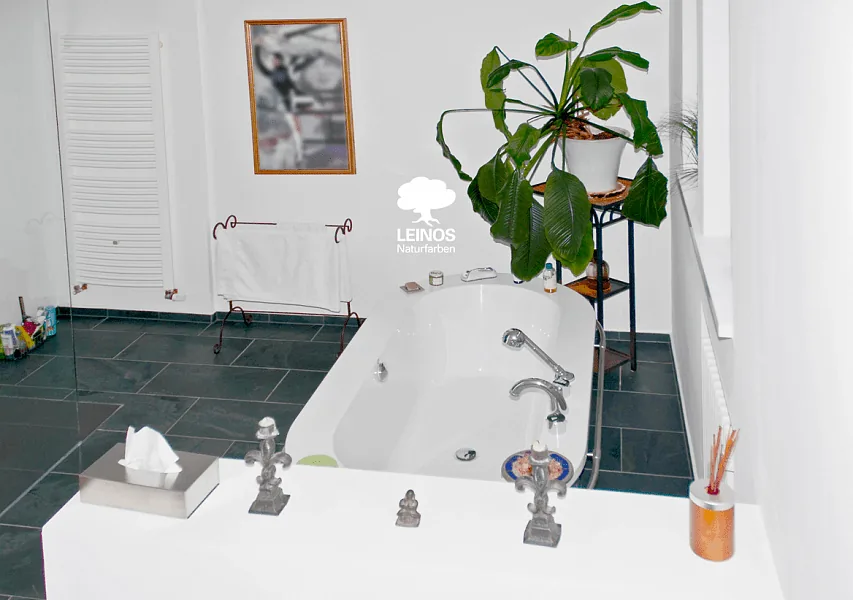
Interior White Paint 650 — white-only natural-resin emulsion for clean specifier schemes. Same chemistry family as 660, opaque white. 2 coats, dry 2–4 h, recoat 4–6 h.
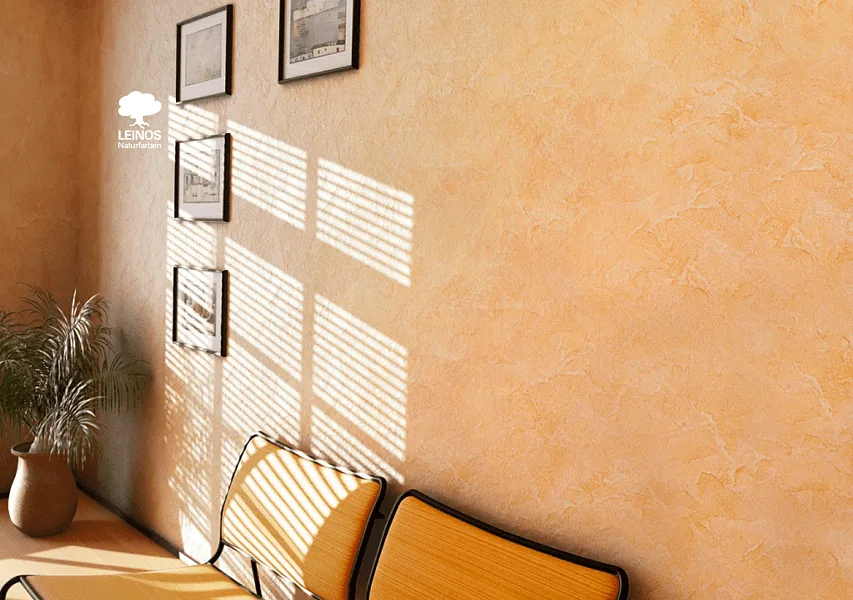
Lime Brush Rendering 667 — decorative lime coat for breathable bedroom feature walls. Soft chalky matte with natural cloudiness. Brush-applied, 1–2 thin coats, carbonation cure 7–14 d (21 d in monsoon RH).
Optional protective wax finish for the lower dado band (skirting to chair-rail height) where slipper scuffs and toddler hand-prints concentrate. Skip on bedroom walls above hand-touch height — the matte paint reads cleaner without sheen.
Wall Wax Finish 350 — natural plant-wax topcoat over 660 emulsion. 1–2 thin coats over fully cured paint (7 d). Dry 6–8 h between coats. Adds soft sheen + wipe-resistance to the 1.2 m skirting band.
Step by Step
Confirm the wall substrate: fresh lime/gypsum plaster (≤6 weeks old, alkaline, absorbent), old painted wall, or skim-coated plasterboard. Pin-meter moisture below 14% across the wall — sample at 1 m height in 4 spots. Plan painting for the cool-dry window (Oct–Feb in most of India) when emulsion paints cure cleanly; in monsoon (Jul–Sep, RH 80–95% in Mumbai/Goa/Chennai) the recoat interval extends from 4–6 h to 8–12 h.
Remove brass switch-plates, ceiling-fan downrod covers, and curtain rod brackets — brass tarnishes if Deep Sealer 620 splatters on it. Mask IPS floor edge with 25 mm painter's tape + 300 mm kraft paper drape. Lift dhurri rugs and woven mats clear. Cover charpoy and wooden chests with drop sheets — primer mist drifts further than expected.
Brush down efflorescence (white salt bloom) from fresh plaster with a dry stiff brush — never wash, water re-mobilises salt. Fill nail-holes, dowel-marks, and hairline cracks with Interior Smoothing & Texturing Filler 684 (knife-applied, sand smooth after 4 h dry). For wider cracks (>2 mm) bridge with 50 mm fibreglass scrim tape under the filler. Sand the filled spots flush with P150–P180.
Skip this step on previously-painted stable walls with sound emulsion (just clean with damp cloth). On fresh plaster, gypsum board, or chalky old paint: stir Deep Sealer 620 well. Dilute 1:1 with water for the first sealer coat on highly absorbent walls (Indian site-mixed lime plaster typically needs dilution). Apply 1 thin coat with 9-inch roller. Cut in corners with a 50 mm brush. Dry 4–6 h dust-dry, paint over after 12 h.
Stir 660 thoroughly — natural-resin emulsions settle in storage. For tinted shades, add Pigment Concentrate 668 (max 10% by volume) and stir 5 minutes. Apply with 9-inch roller in W-pattern then lay off vertically. Cut in around the ceiling line, switch plates, and skirting with a 50 mm brush. One full wall start-to-finish in one session — wet-edge breaks show as lap marks. Coverage 8–10 m²/litre.
Touch-dry test on a low-visibility corner — paint should feel cool but not tacky. Second coat using the same roller-and-brush sequence. The second coat is what gives the final colour density and the matte finish character. For Lime Brush Rendering 667 alternative: brush-apply in cross-hatch strokes, accept the natural cloudiness — this is the lime register's aesthetic, not a defect.
Surface light-use ready 24–48 h after the second coat (slot brass switch-plates back, re-hang Madhubani art). Full wash-resistance develops after 7 d — wipe spills earlier with a dry cloth only. For Lime Brush Rendering 667 the carbonation cure extends to 7–14 d (21 d in monsoon RH 90%+) before the finish reaches full hardness.
Skip on bedroom walls above hand-touch height. On living-room walls where slipper scuffs and toddler hand-prints concentrate (lower 1.2 m): after the paint has cured 7 d, apply Wall Wax Finish 350 with a lint-free cloth in thin even circles. Wait 6–8 h dry. Apply a second thin coat if a wipe-clean dado band is the brief. The wax adds soft sheen + wipe-resistance without changing the matte register above.
System Composition
Why It Works
Pick the Right Build
Standard residential living room with caned chairs, hand-loom rug, brass fixtures, plaster walls 3–6 months cured. Deep Sealer 620 (1 coat, diluted 1:1) → Natural Resin Emulsion 660 (2 coats) in a tinted shade via 668 pigment. Skip the wax — the soft matte reads cleaner without sheen.
Deep Sealer 620 + Natural Resin Emulsion 660 — 2 coats
Bedroom with one feature wall in Lime Brush Rendering 667 (chalky breathable lime), three walls in Natural Resin Emulsion 660 (tinted to match the lime tone). Primer 622 under 667 lime register. Carbonation cure on the lime wall: 7–14 d normal, 21 d during monsoon — don't mount art until cure is complete.
Mineral Plaster Primer 622 + Lime Brush Rendering 667 (feature) + Natural Resin Emulsion 660 (3 walls)
Living-room dado band or toddler bedroom lower 1.2 m sees hand-prints, crayon, sippy-cup spills. Deep Sealer 620 + Natural Resin Emulsion 660 (2 coats, tinted) + Wall Wax Finish 350 (2 thin coats over fully cured paint) on the lower 1.2 m only. Wipe-clean band reads soft, not glossy — keeps the room's matte register.
Deep Sealer 620 + Natural Resin Emulsion 660 + Wall Wax Finish 350 (dado only)
What to Expect
What to Avoid
Scope & Limits
This solution applies to interior mineral wall and ceiling surfaces inside Indian buildings — site-mixed lime plaster, cement-and-sand plaster, gypsum-board partitions, gypsum-skimmed concrete, masonry walls finished with skim coat, and similar mineral substrates inside the conditioned envelope of a home or office.
In the wild
Common Questions
Next step
Move into the filtered catalogue, or jump back to surface choice if you're still scoping the project.
Need a Recommendation?
Four ways to reach our India team — pick the one that fits how you work.