Mineral Surfaces · Solutions

Exterior Walls

A heritage cement-plastered Pune bungalow facade, a 4-storey Bangalore residential RCC tower, a compound wall around a Mumbai sea-facing villa, a Pondicherry colonial-style boundary in coarse lime render — Indian exterior walls earn their life under three concurrent climate loads: monsoon RH 80–95% for three months, intense UV for nine, and coastal salt-air on the western and eastern seaboards with a 30–50% UV-degradation multiplier over inland sites. Most legacy Indian facades are painted with acrylic or alkyd emulsions that film-form on the surface and fail at the first monsoon — blistering at substrate cracks, peeling at the chajja drip line, biological growth at the north face within two seasons. The LEINOS exterior-walls system documented for that reality is mineral-bonded: sol-silicate ProfiSol and silicate Universil topcoats over a primer and quartz-filler base, chemically silicified into the lime, cement, or masonry substrate so the coating becomes part of the wall.

ExteriorThree-Layer System7 compatible products
  • Breathable through monsoon RH 80–95% (sd-value 0.01 m)
  • Weather-resistant — no peeling, mineral-bonded silicification
  • UV-stable — chalks evenly over 5–7 years (inland)
  • Mineral character — matte sol-silicate finish, 200+ colours
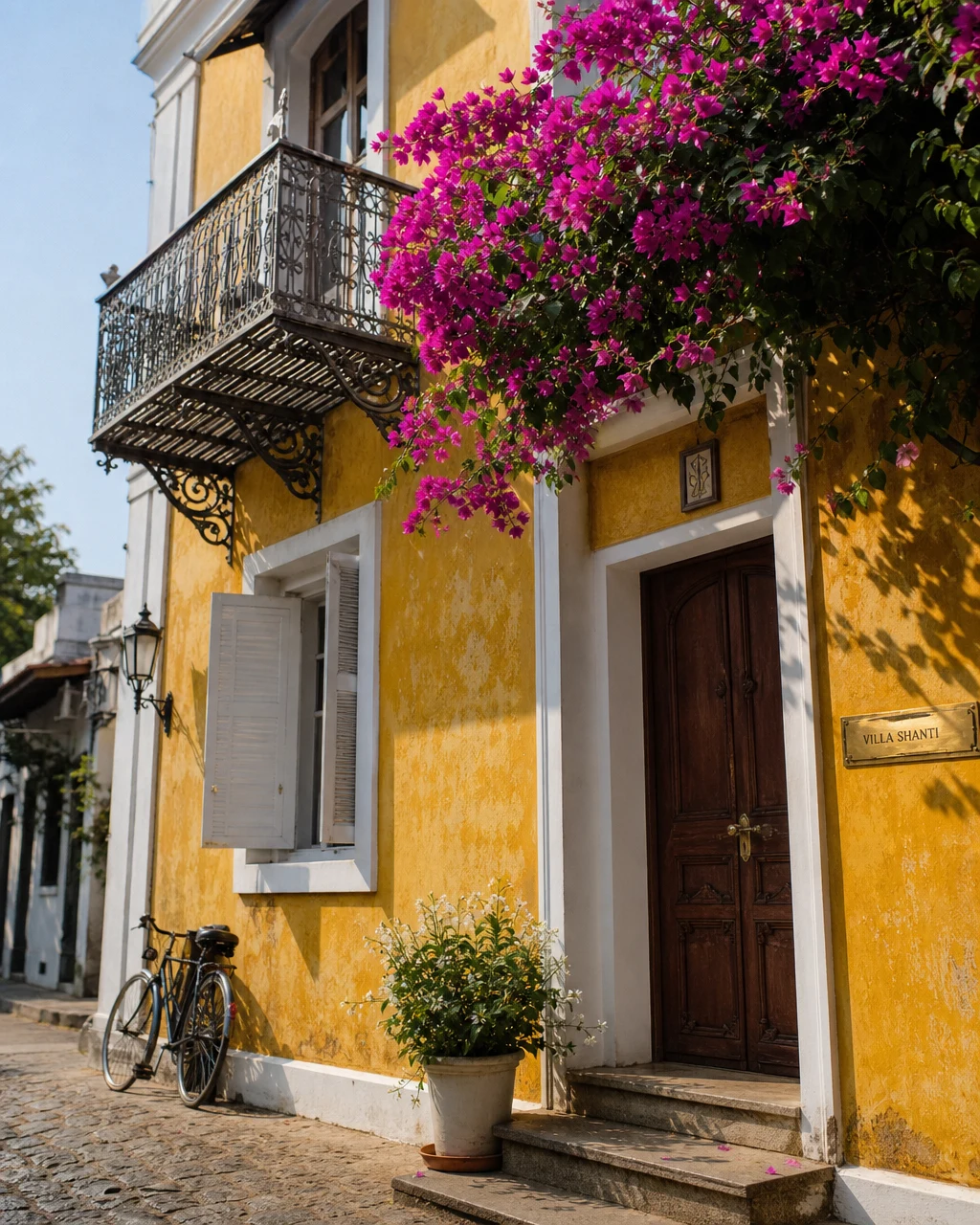
Pondicherry French-colonial heritage townhouse façade with deep saffron-yellow limewash walls, white teak shutters, magenta bougainvillea, brass kundi door handles, jasmine pot by the steps

Find your application

Pick the substrate. We'll show what fits.

Residential or commercial 2–4 storey facade — RCC bungalow, low-rise apartment, painted-plaster villa, hill-station guesthouse. Default stack: 622 primer + 610 quartz filler + 612 ProfiSol Fine (mineral substrate, smooth render) OR 614 Universil Fine (previously emulsion-coated facade). Pro-line economics make 612/613 the canonical choice when facade area exceeds 200 m² (cost-per-m² advantage and deeper silicification than ready-mix alternatives). For Mumbai/Goa/Chennai/Pondicherry coastal facades, plan a 12–18 month earlier first-recoat than inland.

4 compatible products

Mineral Plaster Primer

Water-based silicate primer that evens absorbency on interior mineral walls — lime plaster, cement, clay, brick, aerated concrete, gypsum board. The prep coat under LEINOS lime, silicate, and natural mineral paints.

View product details
ProfiGrund Quartz Filler

Fibre-reinforced quartz filler primer for mineral facades — levels hairline cracks and plaster repairs up to 0.4 mm.

View product details

Profi Fixative

Professional fixative for workability control — serves as primer and binder for mineral facade systems.

View product details

ProfiSol Facade Paint Fine

Sol-silicate facade paint with mineral character — silicification-capable, water-vapour diffusible, available in 200+ colours.

View product details

System & Substrates

Three-layer silicate facade — primer, quartz filler, topcoat. Substrate decides ProfiSol vs Universil.

For heritage-bungalow boundary walls where a hand-finished limewash register is the design intent, consider Lime Paint 665 from the Interior Walls solution as a cross-product alternative. For architect-specifier project context, the Exterior Mineral Facades solution covers the same products at specifier depth.

How This System Works

1

Primer

Mineral Plaster Primer 622 — silicifies into the lime, cement, or RCC substrate of the typical Indian residential / commercial facade. Skip Profi Fixative 611 on sound mineral substrates; reserve it for chalking concrete in the masonry route. One coat, touch-dry 6–12 h, topcoat from 12 h.

Mineral Plaster Primer 622 — potassium-silicate water-based primer. Apply over clean, dry, sound mineral facade (lime plaster, cement plaster, RCC). Coverage ~5 m²/litre at one coat. Whitish pigment for coverage verification.

2

Base Coat

Optional

Profigrund Quartz Filler 610 — fibre-reinforced ground coat. Apply when the facade carries hairline cracks (<0.4 mm) or uneven surface differences. Skip when the facade is freshly rendered and visually flat.

Profigrund Quartz Filler 610 — 0.4 mm fibre-reinforced ground coat. Bridges hairline cracks, levels minor plaster differences, anchors the silicate topcoat into the substrate.

3

Top Coat

ProfiSol Fine 612 (default, bare-mineral facade) or Universil Fine 614 (renovation, previously emulsion-coated facade). Smooth-render finish for residential and commercial facades. 1–2 coats per TDS — contact specifier for coverage and recoat window.

ProfiSol Facade Paint Fine 612 — sol-silicate topcoat. Silicifies with the mineral substrate. sd-value 0.01 m, matte finish, 200+ colours. Default for bare or mineral-coated Indian residential and commercial facades.

Universil Facade Paint Fine 614 — silicate topcoat for facades previously coated with acrylic / alkyd emulsion. Mineralises the existing polymer film instead of bonding through it — no strip-back required.

× 2 coats

Step by Step

How to Apply

  1. Diagnose the facade — substrate and prior coating

    Walk the facade. Scratch a coin across the surface in three test patches. A polymer film flake = synthetic-coated (use Universil 614). Powder or mineral texture = bare or mineral-coated (use ProfiSol 612). Identify the substrate: cement plaster, lime plaster, RCC, or AAC block. Note all hairline cracks, structural cracks, efflorescence patches, and moisture-source defects (rising damp at the base, leaking pipes, missing chajja drip groove, flashing failures). Fix the moisture-source defects before painting — no surface treatment rescues a moisture-source problem.

  2. Clean, fungicidal treatment, dry-down

    Brush off any efflorescence (white salt bloom) — never paint over active efflorescence. If algae or mould visible at the north face or behind chajja, treat with a fungicidal wash, dry 24 h, mechanical-clean again. Pressure-wash the full facade at moderate PSI (1500 PSI; high pressure damages lime plaster and over-erodes weak render). Let dry 48–72 h. Coastal facades (Mumbai, Goa, Chennai, Pondicherry) may need 5–7 days drying after monsoon. Measure substrate moisture content with a contact meter on the shaded face — must read ≤14% before primer.

  3. Repair structural defects, cure fresh render 28 d

    Fill structural cracks (>0.5 mm) with matching repair mortar; cure 14–28 d. Fresh new render and re-rendered patches require 28 d minimum cure before silicate paint — the silicification reaction needs the substrate to have set chemically. Hairline cracks (<0.4 mm) stay un-filled — these are handled by the optional 610 Profigrund Quartz Filler step.

  4. Apply Mineral Plaster Primer 622

    Stir 622 well. Apply one even coat with brush, roller, or airless spray. Whitish pigment shows coverage; no bare patches. Optionally thin 5–10% with water on extremely absorbent fresh plaster; otherwise apply undiluted. Wipe back any pooled primer on low-absorbency patches after 15–20 minutes. Touch-dry 6–12 h. Topcoat from 12 h (24 h is safer at monsoon edge). Coverage ~5 m²/litre.

  5. Apply 610 Profigrund Quartz Filler (conditional)

    If the facade carries hairline cracks (<0.4 mm) or uneven surface levels: apply Profigrund Quartz Filler 610 as full-surface ground coat after 622 has cured. Fibre reinforcement bridges the hairlines; 0.4 mm grain levels minor differences. On a freshly-rendered visually flat facade, skip this step. Let dry per TDS (typically 24 h on exterior).

  6. Apply first silicate topcoat — ProfiSol or Universil Fine

    Stir well. Apply with brush, roller, or airless spray in the cool-dry window (surface 5–30 °C, ambient RH <80%, no rain forecast in next 24 h). Work panel-to-panel maintaining a wet edge to avoid lap marks. Bangalore mid-rise apartment block: typical 2-day application for a 4-storey facade with two-painter crew. For Mumbai high-rise (15+ floors), plan scaffold-zone-by-scaffold-zone with overlap at the seam line so a fresh-and-dry edge is always available.

  7. Apply second topcoat, weather-protect the cure window

    Apply the second coat after the first has dried (TDS recoat window, typically 12–24 h on exterior). Keep the freshly painted facade dry for at least 24 h after the final coat — a sudden afternoon shower within the cure window damages the silicification reaction and the coating fails patchily within months. In Mumbai/Goa monsoon-edge conditions (October pre-monsoon-retreat, May pre-monsoon-onset), run a tarpaulin overhead on the working face if a freak shower is forecast. Coastal sites: add 12–18 month earlier first-recoat planning into the maintenance calendar.

System Composition

  • Diagnose substrate (bare mineral vs previously emulsion-coated — coin scratch test decides Pro-line vs Universil)
  • Mechanical clean, fungicidal wash, pressure-wash (1500 PSI), dry 48–72 h, moisture <14%
  • Repair structural cracks, cure fresh render 28 d minimum
  • Mineral Plaster Primer 622 — one coat, 6–12 h dry, topcoat from 12 h
  • Optional Profigrund 610 ground coat if hairline cracks present
  • ProfiSol Fine 612 OR Universil Fine 614 — 1–2 coats in cool-dry window (RH <80%, no rain 24 h)

Why It Works

  • Sol-silicate ProfiSol 612 bonds chemically with the mineral substrate (silicification) — the coating becomes part of the wall, cannot peel, cannot blister at chajja drip lines the way film-forming acrylic facade paints do every monsoon.
  • sd-value 0.01 m means moisture vapour moves through the coating almost unimpeded — critical for Indian monsoon walls where trapped moisture causes the worst residential-facade failures.
  • For renovation work over intact emulsion: Universil 614 mineralises the existing polymer film, converting a peeling-acrylic Bangalore apartment facade into a breathable mineral coating without strip-back — saves 60–70% labour cost vs full strip-and-repaint cycle.
  • Repaint cycle 5–7 y inland (Bangalore, Pune, Delhi NCR) vs 3–5 y coastal (Mumbai, Goa, Chennai, Pondicherry). Pro-line economics pay back within first cycle on any facade >200 m² vs commodity acrylic emulsion.

Pick the Right Build

Which build fits your surface?

New-build mineral facade (bare RCC + cement plaster, Bangalore residential)

622 Primer + 610 Quartz Filler (cures any plaster hairline cracks) + 612 ProfiSol Fine in 2 coats. Canonical default for Indian new-build 2–4 storey residential. 5–7 year inland repaint cycle.

622 + 610 + 612 ProfiSol Fine — 2 coats

Renovation over intact emulsion (Mumbai bungalow, acrylic-painted facade)

Pressure-wash, spot-repair any peeled patches with matching emulsion (let dry 7 d), then 622 Primer + 614 Universil Fine in 2 coats. Universil mineralises the polymer film instead of bonding through it.

622 + 614 Universil Fine — 2 coats

Coastal high-rise facade (Mumbai/Chennai, salt-air load)

622 Primer + 610 Quartz Filler (fights monsoon-driven hairline cracking from thermal swing) + 612 ProfiSol Fine in 2 coats. Plan 3–5 y first-recoat (vs 5–7 y inland). South-facing zones may need spot-touch-up at year 2.

622 + 610 + 612 ProfiSol Fine — 2 coats, 3–5 y recoat

What to Expect

  • Touch-dry 6–12 h on each layer in normal Indian cool-dry conditions. Full silicification cure on the topcoat: 14–28 d. Mature mineral character only after the first post-application monsoon or dry season.
  • Repaint cycle: 5–7 y inland, 3–5 y coastal. Annual wash-down at start of cool-dry season; spot-touch-up at year 3; full re-paint at year 5–7 (inland) or 3–5 (coastal).
  • Pre-monsoon (April–May) or post-monsoon (October–November) are the canonical application windows for facade work in most of India. Bangalore and Pune extend year-round; hill stations work April–October only.
  • Slight chalking over years is a mineral-silicate characteristic, not a defect — the colour fades evenly to a lighter shade rather than peeling in patches.

What to Avoid

  • Not for gypsum-board, plaster-of-Paris, POP exterior elements, wood facades, plastic cladding, or metal panels — silicate paints bond chemically only to alkaline mineral substrates.
  • Pro-line products (610, 612, 613, 614, 615) are professional-grade and TDS coverage / drying may read "Contact manufacturer" in the leinos.in catalogue — contact sales@leinos.in for full specifier sheet and project-specific quantities.
  • Do not paint over active efflorescence, live mould or algae bloom, or wet substrate (>14% moisture) — coating fails within one monsoon.
  • WDVS / ETICS facades: restrict to light colours (HBW > 40) — dark colours cause thermal stress on the insulation.

Scope & Limits

Where this system applies.

This solution covers exterior mineral facades and walls: lime plaster, cement plaster, render, masonry brick, AAC blocks, RCC concrete, WDVS thermal insulation systems, and previously-painted mineral facades in sound condition. It applies to residential bungalows, low- and mid-rise apartment buildings, compound walls, garden walls, soffits, reveals, balcony parapets, and all fixed exterior mineral wall elements where weather exposure (rain, UV, salt air, thermal swing) is the governing load.

Requirements

  • Before compatible products can be reviewed, the following must be confirmed:
  • Substrate is alkaline mineral — lime plaster, cement plaster, render, masonry brick, AAC block, RCC concrete, or a sound previously-painted mineral facade. Silicate paints chemically bond only to alkaline mineral substrates (silicification reaction); they cannot bond to gypsum, plaster-of-Paris, wood, or plastic exteriors.
  • Substrate moisture content below 14% — measure with a contact meter on the shaded face of the wall. Newly rendered or plastered walls must cure at least 4 weeks (28 days) before silicate paint goes on — wet substrate traps the silicification reaction.
  • No efflorescence (white salt bloom) visible — brush off mechanically, identify the moisture source (rising damp, leaking pipe, flashing failure) and fix before painting. Painting over active efflorescence guarantees coating failure within one monsoon.
  • No prior film-forming acrylic, polyurethane, or elastomeric facade paint — silicate cannot bond through a polymer film. Strip back to bare mineral substrate, or pivot to the Universil line (614/615) which is specifically engineered to mineralise sound synthetic-coated facades.
  • Application window: surface temperature between 5 °C and 30 °C, ambient RH below 80%, no rain forecast within 24 h of completion. In most of India this means working the cool-dry window (October–March in the plains, year-round in Bangalore/Pune), avoiding the monsoon peak (June–September) when the silicification reaction stalls.
  • For Indian application reality: pre-monsoon (April–May) or post-monsoon (October–November) are the canonical application windows. Coastal facades (Goa, Mumbai, Chennai, Pondicherry) require an extra 12–24 h moisture-equilibration after the monsoon ends before painting starts.

Not compatible with

  • This system does not apply to:
  • Gypsum-board, plaster-of-Paris, or POP exterior elements (sometimes used on decorative balcony parapets or false-cornices) — gypsum is not alkaline-mineral and cannot host the silicification reaction; silicate paint will not bond and will sheet off within months of monsoon exposure.
  • Facades currently coated in acrylic, alkyd, or elastomeric emulsion paint where the film is intact — pure silicate paints (ProfiSol 612/613) cannot silicify through a polymer barrier. Either strip back to bare mineral substrate, or pivot to Universil 614/615 which is engineered to mineralise sound synthetic films.
  • Walls with active mould or algae bloom — these are moisture-symptom problems, not paint problems. Treat with a mould-removal protocol (mechanical removal + fungicidal wash), fix the moisture source (drainage, flashing, leaking pipe, missing chajja drip groove), allow the wall to dry fully, then paint. Painting over a live bloom traps it under the new coat and the new coat fails within 12 months.
  • Wood facade panels, timber soffits, plastic cladding, or metal facade elements — these are not mineral substrates and are governed by entirely different LEINOS systems (Exterior Wood for timber; mineral facade paints do not cover the non-mineral envelope of a mixed-substrate facade).

Common Questions

Frequently Asked

Next step

Ready to see the 7 compatible products?

Move into the filtered catalogue, or jump back to surface choice if you're still scoping the project.

Need a Recommendation?

Talk to

Four ways to reach our India team — pick the one that fits how you work.