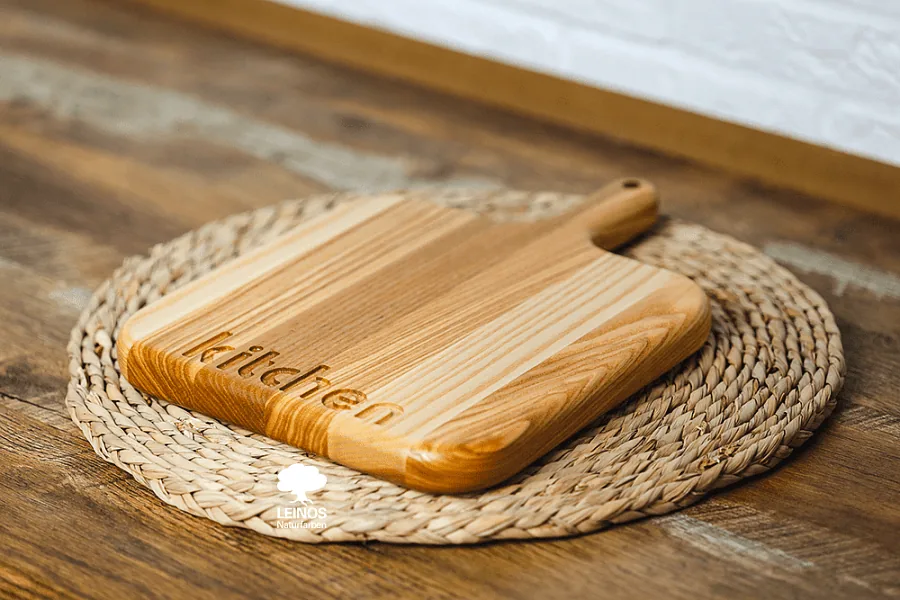
Countertop Oil
Penetrating food-safe oil for kitchen worktops, butcher blocks, dining tables, and children’s furniture. WESSLING-tested for direct food contact.
View product detailsWood Surfaces · Solutions
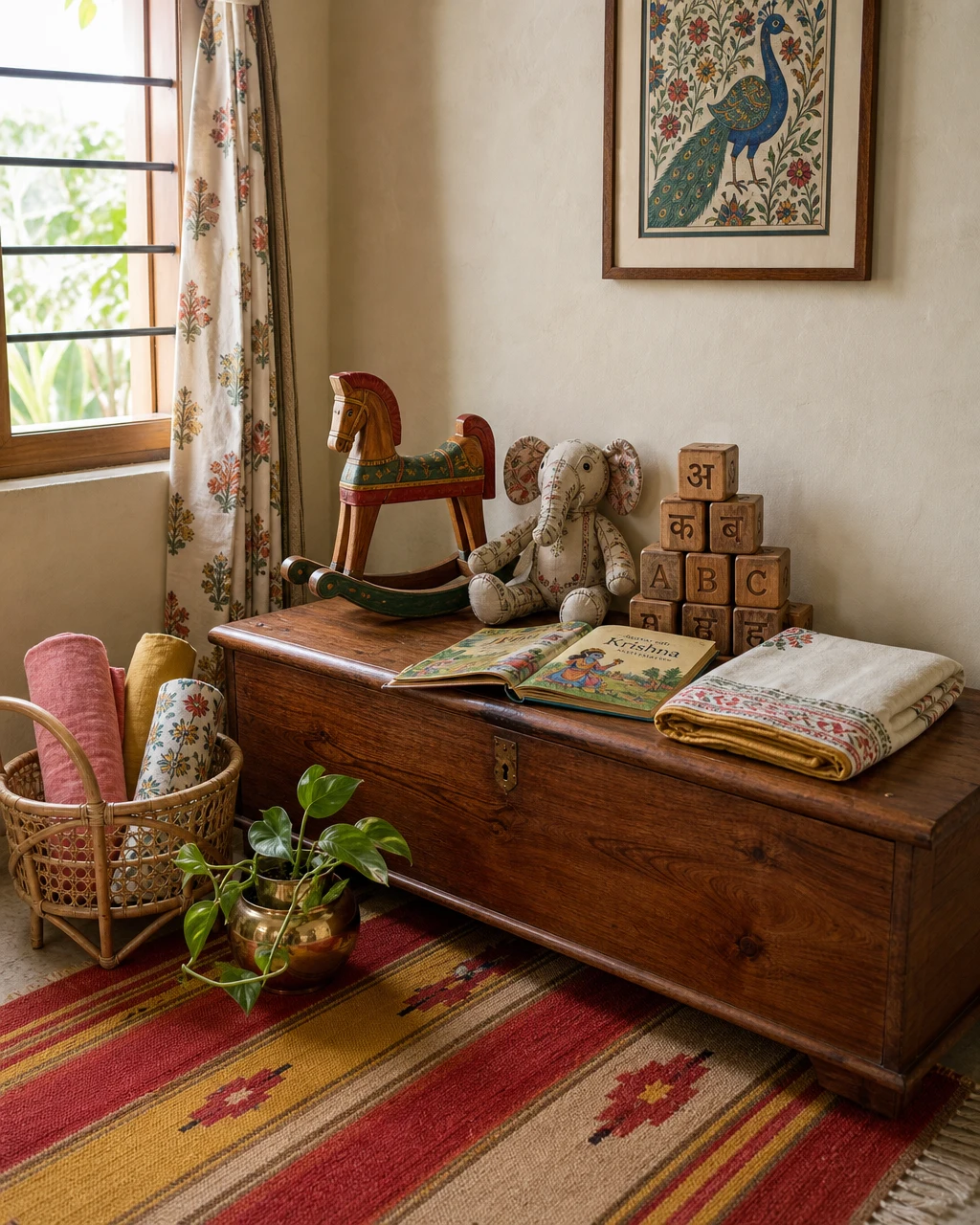
A Channapatna rocking horse, a sheesham building-block set, a teak crib top-rail — children’s wooden surfaces live in mouths, palms, and sleep-environments. The finish documented for that reality is Countertop Oil 280, tested per DIN EN 71-3 and Regulation (EC) 1935/2004 + LFGB §31.
Find your application
Active play and mouthing — Channapatna rocking horses, sheesham building blocks, pull-along animals, stacking rings. The toy is dropped, gnawed, held under a faucet, dropped again. Countertop Oil 280 cures inside the wood fibre (no surface film to chip into the mouth), takes two thin coats on P150–P180 sanded wood, and is the only LEINOS oil documented under EN 71-3 + Regulation (EC) 1935/2004 + LFGB §31 for this contact class. The 7–10 day cure window before child access is non-negotiable.
1 compatible productPenetrating food-safe oil for kitchen worktops, butcher blocks, dining tables, and children’s furniture. WESSLING-tested for direct food contact.
View product detailsSystem & Substrates
For nursery floors, use LEINOS 290 Interior Hardwax Oil instead.
The Coating System
Primer plus topcoat — the full chain.
Long-term Care
Extends the life of the finish over the years.
Step by Step
Sand every visible surface and reachable edge with P150–P180 abrasive. Toys are handled, dropped, and put in mouths — there must be no sharp edge, splinter, or rough end-grain. On Channapatna-style turned toys, sand along the lathe direction; on carved blocks, finish all six faces equally. Confirm the wood is solid (no MDF, no plywood) and bare — strip any existing lacquer or paint first.
Vacuum thoroughly, then wipe with a slightly damp lint-free cloth. Dust trapped in carved grooves, drilled holes, or under cut-out shapes will block oil penetration. Allow to dry fully — moisture content below 14% before oiling.
Stir well. Apply a thin even coat with a soft cloth or fine brush. Cover every face including the underside, all edges, drilled wheel holes, peg sockets, and carved detail. End-grain (top and bottom of turned pieces, ends of building blocks) absorbs 5–10× more oil — let it drink. There must be no unoiled surface a child could find.
After 20–30 min penetration, wipe off ALL excess with a clean cloth. Toys have no horizontal "wear zone" the way a worktop does — any oil layer left on top will stay tacky for days. Stand or hang the toy so air circulates around every face. Surface dry 10–12 h, recoatable after 16–24 h.
Apply a thinner second coat the same way. If micro-fuzz has raised after coat one (common on sheesham, neem, and mango end-grain), de-nib with P400 mesh before recoating. Wipe excess thoroughly after 20–30 min. The toy is touch-dry the same day — but not yet child-safe.
This window is non-negotiable. The EN 71-3 migration limits apply to a fully cured oxidised finish — not a still-curing wet one. Keep the toy out of reach for 7–10 days at room temperature (18–28°C) with airflow. Only after this window may the toy enter the play area. Same rule applies to repaired or re-oiled toys before they go back to the child.
System Composition
Why It Works
Pick the Right Build
Two thin coats with cloth or fine brush. Sand P150–P180. Full 7–10 day cure before child access — non-negotiable. Re-oil annually or whenever the toy stops feeling smooth-fed under the fingers.
Countertop Oil 280 — 2 coats, mandatory full cure
What to Expect
What to Avoid
Scope & Limits
This solution applies to wooden toys, nursery furniture (dressers, changing tables, rocking chairs, low bookshelves), children’s beds and cots, and indoor play equipment.
In the wild
Common Questions
Next step
Move into the filtered catalogue, or jump back to surface choice if you're still scoping the project.
Adjacent applications
Need a Recommendation?
Four ways to reach our India team — pick the one that fits how you work.