Solutions
Easy Refresh & Maintenance
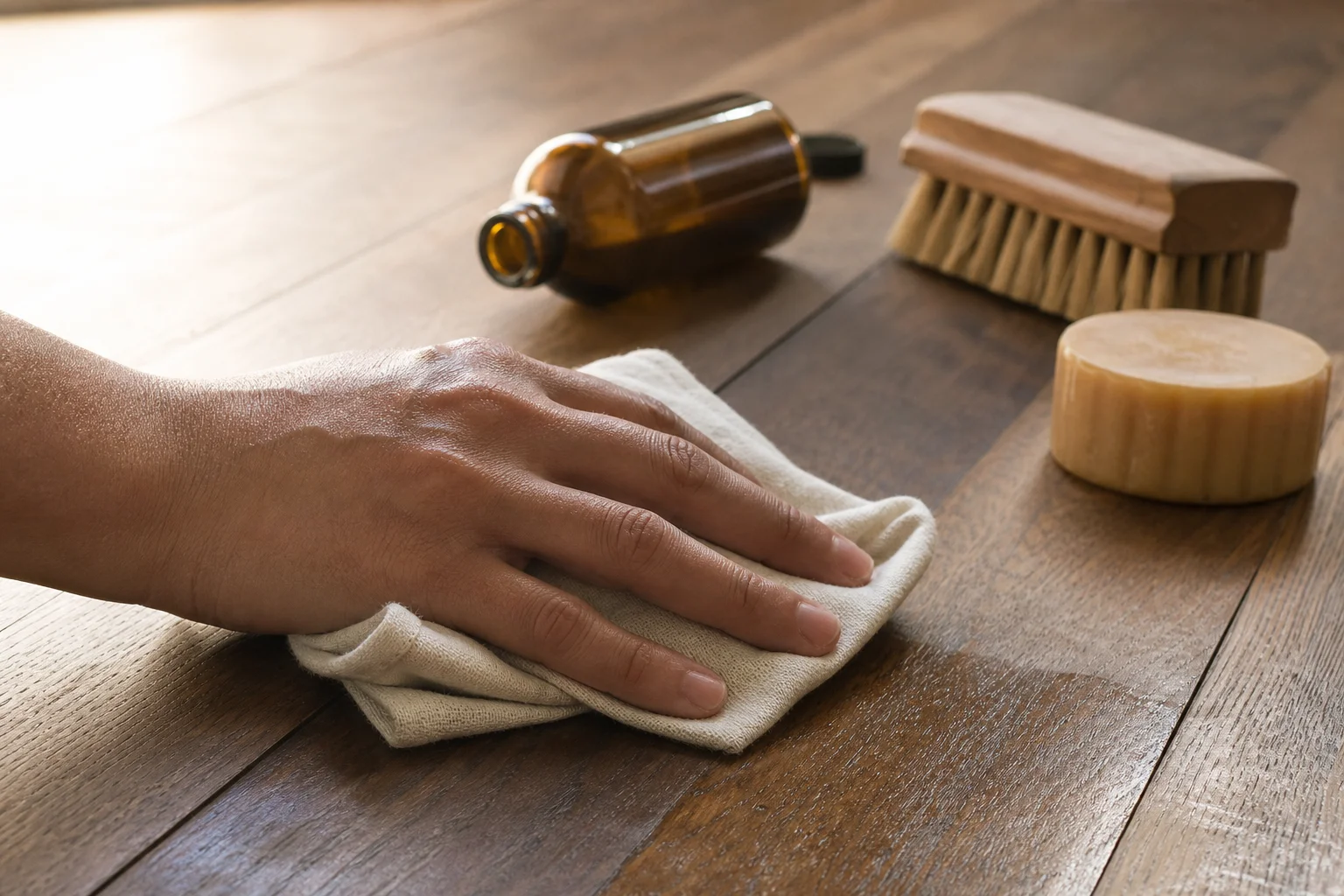
Oil finishes don't peel — they just absorb again.
Who really feels this in India
- DIY homeowners maintaining existing LEINOS-oiled oak, teak, or shisham floors — looking for refresh products that match the original chemistry, not a one-size-fits-all polish.
- Owners of LEINOS-oiled furniture, kitchen islands, and dining tables — wanting a single-bottle solution for weekly cleaning and annual recoat.
- Facility managers of boutique hotels, homestays, and serviced apartments with oiled wooden decks, terraces, and balconies — needing predictable maintenance cycles, not recurring full re-sanding.
How LEINOS answers this
The LEINOS product system for this pain
Vegetable Soap
Fat-replenishing cleaner for oiled, waxed, and lacquered surfaces. Universal cleaning product from plant-based renewable raw materials.
View productFloor Milk
Care product for oiled, waxed, and lacquered wooden floors containing natural waxes. Provides a soil-resistant, silky-gloss finish without polishing.
View productWax Varnish
Water-based natural wax glaze for the decorative, tintable finishing of interior wood — ceilings, wall panelling, and furniture.
View productInterior Hardwax Oil
Hardwax oil for durable protection and finishing of interior wooden surfaces.
View productLab evidence
Documented, not claimed.
Independent labs, named standards, batch-traceable certificates.

Specifier questions
What architects and homeowners ask first.
How often do I need to fully refresh a LEINOS-oiled hardwood floor in an Indian home?
For a normal residential LEINOS-oiled hardwood floor: regular mopping with diluted 930 vegetable soap, 920 floor milk after every 2–4 cleaning rounds (per TDS), and a thin recoat of 290 hardwax oil or 600 wax varnish on high-traffic zones when the surface starts to look dry. Light-use floors stretch the recoat interval by years. There is no full sand-and-refinish step; the oil layer rebuilds itself with each refresh.
Can I recoat a LEINOS-oiled floor without sanding?
Yes — this is the central advantage of penetrating-oil finishes. Clean the floor with 930 vegetable soap, allow to dry overnight, apply a thin coat of 290 hardwax oil or 600 wax varnish with a lint-free microfibre pad, wipe off any excess. The recoat is dry to the touch in approx. 6–12 hours; treat it gently for the first days — full load-bearing after approx. 7–14 days per TDS. No sander, no dust shroud, no chemical strippers, no furniture removal beyond the area being refreshed.
What is the difference between 920 floor milk and 930 vegetable soap?
930 vegetable soap is the everyday cleaner — fat-replenishing and plant-based; dilute 30–50 ml in 10 litres of water and mop. It cleans dust and light soiling without stripping the oil. 920 floor milk is the periodic cleaner-conditioner — the TDS protocol is one application after every 2–4 rounds of soap cleaning; it cleans more deeply and adds a thin layer of natural waxes, restoring sheen and lifting traffic marks. Both are part of the same LEINOS care chain and work together.