Solutions

Indian Outdoor Weathering

Wood and walls that survive Indian monsoon, sun, and salt.

Validated by

DIN 18550·EN 1062-3·ift Rosenheim·WESSLING

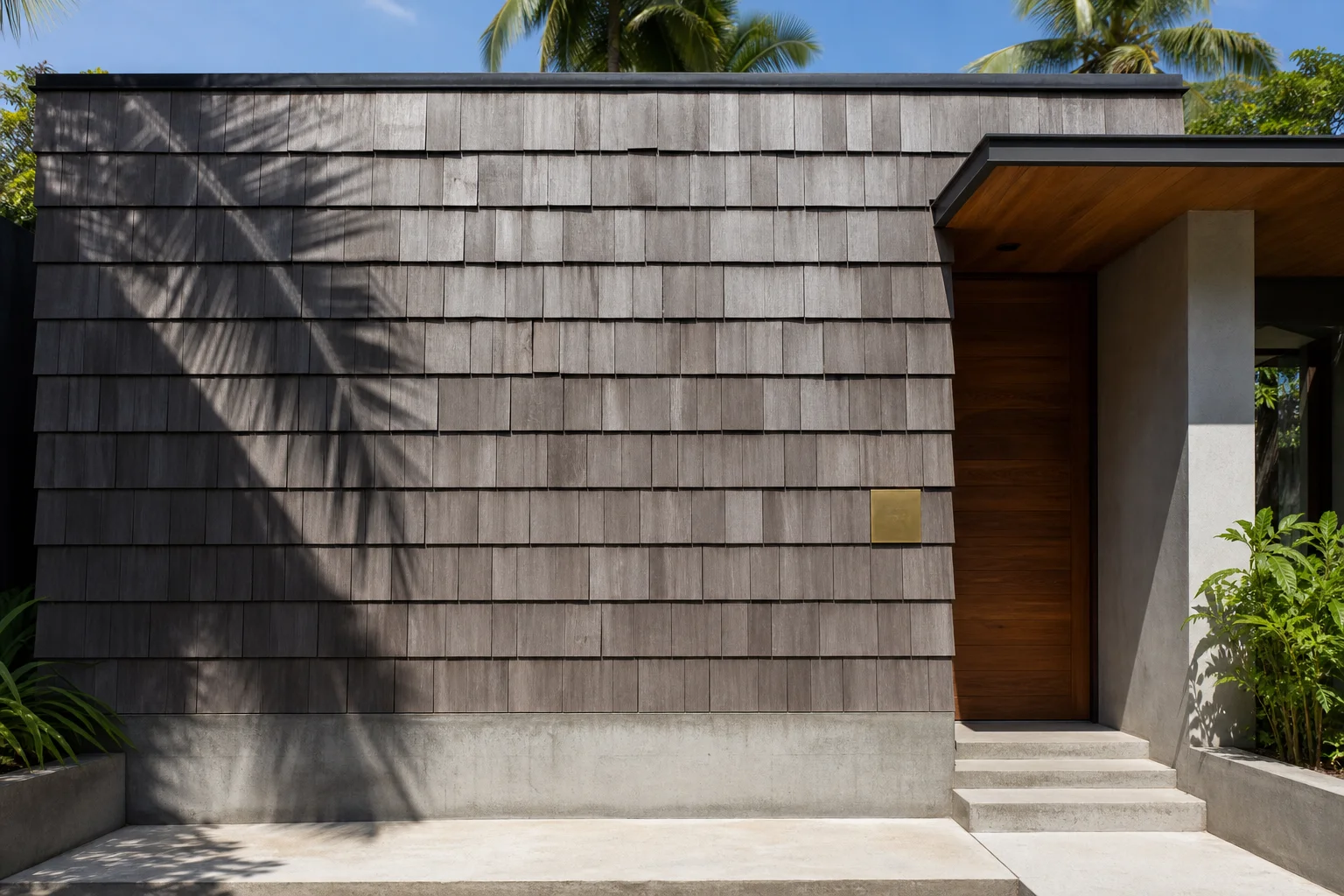
Cedar shingle facade of a contemporary Chennai house, weathered four years to a silvery-grey patina, palm shadow on left wall

The pain — diagnosed

Where the layer on top of the wood — or the wall — actually fails.

In Mumbai by August, the new wooden deck has black streaks. By the next March, the lime-plastered facade has peeling sheets. By the third monsoon, the cedar shutters have cracked at every joint. The wood and the wall are sound — the failure is in the layer on top of them.

What the substrate endures

  • Monsoon

    8-12 weeks of horizontal rain at 85%+ humidity. Surface temperature drops; substrate stays warm. Vapour pressure pushes water under any sealed film.

  • Summer UV

    Index 9-11 for four months across most of India. Plastic films chalk, oxidise, and microcrack year after year.

  • Salt aerosol

    Coastal sites receive 50-200 mg/m² of NaCl deposited weekly. Salt is hygroscopic; it draws moisture into every microcrack it finds.

  • Diurnal cycling

    Hill stations swing 35 °C by day to 8 °C at night. The substrate flexes; the film does not flex enough and lets go at the bond line.

Film-forming coatings — acrylic emulsion on walls, polyurethane on wood — seal the substrate from the room side. Vapour rising from below cannot escape upward through the film. It condenses behind the film. The bond fails from the inside. By the time the bubble or the crack appears, the wood or the wall has already absorbed weeks of trapped water.

The cycle

bubble → scrape → repaint → bubble. Twelve to eighteen months between repaints in the worst monsoon zones.

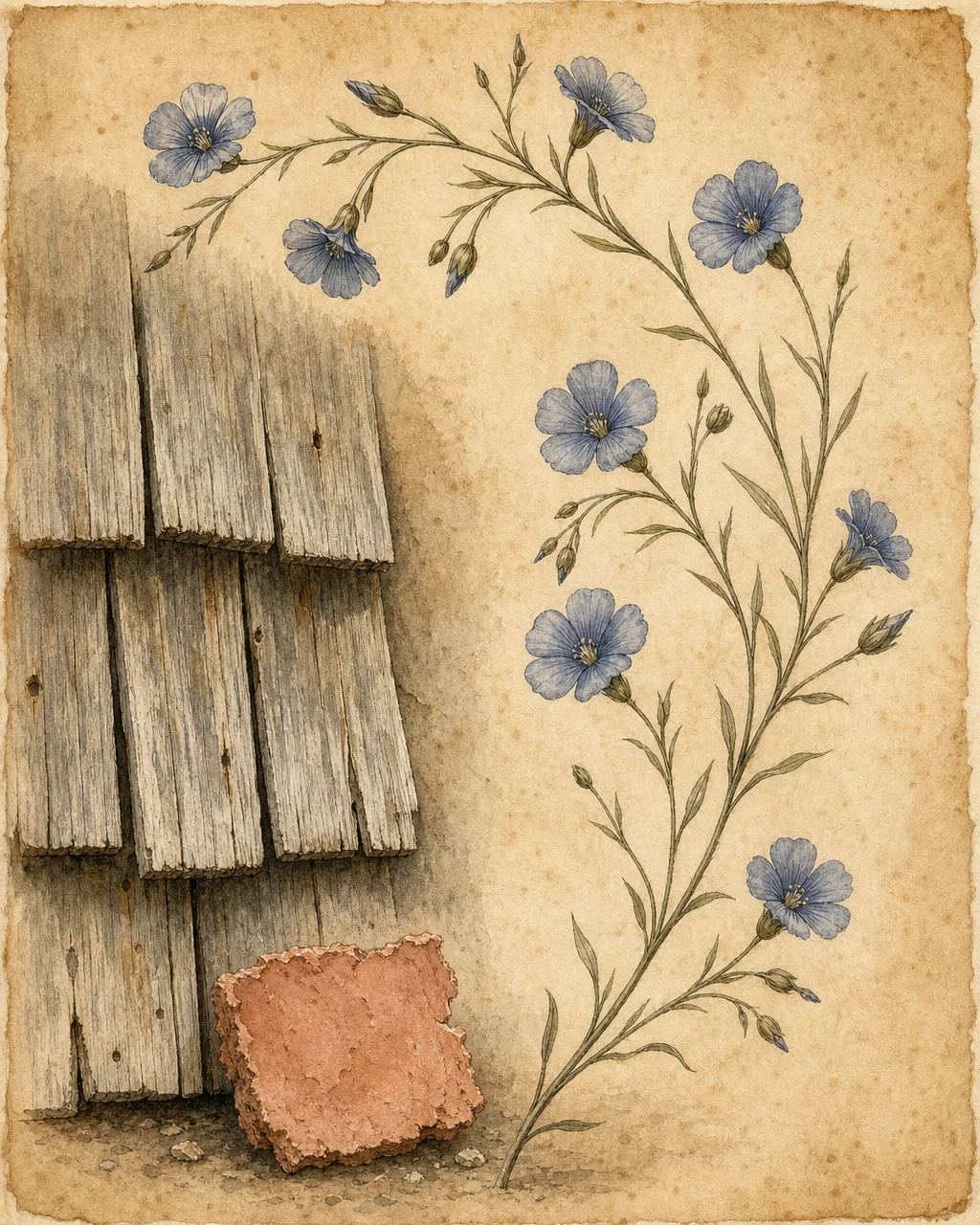
Watercolor botanical study on aged paper — weathered cedar shingles, linseed branch with blue flowers, terracotta plaster sample

Who really feels this in India

  • Coastal homeowners along the Mumbai–Goa–Chennai stretch — where wooden cladding and exterior walls fight monsoon and salt year-round.
  • Hill-station villa owners in Coorg, Coonoor, and Shimla — high UV by day, freeze-thaw at night, condensation seasons.
  • Architects specifying tropical-zone facades — looking for system continuity across teak shutters, lime plaster, and cedar shingles.

The mechanism

How LEINOS solves it — chemistry, not chemicals.

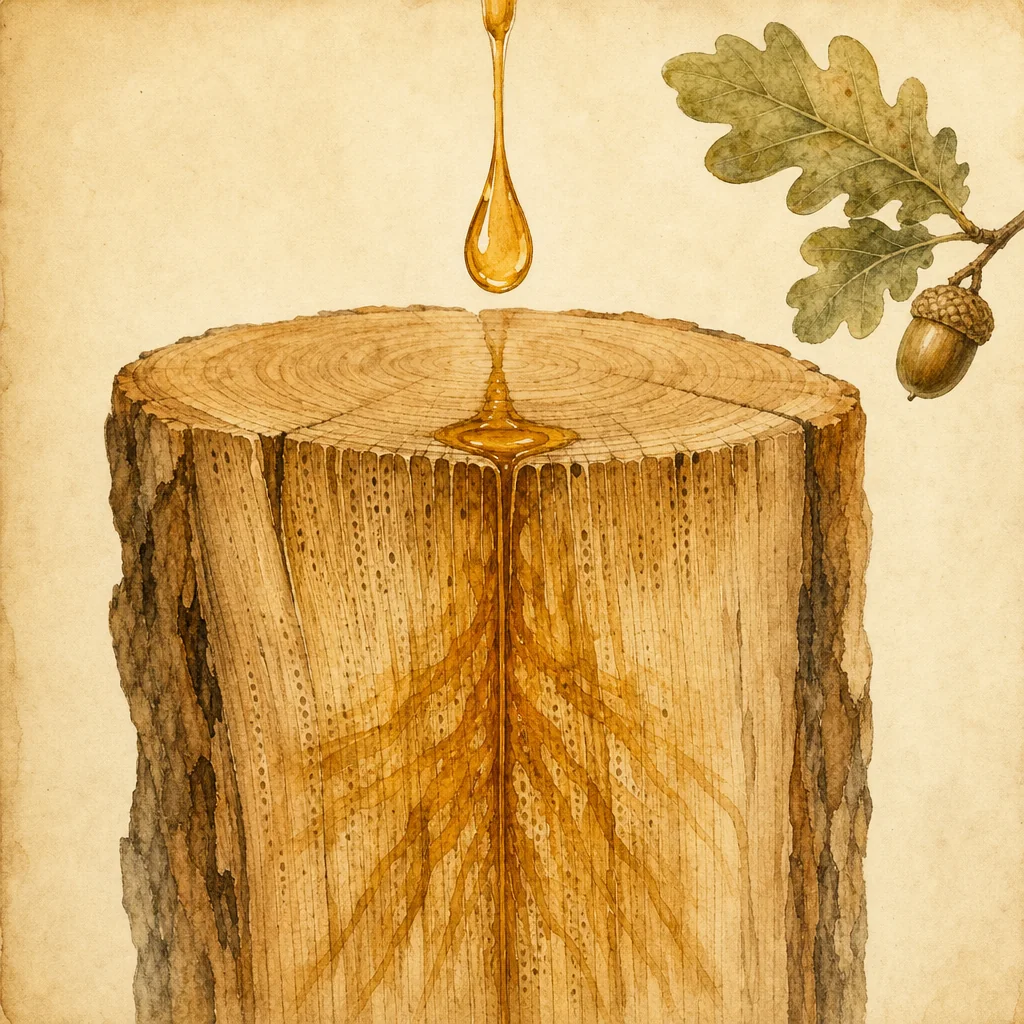
Watercolor medallion — linseed oil droplet penetrating into oak wood grain cross-section

Mechanism · 01

Penetration, not film

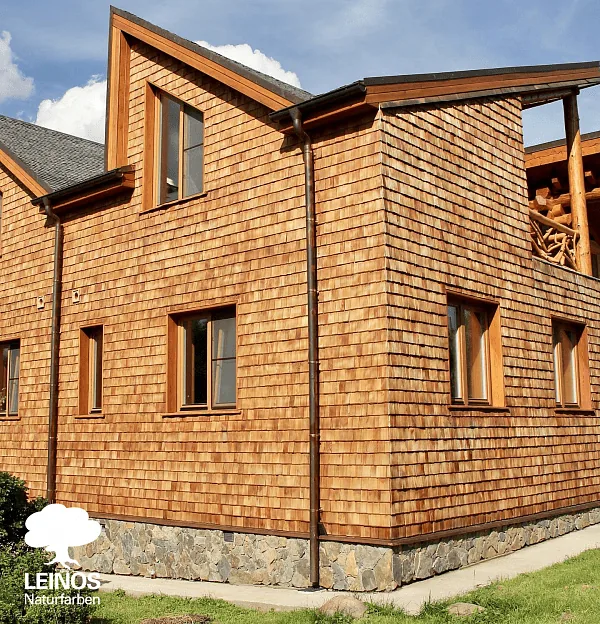
LEINOS 150, 236, and 260 are linseed-oil-based. They soak into the wood pores and cure inside the wood — not on top of it. There is no separate film to crack, peel, or trap moisture. The surface greys naturally as a thin oxidised layer; the oil-saturated wood underneath stays sound for years.

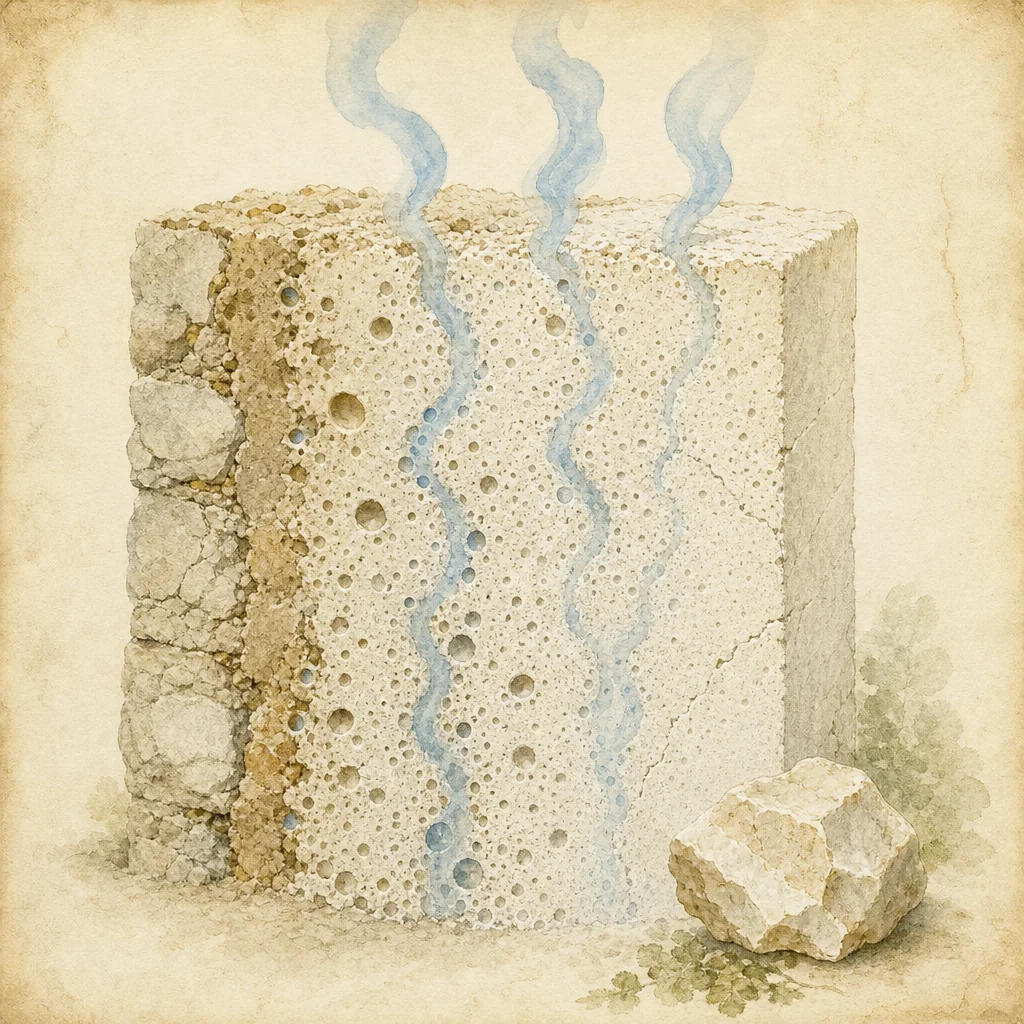
Watercolor medallion — mineral plaster cross-section with vapour rising through open pores

Mechanism · 02

Open-pored mineral system

LEINOS 622 primer and 665 lime paint stay open-pored after curing. Water-vapour transmission is an order of magnitude higher than acrylic emulsion. Monsoon vapour passes through the wall to the room air, where ventilation handles it. The bond line never gets wet from behind.

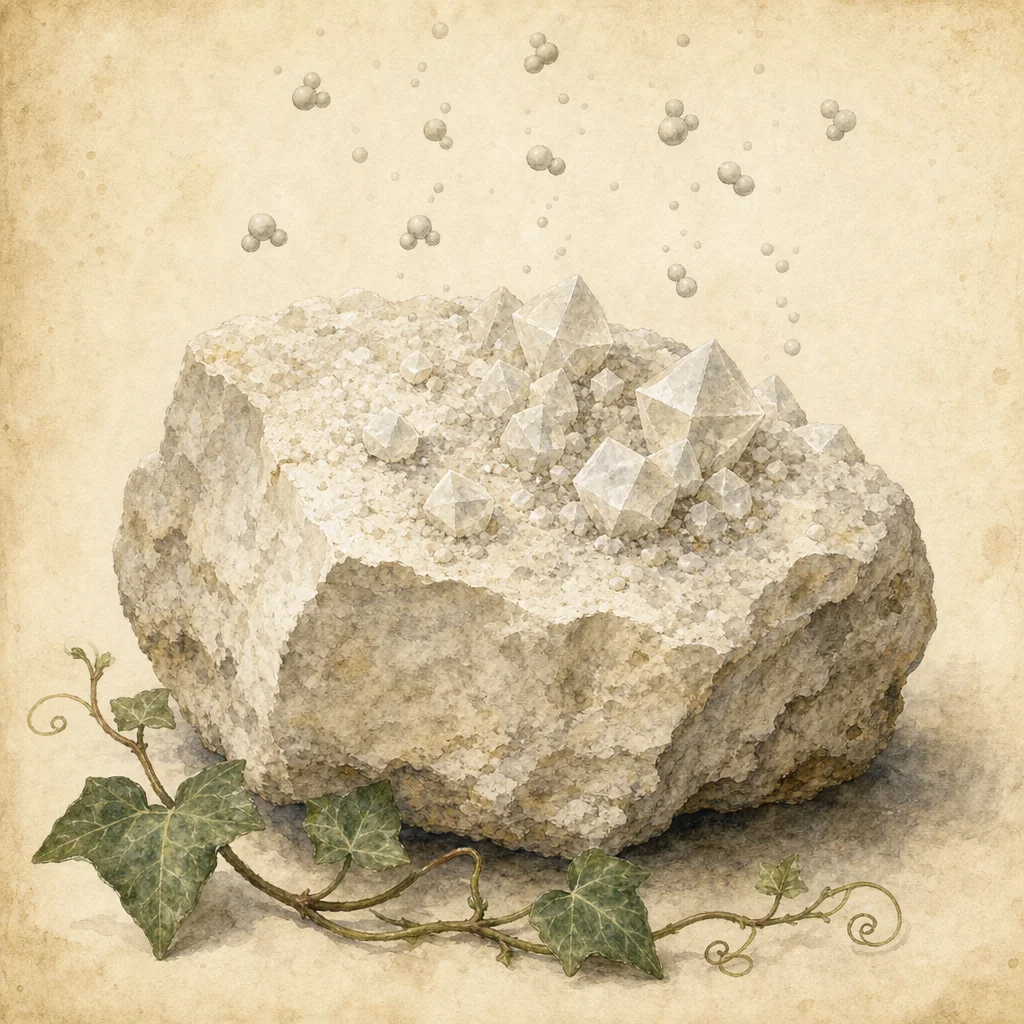
Watercolor medallion — limestone formation with CO₂ molecules and ivy decoration

Mechanism · 03

Carbonation hardening

Slaked lime in 665 reacts with atmospheric CO₂ to form calcium carbonate — the mineral limestone is made of. The surface hardens with age, not softens. New limewash bonds chemically with the previous coat as both continue to carbonate. Heritage buildings have used this mechanism for two thousand years.

How LEINOS answers this

Indian outdoor surfaces lose to weather not because the wood or wall is wrong — they lose because the coating is wrong. Film-forming finishes trap monsoon moisture against the substrate. The film cracks. Water sits underneath. The wood greys. The wall bubbles. LEINOS linseed-based exterior finishes (150 wood sealer, 236 wood stain, 223 oil glaze, 260 wood oil) penetrate instead of filming. Moisture passes through. Salt and UV degrade the top layer, but the wood stays sound. Refresh by re-oiling the same surface — no sanding, no peeling. For exterior facades, the 622 mineral primer + 665 lime paint system stays open-pored. Monsoon vapour escapes through the wall rather than getting trapped behind a plastic skin. Lime carbonates with CO₂ over time — the surface gets harder, not softer, in our climate.

Why this is actually natural

Application

How the system gets onto the substrate.

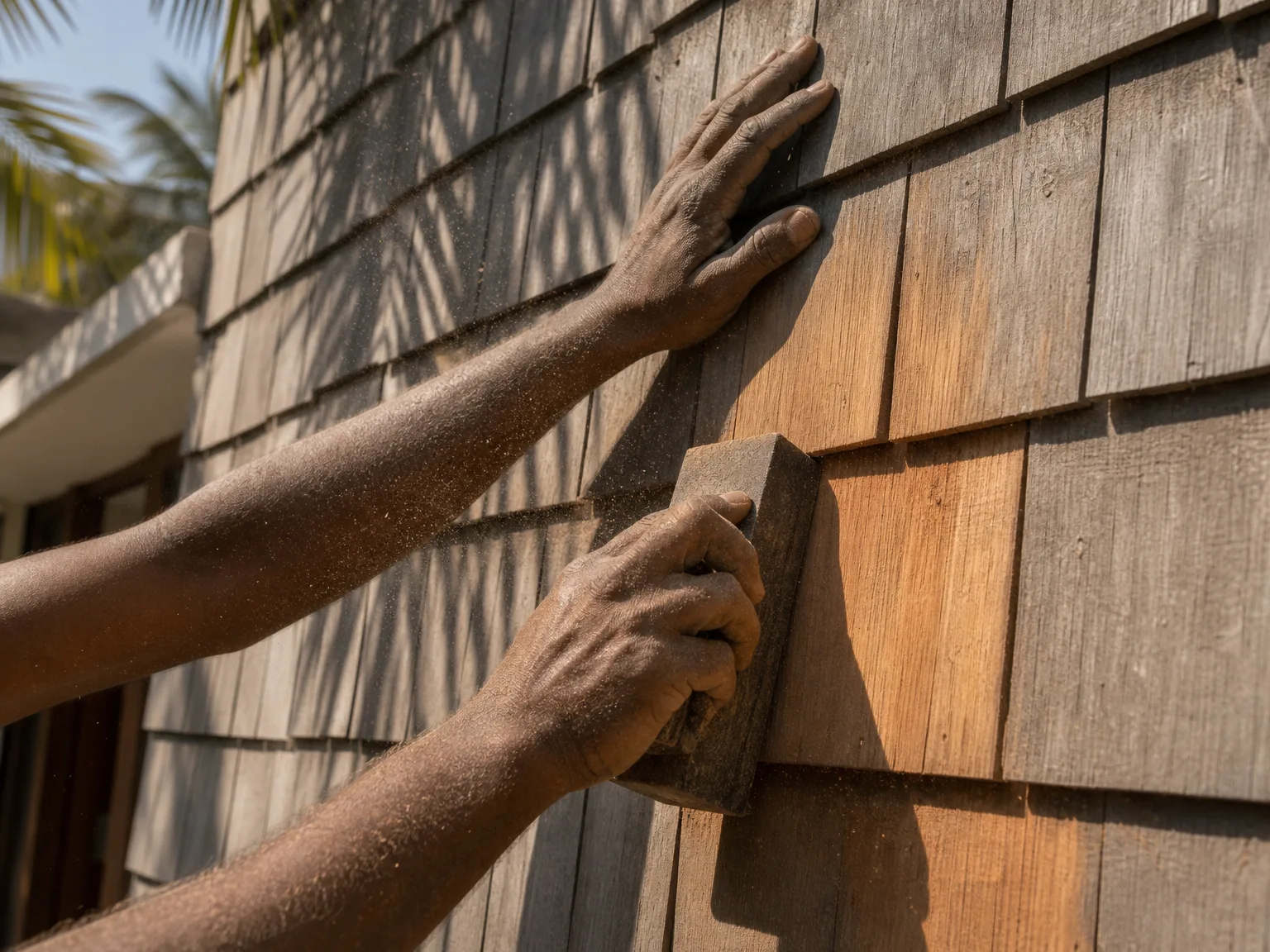
  1. Indian craftsman sanding a cedar shingle outdoor wall, palm shadow, dust visible in warm late-morning light
    Step 1 of 4

    Prepare the substrate

    For wood: sand to bare timber, brush off dust, allow to reach moisture content below 18%. For lime/mineral walls: remove any existing film coating mechanically, expose sound substrate, dampen surface lightly before priming.

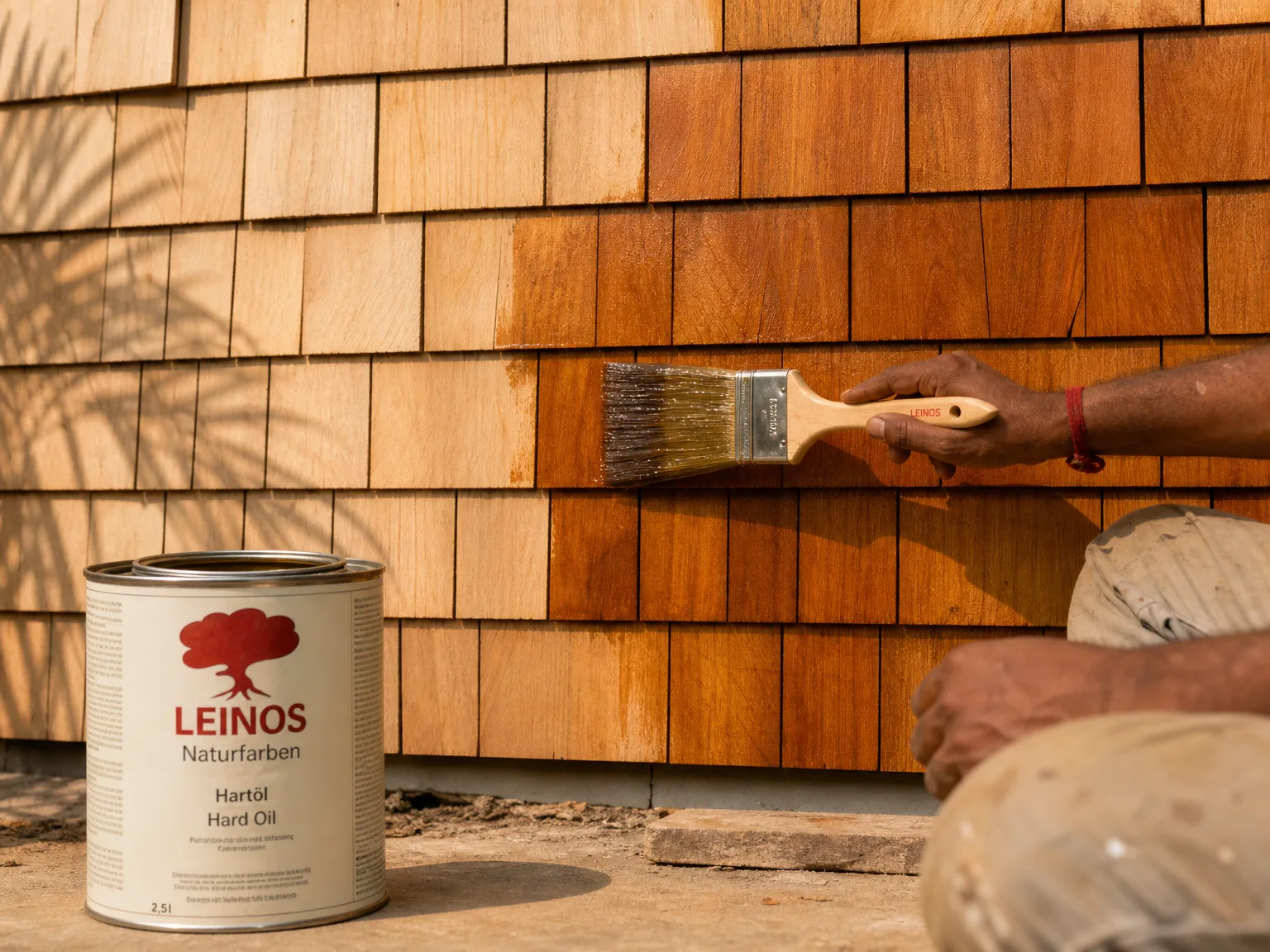
  2. Brushing LEINOS Hartöl onto cedar shingles, golden-amber oil soaking into the grain, cream-and-red LEINOS can in foreground
    Step 2 of 4

    Apply the base coat

    Wood: flood-coat 150 sealer or thinned 236 stain; wipe excess after 20 minutes so oil enters the grain, not just the surface. Walls: apply 622 mineral primer with a brush, working into the substrate; allow 24 hours.

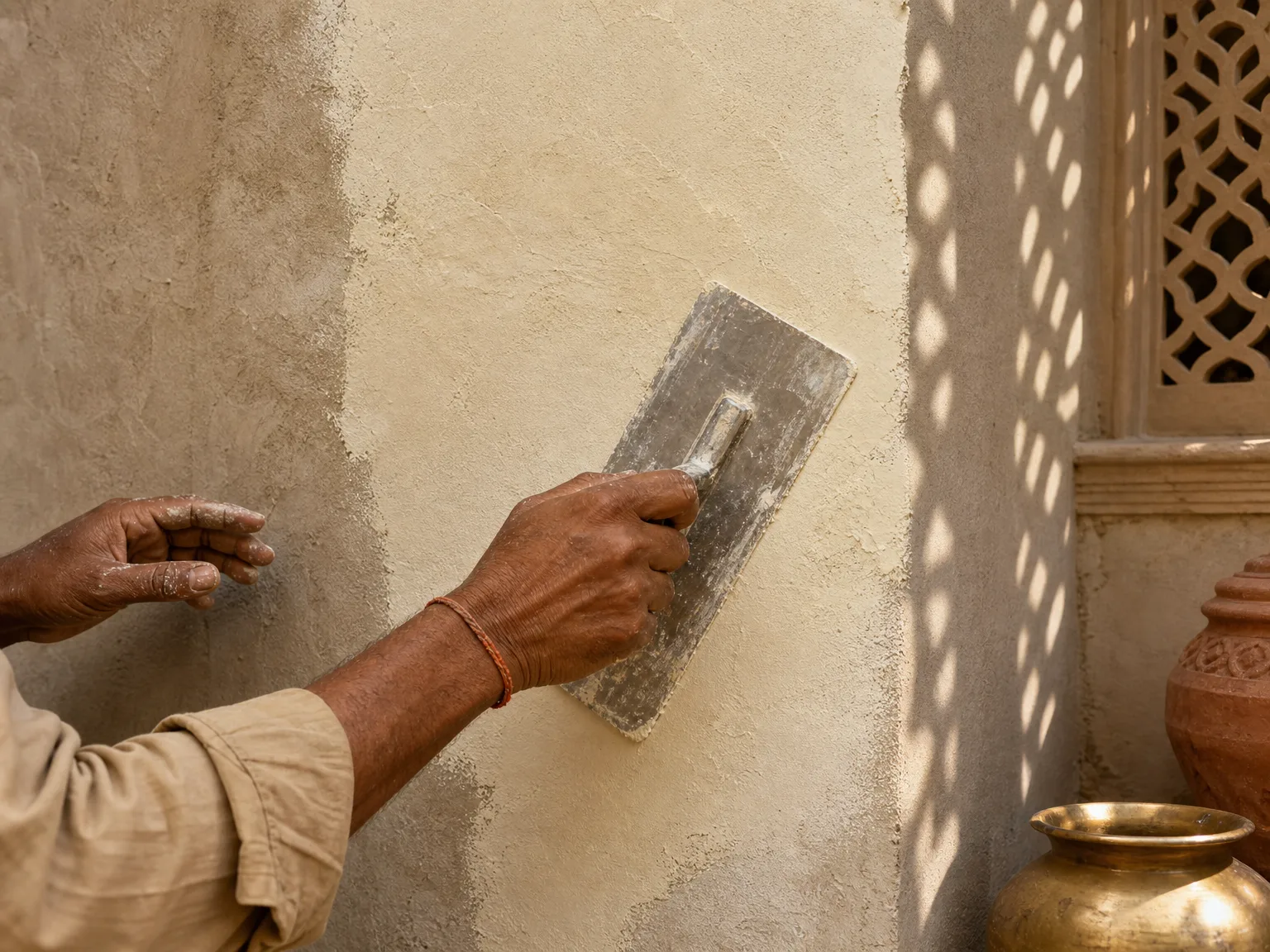
  3. Trowel smoothing LEINOS lime paint onto a heritage mineral plaster facade, jali shadow pattern and brass kalash on right
    Step 3 of 4

    Build the system

    Wood: two coats of 236 stain or 260 oil with 24 hour intervals. Walls: two coats of 665 lime paint with 12-24 hour intervals; mist the wall lightly between coats in dry weather to support carbonation.

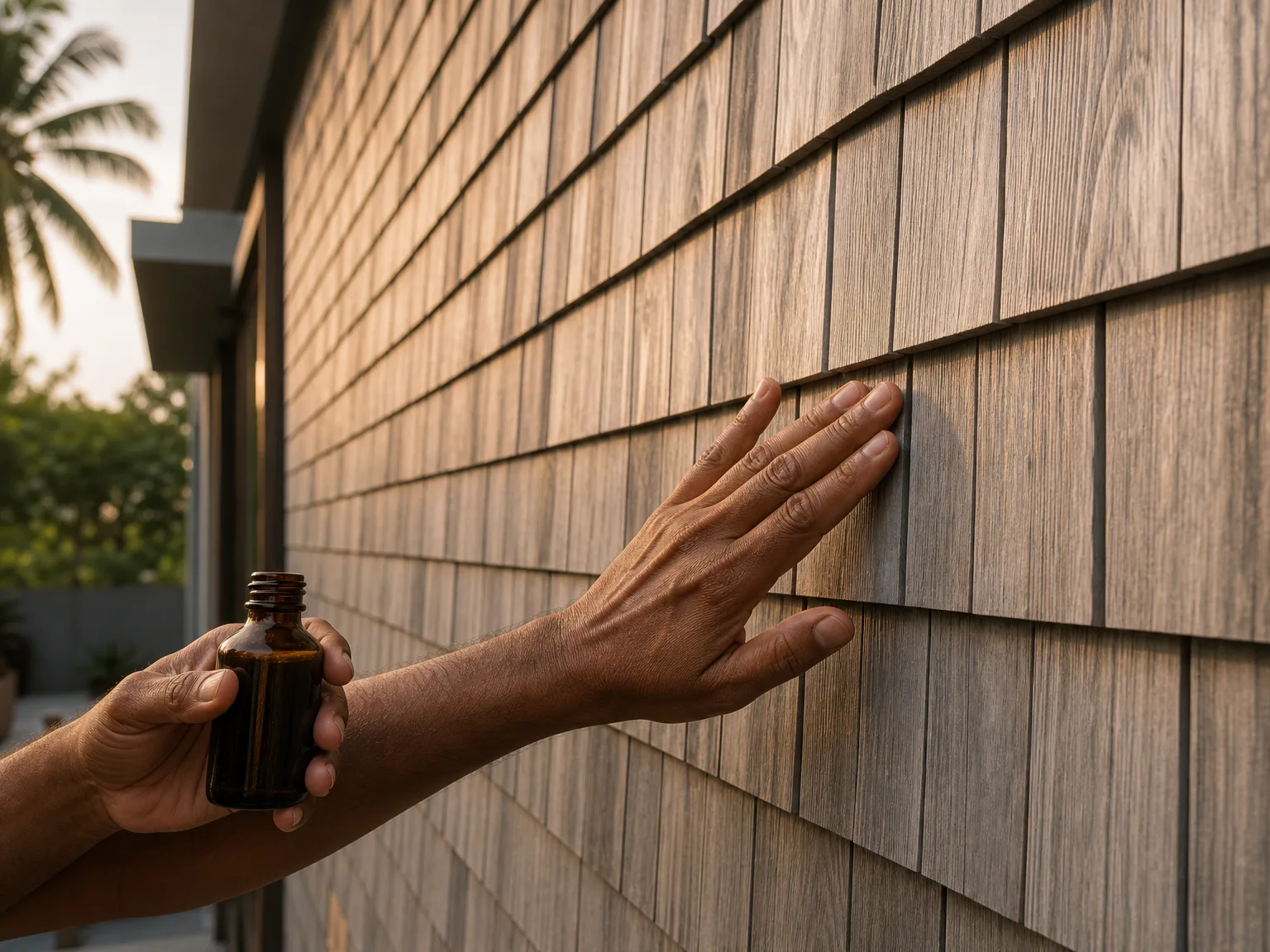
  4. Hand running over a cedar shingle wall weathered to silvery-grey, small dark-glass bottle of LEINOS wood oil for spot refresh, golden-hour Chennai light
    Step 4 of 4

    First-year care

    Wood: inspect after one monsoon; spot-refresh any sun-bleached or salt-exposed zones with a single thin coat over a cleaned surface. Walls: allow the full carbonation cycle (6-12 months) before any repair patching.

Per-product TDS sheets are the authoritative source for coverage, drying intervals, and tool selection. Use these steps as the system-level shape, then download the relevant TDS from each product page.

Lab evidence

Documented, not claimed.

Independent labs, named standards, batch-traceable certificates.

  • DIN 18550

    Breathable plaster

  • EN 1062-3

    Water permeability

  • ift Rosenheim

    Weather cycling

  • WESSLING

    Independent lab

Compare

Why the conventional path fails for this pain.

Conventional path

Acrylic exterior emulsion on lime, mineral, or stone facade

What fails

Film seals the wall. Monsoon vapour gets trapped behind it. Bond fails inside-out. Bubbling appears within 18-36 months. Biocide leaches; mould returns.

With LEINOS instead

Why it holds

622 primer + 665 lime paint — open-pored, chemically lime-bonded to the substrate, hardens through carbonation over years instead of degrading.

Conventional path

Polyurethane / varnish on outdoor wood

What fails

UV chalks the film; salt cracks it; water enters cracks; wood greys under an intact-looking film. Refresh requires full sanding back to bare timber.

With LEINOS instead

Why it holds

236 stain / 260 oil / 150 sealer — penetrate the wood, no film to fail. Refresh is a single thin coat over a cleaned surface, no sanding needed.

Conventional path

Solvent-based exterior paint with biocides

What fails

Biocide leaches out within 18-24 months. Mould returns. The paint itself becomes mould food once the biocide is spent. Repaint cycle repeats with rising biocide load indoors.

With LEINOS instead

Why it holds

665 lime — pH 12+ naturally suppresses spores. No biocide added, no biocide to leach, no re-bloom cycle. Mineral chemistry, not chemical suppression.

Specifier questions

What architects and homeowners ask first.

  • Will LEINOS oils protect teak from Mumbai monsoon for 3+ years?

    Yes — LEINOS 236 wood stain or 260 wood oil, applied in 2-3 coats, gives 3-5 year exterior durability on hardwoods like teak. Refresh interval is shorter (12-18 months) on softwoods like cedar. Refresh is single-coat oil over a cleaned surface — no sanding required.

  • Can I use the same product system for both wooden and lime-plastered facades?

    No — wood and mineral substrates need different chemistry. Wood takes penetrating linseed oils (236, 260). Mineral walls take the 622 primer + 665 lime paint system. They share a philosophy (breathable, no film, naturally weathered) but the binder is different.

  • Is the 665 lime paint safe near food gardens or rainwater catchment surfaces?

    Yes — 665 is mineral with no biocides and no VOC. Rainwater runoff is mildly alkaline (lime) but not toxic; it dilutes harmlessly. The 665 is documented under DIN 18550 breathable plaster standards, and the lime carbonation chemistry is a natural antimicrobial.

Next step

Get the right answer for your project — fast.