Interior Hardwax Oil
Hardwax oil for durable protection and finishing of interior wooden surfaces.
View product detailsWood Surfaces · Solutions
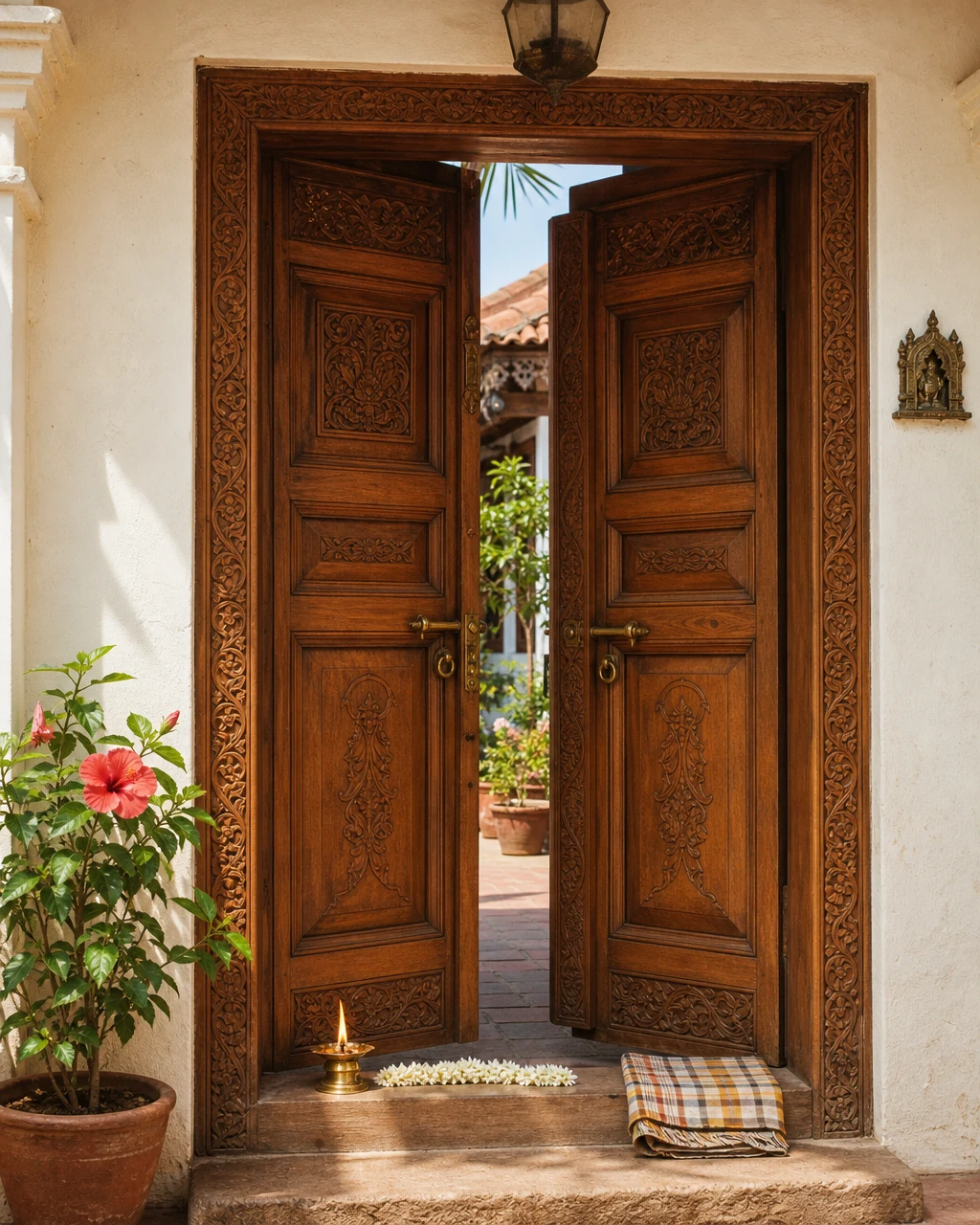
A Burma teak panel door with brass kundi handle in a Bandra bungalow. A white-painted flush-panel door in a Gurgaon high-rise corridor. A sheesham window-frame head rail that drags a daily sari curtain through eight monsoon seasons. Skirting that takes the jhadu-pochha (broom + wet-mop) every morning for the next twenty years. Indian doors, window frames, and skirting span the full clear-natural ↔ painted-opaque finish spectrum — and the LEINOS system documented for that spectrum covers both: clear interior oils (Hardwax Oil 290, Hard Oil Universal 259) for natural-finish hardwood, and the opaque natural-resin lacquer system (Resin Lacquer Primer 810 → White Lacquer 820 / Finishing Lacquer 840 / Finishing Lacquer Mix 845) for painted woodwork. Wood Filler 337 fills nail holes, knots, and hinge-screw history before either path.
Find your application
Indian interior doors split into two finish worlds: heritage Burma teak / sheesham panel doors in older bungalows and haveli homes get a clear oil (Hardwax Oil 290 default — micro-wax holds up under daily kundi-handle contact). Modern flush-panel doors in apartments and new builds are almost always painted — that's the 810 primer → 820 white / 840 colour / 845 custom-tint opaque-lacquer system. Wood Filler 337 fills knots and old hinge-screw holes before either finish.
7 compatible productsHardwax oil for durable protection and finishing of interior wooden surfaces.
View product detailsVersatile universal primer and topcoat for all interior wood types. Enhances natural wood structure with silky matte, durable, water-repellent finish.
View product detailsFast-drying, easily sanded primer for wood, stone, and metal surfaces. Suitable for interior and exterior use with good filling and opacity.
View product detailsHigh-coverage white lacquer for wood and metal finishing. Available in satin or gloss finish with excellent flow and minimal yellowing.
View product detailsSystem & Substrates
For walkable floor and stair joinery use LEINOS 290 in floor-grade build; for exterior front doors use Teak Oil 223 or Weatherproof Paint 850.
The Coating System
Primer plus topcoat — the full chain.
Topcoat Options
Choose the finish character; the primer underneath stays the same.
Long-term Care
Extends the life of the finish over the years.
Step by Step
Lift the door off its hinges and lay it flat on padded saw-horses (Indian door weights — Burma teak panel doors are heavy, get two people). Remove the kundi handle, lock plate, drop-bolt, hinges, and any inset glass beading. Masking around mounted hardware traps oil/lacquer in the screw holes and leaves a shiny rim — every door specifier learns this the hard way.
On older Indian doors there are usually 2–4 retired hinge positions, abandoned kundi-latch screw holes, and knot voids in the panels. Mix Wood Filler 337 powder with cold water 3:1 to a stiff putty, press into the holes with a spatula, level flush. Sandable after 45 min. Skip this step on a new door with clean substrate.
Sand both faces of the door with P120 in grain direction — panel face, rails, stiles, all visible edges. Re-sand the kundi-handle zone and lock-plate area with P150 — finger-pad smoothness matters where hands land daily. Round all sharp door edges with a sanding sponge (the bottom edge that swings over the threshold gets the most catch). Strip any old PU or melamine first — oil and natural-resin lacquer only bond to bare wood.
Natural Burma teak, sheesham, mango panel door where the wood grain is the design feature: clear oil. Hardwax Oil 290 (2 coats, brush) is default — handle contact is the highest stress and 290's micro-wax matches it. Hard Oil Universal 259 (3 thin coats, sealing roller) when the door install is on a 24-hour deadline. Flush-panel apartment door, painted door panel in a children's room, white internal-corridor door: opaque lacquer. Resin Lacquer Primer 810 (1 coat) then White Lacquer 820 (2 coats) for standard white, or Finishing Lacquer 840 (2 coats over primer) for one of 10 fixed colours, or Finishing Lacquer Mix 845 (2 coats over primer) when the architect specifies an NCS or RAL custom tint.
Sequence matters on door panels: work the panels first (they're slightly recessed and a brush picks up panel-corner overspill cleanly), then the horizontal rails, then the vertical stiles. Finish with the door edges — top, bottom, hinge-side, handle-side. Bottom edge always gets a coat (threshold-zone moisture wicks up if left bare). After 20–30 min penetration on oils, wipe excess from corner profiles. Lacquer: no wipe-back; let dry undisturbed.
Oils: 290 dry to touch 6–12 h, recoatable after 12 h. 259 dust-dry 6–8 h. Apply second coat (or third for 259). Lacquers: 810 primer sandable after 24 h — light P180 between primer and topcoat. 820/840 recoatable after 24 h. 845 dust-dry 8 h, sandable after 24 h. Door is light-handling ready 24 h after final coat. Remount hardware (clean kundi-handle screw threads first — old oil/lacquer residue prevents tight torque). Re-hang the door. Full polymer cure 7–14 days on oils, 2–3 weeks on 845 lacquer for final gloss.
System Composition
Why It Works
Pick the Right Build
Hardwax Oil 290 — 2 coats with brush. P120 sand on faces, P150 on the kundi-handle zone. The default for older Indian homes, haveli restorations, bungalows where the wood grain IS the design.
Hardwax Oil 290 — 2 coats
Resin Lacquer Primer 810 (1 coat) → White Lacquer 820 (2 coats, satin or gloss). The default for flush-panel internal apartment doors, corridor doors, children's bedroom doors where opaque white is the design intent.
810 primer + 820 white lacquer (2 coats over primer)
Resin Lacquer Primer 810 (1 coat) → Finishing Lacquer 840 (2 coats) in one of 10 fixed colours: White, Black, Anthracite Grey, Light Grey, Fir Green, Dove Blue, Nordic Red, Yellow, Blue, Leaf Green. Mutually mixable for custom blends within the palette.
810 primer + 840 colour lacquer (2 coats over primer)
Resin Lacquer Primer 810 (1 coat) → Finishing Lacquer Mix 845 (2 coats) machine-tinted to architect's NCS or RAL specification. Use when the door colour must match a wall, a fabric, or a brand identity not on the 840 fixed palette.
810 primer + 845 custom-tint lacquer (2 coats over primer)
Hard Oil Universal 259 — 3 thin coats via sealing roller at 6–8 h intervals, no intermediate sanding. Lets the door go from sanded to light-handling ready inside a single 24-hour shift, useful when the homeowner moves in on a tight deadline.
Hard Oil Universal 259 — 3 coats
What to Expect
What to Avoid
Scope & Limits
This solution applies to interior doors (panel doors, flush-panel doors), interior side of window frames (jamb, head rail, sill, glazing beads), skirting boards and architraves, dado rails, door frames and architraves, mouldings, and similar architectural joinery inside buildings — both natural-finish hardwood and painted opaque variants.
In the wild
Common Questions
Next step
Move into the filtered catalogue, or jump back to surface choice if you're still scoping the project.
Adjacent applications
Need a Recommendation?
Four ways to reach our India team — pick the one that fits how you work.