Hard Oil
Penetrating oil finish for absorbent interior surfaces
View product detailsWood Surfaces · Solutions
Every interior wood surface in an Indian home — table top, drawer interior, child's toy, hallway skirting, study floor, panel door, white-painted window frame — needs a finish picked for its specific wear pattern, not for a generic "interior wood" label. The LEINOS interior wood set is 14 products organised into six application families, all built on the same linseed-and-natural-resin ingredient core. One ingredient family, surface-driven chemistry, decision tree by surface type. This page routes you to the right family.
Find your application
Wardrobes, shelving, freestanding tables, desks, sideboards, built-in cabinets. The two-product canon (Hardwax Oil 290 on horizontal tops + Hard Oil 240 on frames and cabinet panels) lives here. Sheesham wardrobes in Mumbai bedrooms, teak dining tables, Burma teak study desks — all routed through this family. For the complete per-surface decision matrix, application sequence, and TDS-grounded coat counts, see the dedicated Interior Furniture & Cabinets sub-route page.
4 compatible productsPenetrating oil finish for absorbent interior surfaces
View product detailsHardwax oil for durable protection and finishing of interior wooden surfaces.
View product detailsNon-yellowing, durable primer and topcoat for unstressed interior wood surfaces, particularly in furniture manufacturing. Also suitable for cork and stoneware.
View product detailsVersatile universal primer and topcoat for all interior wood types. Enhances natural wood structure with silky matte, durable, water-repellent finish.
View product detailsSystem & Substrates
For specific surfaces, enter the substrate tabs above or visit the dedicated sub-route page — each tab routes to the per-surface decision matrix and full application sequence.
Topcoat Options
Choose the finish character; the primer underneath stays the same.
Long-term Care
Extends the life of the finish over the years.
Step by Step
Ensure the substrate is dry, clean, grease-free, dust-free, and absorbent. Sand wood surfaces in grain direction: Hard Oil 240 — 150–180 grit; Hardwax Oil 290 — minimum 120 grit; Hard Oil Universal 259 — 150–180 grit. Hard Oil Clear 241: surface must be dry, firm, absorbent, resin- and dust-free. Remove all sanding dust. Temperature above 15°C.
Apply a thin, even coat along the grain. Tools by product: Hard Oil 240 — brush, roller, spray, or dip; Hardwax Oil 290 — short-nap sealing roller or mop, applied thinly and evenly; Hard Oil Clear 241 — brush, roller, or spray. Apply thinly — excess oil sitting on the surface will not dry properly.
Hard Oil 240: wet-on-wet method — apply second coat after 20–30 minutes. Remove excess carefully 30 minutes after the final coat. Hard Oil Clear 241: same wet-on-wet method (20–30 min), remove excess after 30 min. Hardwax Oil 290: remove excess after 15–20 minutes and work in with a green pad.
Hard Oil 240: dust-dry 10–12 hours, recoatable 16–24 hours. Hardwax Oil 290: dry to touch 6–12 hours, recoatable after 16–24 hours. Hard Oil Clear 241: dust-dry approx. 8 hours, recoatable after 16–20 hours. Hard Oil Universal 259: dust-dry 6–8 hours. Use a fan for air circulation during drying.
Apply at least two coats for all products. Hard Oil Universal 259: apply 3 uniform thin coats using a sealing roller with 6–8 hour intervals — no intermediate sanding required. For 240 and 241: important — remove excess oil 30 minutes after the final coat regardless of method. For 290: apply second coat thinly, work in with green pad after 15–20 minutes.
System Composition
Why It Works
Pick the Right Build
If you need a versatile all-round finish → Hard Oil 240. Two coats, warm natural tone, easy wet-on-wet application. The default choice when no special requirements apply.
Hard Oil 240 — 2 coats
If the surface is handled daily or needs extra durability → Hardwax Oil 290. Micro-wax hardens the surface, resists coffee, wine, and fingerprints better than pure oil.
Hardwax Oil 290 — 2 coats
If you want to keep light wood looking light → Hard Oil Clear 241. Safflower-based, non-yellowing formula prevents the warm amber shift that linseed oils cause on pale timbers.
Hard Oil Clear 241 — 2 coats
If the surface gets heavy use or you want maximum sealing → Hard Oil Universal 259. Three thin coats with a sealing roller at 6–8 hour intervals. No sanding between coats needed.
Hard Oil Universal 259 — 3 coats
What to Expect
What to Avoid
Scope & Limits
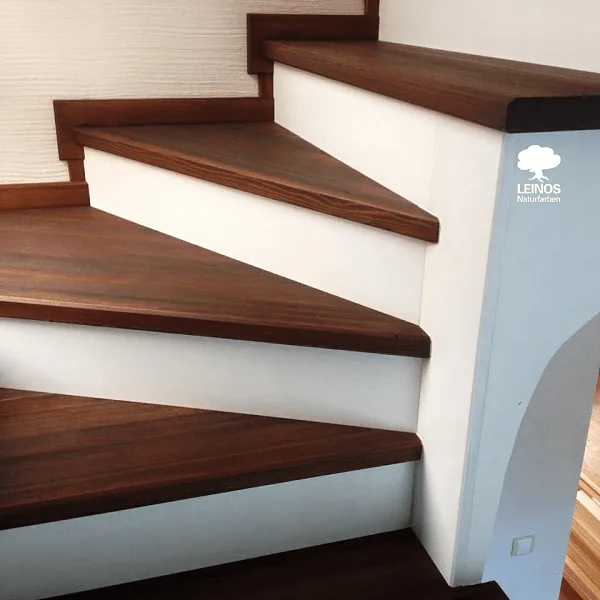
This umbrella covers ALL interior wood applications across the Indian home: freestanding and built-in furniture, cabinets and wardrobes, hardwood floors and parquet, staircases and treads, interior doors and window frames and skirting, kitchen worktops and cutting boards, children's toys and nursery furniture, plus decorative chalk-paint / vintage-finish effects on accent pieces. The set spans clear oils (Hard Oil 240, Hardwax Oil 290, Hard Oil Clear 241, Hard Oil Universal 259, Countertop Oil 280), opaque lacquers (Resin Lacquer Primer 810 → White Lacquer 820, Finishing Lacquer 840, Finishing Lacquer Mix 845), filler and decorative auxiliaries (Wood Filler 337, Furniture Chalk Paint 331, Pigment Concentrate 668, Vintage Finish 635).
In the wild
Common Questions
Next step
Move into the filtered catalogue, or jump back to surface choice if you're still scoping the project.
Adjacent applications
Need a Recommendation?
Four ways to reach our India team — pick the one that fits how you work.